Opinion
Two abducted JAMB candidates escape from bandits


Two Unified Tertiary Matriculation Examination, UTME, candidates who were among passengers abducted in a commercial bus in Benue State have escaped from their captors.
The State police Command confirmed their escape and said efforts are being made to rescue the other abducted candidates.
About 14 candidates travelling to Otukpo for the UTME were abducted in Benue State.
A statement by the Police Public Relations Officer, Udeme Edet, on Friday, said the vehicle involved was a Toyota Hiace bus with registration number BGT 234 S4 belonging to Benue Links Limited.
According to the police, one suspect has been arrested in connection with the incident.
The police spokesperson disclosed that the driver violated company policy by embarking on an unauthorised late-night journey.
According to Edet, the driver picked up passengers randomly along the route without issuing a formal manifest, contrary to standard operating procedures.
“The Command has deployed several tactical teams, including the Anti-Kidnapping Unit, and is working with other sister agencies to track down the perpetrators and ensure the safe return of the victims,” the statement said.
By Jumai Ahmadu
FCT’s remarkable rise in Presidential Enabling Business Environment Council (PEBEC) ranking reflects infrastructure renewal, land administration reforms, improved service delivery and a reinvigorated investment drive
When the Federal Capital Territory (FCT) was ranked 31st in the 2023 Subnational Ease of Doing Business assessment, there was little indication that within a relatively short period, Nigeria’s federal capital would make a dramatic leap into the country’s top five business-friendly destinations.
Today, that story has changed.
In the latest Subnational Ease of Doing Business assessment by the PEBEC, the FCT emerged 4th nationally with a score of 61.0 per cent, trailing only Lagos, Kaduna and Oyo. From 31st to 4th, the improvement represents a remarkable turnaround in the territory’s business-environment performance.
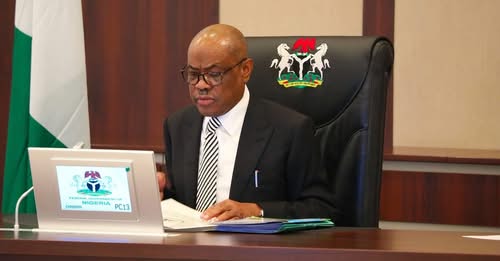
While such rankings are the product of several institutions, reforms and measurable indicators, the FCT’s improved performance reflects the direction of the administration of the Minister of the FCT, Barrister Nyesom Wike, particularly its emphasis on infrastructure, land administration, institutional effectiveness, service delivery and private-sector investment.
Since assuming office, Wike has made infrastructure development one of the defining features of his administration. Across the capital, the construction, rehabilitation and expansion of roads have opened important corridors, improved connectivity and enhanced movement within the city and its satellite communities.
For businesses, roads are more than physical infrastructure. They influence the movement of people, goods and services, reduce logistical constraints and open previously underserved locations to commercial and real estate development.
But perhaps equally consequential to Abuja’s investment environment has been the administration’s attention to land reforms and the restoration of discipline in land administration.
Land remains one of the most important assets for investment in the FCT. Whether in housing, agriculture, hospitality, manufacturing, education, healthcare or commercial development, investors require confidence that land titles are secure and that the processes governing allocation, documentation and development are transparent and predictable.
The Wike administration has taken a firmer approach to addressing longstanding challenges within the system. This has included measures to strengthen the integrity of land documentation, tackle abuses associated with land allocations, enforce development conditions and improve accountability in the administration of land.
The administration has also moved to address the long-running issue of Area Council land documentation and regularisation, providing a pathway for affected property owners to formalise their interests within the statutory framework of the FCT.
Another significant intervention has been the push for holders of property titles to obtain the required Certificates of Occupancy and other appropriate documentation, alongside measures aimed at strengthening the security and credibility of land titles.
The introduction and enforcement of ground rent obligations, together with efforts to recover outstanding revenues associated with land and property, have also reinforced the principle that land administration must be accompanied by responsibility and compliance.
Similarly, the administration’s insistence that allocated land should be developed for its approved purpose rather than held indefinitely for speculation sends an important message. Land in a rapidly growing capital city is an economic resource, and its productive use can stimulate construction, housing, commerce and employment.
These measures are important to the ease of doing business because a credible land administration system reduces uncertainty. Investors are more willing to commit capital when property rights are clearer, documentation is reliable and the rules governing development are applied with greater predictability.
Beyond land and infrastructure, the FCT has also recorded progress in institutional areas important to businesses, including access to commercial justice, grievance-redress mechanisms and increasingly technology-driven public services. Functional Small Claims Courts, for example, provide businesses, particularly micro, small and medium enterprises, with a faster and less cumbersome route for resolving certain commercial disputes.
Taken together, these interventions point towards a broader shift: Abuja is increasingly being managed not only as Nigeria’s administrative capital but also as an economic destination that must compete for investment.
An important part of this emerging story is the role of Abuja Investments Company Limited (AICL), the investment arm of the FCT Administration.
Under the current administration, AICL has intensified efforts to promote Abuja as an attractive investment destination, engage domestic and international investors and create platforms that connect government opportunities with private-sector capital.
Through strategic investment engagements, partnerships and platforms such as the Abuja Business and Investment Summit/Expo, the company has helped draw greater attention to the commercial potential of the FCT. Its activities across real estate, agriculture, renewable energy, markets and other investment opportunities complement the administration’s wider economic development agenda.
This role is particularly important because roads, land reforms and improvements in government processes must ultimately translate into actual investments. Investors require identifiable opportunities, secure assets, credible institutional partners and effective platforms through which they can engage government.
AICL therefore provides an important bridge between the FCT Administration’s development agenda and the private sector, helping to package opportunities, facilitate investment conversations and strengthen Abuja’s profile as a destination for capital.
The FCT’s movement from 31st position in 2023 to 4th in the latest assessment consequently offers an important lesson about governance: sustainable results become more achievable when political leadership, infrastructure, land reforms, institutional efficiency and investment promotion work in the same direction.
There is, of course, more work to be done.
A fourth-place ranking should inspire the FCT Administration to push even further. Businesses require faster processes, greater predictability, deeper digitisation of services and continued improvements in land administration and regulatory procedures.
Indeed, the real value of an ease-of-doing-business ranking is not merely the position occupied on a national table, but whether entrepreneurs and investors can feel the improvements when they seek land, register interests, obtain approvals, resolve disputes and interact with government institutions.
Nevertheless, moving from 31st to 4th within one assessment cycle is significant. It suggests that Abuja is moving in the right direction and that the combination of infrastructure renewal, land reforms, institutional improvements and investment promotion is producing measurable outcomes.
For decades, Abuja has been viewed primarily as the seat of the Federal Government. Yet with its strategic location, expanding infrastructure, growing population, valuable land assets, vibrant real estate and hospitality sectors and concentration of national and international institutions, the Territory possesses enormous potential to become one of Africa’s competitive investment destinations.
Unlocking that potential requires leadership that provides infrastructure, protects the integrity of land administration, strengthens institutions and actively creates opportunities for private investment.
Under Minister Wike, these different elements are increasingly being brought together, while institutions such as Abuja Investments Company Limited are complementing the administration’s efforts by taking Abuja’s investment opportunities to the marketplace.
The latest PEBEC ranking therefore represents more than an improved position on a national table. It is an opportunity to consolidate reforms, deepen investor confidence and demonstrate what coordinated leadership and institutional performance can achieve.
The challenge now is to sustain the momentum and make the nation’s capital not only a great place to live and work, but one of the best places to invest and do business in Nigeria.
Dr. Jumai Ahmadu is Director, Reform Coordination and Service Improvement Department of the FCTA.

By Bonaventure Phillips Melah
For the management of Nigerian Meteorological Agency (NiMet), the past two years and a few months, have been marked by unprecedented achievements while the workers are counting the many bountiful harvests that are outcomes of the initiatives, policies, reforms and schemes which combined to bring them enhanced welfare, skills acquisition and overall wellbeing.
Perhaps, especially for workers, the greatest landmark achievement of the Anosike-led management of NiMet so far, is the recent approval by the federal government, of a new consolidated salary structure and reviewed conditions of service which have continued to attract positive reactions from industry workers and other stakeholders across the country.
The approvals were contained in a letter written by the Secretary to the Government of the Federation (SGF) and addressed to the Chairman, National Salaries, Incomes and Wages Commission, stating that the federal government had approved the recommended consolidated salary structure for NiMet with an effective date of June 1, 2026 as well a new Staff Condition of Service for the agency.
Available records show that NiMet’s condition of service was last reviewed 28 years ago. Efforts by past managements of the agency for a review of the all-important document were all muffled by bureaucratic bottlenecks, thereby leaving the taste of ash in the mouth of the workers.
Prof. Charles Anosike was appointed as the Chief Executive Officer of NiMet by His Excellency, President Bola Tinubu, GCFR, in December 2023. Since then, it has been stories of one milestone achievement to the other. Anosike also served as Nigeria’s Permanent Representative at the World Meteorogical Organization (WMO).
Some of Anosike’s bold footprints at NiMet in the past two years include infrastructure upgrade which has resulted in installation of high-grade modern machines as well as digitalization of operations on climate and weather forecast, early warning mechanisms and digitalization of the Seasonal Climate Predictions (SCP) presentation and the ICT Unit.
The management has invested impressively on capacity development and professionalism through constant training and retraining of staff to ensure that operations comply with international best practices and at optimal standards.
Within the period under review, NiMet has also become a preferred destination for young men and women, from Nigeria and across West Africa, seeking careers in meteorology related fields. The above is achieved through the World Meteorological Organisation (WMO) Regional Training Centre, Oshodi Lagos and Meteorological Institute of Science and Technology (MBMIST) located in Katsina State which are both operated by the agency.
Following the massive transformation carried out by NiMet’s management, the National Board for Technical Education (NBTE), has accredited courses offered at the two institutions which offer National Diploma Certificates while they are being expanded to Post Graduate Diploma (PGD) awarding schools as well as transmute from monotechnic to polytechnics.
As its name implies, the WMO Regional Training Centre admits students from Nigeria and other West African countries. The school is dedicated to enhancing global capacity to observe, understand and predict weather, climate and water-related phenomena while Katsina based MBMIST offers a range of diploma programs in meteorology and climate that are compliant with NBTE, WMO and ISO standards.
Just a few days ago, Prof. Anosike was honoured with the 2026 Educational Excellence Award for his outstanding leadership and several initiatives aimed at advancing education. At the award ceremony which took place Monday, May 11, 2026 at the Faculty of Education, Federal University, Oye- Ekiti. Ekiti state, Anosike was praised for turning meteorological science into learning, training, and capacity that reaches classrooms, universities, and young professionals across the country.
As NiMet CEO, Anosike has led a transformative push to make climate data more actionable, inclusive, and accessible. Currently, early warning systems have been significantly upgraded to provide timely, impact-based forecasts that help mitigate the effects of floods, droughts, and other extreme weather events.
These systems are not only more accurate, they are now reaching farmers, local governments, and disaster managers in real time, often through digital platforms and mobile networks. The management has also championed the use of digital climate advisory services and AI-powered forecasting tools to deliver tailored weather insights, especially to small holder farmers who are among the most vulnerable to climate shocks. By translating forecasts into local languages and formats, NiMet is breaking down long-standing barriers in climate communication and ensuring that no community is left behind.
The above milestones have been made possible by Anosike approach of building partnerships across universities, development agencies, and the private sector to scale sustainable infrastructure, expand weather station networks, and train a new generation of climate scientists.
One of the most recent of the many strategic partnerships is a Memorandum of Understanding (MoU) NiMet signed with the Central Bank of Nigeria (CBN) on data sharing which took place at the apex bank’s headquarters in Abuja on Wednesday, May 13, 2026.
While NiMet’s team was led by Prof. Anosike, Dr. Mohammed Sani Abdullahi, Deputy Governor, Economic Policy Directorate, was head of CBN’s side.
Speaking at the event, Prof. Charles Anosike highlighted the importance of integrating weather and climate data into economic research, especially in sectors such as agriculture, energy, and transportation. He noted that extreme weather events can reduce agricultural productivity and threaten food security.
He added that the collaboration aligns with the Renewed Hope Agenda of President Bola Ahmed Tinubu GCFR, which prioritizes food security through major agricultural investment, including the cultivation of 10 million hectares of land and the distribution of mechanised equipment.
Prof. Anosike cited the World Bank (2026), which reports that extreme weather driven by climate change is significantly affecting global food security, with more than 87 million people facing hunger in East and Southern Africa and 52 million in West and Central Africa. He also referenced the Berkeley Earth Report (2026), which projects that 2026 is likely to be the fourth warmest year on record, a trend that continues to shape agricultural and energy market projections.
In his remarks, Muhammad said the signing of the MoU marked an important step in strengthening the partnership between two key national institutions whose mandates intersect in data, research, and policy support. He emphasized that, in an increasingly complex and dynamic economic environment, timely and reliable data remain essential for effective policy decisions.
He further noted that the Economic Policy Directorate relies heavily on timely and credible statistical information from NiMet. Such data, he said, are critical for inflation monitoring, agricultural sector assessment, and broader economic policy advisory functions. He described the initiative as both timely and important, adding that strong institutional partnerships are essential for strengthening evidence-based policymaking and improving the robustness of national data systems.
Anosike has also been a vocal advocate for integrating climate risk into urban planning and sustainability reporting, pushing institutions and businesses to take a proactive stance on resilience.
Apart from institutional transformation ongoing in NiMet, the management has focused serious attention on workers welfare and overall performance upscale through yearly training programme for all staff; payment of their subsistence benefits; payment of furniture grants; payment of inherited 45 months minimum wage arrears covering 2019, 2020, 2021 and 2022; introduction of send-forth honours-gathering for retiring officers; introduction of staff bus services covering major routes including Kuje, Gwagwalada, Mararaba and Kubwa; improved management–staff relations through periodic and sustained engagement and consultation with staff unions and stakeholders; introduction of a seamless pay-slip management system and improved refresher courses for meteorologists and observers. The list is endless.
On the other hand, there is now a burden on NiMet workers and their various labour unions, to recommit themselves to hard work, loyalty and dedication to duty, as a practical show of appreciation to President Bola Tinubu, GCFR, the Minister of Aviation and Aerospace Management, Barrister Festus Keyamo, SAN and Professor Charles Anosike, their Chief Executive Officer, for the monumental transformations going on in NiMet. As they say, ‘To whom much is given, much more is expected.’
Bonaventure Phillips Melah is an Abuja based journalist and public affairs analyst. bonamelah123@gmail.com 08036062975

By Christian ABURIME
There is a peculiar irony in watching a supposedly learned activist who parades a platform called ‘Hungry and Angry Analytical’ and then proceeds to act tactless and offer analyses that are neither enlightening nor accurate, but only hungry and angry ranting.
Just like other disgruntled elements who take sadistic delight in campaign of calumny, Dr. Chido A. A., the self-styled social media critic and convener of the aforementioned platform, has made a cottage industry out of confrontational attacks on Governor Chukwuma Charles Soludo’s administration in Anambra State. His latest salvo, targeting the Governor’s recent visit to London for a diaspora civic town hall meeting, is perhaps his most hollow and irresponsible yet. It is not an innocuous critique. It is political mischief dressed up as civic concern.
Let us be clear about what actually happened. Governor Soludo travelled to London to render an account of his first term in office to Ndi Anambra in the diaspora. This is not a jamboree; it is governance. The Governor did not abandon his job at home. He went to meet his state stakeholders who live and work abroad, who care deeply about the state of their homeland, and who deserve the same access to their elected leader as those at home.
What the Hungry and Angry rabble-rouser and his co-travellers miss, whether by ignorance or by design, is that citizens’ engagement is not a luxury Governor Soludo occasionally indulges. It is his governing philosophy. Long before the ballot box gave him the mandate, and consistently since, Governor Soludo has treated dialogue with the people as crucial to leadership.
His town hall meetings have spanned the United Kingdom, the United States, Abuja, and Lagos. Closer to home in Anambra, he has sat with traders, transporters, community leaders, and ordinary stakeholders, not for a show-off, but because he understands that responsive government requires that the governed be heard. These interactions, however quiet and unglamorous, are among the surest foundations of transparent governance.
Our Hungry and Angry analyst is of course free to criticise. Vigorous debate about governance is healthy, even necessary. But criticism that misrepresents the facts, that frames accountability as indulgence and civic duty as dereliction, does not serve Anambra people. It serves only the critic’s profile. When a platform built on anger mistakes disruption for analysis and provocation for insight, it forfeits the moral authority to hold anyone else to account. Ultimately, Ndi Anambra, at home and abroad, know the difference between a leader who shows up and a commentator who always rants.
-

 News2 years ago
Senate to speed up conclusion of Nigeria Forest Security Service Bill
-

 News1 year ago
The Many Lies Against Bashir Haske
-

 News3 years ago
Breaking: Tinubu’s authentic ministerial nominees
-

 News3 years ago
“Anytime we want to kill terrorists, President would ask us to take permission from France but they were killing our soldiers-” Niger Republic coup leader
-

 News3 years ago
“I’m leaving the Catholic church because Bishop Onah is oppressing me,” says Okunerere
-

 News3 years ago
My nude photo leak was a mistake- lawyer Ifunanya
-
 News4 months ago
See your state governor’s performance ranking
-

 News3 years ago
Radio Nigeria’s veteran broadcaster Kelvin Ugwu dies three months after retirement from service