News
Breaking: Tinubu’s authentic ministerial nominees


See below list of President Bola Tinubu’s ministerial nominees
1. Attorney General of the Federation – Dr Hassan M Liman (SAN)
2. Solicitor General of the Federation – Babatunde Ogala
3. Minister of State Petroleum Resource – Augustine Avuru – Delta State
4. Minister of Finance – Aisha Ahmad – Niger State
5. Minister of Finance State – Mr Dapo Okubadejo – Ogun State
6. Minister of Work & Housing – Sen. Adam Oshomole – Edo State
7. Minister of Work & Housing State – Bashir Machina – Yobe State
8. Minister of Power – Sanusi Garba – Katsina
9. Minister of Power State – Dr Isiaka Olayinka Kolawole – Oyo State
10. Minister of Education – Prof Peter OKebukola – Osun State
11. Minister of Education State – Sen Sani Bello – Niger State
12. Minister of Defence – Gen Abdulmalik Jubril (RTD)
13. Minister of Defence State – Prof Osareimen Osunbor – Edo State
14. Minister of Foreign Affairs – Fayemi Kayode – Ekiti State
15. Minister of Foreign Affairs State – Alhaji Lawan Ya’ u Roni- Jigawa State
16. Minister of Health – Dr Bankole A Johnson
17. Minister of Health State – Dr Zainab Shinkafi Bagudu – Kebbi State
18 Minister of Agriculture & Rural Dev – Abdullahi Ganduje – Kano State
19. Minister of Agriculture State – Sen Ita Enang – Akwa Ibom
20. Minister of Transportation – Simon Lalong – Plateau State
21. Minister of Transportation State – D Kekemeke – Ondo State
22. Minister of Police Affair – Nyesome Wike – River State
23. Minister of Police Affair State – Kabiru Marafa – Zamfara State
24. Minister of Interior – Nasril El Rufai – Kaduna State
25. Minister of Interior State – Prince Alex Mbata – Imo State
26. Minister of Science & Technology – Sen Chimaroke Nnamani – Enugu State
27. Minister of Science & Technology State – Alhaji Modu Musa – Borno State
28. Minister of Labour & Productivity – Festus Keyamu – Delta State
29. Minister of Labour & Productivity State – Mohammed Hassan – Yobe State
30. Minister of Budget & National Planning – David Sabo Kente – Taraba State
31. Minister of Budget & National Planning State – Abike Dabiri – Lagos State
32. Minister of Special Duties – Andy Uba – Anambra State
33. Minister of Specail Duties State – Alhaji Abdullahi Bello Bodejo – Bauchi State
34. Minister of Trade & Investment – Gboyega Oyetola – Osun State
35. Minister of Trade & Investment State – Alhaji Haddy Ametuo – Kogi State
36. Minister of Commerce & Industry – Sen Martin Elechi – Ebonyi State
37. Minister of Commerce & Industry State – Steven Lawani – Benue State
38. Minister of Solid Minerial Dev – Sen Teslim Folarin – Oyo State
37. Minister of Solid Minerial Dev State – Jamil Isiyaku Gwamna – Gombe State
39. Minister of Environment – Ben Ayade Cross River
40. Minister of Environment State – Ibrahim Abdullahi Danbaba – Sokoto State
41. Minister of FCT – Tanko Al-malkura – Nasarawa State
42. Minister of FCT (State) – Hon Zaphania Jisalo – Abuja
43. Minister of Aviation – Dr Ibrahim Salau – Kogi State
44. Minister of Aviation State – Muntari Lawal – Katsina State
45. Minister of Water Resource – Sadique Abubakar – Bauchi State
46. Minister of Water Resource State – Sen Ifeanyi Ararume – Imo State
47. Minister of Niger Delta – David Lyon – Bayelsa State
48. Minister of Niger Delta State – Gbenga Edema – Ondo State
49. Minister of Women Affair – Aishatu Binani – Adamawa State
50. Minister of Women Affair State – Betta Edu – Cross River
51. Minister of Youth & Sport Dev – Barr Bello Mohammed Goronyo – Sokoto State
52. Minister of Youth & Sport Dev State – Jay Jay Okocha – Delta State
53. Minister of Mine & Steel Dev – Bello Matawalle – Zamfara State
54 Minister of Mine & Steel Dev State – Magnus Abi – Rivers State
55. Minister of Information – Bayo Onanuga – Ogun State
56. Minister of Information State – Abdulmumin Jibrin – Kano State
57. Minister of Communication & Digital Technology – Ikechi Emenike – Abia State
58. Minister of Communication & Digital Technology State – Eng Ahmed Yusuf – Taraba State
59. Minister of Tourism , Culture & Art – Abubakar Badaru – Jigawa State
60. Minister of Tourism, Culture & Art State – Jide Kosoko – Lagos State
61. Ministry of Humanitarian Affair, Disaster management & Social Dev – Alhaji Adamu Dibal – Borno State
62. Ministry of Humanitarian Affair, Disaster management & Social Dev State – Sen M Okadigbo – Anambra
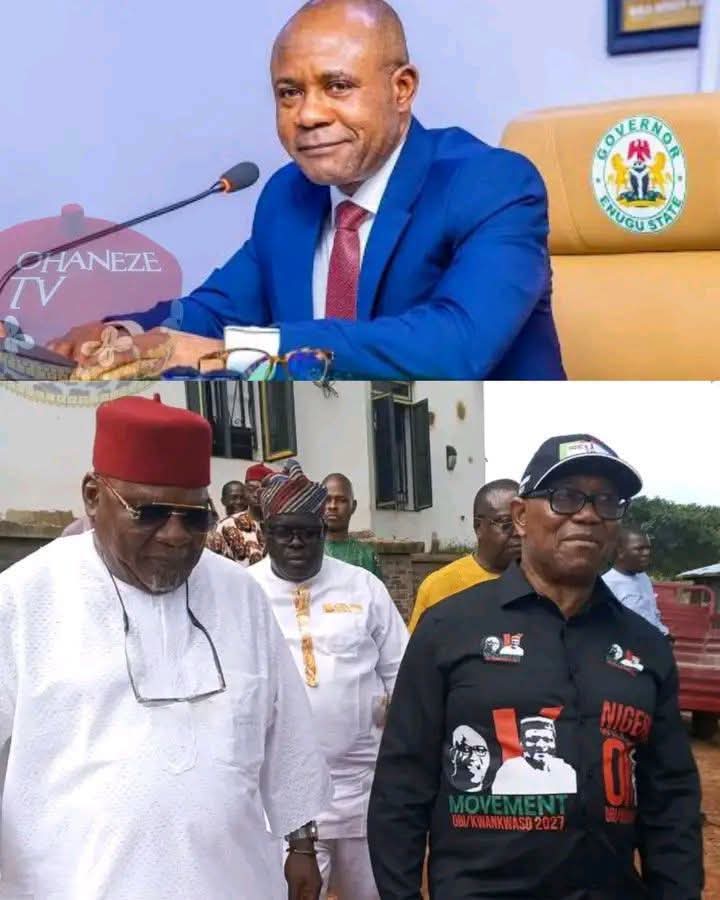
The Enugu State Government has suspended His Royal Majesty, Igwe Eze William Ezugwu, the traditional ruler of Ibagwa Ogbozalla Opi Autonomous Community, in Nsukka Local Government Area of Enugu state.
The state government accused Igwe Ezugwu of violating provisions of the state’s Traditional Rulers Law.
In a letter of suspension dated September 24, the Enugu State Government cited his alleged failure to constitute his cabinet, failure to establish a Town Union governing body, and persistent conduct deemed inconsistent with the laws governing traditional rulers in the state.
The suspension comes barely three weeks after Igwe William Ezugwu received NDC presidential candidate Peter Obi at his palace in Opi, Nsukka LGA, where he reportedly blessed Obi’s presidential ambition.
The Deputy Commander of Operation Rainbow, CSP (Chief Superintendent of Police) Dennis David Babale, has been killed after gunmen suspected to be Fulani Bandits ambushed personnel of the security outfit along the Bokkos-Barkin Ladi road in Barkin Ladi Local Government Area of Plateau State.
Operation Rainbow is a State-backed community security and intelligence-gathering outfit in Plateau State, Nigeria, originally established in 2010 under former Governor Jonah Jang and recently revamped by Governor Caleb Mutfwang to combat rural violence and beef up grassroots security.
The incident reportedly occurred at about 4:06 p.m. on Tuesday, September 22, 2026 when the personnel, travelling in a Toyota Hilux vehicle, came under attack by unidentified gunmen.
Troops of Sector 4, Operation ENDURING PEACE (OPEP), responded to a distress report and moved to the location of the attack.
Sources told reporters that Babale sustained gunshot wounds during the ambush and was evacuated to the General Hospital, Barkin Ladi, for medical attention.
Following the attack, troops, working alongside personnel of other security agencies, launched offensive operations and a manhunt for the assailants within the general area.
Security forces have intensified efforts to track the attackers and prevent further attacks along the route.

Director General/CEO of the Nigerian Meteorological Agency (NiMet) and Nigeria’s Permanent Representative at the World Meteorological Organization, Prof. Charles Anosike and other Chief Executive Officers of similar agencies across the world, have concluded a one week high level dialogue on Climate Science Information for Climate Finance and the 53rd Senior Official Field Exchange (SOFE) in Beijing, China.
The event which was hosted by World Meteorological Organization (WMO), took place from September 14 to 18, 2026 and featured discussions on: strengthening the role and leadership development of National Meteorological and Hydrological Services (NMHSs) in mobilizing climate finance; aligning scientific and technical capabilities with risk-informed, people-centred early warning systems; shifting from technical assistance to sustainable investments by expanding practical cooperation between meteorological frameworks and multilateral financing entities; and support to NMHSs leadership on strengthening strategic thinking and fostering productive partnerships.
Held back-to-back with the High-level dialogue was the 53rd Senior Official Field Exchange to Fujian Province for first-hand exposure to the implementation of Multi-hazard, Alert, Zero-gap and Universal (MAZU) platform – China’s AI-driven meteorological early warning solution in support of the Early Warnings for All (EW4All) initiative and disaster risk reduction practices through technical exchanges, field visits and peer learning.
-

 News2 years ago
Senate to speed up conclusion of Nigeria Forest Security Service Bill
-
 News1 year ago
The Many Lies Against Bashir Haske
-
 News3 years ago
“Anytime we want to kill terrorists, President would ask us to take permission from France but they were killing our soldiers-” Niger Republic coup leader
-
 News3 years ago
“I’m leaving the Catholic church because Bishop Onah is oppressing me,” says Okunerere
-

 News3 years ago
My nude photo leak was a mistake- lawyer Ifunanya
-
 News4 months ago
See your state governor’s performance ranking
-

 News3 years ago
Radio Nigeria’s veteran broadcaster Kelvin Ugwu dies three months after retirement from service
-
 News3 years ago
Dokpesi and the Gazebo Mystique