
News
Rebirth of Nigerian Meteorological Agency: Sustaining Climate Science For Action


By Bonaventure Phillips Melah
For the management of Nigerian Meteorological Agency (NiMet), the past two years and a few months, have been marked by unprecedented achievements while the workers are counting the many bountiful harvests that are outcomes of the initiatives, policies, reforms and schemes which combined to bring them enhanced welfare, skills acquisition and overall wellbeing.
Perhaps, especially for workers, the greatest landmark achievement of the Anosike-led management of NiMet so far, is the recent approval by the federal government, of a new consolidated salary structure and reviewed conditions of service which have continued to attract positive reactions from industry workers and other stakeholders across the country.
The approvals were contained in a letter written by the Secretary to the Government of the Federation (SGF) and addressed to the Chairman, National Salaries, Incomes and Wages Commission, stating that the federal government had approved the recommended consolidated salary structure for NiMet with an effective date of June 1, 2026 as well a new Staff Condition of Service for the agency.
Available records show that NiMet’s condition of service was last reviewed 28 years ago. Efforts by past managements of the agency for a review of the all-important document were all muffled by bureaucratic bottlenecks, thereby leaving the taste of ash in the mouth of the workers.
Prof. Charles Anosike was appointed as the Chief Executive Officer of NiMet by His Excellency, President Bola Tinubu, GCFR, in December 2023. Since then, it has been stories of one milestone achievement to the other. Anosike also served as Nigeria’s Permanent Representative at the World Meteorogical Organization (WMO).
Some of Anosike’s bold footprints at NiMet in the past two years include infrastructure upgrade which has resulted in installation of high-grade modern machines as well as digitalization of operations on climate and weather forecast, early warning mechanisms and digitalization of the Seasonal Climate Predictions (SCP) presentation and the ICT Unit.
The management has invested impressively on capacity development and professionalism through constant training and retraining of staff to ensure that operations comply with international best practices and at optimal standards.
Within the period under review, NiMet has also become a preferred destination for young men and women, from Nigeria and across West Africa, seeking careers in meteorology related fields. The above is achieved through the World Meteorological Organisation (WMO) Regional Training Centre, Oshodi Lagos and Meteorological Institute of Science and Technology (MBMIST) located in Katsina State which are both operated by the agency.
Following the massive transformation carried out by NiMet’s management, the National Board for Technical Education (NBTE), has accredited courses offered at the two institutions which offer National Diploma Certificates while they are being expanded to Post Graduate Diploma (PGD) awarding schools as well as transmute from monotechnic to polytechnics.
As its name implies, the WMO Regional Training Centre admits students from Nigeria and other West African countries. The school is dedicated to enhancing global capacity to observe, understand and predict weather, climate and water-related phenomena while Katsina based MBMIST offers a range of diploma programs in meteorology and climate that are compliant with NBTE, WMO and ISO standards.
Just a few days ago, Prof. Anosike was honoured with the 2026 Educational Excellence Award for his outstanding leadership and several initiatives aimed at advancing education. At the award ceremony which took place Monday, May 11, 2026 at the Faculty of Education, Federal University, Oye- Ekiti. Ekiti state, Anosike was praised for turning meteorological science into learning, training, and capacity that reaches classrooms, universities, and young professionals across the country.
As NiMet CEO, Anosike has led a transformative push to make climate data more actionable, inclusive, and accessible. Currently, early warning systems have been significantly upgraded to provide timely, impact-based forecasts that help mitigate the effects of floods, droughts, and other extreme weather events.
These systems are not only more accurate, they are now reaching farmers, local governments, and disaster managers in real time, often through digital platforms and mobile networks. The management has also championed the use of digital climate advisory services and AI-powered forecasting tools to deliver tailored weather insights, especially to small holder farmers who are among the most vulnerable to climate shocks. By translating forecasts into local languages and formats, NiMet is breaking down long-standing barriers in climate communication and ensuring that no community is left behind.
The above milestones have been made possible by Anosike approach of building partnerships across universities, development agencies, and the private sector to scale sustainable infrastructure, expand weather station networks, and train a new generation of climate scientists.
One of the most recent of the many strategic partnerships is a Memorandum of Understanding (MoU) NiMet signed with the Central Bank of Nigeria (CBN) on data sharing which took place at the apex bank’s headquarters in Abuja on Wednesday, May 13, 2026.
While NiMet’s team was led by Prof. Anosike, Dr. Mohammed Sani Abdullahi, Deputy Governor, Economic Policy Directorate, was head of CBN’s side.
Speaking at the event, Prof. Charles Anosike highlighted the importance of integrating weather and climate data into economic research, especially in sectors such as agriculture, energy, and transportation. He noted that extreme weather events can reduce agricultural productivity and threaten food security.
He added that the collaboration aligns with the Renewed Hope Agenda of President Bola Ahmed Tinubu GCFR, which prioritizes food security through major agricultural investment, including the cultivation of 10 million hectares of land and the distribution of mechanised equipment.
Prof. Anosike cited the World Bank (2026), which reports that extreme weather driven by climate change is significantly affecting global food security, with more than 87 million people facing hunger in East and Southern Africa and 52 million in West and Central Africa. He also referenced the Berkeley Earth Report (2026), which projects that 2026 is likely to be the fourth warmest year on record, a trend that continues to shape agricultural and energy market projections.
In his remarks, Muhammad said the signing of the MoU marked an important step in strengthening the partnership between two key national institutions whose mandates intersect in data, research, and policy support. He emphasized that, in an increasingly complex and dynamic economic environment, timely and reliable data remain essential for effective policy decisions.
He further noted that the Economic Policy Directorate relies heavily on timely and credible statistical information from NiMet. Such data, he said, are critical for inflation monitoring, agricultural sector assessment, and broader economic policy advisory functions. He described the initiative as both timely and important, adding that strong institutional partnerships are essential for strengthening evidence-based policymaking and improving the robustness of national data systems.
Anosike has also been a vocal advocate for integrating climate risk into urban planning and sustainability reporting, pushing institutions and businesses to take a proactive stance on resilience.
Apart from institutional transformation ongoing in NiMet, the management has focused serious attention on workers welfare and overall performance upscale through yearly training programme for all staff; payment of their subsistence benefits; payment of furniture grants; payment of inherited 45 months minimum wage arrears covering 2019, 2020, 2021 and 2022; introduction of send-forth honours-gathering for retiring officers; introduction of staff bus services covering major routes including Kuje, Gwagwalada, Mararaba and Kubwa; improved management–staff relations through periodic and sustained engagement and consultation with staff unions and stakeholders; introduction of a seamless pay-slip management system and improved refresher courses for meteorologists and observers. The list is endless.
On the other hand, there is now a burden on NiMet workers and their various labour unions, to recommit themselves to hard work, loyalty and dedication to duty, as a practical show of appreciation to President Bola Tinubu, GCFR, the Minister of Aviation and Aerospace Management, Barrister Festus Keyamo, SAN and Professor Charles Anosike, their Chief Executive Officer, for the monumental transformations going on in NiMet. As they say, ‘To whom much is given, much more is expected.’
Bonaventure Phillips Melah is an Abuja based journalist and public affairs analyst. bonamelah123@gmail.com 08036062975
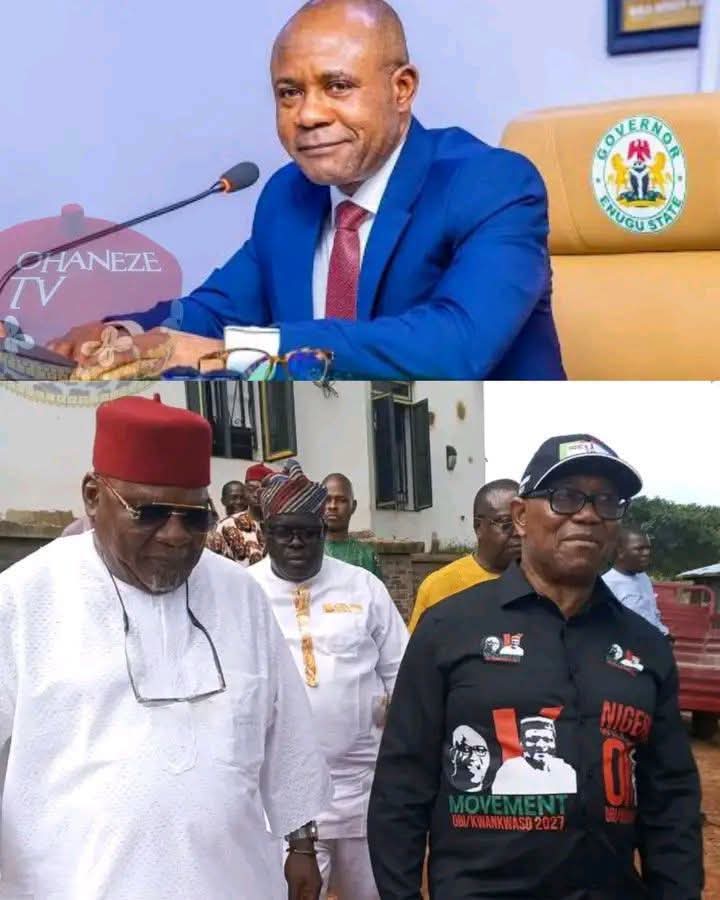
The Enugu State Government has suspended His Royal Majesty, Igwe Eze William Ezugwu, the traditional ruler of Ibagwa Ogbozalla Opi Autonomous Community, in Nsukka Local Government Area of Enugu state.
The state government accused Igwe Ezugwu of violating provisions of the state’s Traditional Rulers Law.
In a letter of suspension dated September 24, the Enugu State Government cited his alleged failure to constitute his cabinet, failure to establish a Town Union governing body, and persistent conduct deemed inconsistent with the laws governing traditional rulers in the state.
The suspension comes barely three weeks after Igwe William Ezugwu received NDC presidential candidate Peter Obi at his palace in Opi, Nsukka LGA, where he reportedly blessed Obi’s presidential ambition.
The Deputy Commander of Operation Rainbow, CSP (Chief Superintendent of Police) Dennis David Babale, has been killed after gunmen suspected to be Fulani Bandits ambushed personnel of the security outfit along the Bokkos-Barkin Ladi road in Barkin Ladi Local Government Area of Plateau State.
Operation Rainbow is a State-backed community security and intelligence-gathering outfit in Plateau State, Nigeria, originally established in 2010 under former Governor Jonah Jang and recently revamped by Governor Caleb Mutfwang to combat rural violence and beef up grassroots security.
The incident reportedly occurred at about 4:06 p.m. on Tuesday, September 22, 2026 when the personnel, travelling in a Toyota Hilux vehicle, came under attack by unidentified gunmen.
Troops of Sector 4, Operation ENDURING PEACE (OPEP), responded to a distress report and moved to the location of the attack.
Sources told reporters that Babale sustained gunshot wounds during the ambush and was evacuated to the General Hospital, Barkin Ladi, for medical attention.
Following the attack, troops, working alongside personnel of other security agencies, launched offensive operations and a manhunt for the assailants within the general area.
Security forces have intensified efforts to track the attackers and prevent further attacks along the route.

Director General/CEO of the Nigerian Meteorological Agency (NiMet) and Nigeria’s Permanent Representative at the World Meteorological Organization, Prof. Charles Anosike and other Chief Executive Officers of similar agencies across the world, have concluded a one week high level dialogue on Climate Science Information for Climate Finance and the 53rd Senior Official Field Exchange (SOFE) in Beijing, China.
The event which was hosted by World Meteorological Organization (WMO), took place from September 14 to 18, 2026 and featured discussions on: strengthening the role and leadership development of National Meteorological and Hydrological Services (NMHSs) in mobilizing climate finance; aligning scientific and technical capabilities with risk-informed, people-centred early warning systems; shifting from technical assistance to sustainable investments by expanding practical cooperation between meteorological frameworks and multilateral financing entities; and support to NMHSs leadership on strengthening strategic thinking and fostering productive partnerships.
Held back-to-back with the High-level dialogue was the 53rd Senior Official Field Exchange to Fujian Province for first-hand exposure to the implementation of Multi-hazard, Alert, Zero-gap and Universal (MAZU) platform – China’s AI-driven meteorological early warning solution in support of the Early Warnings for All (EW4All) initiative and disaster risk reduction practices through technical exchanges, field visits and peer learning.
-

 News2 years ago
Senate to speed up conclusion of Nigeria Forest Security Service Bill
-

 News1 year ago
The Many Lies Against Bashir Haske
-

 News3 years ago
Breaking: Tinubu’s authentic ministerial nominees
-

 News3 years ago
“Anytime we want to kill terrorists, President would ask us to take permission from France but they were killing our soldiers-” Niger Republic coup leader
-

 News3 years ago
“I’m leaving the Catholic church because Bishop Onah is oppressing me,” says Okunerere
-

 News3 years ago
My nude photo leak was a mistake- lawyer Ifunanya
-
 News4 months ago
See your state governor’s performance ranking
-

 News3 years ago
Radio Nigeria’s veteran broadcaster Kelvin Ugwu dies three months after retirement from service