
News
Tinubu celebrates 27 years of uninterrupted democracy in Nigeria

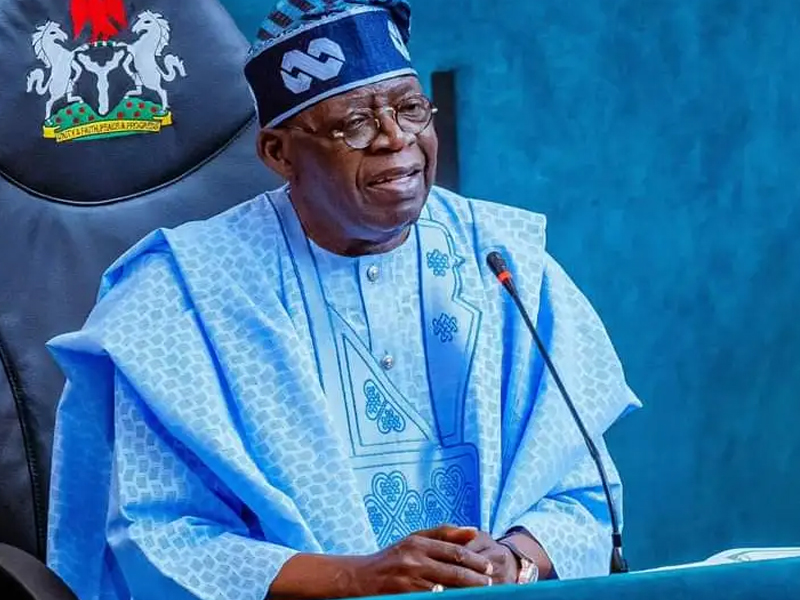
President Bola Ahmed Tinubu on Friday celebrated 27 years of uninterrupted democracy in Nigeria and used the occasion of 2026 June 12 Democracy Day address to reaffirm commitment to economic reforms and security operations.
The President also announced national honours for dozens of pro-democracy activists and military officers who played roles in the June 12 struggle.
Tinubu said Nigeria had achieved its longest uninterrupted period of civilian rule since the return to democracy on May 29, 1999, noting that political disagreements are now largely resolved through constitutional institutions rather than violence.
“Today, we celebrate not only democracy but also the enduring Nigerian spirit,” Tinubu said. “For 27 unbroken years, since May 29, 1999, Nigerians have chosen their leaders through the ballot, witnessed peaceful transitions of power, and resolved disagreements in courtrooms and legislative chambers—not through violence.”
The national honours recipients include two former The Guardian editors, Lade Bonuola and Femi Kusa.
Others are: Barrister Ayoka Lawani; Tunde Fagbenle; Oladele Alake; Olatunji Bello; Louis Odion; Segun Babatope; Sam Omatseye; Sir Ademola Osinubi; Bola Bolawole; Debo Adeniran; Chief Ayo Opadokun; Chief Ralph Obiora; Ose Osayande; Barrister Osa Director; Prof. Sylvester Odion-Akhaine; Dr Arthur Nwankwo (Posthumous); Dr Osagie Obayuwana; Dr Joe Okei-Odumakin; Barrister Titus Mann; Joe Igbokwe; Richard Akinnola; Ben Charles-Obi (Posthumous); George Mbah; Dr Niran Malaolu; Major-General Ishola Williams (rtd); Femi Aborisade; Jenkins Alumona; Gbemiga Ogunleye; Muyiwa Adekeye; Babajide Kolade-Otitoju; Ike Okonta
The “soldier-democrats of the June 12 struggle” are: Major General MA Garba; Brigadier General Lawal Jaafaru Isa; Col Umar Farouk Ahmed; Col Sambo Dasuki; Col Lawan Gwadabe; Brigadier Jonathan Ndam Temlong; Col Musa Shehu; Major General Chris Eze; Major General Harris Dzarma; Col Isa Jibrin; Maj. General Joseph Oshanupin; Col Olusegun Oloruntoba; Lieutenant Colonel Happy Kefas Bulus; Col J Okai; Col Emmanuel Ndubueze; Lt Col Yakubu Muazu; and Brigadier Yahaya Abubakar.
The President urged stakeholders to ensure peaceful and credible governorship elections in Ekiti and Osun states, calling on the Independent National Electoral Commission (INEC), security agencies and political parties to protect public confidence in the electoral process.
He also appealed to the National Assembly, judiciary, media and civil society organisations to continue defending democratic institutions, stressing that criticism and disagreement remain essential components of democracy.
Addressing young Nigerians, Tinubu urged them to invest their talents and aspirations in the country, encouraging them to build businesses, pursue careers and participate actively in the democratic process.
The President commended members of the armed forces, police and intelligence services for their sacrifices, while also acknowledging the roles played by traditional rulers, religious leaders and community heads in promoting peace and reconciliation across the country.
Tinubu devoted a significant portion of his address to security challenges, particularly the recent abductions of children in Oyo and Borno states, which he said had cast a shadow over this year’s Democracy Day celebrations.
“Though this year’s mood is dampened by the abduction of our children in Oyo and Borno, we remain hopeful for their safe return,” he said.
Reaffirming his administration’s commitment to tackling insecurity, the President said the government had declared a security emergency and approved the recruitment of more than 50,000 police officers alongside thousands of military recruits.
According to him, the 2026 budget allocates N5.41 trillion to defence and security, representing the highest security expenditure in Nigeria’s history.
Tinubu said security operations had evolved from training exercises with international partners to precision-targeting missions against terrorist groups. He cited military action in Arege, Borno State, where he said the command centre of the Islamic State West Africa Province (ISWAP) had been degraded.
The President stated that terror-related deaths had fallen by 81 per cent since 2015 and that more than 13,000 terrorists had been neutralised in the past year. He added that over 124,000 fighters and their dependents had surrendered through Operation Safe Corridor since 2023.
Issuing a warning to criminal groups, Tinubu said bandits, kidnappers and sponsors of terrorism must either surrender or face decisive action from the state.
“Crime has no ethnicity,” he said, urging Nigerians to remain united against insecurity and expressing confidence that the country would eventually overcome terrorism and violent crime.
Reflecting on the significance of June 12, the President said, “June 12 occupies a sacred place in our national memory. It represents more than an election; it is a defining chapter in our story. We remember Chief M.K.O. Abiola, who won a pan-Nigerian mandate transcending ethnicity and religion. We remember Alhaja Kudirat Abiola.
“We also remember Chief Gani Fawehinmi, Chief Bola Ige, Chief Alfred Rewane, Pa Abraham Adesanya, Chief Anthony Enahoro, Alhaji Balarabe Musa, Commodore Dan Suleiman, Dr Beko Ransome-Kuti, Frank Kokori, Arthur Nwankwo, Chima Ubani, Shehu Musa Yar’Adua, and the many other heroes and heroines of democracy whose sacrifices helped secure the freedoms we enjoy today.”
He added, “As beneficiaries of their struggle, we have a duty to strengthen and deepen the democratic institutions for which they fought. The greatest tribute we can pay is to build a Nigeria where freedom is protected, justice is upheld, opportunity is expanded, and government is accountable.”
Turning to the economy, Tinubu said the central challenge facing the current generation was to secure economic freedom in the same way previous generations secured independence and democracy.
He argued that democracy must be reflected in the living conditions of ordinary Nigerians through employment opportunities, agricultural productivity, entrepreneurial success and improved welfare.
The President defended the economic reforms introduced since 2023, saying they were adopted out of necessity rather than convenience. According to him, the country inherited severe fiscal pressures, weak investor confidence and economic uncertainty.
He said reforms implemented by the administration had restored stability and credibility to economic management, increased federation revenues and provided state and local governments with greater resources for infrastructure, education, healthcare and security.
Tinubu also claimed that fiscal transparency had improved and that leakages in public finance had been reduced.
He further stated that investor confidence had strengthened, resulting in increased investments across agriculture, energy, manufacturing, technology, mining, transportation and the creative sector.
On energy, the President said domestic refining capacity had expanded, reducing dependence on imported petroleum products and improving energy security.
He described the electricity sector inherited by his administration as one burdened by generation shortfalls, unreliable gas supply, weak transmission infrastructure, heavy losses by distribution companies, a metering deficit exceeding four million customers and significant legacy debts.
Tinubu said the Electricity Act signed by his administration empowered States to generate, transmit and distribute electricity, while the Presidential Power Sector Task Force was working to reduce the metering gap.
He disclosed that the task force had been authorised to raise a N4 trillion bond to settle verified legacy debts in the sector.
The President added that the Rural Electrification Agency, with support from the World Bank and the African Development Bank, had expanded off-grid and mini-grid electricity projects to underserved communities, markets, universities and hospitals.
He also highlighted infrastructure and agricultural initiatives, including the deployment of 10,000 tractors over five years through the National Agricultural Development Fund, certification of more than 1,000 small and medium-sized enterprises for export and a reported 21 per cent increase in non-oil exports last year.
Despite these developments, Tinubu acknowledged that many Nigerians continue to experience economic hardship.
He said the government remained focused on reducing inflation, increasing food production, creating jobs and improving living standards, while rebuilding confidence in the economy.
The President also linked insecurity to weaknesses in grassroots governance and reiterated his administration’s support for financial autonomy for the country’s 774 local government councils.
As part of the Democracy Day celebrations, Tinubu announced the Federal Government’s approval of the revitalisation and renaming of the completed Institute of Petroleum Studies, Kaduna, as the General Shehu Musa Yar’Adua University of Geological Sciences and Engineering Technology.
Concluding the address, Tinubu said Nigeria’s diversity, once viewed by many as a challenge to democratic survival, had become a source of democratic strength.
“The road ahead is steep,” he said. “But June 12 reminds us: Nigerians do not break. We bend, we bleed, but we do not break.”
He called on citizens to renew their commitment to national unity, democratic governance and prosperity, saying the task of the present generation is to secure a more prosperous future for all Nigerians.
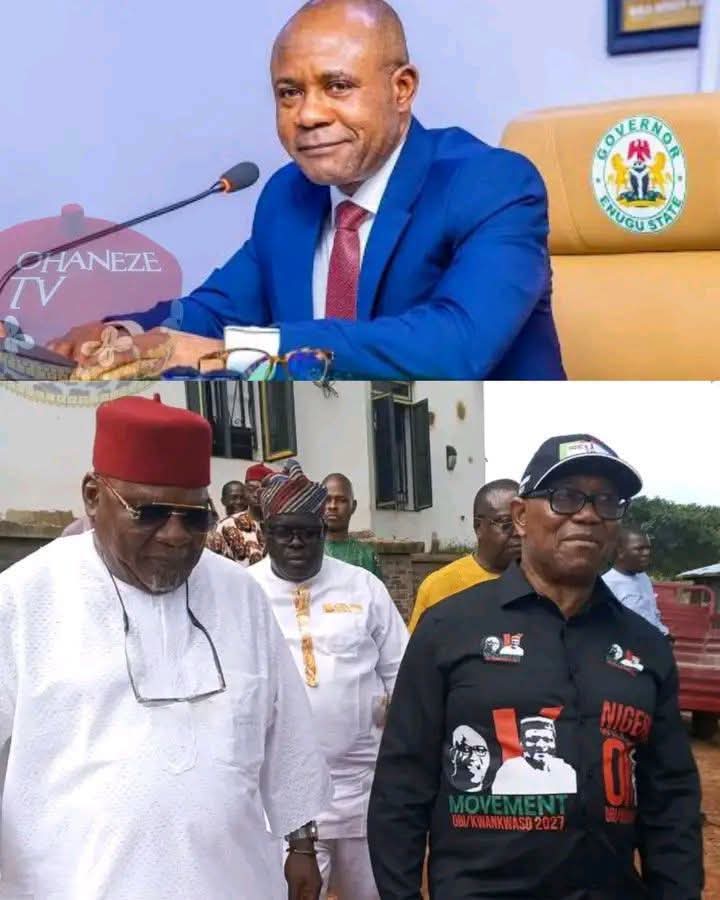
The Enugu State Government has suspended His Royal Majesty, Igwe Eze William Ezugwu, the traditional ruler of Ibagwa Ogbozalla Opi Autonomous Community, in Nsukka Local Government Area of Enugu state.
The state government accused Igwe Ezugwu of violating provisions of the state’s Traditional Rulers Law.
In a letter of suspension dated September 24, the Enugu State Government cited his alleged failure to constitute his cabinet, failure to establish a Town Union governing body, and persistent conduct deemed inconsistent with the laws governing traditional rulers in the state.
The suspension comes barely three weeks after Igwe William Ezugwu received NDC presidential candidate Peter Obi at his palace in Opi, Nsukka LGA, where he reportedly blessed Obi’s presidential ambition.
The Deputy Commander of Operation Rainbow, CSP (Chief Superintendent of Police) Dennis David Babale, has been killed after gunmen suspected to be Fulani Bandits ambushed personnel of the security outfit along the Bokkos-Barkin Ladi road in Barkin Ladi Local Government Area of Plateau State.
Operation Rainbow is a State-backed community security and intelligence-gathering outfit in Plateau State, Nigeria, originally established in 2010 under former Governor Jonah Jang and recently revamped by Governor Caleb Mutfwang to combat rural violence and beef up grassroots security.
The incident reportedly occurred at about 4:06 p.m. on Tuesday, September 22, 2026 when the personnel, travelling in a Toyota Hilux vehicle, came under attack by unidentified gunmen.
Troops of Sector 4, Operation ENDURING PEACE (OPEP), responded to a distress report and moved to the location of the attack.
Sources told reporters that Babale sustained gunshot wounds during the ambush and was evacuated to the General Hospital, Barkin Ladi, for medical attention.
Following the attack, troops, working alongside personnel of other security agencies, launched offensive operations and a manhunt for the assailants within the general area.
Security forces have intensified efforts to track the attackers and prevent further attacks along the route.

Director General/CEO of the Nigerian Meteorological Agency (NiMet) and Nigeria’s Permanent Representative at the World Meteorological Organization, Prof. Charles Anosike and other Chief Executive Officers of similar agencies across the world, have concluded a one week high level dialogue on Climate Science Information for Climate Finance and the 53rd Senior Official Field Exchange (SOFE) in Beijing, China.
The event which was hosted by World Meteorological Organization (WMO), took place from September 14 to 18, 2026 and featured discussions on: strengthening the role and leadership development of National Meteorological and Hydrological Services (NMHSs) in mobilizing climate finance; aligning scientific and technical capabilities with risk-informed, people-centred early warning systems; shifting from technical assistance to sustainable investments by expanding practical cooperation between meteorological frameworks and multilateral financing entities; and support to NMHSs leadership on strengthening strategic thinking and fostering productive partnerships.
Held back-to-back with the High-level dialogue was the 53rd Senior Official Field Exchange to Fujian Province for first-hand exposure to the implementation of Multi-hazard, Alert, Zero-gap and Universal (MAZU) platform – China’s AI-driven meteorological early warning solution in support of the Early Warnings for All (EW4All) initiative and disaster risk reduction practices through technical exchanges, field visits and peer learning.
-

 News2 years ago
Senate to speed up conclusion of Nigeria Forest Security Service Bill
-
 News1 year ago
The Many Lies Against Bashir Haske
-

 News3 years ago
Breaking: Tinubu’s authentic ministerial nominees
-
 News3 years ago
“Anytime we want to kill terrorists, President would ask us to take permission from France but they were killing our soldiers-” Niger Republic coup leader
-
 News3 years ago
“I’m leaving the Catholic church because Bishop Onah is oppressing me,” says Okunerere
-

 News3 years ago
My nude photo leak was a mistake- lawyer Ifunanya
-
 News4 months ago
See your state governor’s performance ranking
-

 News3 years ago
Radio Nigeria’s veteran broadcaster Kelvin Ugwu dies three months after retirement from service