
News
27 Years of Nigeria’s Democratic Journey

News commentary by Victorson AgbensWhen on May 29th, 1999, Nigeria returned to democracy with President Olusegun Obasanjo, a civil war hero, on the saddle, not many Nigerians could boldly say that the experiment would last long.
Previous democratic efforts had failed *within* few years. The first republic which took off in 1960 ended in bloodshed just six years down the line in 1966. The second was not different, neither was the third.
Today, that seemingly shaky, unsure footing of the current *fourth* republic has however lasted for almost three decades despite the fact that democracies across the world are increasingly facing daunting challenges.
Some of Nigeria’s *closest* West African neighbours have in fact, fallen back into military dictatorships. These include Niger, Mali, Burkina Faso and Guinea.
In the United Kingdom, which colonized Nigeria until 1960, multiculturalism has generated anxieties about identity and belonging, feeding insular politics and the rise of white extremist resistance.
France is facing similar tensions, where debates over secularism, immigration and national identity have strained republican ideals.
In the United States, democratic stress has taken the form of populist backlash, so visibly in the Donald Trump-led “Make America Great Again,” MAGA movement, which reflects deep distrust of institutions and elites.
Scholars such as Alexis de Tocqueville have long warned that democracy carries its own inner tensions, especially when equality conflicts with fear and resentment.
Similar factors like *those* highlighted by Tocqueville keep playing out amongst major tribes and political divides in Nigeria, a country where centrifugal forces *have been* pulling at the soul of the nation for a long time.
In Europe and America, it is either the villains are scapegoating the intellectuals and social activists or the business elite, or, most dangerously, minority groups. This has always been so, and It does not seem as if it would change.
In *the United States* today, President Donald Trump’s leadership style seem to have reaffirmed the belief that Liberal Democracy’s mortal flaw is its susceptibility to the machinations of what some refer to as the demagogue.
Nigeria is not an exception to these global patterns, but our problems seem more pronounced because of our peculiar history.
Colonialism created deep fault lines by forcing diverse peoples into a single political structure without a shared civic foundation, vision, drive and orientation.
After independence, these cracks were widened by the indiscipline,
recklessness and greed of the political elite , weak institutions, and a largely uneducated citizenry without patriotic zeal.
Samuel Huntington described this condition where institutions fail to keep pace with social change as political decay.
The messianic style military administration of the Buhari- Idiagbon era came with the slogan of War Against Indiscipline, WAI.
The late General *Sani* Abacha came and added corruption to the slogan becoming, War Against Indiscipline and Corruption . Nigerians inadvertently rejected all these as coups and counter coups took the centre stage. At last, the nation got fed up with the military and returned to democracy in 1999 after the June 12 watershed political tragedy of Chief Moshood Kashimawo Olawale Abiola.
In Nigeria, democracy has not really been seen as a stabilising ideal but more like a constant struggle, not because democracy itself is the problem, but because it has been poorly managed and repeatedly abused.
One thing that was clear from the formation and colouration of a recent alleged coup plot was that those behind it wanted to *cash* in on the political and economic challenges of this period.
Following the confirmation of the aborted coup d’etat it was Nigerian born development expert and activist, Abdul Mahmud who wrote from his United Kingdom home saying: “every democracy goes through periods of stress, including the most advanced liberal democracies”
Yes, democracy does not mean immunity from economic challenges.
When President Tinubu took over on May 29th , 2023 he immediately announced the removal of petrol subsidy which every presidential aspirant and candidate in the 2023 elections as well as experts had all agreed was a gigantic drain pipe on our national resources.
The ensuing hardship is perhaps one of the sentiments upon which the coup plotters wanted to use in riding into power. That overwhelming economic debacle was already giving way to a rebound before the Middle East war led to another fuel price hike.
For many pundits, democracy is not an end in itself, good governance, better living and inclusivity should be the end point of democracy.
That is why some Nigerians feel that the current administration has not lived up to expectations in terms of quality of life of the ordinary *Nigerian*. (Preferably CITIZEN)But supporters say president Tinubu is taking the hard decisions for a better tomorrow.
No *doubt*, the nation was in dire financial conditions before Tinubu came with the removal of fuel subsidy policy, governors faced tough times paying salaries of workers as they besieged banks for loans to keep States running. But, today, states are getting much more funds from the federal government and no longer borrowing.
Therefore, the subsidy removal was a painful decision, but has been seen by some as the mark of true leadership and the courage to make difficult choices that cause short-term hardship in exchange for long-term gains.
So, as Nigeria continues to grapple with multilayered challenges, including widespread insecurity, such as *terrorism*, banditry and kidnapping, it must be made clear that military dictatorship is not an alternative to Nigeria’s current problems. It merely suppresses conflict without resolving its root causes. It inflicts deeper damage on institutions and civic culture.
As Robert Dahl and Jurgen Habermas have argued, democracy matures not by escaping conflict, but by learning how to manage it through strong institutions, accountability, and inclusive participation.
The task before *Nigerians* is therefore not to abandon democracy, but to confront the factors that have made it so difficult for us to operate it in a way that would bring maximum benefit to the greater number of people.
This requires regulating power, reinventing institutions, and correcting historical injustices, so that democracy becomes a true reality rather than a consistent state of crisis and disappointment to the populace.
For *a* newspaper Editor, Emmanuel Ogbeche “Multiculturalism is at a tipping point, but those who believe in the future must work towards its survival” Ogbeche therefore adds that the people of Nigeria must decide the kind democracy *they* wish to practice.
Some political watchers have advocated the strong man or charismatic leader kind of democracy for Nigeria. Others have however posited that it is strong institutions that build nations and not strong men. They are of the view that a strong man democracy would stabilize our system because of the peculiarities of our country, given the trajectory of the citizen’s penchant for indiscipline, cutting corners, corruption and stubbornness.
In almost three decades of our democratic journey, the nation should have outgrown some of the things being witnessed in the latest primary elections of political parties ahead of the 2027 general polls, which fell way below expectations. It means our democracy is not growing as it should.
As things stand, it is very clear that Liberal democracy will never survive income inequality. It is what gave rise to the Nazis and fascism in Germany, Italy and Spain.
We see that in America today, there *seems* to be a need to always scapegoat a group. But it is simplistic to want to blame any ruling administration for all the ills in the country. If it is as easy as that, past governments, both military and civilian would have created an eldorado of Nigeria by now.
Whatever it is, leaders must commit to taking the tougher road of building a more equitable economic and social order.
It is unfortunate that many politicians and their followers today have the posture of: if it is not us, then let it be destroyed.
If anyone is hailing the situation in some neighboring African countries where the military sacked Constitutional governments no matter how faulty they were, *then* that is the height of insensitivity and ignorance.
A threat to democracy anywhere is a threat to democracy everywhere.
If the successive coups had not taken place and the country had been left to progress steadily in learning the ropes of democratic governance , one can only imagine our level of progress by now. But we were impatient and see where it has brought us. Are we still going to remain impatient? Democracy is not a hundred metres dash, but a painstaking process that gets better by the day. It may be slow but *its* progress is more enduring and comprehensive.
As things stand, it is clear that Nigeria’s democracy, despite its impurities, will not succumb to any derailment again. Democracy has come to stay and will continue to flourish in Nigeria and the people would be better for it.
Nigeria’s 27 years on the path of democracy has been very fulfilling and rewarding, we have had robust discussions and disagreements, yet we have remained one indivisible country where transitions have become more stable with less rancour.
It was under this republic that a sitting president, Dr. Goodluck Jonathan was defeated in an election, and he willingly handed over power to late General *Muhammadu* Buhari.
No doubt Nigeria has come a full circle in its democratic journey. Twenty seven years is not a fluke and indeed its worth celebrating!
Agbenson is the Political Editor and General Manager FRCN Bronze FM Benin.
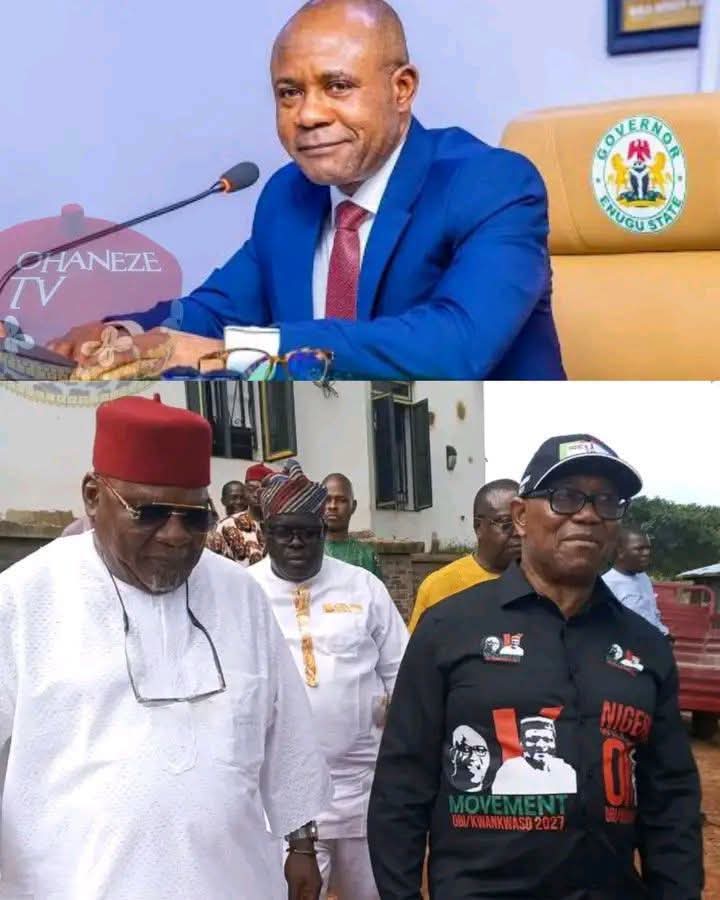
The Enugu State Government has suspended His Royal Majesty, Igwe Eze William Ezugwu, the traditional ruler of Ibagwa Ogbozalla Opi Autonomous Community, in Nsukka Local Government Area of Enugu state.
The state government accused Igwe Ezugwu of violating provisions of the state’s Traditional Rulers Law.
In a letter of suspension dated September 24, the Enugu State Government cited his alleged failure to constitute his cabinet, failure to establish a Town Union governing body, and persistent conduct deemed inconsistent with the laws governing traditional rulers in the state.
The suspension comes barely three weeks after Igwe William Ezugwu received NDC presidential candidate Peter Obi at his palace in Opi, Nsukka LGA, where he reportedly blessed Obi’s presidential ambition.
The Deputy Commander of Operation Rainbow, CSP (Chief Superintendent of Police) Dennis David Babale, has been killed after gunmen suspected to be Fulani Bandits ambushed personnel of the security outfit along the Bokkos-Barkin Ladi road in Barkin Ladi Local Government Area of Plateau State.
Operation Rainbow is a State-backed community security and intelligence-gathering outfit in Plateau State, Nigeria, originally established in 2010 under former Governor Jonah Jang and recently revamped by Governor Caleb Mutfwang to combat rural violence and beef up grassroots security.
The incident reportedly occurred at about 4:06 p.m. on Tuesday, September 22, 2026 when the personnel, travelling in a Toyota Hilux vehicle, came under attack by unidentified gunmen.
Troops of Sector 4, Operation ENDURING PEACE (OPEP), responded to a distress report and moved to the location of the attack.
Sources told reporters that Babale sustained gunshot wounds during the ambush and was evacuated to the General Hospital, Barkin Ladi, for medical attention.
Following the attack, troops, working alongside personnel of other security agencies, launched offensive operations and a manhunt for the assailants within the general area.
Security forces have intensified efforts to track the attackers and prevent further attacks along the route.

Director General/CEO of the Nigerian Meteorological Agency (NiMet) and Nigeria’s Permanent Representative at the World Meteorological Organization, Prof. Charles Anosike and other Chief Executive Officers of similar agencies across the world, have concluded a one week high level dialogue on Climate Science Information for Climate Finance and the 53rd Senior Official Field Exchange (SOFE) in Beijing, China.
The event which was hosted by World Meteorological Organization (WMO), took place from September 14 to 18, 2026 and featured discussions on: strengthening the role and leadership development of National Meteorological and Hydrological Services (NMHSs) in mobilizing climate finance; aligning scientific and technical capabilities with risk-informed, people-centred early warning systems; shifting from technical assistance to sustainable investments by expanding practical cooperation between meteorological frameworks and multilateral financing entities; and support to NMHSs leadership on strengthening strategic thinking and fostering productive partnerships.
Held back-to-back with the High-level dialogue was the 53rd Senior Official Field Exchange to Fujian Province for first-hand exposure to the implementation of Multi-hazard, Alert, Zero-gap and Universal (MAZU) platform – China’s AI-driven meteorological early warning solution in support of the Early Warnings for All (EW4All) initiative and disaster risk reduction practices through technical exchanges, field visits and peer learning.
-

 News2 years ago
Senate to speed up conclusion of Nigeria Forest Security Service Bill
-
 News1 year ago
The Many Lies Against Bashir Haske
-

 News3 years ago
Breaking: Tinubu’s authentic ministerial nominees
-
 News3 years ago
“Anytime we want to kill terrorists, President would ask us to take permission from France but they were killing our soldiers-” Niger Republic coup leader
-
 News3 years ago
“I’m leaving the Catholic church because Bishop Onah is oppressing me,” says Okunerere
-

 News3 years ago
My nude photo leak was a mistake- lawyer Ifunanya
-
 News4 months ago
See your state governor’s performance ranking
-

 News3 years ago
Radio Nigeria’s veteran broadcaster Kelvin Ugwu dies three months after retirement from service