News
Road Rebirth: How Governor Ododo is Leveraging Multilateral Partnership to Transform Road Infrastructure in Kogi State

By Ismaila Isah
In a bold move to bridge gaps in Kogi State’s road infrastructure and position it as a model of sustainable development, Governor Ahmed Usman Ododo has embarked on an ambitious strategy of leveraging multilateral partnerships to revitalize rural access, enhance connectivity, reverse environmental degradation and boost agricultural productivity anchored on local content.
While the state government is currently working on over 400 kilometers of township roads including roads in Omala, Idah, Bassa in Kogi East, Mopamuro, Egbe, Ijumu in Kogi West and in Okene, Okehi and Adavi in Kogi Central, there are currently over 200 kilometres of rural roads connecting about 50 communities across most of the agricultural belts in several local government areas in the state largely enabled by multilateral partnerships and strategic interventions.
Central to this vision innovative multilateral partnerships is the Agro-Climatic Resilience in Semi-Arid Landscape (ACReSAL) with its unprecedented erosion control projects at Etahi in Okene, Olubiojo in Ankpa, and Omigbo in Kabba, representing Kogi Central, East, and Western Senatorial zones respectively worth 29.9 Billion Naira. Equally pivotal is the Rural Access and Agricultural Marketing Project (RAAMP), which has already initiated construction of over 200 kilometres of rural access roads across the state.
These initiatives, implemented in collaboration with multilateral organizations such as the World Bank, African Development Bank (AfDB), and the Federal Government of Nigeria, among other donor agencies, are closely aligned with Governor Ododo’s campaign promises anchored on a commitment of not only transforming Kogi’s physical landscape but at the same time breathing new life into its economy by boosting agricultural output and creating jobs.
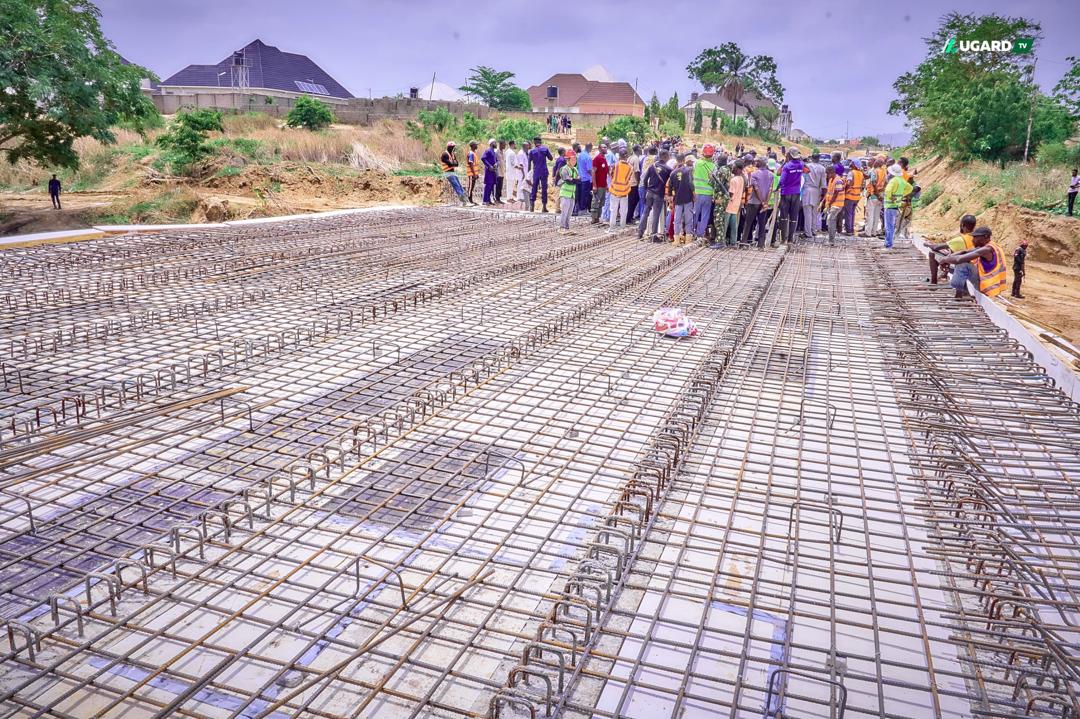
RAAMP, an initiative by the World Bank, and the Federal Ministry of Agriculture and Food Security, has emerged as a cornerstone of the administration’s strategy to link rural and agricultural production communities with markets and essential services. In October 2024, Governor Ododo flagged off the construction of 65 kilometres of rural access roads connecting major agro-producing communities in Lokoja, Adavi and Okehi local government areas.
Speaking during the flag-off ceremony at Apata, near Obajana, Governor Ododo emphasized that: “These rural roads are not just transport links, they are lifelines that connect our traders, farmers, and communities, fostering economic growth and food security.
By improving access, we are empowering farmers to compete in regional and national markets, thereby boosting incomes and reducing poverty.”
The Governor maintained that strategic connections to be enhanced by the project marked the beginning of a broader rural road network aimed at enhancing connectivity, lowering transportation costs for farmers, and improving access to markets.
True to the Governor’s manifesto, which pledged to explore innovative financing models such as public-private partnerships for roads and other public infrastructure, the RAAMP initiative is a textbook example, blending international donor support with state-driven priorities to address critical infrastructure gaps in the state.
While RAAMP tackles the rural connectivity challenge, ACReSAL focuses on another pressing concern: environmental degradation and the threat it poses to agricultural sustainability and peoples’ wellbeing. In Etahi, Olubiojo, and Omigbo, years of unchecked seasonal erosion have carved deep gullies, devastating farmlands, and displacing communities. In response, the ongoing ACReSAL environmental remediation projects funded by its partners like the World Bank and implemented in partnership with the Federal Ministry of Environment aim to restore these landscapes through bioengineering and climate-resilient techniques.
Governor Ododo harped on the significance of these projects when he noted: “We are not only building roads and bridges; we are building trust, inclusion, and ownership by ensuring our people benefit directly from the process.”
He further stated that the projects are not merely technical interventions but people-centered solutions designed for long-term impacts, as he stressed during the recent project inspection tour in Kogi Central, emphasizing that the administration has evolved a statewide scope of interventions.
“What we are doing in Kogi Central is also taking place in Kogi East and Kogi West. Our project monitoring teams are also conducting inspections in other parts of the state. We will continue to monitor, evaluate, and complete projects that matter to the people,” he said.
A testament to all-inclusiveness in the development of road infrastructure in the state is visible in the several rural road projects by RAAMP including the 24.1KM Ilai-Ifeolukotun road in Yagba East local government; 19.55KM Aku-Uro-Obajana road, 6.59KM Osara-Atami road, 6.83KM Elubi-Etiaja-Ajakwu- Ulaja road in Dekina local government area, 4.13KM Odidoko-Ugbamaka-Ubojo-Oloyo-Emakpe road in Olamaboro local government area, 16.03KM Eganyi-FFN road in Ajaokuta local government area, 1.33KM EMMCO-Umuaga road in Okene local government area, 2.41KM Aku-UrukuOdoba road in Adavi local government area and the 18.95KM Ibado Akpacha-Ojiaji-Ogudu road in Omala local government area.
These projects are serving as engines of economic empowerment, inclusion, and promoting local content in project delivery.
Current data reveals that over 5,000 skilled and semi-skilled youths are employed across the state, from road construction sites in Obajana, Omala, and Aku to erosion control sites in Ankpa, Okene, and Kabba-Bunu
As Benjamin Oguche, a mason working on one of the ACReSAL project sites in Ankpa, shared:
“I am working on the gully erosion control sites. They (the construction firm) taught us how to lay asphalt and use machinery. Now I can get similar jobs anywhere in the country.”
The ripple effects are already apparent. In Etahi, ongoing construction of roads coupled with erosion control have revitalized community life almost overnight. In Olubiojo and Omigbo, ACReSAL’s land restoration, now over 65% complete, has restored access to fertile lands previously lost to erosion, enabling a return to farming and food production.
As these projects progress across the state, they herald a new era for Kogi. Upon completion, RAAMP’s road networks will connect rural dwellers to schools, healthcare centres, and markets, while ACReSAL’s restoration efforts, supported by over three billion Naira in community revolving loans as well as plans to plant trees for reforestation on 10,000 hectares of land in the state, will safeguard Kogi’s agricultural productivity, the environment and the wellbeing of the people.
Overall, Governor Ododo’s administration is proving that strategic multilateral partnerships can turn campaign promises into tangible progress. By aligning international and national interventions with a clear, community-focused development agenda, he is not just bridging infrastructure gaps, he is building a new Kogi State where collective commitment to sustainability and shared prosperity become a reality for all.
Ismaila Isah is the Special Adviser on Media to the Governor of Kogi State.
….Writes NMDPRA, Engages Marketers to Stabilise Fuel Market
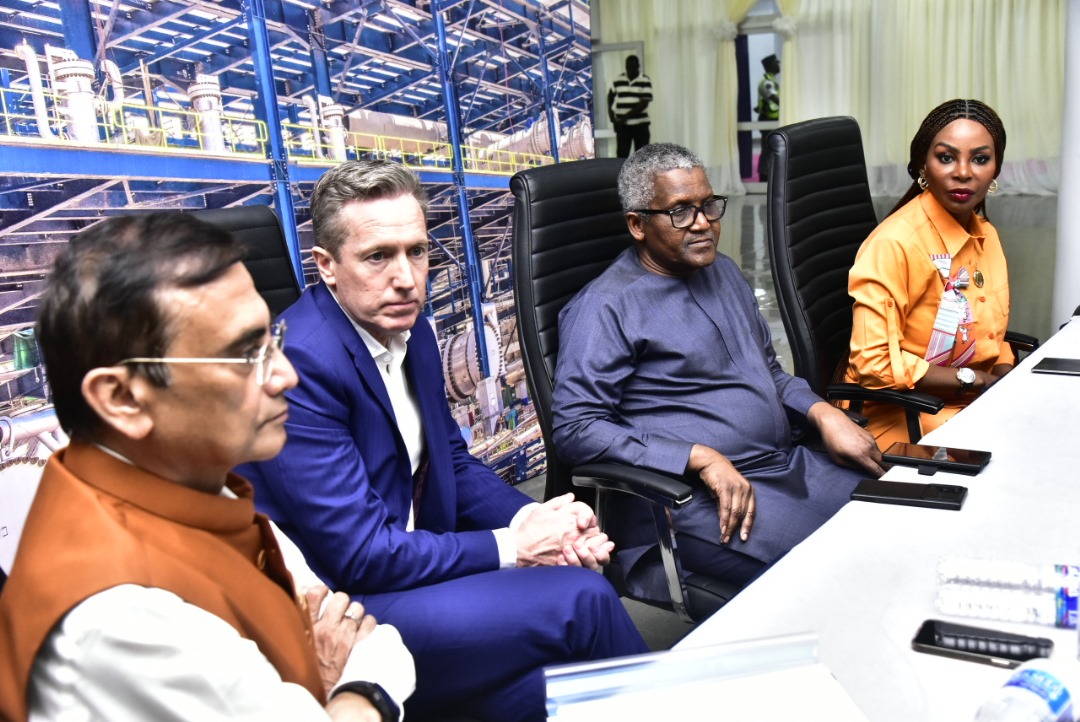
Photo caption: L R: Chief Executive Officer, Dangote Fertiliser Limited, Vishwajit Sinha; Chief Executive Officer and Managing Director, Dangote Petroleum Refinery, David Bird; President and Chief Executive, Dangote Industries Ltd, Aliko Dangote; Managing Director and Chief Executive Officer, South South Development Commission, Usoro Akpabio, during the visit of SSDC members to the Dangote Petroleum Refinery and Fertiliser Plant in Lagos on Sunday, November 30, 2025.
Dangote Petroleum Refinery has announced plans to supply one billion five hundred million litres of Premium Motor Spirit (PMS) monthly to the Nigerian market in December 2025 and January 2026, a move aimed at ensuring uninterrupted nationwide fuel availability through the festive season and into the New Year.
President and Chief Executive of Dangote Industries Limited, Aliko Dangote, disclosed the plans at the weekend, noting that the refinery will make available 50 million litres of PMS daily beginning December 1.
“In line with our commitment to national wellbeing, and consistent with our track record of ensuring a holiday season free of fuel scarcity, the Dangote Petroleum Refinery will supply 1.5 billion litres of PMS to the Nigerian market this month. This represents 50 million litres per day. We are formally notifying the Nigerian Midstream and Downstream Petroleum Regulatory Authority (NMDPRA) of this commitment. We will supply another 1.5 billion litres in January and increase to 1.7 billion litres in February, which translates to about 60 million litres per day,” Dangote said.
Photo caption: L R: President and Chief Executive, Dangote Industries Ltd, Aliko Dangote; Managing Director and Chief Executive Officer, South South Development Commission, Usoro Akpabio, during the visit of SSDC members to the Dangote Petroleum Refinery and Fertiliser Plant in Lagos on Sunday, November 30, 2025.
Speaking during a visit by the South-South Development Commission (SSDC) to the refinery and the Dangote Fertiliser complex, he stated that the facility currently has adequate stock and is producing between 40 and 45 million litres of PMS daily. He added that the daily supply of 50 million litres should dispel long-standing claims that domestic refineries lack the capacity to meet national demand.
Dangote also revealed ongoing engagement with petroleum marketers to strengthen distribution systems, including expanding the use of CNG-powered haulage.
“Our priority is to ensure Nigeria receives the products it needs. This is not driven by profit motives; it is about guaranteeing the availability of essential energy products. It is similar to the transformation we delivered in the cement sector,” he added.
He further noted that the refinery is progressing with its expansion plan to reach a capacity of 1.4 million barrels per day. More than 100,000 workers are expected to be involved in the expansion of both the refinery and the fertiliser complex. Dangote emphasised that the Group remains committed to its vision, driven by the strong public support for the company’s role in shaping Nigeria’s economic development.
During the visit, the Managing Director of SSDC, Usoro Offiong Akpabio, commended Dangote’s leadership and his continued contribution to strengthening Nigeria’s industrial capability, national energy security and long-term economic competitiveness.
She described the South-South region as Nigeria’s natural energy corridor, with vast crude oil reserves, gas infrastructure, maritime assets, agro-industrial activity and emerging industrial clusters. She noted that deeper collaboration between the region and the Dangote Group could unlock opportunities in product distribution, CNG infrastructure, petrochemicals, agriculture, and employment creation.
Akpabio added that such partnerships would advance the Federal Government’s energy stability agenda and position the South-South as a strategic growth hub for the Dangote Group.
“As the statutory development body for the South-South, SSDC is mandated to drive regional economic development, infrastructure integration, human capital advancement, and private-sector–led growth. In this regard, we stand prepared to support State-level policy and regulatory support for Ease-of-doing-business across our six states. Enabling environments for Dangote Group’s expansion into strategic sectors such as gas processing, agro-industrial value chains, renewable energy, logistics, and export-oriented manufacturing,” she said.
In a letter from the refinery’s Managing Director, David Bird, to the Authority Chief Executive of the NMDPRA, the company reaffirmed its readiness to host NMDPRA officials onsite at the refinery from December 1st to verify and publish its daily supply volumes. The refinery also sought the Authority’s support to ensure unhindered importation of crude, feedstocks and blending components, as well as smooth vessel loading for product evacuation.
“In the spirit of full transparency to the public we are willing to publish our daily production and stock volumes (online and print media),” Bird stated. “We seek the full support of NMDPRA to allow Dangote refinery to import our crude, feedstocks and blending components unhindered as well as support the lifting of our products by vessel. We continue to experience delays in vessel clearance which impacts not only the refinery operations but also our customers, adding unnecessary costs and inefficiencies”.
By Bonaventure Phillips Melah
Photo caption: L R: Chief Executive Officer, Dangote Fertiliser Limited, Vishwajit Sinha; Chief Executive Officer and Managing Director, Dangote Petroleum Refinery, David Bird; President and Chief Executive, Dangote Industries Ltd, Aliko Dangote; Managing Director and Chief Executive Officer, South South Development Commission, Usoro Akpabio, during the visit of SSDC members to the Dangote Petroleum Refinery and Fertiliser Plant in Lagos on Sunday, November 30, 2025.
Dangote Petroleum Refinery has announced plans to supply one billion five hundred million litres of Premium Motor Spirit (PMS) monthly to the Nigerian market in December 2025 and January 2026, a move aimed at ensuring uninterrupted nationwide fuel availability through the festive season and into the New Year.
President and Chief Executive of Dangote Industries Limited, Aliko Dangote, disclosed the plans at the weekend, noting that the refinery will make available 50 million litres of PMS daily beginning December 1.
“In line with our commitment to national wellbeing, and consistent with our track record of ensuring a holiday season free of fuel scarcity, the Dangote Petroleum Refinery will supply 1.5 billion litres of PMS to the Nigerian market this month. This represents 50 million litres per day. We are formally notifying the Nigerian Midstream and Downstream Petroleum Regulatory Authority (NMDPRA) of this commitment. We will supply another 1.5 billion litres in January and increase to 1.7 billion litres in February, which translates to about 60 million litres per day,” Dangote said.

Photo caption: LR: President and Chief Executive, Dangote Industries Ltd, Aliko Dangote; Managing Director and Chief Executive Officer, South South Development Commission, Usoro Akpabio, during the visit of SSDC members to the Dangote Petroleum Refinery and Fertiliser Plant in Lagos on Sunday, November 30, 2025.
Speaking during a visit by the South-South Development Commission (SSDC) to the refinery and the Dangote Fertiliser complex, he stated that the facility currently has adequate stock and is producing between 40 and 45 million litres of PMS daily. He added that the daily supply of 50 million litres should dispel long-standing claims that domestic refineries lack the capacity to meet national demand.
Dangote also revealed ongoing engagement with petroleum marketers to strengthen distribution systems, including expanding the use of CNG-powered haulage.
“Our priority is to ensure Nigeria receives the products it needs. This is not driven by profit motives; it is about guaranteeing the availability of essential energy products. It is similar to the transformation we delivered in the cement sector,” he added.
He further noted that the refinery is progressing with its expansion plan to reach a capacity of 1.4 million barrels per day. More than 100,000 workers are expected to be involved in the expansion of both the refinery and the fertiliser complex. Dangote emphasised that the Group remains committed to its vision, driven by the strong public support for the company’s role in shaping Nigeria’s economic development.
During the visit, the Managing Director of SSDC, Usoro Offiong Akpabio, commended Dangote’s leadership and his continued contribution to strengthening Nigeria’s industrial capability, national energy security and long-term economic competitiveness.
She described the South-South region as Nigeria’s natural energy corridor, with vast crude oil reserves, gas infrastructure, maritime assets, agro-industrial activity and emerging industrial clusters. She noted that deeper collaboration between the region and the Dangote Group could unlock opportunities in product distribution, CNG infrastructure, petrochemicals, agriculture, and employment creation.
Akpabio added that such partnerships would advance the Federal Government’s energy stability agenda and position the South-South as a strategic growth hub for the Dangote Group.
“As the statutory development body for the South-South, SSDC is mandated to drive regional economic development, infrastructure integration, human capital advancement, and private-sector–led growth. In this regard, we stand prepared to support State-level policy and regulatory support for Ease-of-doing-business across our six states. Enabling environments for Dangote Group’s expansion into strategic sectors such as gas processing, agro-industrial value chains, renewable energy, logistics, and export-oriented manufacturing,” she said.
In a letter from the refinery’s Managing Director, David Bird, to the Authority Chief Executive of the NMDPRA, the company reaffirmed its readiness to host NMDPRA officials onsite at the refinery from December 1st to verify and publish its daily supply volumes. The refinery also sought the Authority’s support to ensure unhindered importation of crude, feedstocks and blending components, as well as smooth vessel loading for product evacuation.
“In the spirit of full transparency to the public we are willing to publish our daily production and stock volumes (online and print media),” Bird stated. “We seek the full support of NMDPRA to allow Dangote refinery to import our crude, feedstocks and blending components unhindered as well as support the lifting of our products by vessel. We continue to experience delays in vessel clearance which impacts not only the refinery operations but also our customers, adding unnecessary costs and inefficiencies”.

Some women in Ezimo community, Udenu Local Government Area of Enugu State, on Saturday, staged a protest over the alleged kidnap of five residents and the shooting of another during an attack on the community.
The protesters, who marched through major parts of the community, said the incident had heightened fear and insecurity in the area.
One victim of the attack is currently receiving treatment in the hospital.
A social media influencer, ‘Sen.’ Chijinkem Ugwuanyi, made this known via Facebook on Saturday.
Ugwuanyi revealed that resident who confirmed the incident said recent cases of abductions and shootings had left the community unsafe, prompting the women to demand urgent government intervention.
In a video shared on Ugwuanyi’s Facebook page, the protesters called on the Enugu State Government and security agencies to step in and restore peace, warning that residents could no longer live under constant fear of attacks.
-

 News2 years ago
Breaking: Tinubu’s authentic ministerial nominees
-

 News9 months ago
Senate to speed up conclusion of Nigeria Forest Security Service Bill
-
 News2 years ago
“Anytime we want to kill terrorists, President would ask us to take permission from France but they were killing our soldiers-” Niger Republic coup leader
-

 News2 years ago
“I’m leaving the Catholic church because Bishop Onah is oppressing me,” says Okunerere
-

 News2 years ago
Radio Nigeria’s veteran broadcaster Kelvin Ugwu dies three months after retirement from service
-
 News2 years ago
Dokpesi and the Gazebo Mystique
-

 News2 years ago
Tsunami: Tinubu orders dissolution of managements, boards of MDAs, to sack all Buhari’s political appointees
-

 News2 years ago
Persons against Allagoa’s reforms behind protests at NSITF