News
Soludo: A Pragmatic Economist and Statesman for Nigeria’s Future

By Christian ABURIME
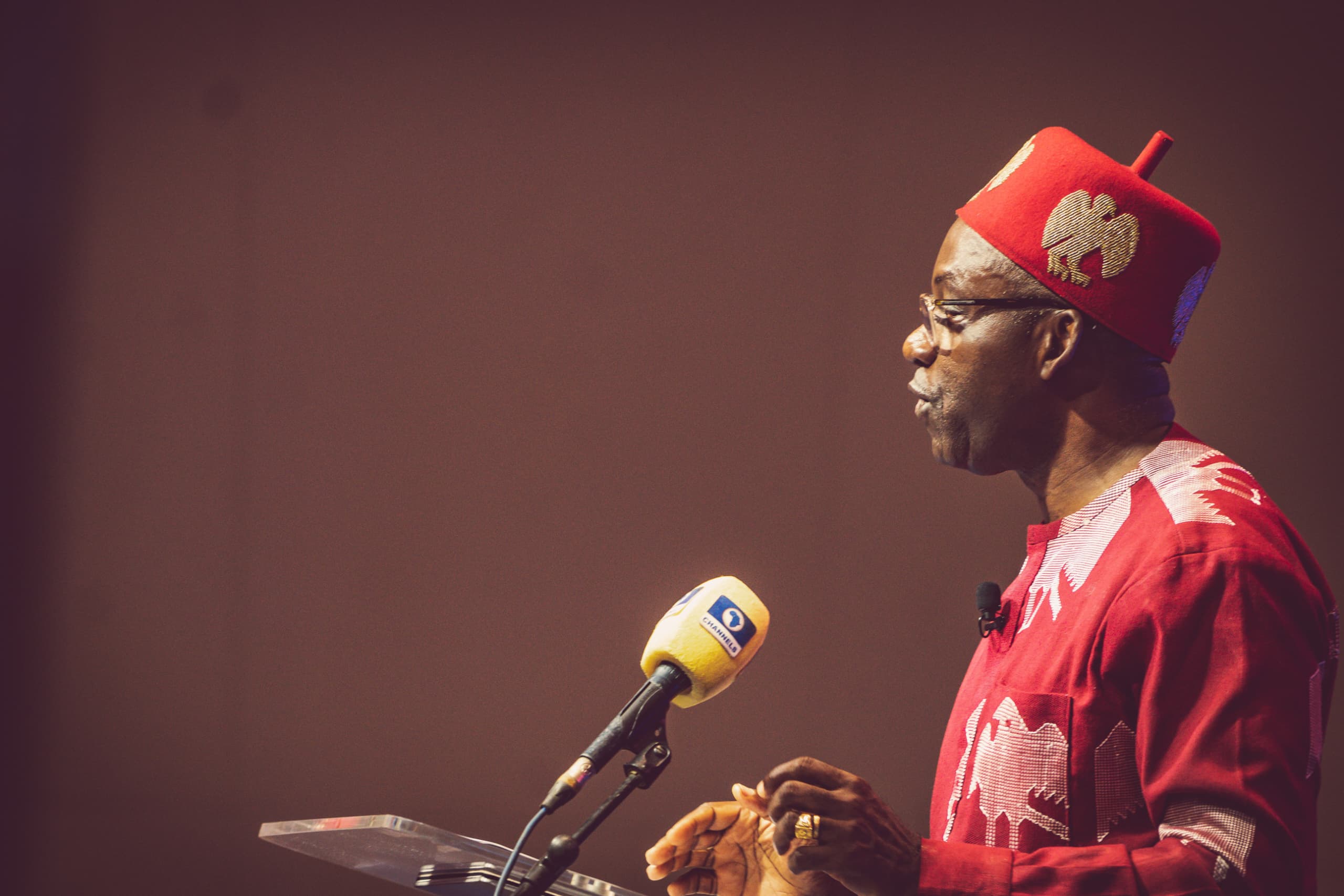
In a riveting address delivered at The Platform, a special national policy dialogue celebrating Nigerian democracy on June 12 in Lagos, Anambra State Governor, Professor Chukwuma Charles Soludo, CFR, perceptively dissected national issues and articulated a compelling vision for Nigeria’s economic and political future. Invited as one of the guest speakers, Governor Soludo did not just show up as a governor, but as an erudite public intellectual and hands-on leader, as he displayed the rare combination of brilliant economic insights and statesmanlike vision that Nigeria desperately needs.
His speech on the subject of Sustainable Democracy and Free Market Economy touched base with the contemporary challenging times, highlighting his profound understanding of Nigeria’s economic challenges and presenting a roadmap for national recovery. With a depth of knowledge honed over decades as an academic, international consultant and former Central Bank governor, Prof. Soludo diagnosed the deep-rooted ills afflicting Nigeria’s battered economy with clinical precision.
He exposed the structural flaws, policy inconsistencies, and lack of productivity that have turned a potentially prosperous nation into a staggering giant struggling under a mountain of debt. In the end, he also propounded solutions in such a way that any dispassionate listener would come away with a genuine impression that Governor Soludo’s comprehensive diagnostic approach and exemplary leadership qualities underscore his potential as the pragmatic, paradigm-shifting leader Nigeria needs in the near future.
Prof. Soludo, with his illustrious academic background and distinguished career, has always been an icon of intellectual rigour and policy innovation. His tenure as the Governor of the Central Bank of Nigeria is still remembered for the significant reforms that stabilised the banking sector. Soludo’s deep-seated knowledge of economic principles and his pragmatic approach to policy-making were evident in his Platform speech. Some of his remarks are as profound as they are reflective of the man’s depth of mind. A few quotes from his speech will suffice.
On the dynamics of democracy and free market economy, Soludo said “It needs to be emphasized however that democracy and market economy are dynamic and permanent work-in-progress, requiring constant contestations among interest groups in the struggle towards a more perfect society.” He continued, “The state of the economy is therefore the determinant of enduring democracy, and for most people, democracy is a key pre-requisite for sustainable economic transformation. Democracy and, indeed, any form of governance must deliver tangible social and economic benefits to the generality of the citizens to be credible and sustainable.”
On admitting the reality of Nigeria’s true economic condition, Prof. Soludo was downright frank: “Let’s admit a fact which most Nigerians don’t seem to appreciate. Nigeria is a very poor country, and its public finance is broken. This admission is critical to any reasonable discourse on the road ahead.” To fix the broken public finance, Soludo implied thus: “Given the humongous infrastructure deficit, the consolidated public sector (FGN and States) capital spending should be at least 10-15% of GDP per annum. Currently, it is less than 5%. Indeed, the entire budget of the FGN is probably less than 30% of what we need to be investing in infrastructure per annum.”
On economic solutions, Soludo went further to emphasize thus: “There is an emergency, and incremental changes won’t cut it. Intentional systemic disruptions are urgently needed but it requires mass mobilization and ownership by the public. Suffice it to say that fixing the systemic insecurity, broken public finance and economy, broken oil and gas sector, infrastructure and environmental decay, rising social tensions, and restoring hope and confidence of the citizens would require us to try several roads not travelled – thinking and acting without any box!”
But how does Soludo see the efforts of the current president in tackling the volatile economy? Hear him: “I believe that President Tinubu (the man who fought the FGN to a standstill over the power of Lagos State to design the local government system of its choice, championed the fundamentals of true federalism 2003-2007, and tamed the Atlantic Ocean) has the knowledge and courage to mobilize Nigeria to cross over the current crossroads. There are no easy or quick fixes, and he needs our collective support.”
Reflecting his own empathetic nature, sensitivity and emotional intelligence as a leader, Soludo expressed a most touching thought on the current hard times most Nigerians are facing: “As a person, I deeply feel the pains of all Nigerians at these challenging times, especially the over 100 million Nigerians who are multi-dimensionally poor. Times are hard. Sometimes I wish that I can give every resident of my state N1 million each to cushion the effects of the hard times.”
But the professor of economics is more than just an economic theorist – he is a leader taking bold actions to put his ideas into practice in Anambra State. Since assuming office over two years ago, he has led by example through prudent spending, patronising made-in-Nigeria products, and displaying genuine empathy for the common man. His commitment to social justice is a cornerstone of his governance philosophy, making him a leader who truly understands and addresses the needs of his people.
According to Soludo, addressing the needs of common Nigerians “will require a fundamental reordering of national priorities to invest massively in social programs (especially health, education and social protections) as well as infrastructure to give everyone a stake in the national cake, thereby securing the future. I am an Awoist and a true progressive on this front.” In fact, Soludo’s Awoist priorities are re-establishing social services in education where he has employed thousands of quality teachers and abolished tuition fees; in healthcare where more personnel are being employed and pregnant women enjoy free antenatal care; in economic security for the senior citizens and underprivileged; and in infrastructural development – all without resorting to piling on more debt.
Nigeria’s economic malaise is quite convoluted and Governor Soludo’s analysis of the woes was extraordinarily incisive. Over and over, he identified structural deficiencies, rampant corruption, and over-reliance on oil revenues as key impediments to economic stability. His critique was not just a lamentation of Nigeria’s economic troubles but a call to action. Soludo emphasized the need for economic diversification, robust governance frameworks, and an enabling environment for entrepreneurship and innovation. His insights reflect a deep understanding of the interconnectedness of economic policies and social outcomes, and the impact on our democracy.
Again, in an era where public trust in leadership is waning, Governor Soludo exemplifies integrity and accountability. His prudent fiscal management in Anambra State offers an exemplary model in transparency and efficiency. By prioritizing locally-made products, Soludo not only supports Nigerian industries but also fosters a sense of national pride and self-reliance. His administration’s fiscal discipline, avoiding excessive borrowing, demonstrates a responsible approach to governance that prioritizes long-term stability over short-term gains. Little wonder, Anambra State under his leadership has been rated one of the top 5 fiscally sustainable states in Nigeria, according to BudgIT.
One of the defining characteristics of Governor Soludo is his unwavering political will to implement bold reforms. His tenure so far as Anambra State’s governor is marked by decisive actions that, while sometimes unpopular, are necessary for sustainable progress. At the risk of repetition, Soludo’s stance against needless borrowing to fund government activities is a courageous deviation from the norm, reflecting his long-term vision for financial independence and economic sovereignty. His leadership style is characterised by a fearless pursuit of policies that ensure a resilient and self-sufficient economy.
As Nigeria grapples with multifaceted challenges, the need for future perceptive leaders and profound thinkers like Professor Charles Soludo has never been more apparent. His blend of academic excellence, practical governance experience, and compassionate leadership positions him uniquely as a statesman capable of steering Nigeria towards a prosperous future. Soludo’s vision for a sustainable democracy and a thriving free market economy offers a blueprint for national recovery and growth. His emphasis on prudent spending, local patronage, social security, ethical reset and fiscal responsibility encapsulates the principles of good governance.
Of course, Nigeria has no shortage of brilliant thinkers and economists diagnosing its woes. But the nation is desperately short on statesmen willing to walk the difficult path of reform and restructuring rather than taking the easy road of corruption and deficits. In Governor Soludo, Nigeria may have found a future leader with both extraordinary intellect and the fortitude to transform his ideas into reality through hard work and political vision.
At times of low morale when citizens need inspiration, Soludo also shows that he is a leader who doesn’t give up. Hear him: “I am an incredible optimist in the potential greatness of this blessed country. That’s essentially why I have persisted in public service and applied for my current job. I believe in the infinite possibilities and opportunities that Nigeria presents. Our youthful population, if unleashed, will definitely conquer the world and the 22nd Century will be Nigeria’s century.”
As Nigeria looks to the future, it should hold up Governor Soludo as a model for the type of transformative yet principled leadership it needs to achieve sustainable democracy wedded to free market prosperity. An accomplished scholar and public servant, Soludo represents hope that Nigeria can rise to its full economic potential by finally having a combination of a brilliant economic diagnosis, empathetic leadership, self-sacrificing prudence, boldness of action and the pragmatic prescription to cure what ails it.
Christian Aburime is the Press Secretary to Governor Soludo.
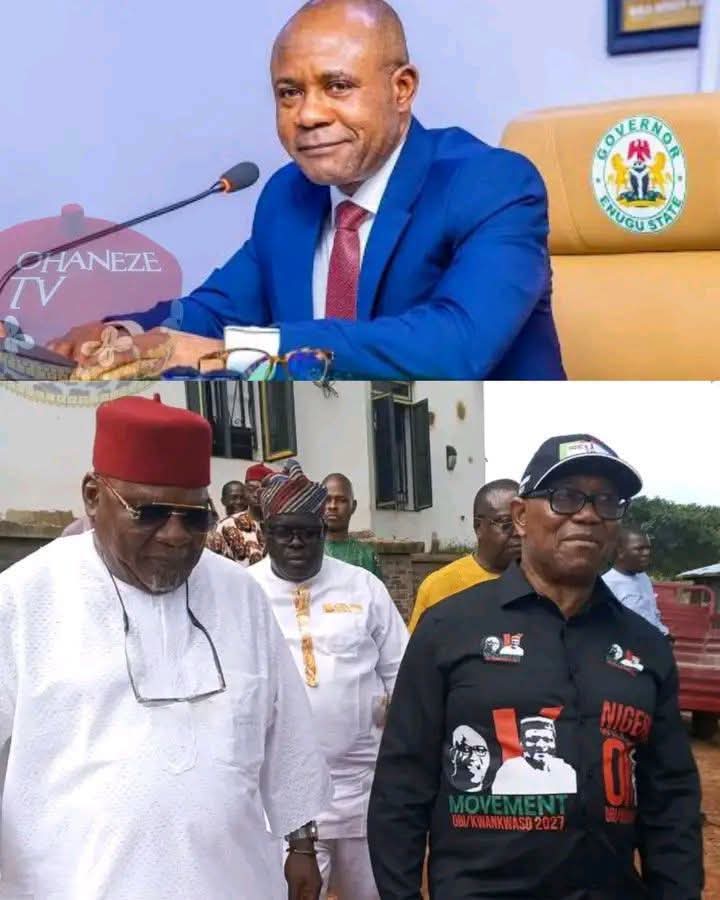
The Enugu State Government has suspended His Royal Majesty, Igwe Eze William Ezugwu, the traditional ruler of Ibagwa Ogbozalla Opi Autonomous Community, in Nsukka Local Government Area of Enugu state.
The state government accused Igwe Ezugwu of violating provisions of the state’s Traditional Rulers Law.
In a letter of suspension dated September 24, the Enugu State Government cited his alleged failure to constitute his cabinet, failure to establish a Town Union governing body, and persistent conduct deemed inconsistent with the laws governing traditional rulers in the state.
The suspension comes barely three weeks after Igwe William Ezugwu received NDC presidential candidate Peter Obi at his palace in Opi, Nsukka LGA, where he reportedly blessed Obi’s presidential ambition.
The Deputy Commander of Operation Rainbow, CSP (Chief Superintendent of Police) Dennis David Babale, has been killed after gunmen suspected to be Fulani Bandits ambushed personnel of the security outfit along the Bokkos-Barkin Ladi road in Barkin Ladi Local Government Area of Plateau State.
Operation Rainbow is a State-backed community security and intelligence-gathering outfit in Plateau State, Nigeria, originally established in 2010 under former Governor Jonah Jang and recently revamped by Governor Caleb Mutfwang to combat rural violence and beef up grassroots security.
The incident reportedly occurred at about 4:06 p.m. on Tuesday, September 22, 2026 when the personnel, travelling in a Toyota Hilux vehicle, came under attack by unidentified gunmen.
Troops of Sector 4, Operation ENDURING PEACE (OPEP), responded to a distress report and moved to the location of the attack.
Sources told reporters that Babale sustained gunshot wounds during the ambush and was evacuated to the General Hospital, Barkin Ladi, for medical attention.
Following the attack, troops, working alongside personnel of other security agencies, launched offensive operations and a manhunt for the assailants within the general area.
Security forces have intensified efforts to track the attackers and prevent further attacks along the route.

Director General/CEO of the Nigerian Meteorological Agency (NiMet) and Nigeria’s Permanent Representative at the World Meteorological Organization, Prof. Charles Anosike and other Chief Executive Officers of similar agencies across the world, have concluded a one week high level dialogue on Climate Science Information for Climate Finance and the 53rd Senior Official Field Exchange (SOFE) in Beijing, China.
The event which was hosted by World Meteorological Organization (WMO), took place from September 14 to 18, 2026 and featured discussions on: strengthening the role and leadership development of National Meteorological and Hydrological Services (NMHSs) in mobilizing climate finance; aligning scientific and technical capabilities with risk-informed, people-centred early warning systems; shifting from technical assistance to sustainable investments by expanding practical cooperation between meteorological frameworks and multilateral financing entities; and support to NMHSs leadership on strengthening strategic thinking and fostering productive partnerships.
Held back-to-back with the High-level dialogue was the 53rd Senior Official Field Exchange to Fujian Province for first-hand exposure to the implementation of Multi-hazard, Alert, Zero-gap and Universal (MAZU) platform – China’s AI-driven meteorological early warning solution in support of the Early Warnings for All (EW4All) initiative and disaster risk reduction practices through technical exchanges, field visits and peer learning.
-

 News2 years ago
Senate to speed up conclusion of Nigeria Forest Security Service Bill
-
 News1 year ago
The Many Lies Against Bashir Haske
-

 News3 years ago
Breaking: Tinubu’s authentic ministerial nominees
-
 News3 years ago
“Anytime we want to kill terrorists, President would ask us to take permission from France but they were killing our soldiers-” Niger Republic coup leader
-
 News3 years ago
“I’m leaving the Catholic church because Bishop Onah is oppressing me,” says Okunerere
-

 News3 years ago
My nude photo leak was a mistake- lawyer Ifunanya
-
 News4 months ago
See your state governor’s performance ranking
-

 News3 years ago
Radio Nigeria’s veteran broadcaster Kelvin Ugwu dies three months after retirement from service