
News
Group to Goodluck Jonathan: Return to leadership in 2027

By Bonaventure Melah
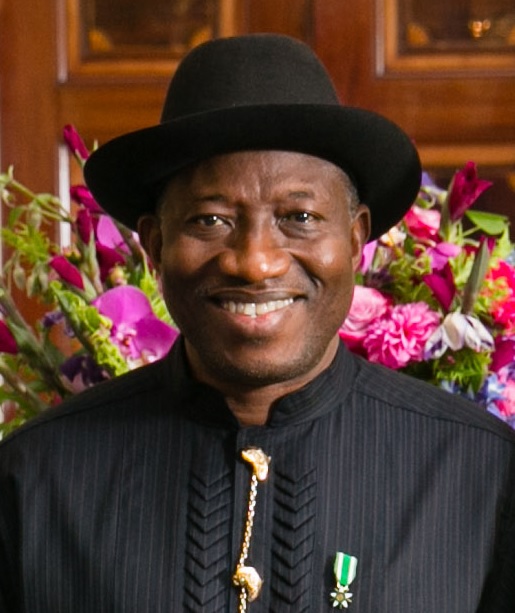
The New Nigeria Integrity Movement (NMIM), Middle Belt Zone, has called on former President Goodluck Ebele Jonathan to consider returning to national leadership in the 2027 general election, citing the urgent need for experienced and stabilising leadership amidst worsening national challenges.
The call was made in a communiqué issued at the end of a strategic meeting of the group, during which members reviewed the current state of the nation and expressed deep concern over rising insecurity, economic hardship, and the deteriorating living conditions of millions of Nigerians.
According to a media release jointly signed by Hon. Pastor Peter Hassan, National Leader, and Dr. Blessing Eliagu, Secretary, “Nigeria is currently facing a critical moment marked by widespread poverty, hunger, and persistent insecurity across several communities, particularly in the Middle Belt region.”
The statement continued, “Across the nation, millions of Nigerians are experiencing unprecedented economic hardship. Poverty has deepened, hunger has become widespread, and many families now struggle daily to secure basic meals.”
The group acknowledged that while infrastructure development remains important for long-term national growth, it does not immediately address the urgent crisis of hunger and livelihood confronting many Nigerians.
They therefore urged Dr. Jonathan to offer his leadership and experience once again in service to the nation.
“We believe that former President Jonathan represents calm, experienced, and credible leadership capable of restoring hope, rebuilding trust in governance, and initiating policies that directly address the economic suffering of citizens,” the communiqué stated.
The organisation also appealed to democratic leaders and partners around the world to support efforts aimed at strengthening democratic governance and stability in Nigeria.
The group described Jonathan as one of Nigeria’s most experienced statesmen, noting that his tenure demonstrated respect for democratic principles, tolerance, and commitment to national unity.
“His leadership style reflected humility, respect for the rule of law, and dedication to democratic values,” the statement added.
It further argued that his return could help reinforce the principle of power rotation, which it described as an important mechanism for maintaining national balance and political stability in Nigeria.
The movement stressed that its appeal is driven not by partisan considerations but by concern for the wellbeing and survival of Nigerians.
“Nigeria requires a national reset – one that focuses on human welfare, economic recovery, and national cohesion. Silence in the face of the current suffering is not an option,” the group said.
The organisation also called on Nigerians to continue advocating peacefully for responsible leadership and policies that prioritise the welfare of citizens.
“Nigeria deserves better. The time to act is now,” the communiqué further stated.
News
Nigeria’s human rights body demands accountability over recurrent civilian casualties from military airstrikes
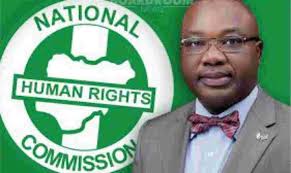
The National Human Rights Commission has expressed deep concern over the recurrent incidents of military airstrikes reportedly resulting in significant civilian casualties across different parts of the country, describing the development as troubling and incompatible with established human rights and humanitarian law standards.
The Executive Secretary of the Commission, Dr. Tony Ojukwu OFR, SAN, who stated this in a statement on Wednesday, said while the fight against insurgency, banditry, and other forms of insecurity remains a legitimate responsibility of the Nigerian State, such operations must at all times be conducted in strict compliance with the Constitution of the Federal Republic of Nigeria, international human rights obligations, and international humanitarian law principles.
According to the statement which was signed by Fatimah Agwai Mohammed, Director, Corporate Affairs and External Linkages, Ojukwu said repeated reports of civilian deaths and injuries, including women, children, and other vulnerable persons, arising from aerial bombardments raise serious concerns regarding the protection of the right to life, human dignity, and the obligation of State actors to exercise precaution and proportionality during security operations.
The Commission therefore calls on the Nigerian Air Force to provide a comprehensive explanation regarding the circumstances surrounding these incidents and the measures being taken to prevent further loss of innocent civilian lives.
“Nigerians deserve to know why this has become a recurring decimal, in April and May alone we have recorded the following casualties, in April Jilli market Yobe, in May Shiroro market Niger, again in May Tumfa market in Zamfara, for how long will this continue?” The Chief Human Rights Officer asked.
The NHRC Cheif emphasized that the principles of distinction, necessity, proportionality, and accountability are fundamental obligations under international humanitarian and human rights law and must guide all military engagements, particularly in conflict-affected communities.
Dr. Ojukwu noted that civilian lives must never be treated as collateral damage and urged security agencies to strengthen intelligence gathering, operational safeguards, and accountability mechanisms in order to minimize harm to non-combatants during military operations.
He further called for prompt, transparent, and independent investigations into all reported incidents of civilian casualties resulting from airstrikes, with a view to ensuring accountability, justice for victims, and adequate remedies, including compensation and psychosocial support for affected families and communities.
The NHRC reiterated that national security objectives and human rights protection are not mutually exclusive, stressing that sustainable peace and public trust can only be achieved where security operations are carried out within the bounds of legality, accountability, and respect for human dignity.
Ojukwu reaffirmed the Commission’s commitment to monitor the situation closely and engage relevant authorities and stakeholders to ensure the protection and promotion of the rights of all persons in Nigeria.

River State Governor, Sir Siminalayi Fubara on Wednesday, broke his silence over widespread speculations that he had defected from the All Progressives Congress (APC) and joined the Nigeria Democratic Congress (NDC) in the ongoing realignment of political forces ahead of the 2027 General Elections..
Governor Fubara made the clarification during an inspection tour of the newly constructed General Hospital and the fully remodelled Neuropsychiatric Hospital, both in Rumuigbo, Obiakpor Local Government Area of Rivers State.
According to Onwuka Nzechi, Chief Press Secretary to the Governor, Fubara said that contrary to the erroneous reports in a section of the media in the last couple of days, suggesting that he had joined another political party, he remained a member of the ruling party and will continue to work for the overall interest of the party.
“I know that there have been a lot of drama in the media; one story or another. I am a member of the All Progressives Congress (APC) and nothing has changed. People should stop using whatever situation that they pick up from the social media or their own interpretation of any situation to present me wrongly.
“I’ve not gone anywhere; I’m still a member of the APC and I remain a member. Whatever happens, what is important is supporting the overall interest of the party,” he said.
Governor Fubara was conducted round the facilities by the Director of Medical Services in the Rivers State Ministry of Health, Dr. Vincent Wachukwu, who led him through the hospital wards, a conference hall, ICT centre, students hostel, staff quarters, and other critical sections.
He expressed delight at the completion of the two projects which according to him, were conceived to address critical needs in the health sector in the state. He recalled that the while the rehabilitation of the Psychiatric Hospital became necessary at some point, the administration also discovered that the area had no General Hospital to take care of the basic health needs of the people.
“This very project, if you could remember, when we came in we had an issue that required our sudden visit and it had to do with mental health. So when we came here for the inspection of the Rehabilitation Centre that the board was trying to put together, we found out that we had more issues than even the mental health issue.
“We didn’t have a General Hospital to serve the people within this area. The closest medical center that they had here was the University of Port Harcourt Teaching Hospital ( UPTH) which is very far from here. We felt that with the space we have in this compound, it will be proper for us to also have a General Hospital situated in this particular facility to take care of the neighboring communities up to Rumuola, Rumuolumeni and all the surrounding areas.
“Today, to the glory of God, we can see that the project is already completed. It is not 95 percent complete, it is a hundred percent completed.
We’re happy because, it is a promise made and a promise fulfilled. Like I’ll always say, what is important is doing what will touch the life of our people. Our people should be first and that is how important this project is for us in this administration,” he said.
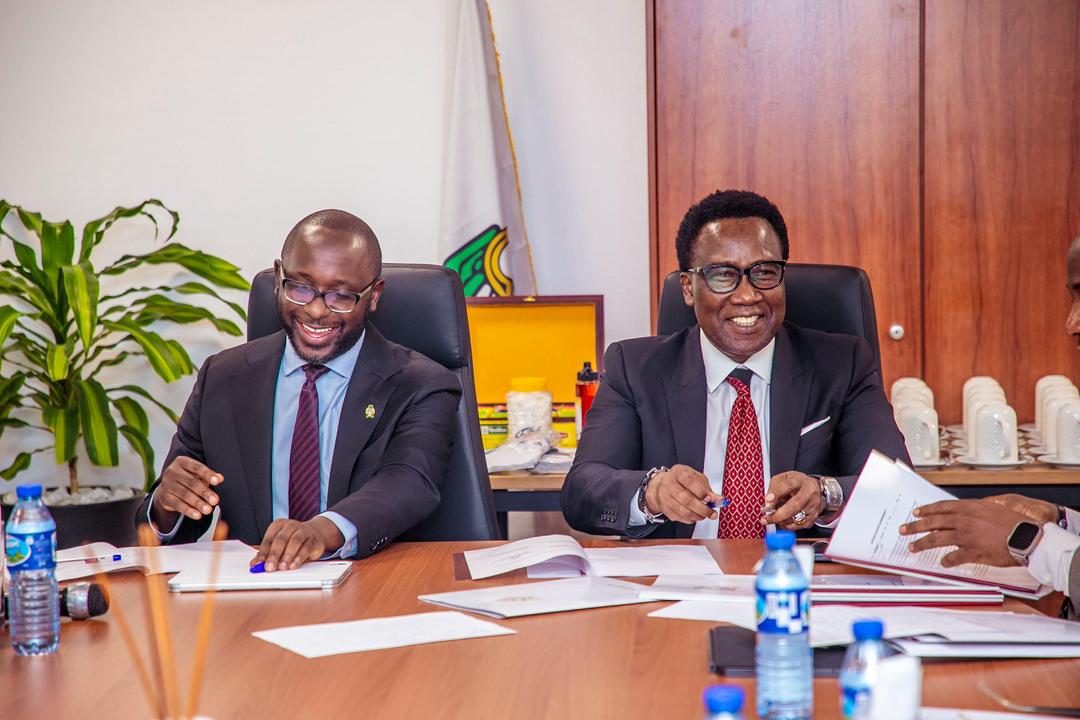
Photo caption: DG/CEO of NiMet, Prof. Charles Anosike (left) Dr. Mohammed Sani Abdullahi, Deputy Governor, Economic Policy Directorate (CBN) signing the partnership MoU.
The Nigerian Meteorological Agency (NiMet) and the Central Bank of Nigeria (CBN) on Wednesday, May 13, 2026, signed a landmark Memorandum of Understanding (MoU) on data sharing.
While NiMet’s team was led by its Director General/CEO, Prof. Charles Anosike, Dr. Mohammed Sani Abdullahi, Deputy Governor, Economic Policy Directorate, was head of CBN side. The MoU was signed at the apex bank’s Head Office in Abuja.
Speaking at the event, Prof. Charles Anosike highlighted the importance of integrating weather and climate data into economic research, especially in sectors such as agriculture, energy, and transportation. He noted that extreme weather events can reduce agricultural productivity and threaten food security.
He added that the collaboration aligns with the Renewed Hope Agenda of President Bola Ahmed Tinubu GCFR, which prioritizes food security through major agricultural investment, including the cultivation of 10 million hectares of land and the distribution of mechanised equipment.
Prof. Anosike cited the World Bank (2026), which reports that extreme weather driven by climate change is significantly affecting global food security, with more than 87 million people facing hunger in East and Southern Africa and 52 million in West and Central Africa. He also referenced the Berkeley Earth Report (2026), which projects that 2026 is likely to be the fourth warmest year on record, a trend that continues to shape agricultural and energy market projections.
In his remarks, Muhammad said the signing of the MoU marked an important step in strengthening the partnership between two key national institutions whose mandates intersect in data, research, and policy support. He emphasized that, in an increasingly complex and dynamic economic environment, timely and reliable data remain essential for effective policy decisions.
He further noted that the Economic Policy Directorate relies heavily on timely and credible statistical information from NiMet. Such data, he said, are critical for inflation monitoring, agricultural sector assessment, and broader economic policy advisory functions. He described the initiative as both timely and important, adding that strong institutional partnerships are essential for strengthening evidence-based policymaking and improving the robustness of national data systems.
-

 News1 year ago
Senate to speed up conclusion of Nigeria Forest Security Service Bill
-
 News9 months ago
The Many Lies Against Bashir Haske
-

 News3 years ago
Breaking: Tinubu’s authentic ministerial nominees
-
 News3 years ago
“Anytime we want to kill terrorists, President would ask us to take permission from France but they were killing our soldiers-” Niger Republic coup leader
-
 News3 years ago
“I’m leaving the Catholic church because Bishop Onah is oppressing me,” says Okunerere
-

 News3 years ago
Radio Nigeria’s veteran broadcaster Kelvin Ugwu dies three months after retirement from service
-
 News3 years ago
Dokpesi and the Gazebo Mystique
-

 News3 years ago
Tsunami: Tinubu orders dissolution of managements, boards of MDAs, to sack all Buhari’s political appointees