News
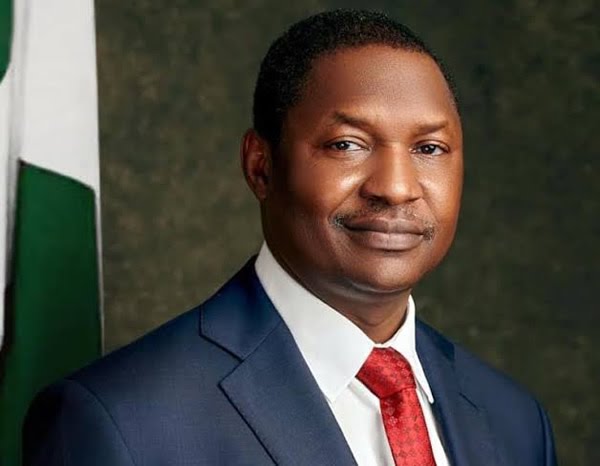
Ex-AGF Malami stole from Abacha loot- Kebbi govt
Kebbi State Government has accused former Attorney General of the Federation and Minister of Justice, Abubakar Malami (SAN), of inflating and sharing commissions from the recovery of the Abacha loot during his tenure in office.
In a statement issued by the Special Adviser on Communication and Strategy to Governor Nasir Idris, Abdullahi Idris, the government alleged that Malami’s record as minister was riddled with corruption, diversion of public funds, and mismanagement of recovered assets.
The Kebbi government, in its statement, further accused Malami of “ridiculous auctions of recovered properties to family members” and involvement in “inflating and sharing commissions from recovered Abacha loot.”
It said Malami, instead of addressing the weighty allegations surrounding his tenure, had resorted to “fabricating falsehoods” and launching “a campaign of blackmail and misinformation” against Governor Idris.
“The former minister is haunted by his own questionable record while serving as Minister of Justice,” the statement read. “It is ironic for Malami, who has no verifiable record of public service or landmark professional achievements, to accuse Governor Nasir Idris of financial recklessness.”
The government also alleged that operatives of the Economic and Financial Crimes Commission had frequently visited Malami’s business establishments in Birnin Kebbi — including Raahan Rice Mills, Raahan University, and AZBIR Hotel — as well as several properties linked to him in Abuja, Kaduna, and Kano.
Abdullahi Idris described Governor Nasir Idris as “a nationally recognised unionist and internationally respected labour leader who has successfully led both the Nigeria Union of Teachers and the Nigeria Labour Congress,” adding that the governor had shown “administrative competence and political maturity” since assuming office.
“Kebbi State Government therefore considers Malami’s baseless and mischievous allegations as products of desperation and hopelessness, driven by the burden of his own past actions,” the statement added.

News
NiMet partners CBN on data sharing to improve economic policies
Photo caption: DG/CEO of NiMet, Prof. Charles Anosike (left) Dr. Mohammed Sani Abdullahi, Deputy Governor, Economic Policy Directorate (CBN) signing the partnership MoU.
The Nigerian Meteorological Agency (NiMet) and the Central Bank of Nigeria (CBN) on Wednesday, May 13, 2026, signed a landmark Memorandum of Understanding (MoU) on data sharing.
While NiMet’s team was led by its Director General/CEO, Prof. Charles Anosike, Dr. Mohammed Sani Abdullahi, Deputy Governor, Economic Policy Directorate, was head of CBN side. The MoU was signed at the apex bank’s Head Office in Abuja.
Speaking at the event, Prof. Charles Anosike highlighted the importance of integrating weather and climate data into economic research, especially in sectors such as agriculture, energy, and transportation. He noted that extreme weather events can reduce agricultural productivity and threaten food security.
He added that the collaboration aligns with the Renewed Hope Agenda of President Bola Ahmed Tinubu GCFR, which prioritizes food security through major agricultural investment, including the cultivation of 10 million hectares of land and the distribution of mechanised equipment.
Prof. Anosike cited the World Bank (2026), which reports that extreme weather driven by climate change is significantly affecting global food security, with more than 87 million people facing hunger in East and Southern Africa and 52 million in West and Central Africa. He also referenced the Berkeley Earth Report (2026), which projects that 2026 is likely to be the fourth warmest year on record, a trend that continues to shape agricultural and energy market projections.
In his remarks, Muhammad said the signing of the MoU marked an important step in strengthening the partnership between two key national institutions whose mandates intersect in data, research, and policy support. He emphasized that, in an increasingly complex and dynamic economic environment, timely and reliable data remain essential for effective policy decisions.
He further noted that the Economic Policy Directorate relies heavily on timely and credible statistical information from NiMet. Such data, he said, are critical for inflation monitoring, agricultural sector assessment, and broader economic policy advisory functions. He described the initiative as both timely and important, adding that strong institutional partnerships are essential for strengthening evidence-based policymaking and improving the robustness of national data systems.
News
How El-Rufai’s revenge destroyed Ribadu
By Mohammed Bello Doka
Somewhere in a detention cell, Nasir El-Rufai must be smiling because the man who put him there—the once all-powerful National Security Adviser, Nuhu Ribadu—has just been dumped, neutered, and reduced to an international errand boy. It is the sweetest revenge, served slowly and silently, by the very system Ribadu helped to build.
Robert Greene, in The 48 Laws of Power, warned that “the danger is long, the blow is sudden.” In Ribadu’s case, the blow came from a man he once called a friend, and it landed with the precision of a master strategist.
The story of El-Rufai and Ribadu is not merely a political feud; it is a Shakespearean tragedy of ambition, betrayal, and the brutal arithmetic of power in Nigeria. The two men were once bosom friends, climbing the greasy pole together, sharing confidences and strategies. But power, as Lord Acton famously observed, corrupts, and absolute power corrupts absolutely. When Ribadu began to harbour ambitions for the 2031 presidency, he reportedly saw El-Rufai as a threat to be eliminated. He not only abandoned the man who stood by him but, according to the former governor, set out to destroy him using the entire machinery of the state.
El-Rufai has repeatedly accused Ribadu of directing security operatives to arrest political opponents without proper investigation, interfering in judicial processes, and weaponising the Department of State Services (DSS), the Police, and the EFCC to “tame” him. In a devastating interview on Arise Television in February 2026, he declared that he was “ashamed” of their past friendship, leveling a public indictment that echoed far beyond the television screen.
The most dangerous accusation came when El-Rufai, in a now-infamous interview on Arise Television’s Prime Time programme, claimed that “someone wiretapped” Ribadu’s phone, allowing him to listen to a conversation in which the NSA purportedly gave the order for his arrest. For a man charged with the nation’s most sensitive security apparatus to be caught in such a compromising position was not only unprofessional; it was catastrophic. The state responded with force. The Department of State Services (DSS) filed criminal charges against El-Rufai, accusing him of unlawfully intercepting the NSA’s phone communications. But the damage was done. The perception of a compromised NSA, one who cannot even secure his own communications, stuck like a poisonous dart.
Yet El-Rufai did not stop there. In a letter dated January 30, 2026, he formally wrote to Ribadu demanding an explanation for why the Office of the NSA (ONSA) allegedly imported approximately 10 kilograms of thallium sulphate—an odourless, colourless, and extremely hazardous toxic chemical—from a supplier in Poland. Ribadu, in an attempt to deflect the blow, referred the allegation to the DSS for investigation and challenged El-Rufai to submit evidence. But the accusation of importing “dangerous toxic chemicals” into the country is not the kind of stain that easily washes off. The very suggestion that the NSA has access to such substances has irrevocably tarnished his reputation.
The charade reached its most absurd and tragic moment on March 29, 2026. Ribadu, who had allegedly orchestrated El-Rufai’s persecution, attended the funeral prayer of El-Rufai’s mother, Hajiya Umma El-Rufai, at the National Mosque in Abuja. Thousands of mourners, including President Bola Ahmed Tinubu and other top government officials, watched as nations security chief, dripping with crocodile tears, paid tribute to a woman he claimed to have fond memories of. For the shrewd observer, it was not a moment of peace; it was the chilling silence before the storm. As Niccolò Machiavelli wrote, “Men are so simple and so much inclined to obey immediate needs that a deceiver will never lack victims for his deceptions.” Ribadu may have seen this as reconciliation; El-Rufai likely saw it as a confirmation of his enemy’s hubris.
By the time the French news agency Agence France-Presse (AFP) published its explosive report on February 23, 2026, claiming that Ribadu orchestrated a multimillion-dollar helicopter ransom payment to Boko Haram, the NSA’s reputation was already in ruins. The so-called “French Dagger” was not the killing blow; it was merely the alibi, the final piece of paper that gave Tinubu the excuse he needed to act. The newly created position of the Special Adviser on Homeland Security, awarded to a Yoruba kinsman of the President, was the executioner’s blade. It stripped Ribadu of his domestic security portfolio, leaving him with only the hollow title of NSA and the demeaning task of handling international liaison. As Baltasar Gracián wrote in The Art of Worldly Wisdom, “Never depend on the arms of others.” Ribadu had no political base, no governors, no party. He was a man of power only because Tinubu lent it to him, and when the wind changed, the power was taken back.
Ribadu, who was once the most powerful Northerner in the Villa, has been reduced to the same ghostly status as Vice President Kashim Shettima—visible in photographs but absent in influence. The man who used the security apparatus to fight his northern rivals has now been fought by the very same machine. El-Rufai sits in a detention cell, not because of Ribadu’s power, but because he dared to speak the truth. And yet, in a bitter twist of irony, Ribadu is the one who has been politically executed. The man who tried to destroy his friend has been destroyed by the very system he helped entrench. As Napoleon Bonaparte once noted, “He who fears being conquered is sure of defeat.” Ribadu feared El-Rufais ambition and tried to crush it, but in doing so, he exposed his own fatal weakness. The wiretap, the poison gas, the ransom payments—whether true or false, these allegations have defined his legacy.
The new Homeland Security Adviser, Retired Major General Famadewa, now controls internal security coordination, intelligence fusion on domestic threats, and hostage negotiation protocols. Ribadu has been handed the impossible task of defending his legacy from a position of complete irrelevance. He will travel, attend meetings, and smile for the cameras. But the real power has departed. The chickens have finally come home to roost.
El-Rufai, for all his troubles, has achieved a monumental feat. He has not only destroyed the reputation of his once-friend but has also forced Tinubu to act, exposing the hollow core of the administration’s much-vaunted security architecture. The French dagger was just the delivery boy. The real knockout punch was thrown by a man who knew Ribadu better than anyone else—and who used that knowledge to bring him down.
Congratulations, Nuhu Ribadu. You are now officially dumped. And in that cell, believe it or not, Nasir El-Rufai is laughing.
As the ancient warrior-philosopher Sun Tzu wrote, “The supreme art of war is to subdue the enemy without fighting.” El-Rufai did not need to fire a single shot. He simply told the truth, and the truth—no matter how inconvenient—had the power to destroy an empire. May this serve as a lesson to those who entrench dictatorships: you will always be its first victim.
Mohammed Bello Doka can be reached via bellodoka82@gmail.com
News
Man seeking Jonathan’s disqualification from presidential contest absent in court
By Bonaventure Phillips Melah
Justice Peter Lifu of the Federal high court in Abuja on Monday, adjourned till Friday, hearing on the suit seeking to stop former president, Dr. Goodluck Jonathan from contesting the 2027 presidential election.
It would be recalled that though Jonathan has not declared intention to contest the election, many groups from across Nigeria have been calling on him to contest the election in order to rescue the nation from mirage of challenges including hunger, high cost of living, bad economy, high cost of petroleum products and others.
The suit, instituted by a lawyer, Johnmary Jideobi, could not proceed as no counsel appeared for the plaintiff, Independent National Electoral Commission (INEC) and Attorney-General of the Federation (AGF).
When the case was called, only Jonathan’s lawyer, Chief Chris Uche, SAN, was in coury.
Uche informed the court that the matter was fixed for hearing and the court was magnanimous to the parties to fix the proceeding at 2pm.
The senior lawyer, therefore, applied that the matter be struck out for lack of diligent prosecution.
He submitted that the plaintiff’s lawyer, Ndubuisi Ukpai, who was in court on the last adjourned, had not deemed it fit to either be present or sent a letter why he would not be in court.
Besides, Uche said the plaintiff, Jideobi, who is also a lawyer, was not in court and no excuse was offered as to why they would not be present.
“My Lord, what it means is that they have lost interest in pursuing the suit, particularly after we have filed and served our notice of preliminary objection and other processes.
“And in a matter where processes have been exchanged, we may ask that the matter be dismissed,” he said.
According to him, the rules of this court empower your lordship to strike out the suit for want of diligent prosecution.
“So, we humbly apply that it be struck out or dismissed with a very substantial cost,” he prayed.
Justice Lifu then asked the registrar to confirm from the court file if hearing notices were served on INEC and AGF, the 2nd and 3rd defendants in the case.
And it was confirmed that neither INEC nor AGF was served.
The judge therefore held that in the interest of fair hearing, the 2nd and 3rd defendants should be afforded another opportunity.
But Uche, who argued that INEC and AGF were passive in the matter, said if struck out, the order would be beneficial to the 2nd and 3rd defendants because it would have no adverse effect on them.
He said this was necessary given the nature of the matter and the status of the person he brought to court.
He, therefore, sought a N5 million cost against the plaintiff.
“For every default, there must be a consequence.
“So we urge your lordship to exercise the right you have under the rules of the court in our favour,” he said.
The judge, however, restated the need to give the other parties another opportunity.
“Let us give them time. Let this order be served on INEC because INEC is fundamental in this case
“Let us listen to INEC in this matter,” he said.
Justice Lifu consequently adjourned the matter until May 15 for a definite hearing.
“In the circumstances of this case, I am minded to bend backward to accommodate the plaintiff and the 2nd and 3rd defendants who have consistently absent,” he said.
The judge observed that the hearing was fixed at 2pm in agreement with the plaintiff’s lawyer.
The judge then ordered that hearing notices be issued and served on the plaintiff, INEC and AGF for the last time.
Dr. Jonathan, in his preliminary objection filed by his lawyer, said Jideobi lacked the legal right to file the suit.
According to him, the suit is purely speculative, founded on conjecture, premature and predicated on media speculation, as there was no nomination, no election and no cause of action.
“The court lacks jurisdiction to entertain hypothetical constitutional questions.
“The suit constitutes a gross abuse of court process, aimed at obtaining a pre-emptive political judgment.
“Cosmetic joinder of 2nd and 3rd defendants is a mere jurisdictional artifice,” the ex-president said.
Jonathan submitted that the issues raised had already been judicially settled by a subsisting judgment of the Federal High Court, Yenagoa.
The former president, therefore, sought an order striking out the suit for want of jurisdiction and as constituting a gross abuse of court process.
-
News1 year agoSenate to speed up conclusion of Nigeria Forest Security Service Bill
-
News9 months agoThe Many Lies Against Bashir Haske
-
News3 years agoBreaking: Tinubu’s authentic ministerial nominees
-
News3 years ago“Anytime we want to kill terrorists, President would ask us to take permission from France but they were killing our soldiers-” Niger Republic coup leader
-
News3 years ago“I’m leaving the Catholic church because Bishop Onah is oppressing me,” says Okunerere
-

News3 years agoRadio Nigeria’s veteran broadcaster Kelvin Ugwu dies three months after retirement from service
-
News3 years agoDokpesi and the Gazebo Mystique
-
News3 years agoTsunami: Tinubu orders dissolution of managements, boards of MDAs, to sack all Buhari’s political appointees