News
Woman dies after falling 80 metres from a cliff


Brianna Cronin, a 29-year-old Australian ecologist, spent her last terrifying minutes clinging to a sheer rock face 80m above the ground after she fell while visiting a famous Bali cliff, only to fall again, this time to her death.
I’mThe tourist who was on a solo travel adventure, tragically died at the famous Kelingking Beach, on the Indonesian island of Nusa Penida, on Saturday morning.
The spectacular rock formation – which resembles the head of a giant Tyrannosaurus Rex – has become one of Bali’s most recognisable landmarks and attracts thousands of foreigners every year.
The University of Queensland graduate was on the infamously steep and narrow track to explore the landmark when she slipped on loose rock and became stuck on the southern side of the cliff.
She was then spotted stranded precariously on a ledge below the path by another tourist, unable to get back to the track and too high to descend to the beach.
It is unclear if she was injured at that point, but the tourist alerted one of the local lifeguards who monitor the rugged and treacherous beach below about 7.45am.
A plan was being made to reach Ms. Cronin when she sadly fell a second time while waiting to be rescued. She hit the sand of Kelingking Beach and died at the scene, suffering multiple fractures from the fall down the rocky cliff.
Another tourist had spotted Ms Cronin stranded on the cliff face before she fell a second time, landing on the beach
‘The views are spectacular but it is downright dangerous and irresponsibly managed,’ one visitor wrote on Tripadvisor in 2019.
‘At least half of the ”path” is sheer, vertical drops, requiring climbing, hanging, and holding on to broken side rails made literally of sticks and bamboo.
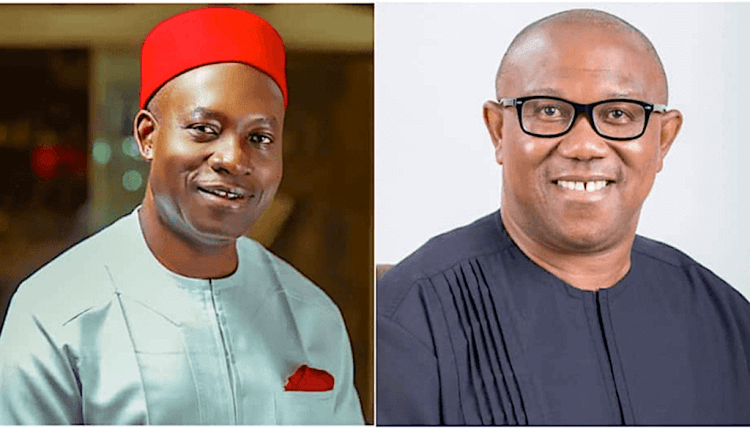
Anambra State Government has disclosed that Governor Charles Soludo’s administration is still repaying loans and other debts incurred by previous administrations, including those of former governors Peter Obi and Willie Obiano.
The Commissioner for Finance in the state, Izuchukwu Okafor, disclosed this during a podcast.
The podcast was moderated by Ejimofor Opara, a special assistant to Governor Soludo on new media.
In the podcast, Mr Opara questioned why details in the budget performance reports indicated that the Anambra State Government has been servicing loans despite claims it had not borrowed before.
In response, Mr Okafor reiterated that Mr Soludo’s administration had not borrowed from any commercial bank since taking office but had continued to service loans inherited from previous governments.
“It’s on record, you know, that this administration has not borrowed a kobo from any commercial bank since the inception of this administration,” he said.
The commissioner then explained that deductions were made from the state’s Federation Account Allocation Committee (FAC) funds every month to service loans obtained by previous administrations.
“Every month during our FAC meetings, and when you see the schedule of FAC, you will notice there were substantial, significant deductions from our own FAC because of loans previously borrowed by previous administrations,” he said.
Mr Okafor claimed some of the loans were obtained during the administrations of Mr Obi and the immediate past governor of the state, Willie Obiano.
“These loans were borrowed, you know, even during the time of Peter Obi and Willie Obiano, (and other) past governors,” he said.
The finance commissioner boasted that Mr Soludo’s administration had “significantly” reduced the state’s debt burden despite not borrowing any loans himself.
“We have been able to manage the debt, the state debt, very well, that we have brought it down by more than 83 per cent as of today. We’ve been able to repay back most of these loans,” he said.
He said the administration had also cleared several “legacy debts,” including unpaid contracts, gratuity arrears and pension arrears.
“But I will give you an example for our domestic debt. There’s what we call legacy debts, you know. That’s, the contracts that were not paid, the gratuity arrears, pension arrears, we’ve been able to clear all that,” he said.
The official also said the state’s domestic debt was “near-zero balance” at the moment.
What about external debts?
Mr Okafor claimed that, on the state’s external debts, some repayments were automatically deducted from federal allocations due to the state in accordance with the terms and conditions attached to the loans.
“Before they remit Anambra’s own allocation, they will deduct it as such, because most of them, World Bank loans and other loans, they committed.”
The commissioner also disclosed that the state had recently paid off one of its debts.
“This administration has been able to create more by paying off, you know, the backlog of numerous debts inherited from previous governments, starting from the time of Peter Obi,” he added.

Borno State Governor, Babagana Zulum, has said the insurgency in the state destroyed more than 5,000 school structures and forced about 2.2 million children out of school at the peak of the crisis.
Zulum stated this on Sunday in Maiduguri while inaugurating several completed projects across the state.
The governor said the destruction of schools, coupled with the loss of teachers and school administrators, severely disrupted education in Borno.
“The insurgency destroyed more than 5,000 school structures, while at its peak, an estimated 2.2 million children were out of school, with fewer than 500,000 enrolled,” Zulum said.
“Many teachers and school administrators lost their lives in the course of duty.”
He said his administration’s efforts to rebuild schools went beyond the construction of physical infrastructure, stressing that the objective was also to restore access to education and confidence in communities affected by the insurgency.
“Today, we have formally commissioned four important projects: the Larawaram Community Senior Secondary School; the Shehu Sanda Kyarimi I Primary and Junior Secondary School; the post office nine-span flyover; and the dualisation of the 2.5-kilometre road, together with five kilometres of drainage, from Budum Tandari Junction to Kasuwan Shanu,” he said.
Zulum added: “Rebuilding schools is beyond constructing physical structures. It is about restoring access to education, rebuilding confidence in our communities and providing our children with the opportunity to secure a better future.”
According to him, the state government invested N46,987,069,675.33 in basic and secondary education between the 2025 and 2026 fiscal years.
“Today’s commissioning forms part of this broader investment, alongside 136 projects that have been completed and are awaiting commissioning,” he said.
The governor said his administration had continued to expand and improve infrastructure at public pre-primary and primary schools across the state.
He said the number of usable classrooms had increased to 5,792, while usable Water, Sanitation and Hygiene, WASH, facilities rose to 4,563.
At the senior secondary level, Zulum said the number of functional schools increased from 34 across eight local government areas in 2019 to 129 across 25 LGAs by 2026.
He also said school enrolment increased from 766,551 learners in 2019 to 1,801,295 in 2026, representing an increase of more than one million learners in seven years.
Zulum attributed the growth to expanded access to education, improved public confidence and sustained investment in the sector.
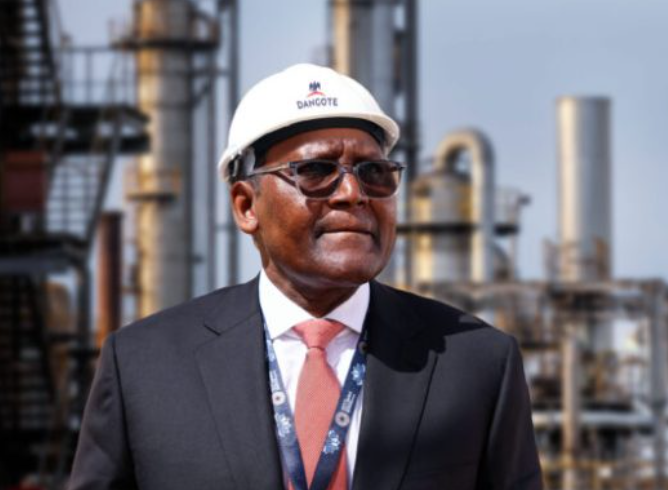
The Chairman of the Kano-Jigawa branch of the Manufacturers Association of Nigeria (MAN), Muhammad Bello Isyaku Umar, has described the Dangote Refinery as a major catalyst for greater inclusiveness in the Nigerian economy.
His comment came as Dangote Refinery is set to make presentation of its Initial Public Offering (IPO) to stakeholders in Kano Thursday at 10:00 a.m.
The presentation will take place at the Meena Event Centre, Kano, and will provide participants with insights into the refinery’s IPO, investment opportunities.
Speaking to newsmen, Mr. Umar commended the Dangote Group for its sustained support for manufacturers and the industrial sector over the years.
He said the Dangote Group is one of the major sponsors of the 54th Joint Annual General Meeting and Fifth Made in Kano-Jigawa Products Exhibitions, slated for September 22nd and 24th, 2026.
The chairman said the refinery’s emergence has created opportunities for businesses across different sectors and strengthened the prospects of a more productive domestic economy.
According to him, the refinery represents an important step in Nigeria’s drive to reduce dependence on imported petroleum products, conserve foreign exchange and create a more predictable operating environment for manufacturers and other businesses.
He said the impact of the refinery extends beyond the oil and gas industry, stressing that its operations have significant implications for manufacturers, transporters, farmers, distributors, small and medium-sized enterprises and consumers.
The chairman said the increased domestic refining capacity can help strengthen local supply chains, improve access to petroleum products and reduce some of the uncertainties associated with dependence on imported refined products.
He added that a stronger domestic energy base would ultimately support industrial production, investment and job creation across the country.
The MAN chairman also welcomed the Initial Public Offering (IPO) of Dangote Refinery, describing it as an opportunity to broaden Nigerians’ participation in one of the country’s most strategic industrial investments.
He said listing the refinery on the Nigerian capital market could allow institutional investors, businesses and individual Nigerians to participate in its growth and benefit from the value created by the company.
“An IPO of this magnitude has the potential to make the refinery not only a national industrial asset, but also an investment opportunity in which Nigerians from different backgrounds can participate,” he said.
Mr. Umar noted that the benefits of the IPO would extend beyond shareholders, arguing that the listing would deepen the Nigerian capital market, attract additional domestic and international investment and strengthen confidence in large-scale industrial projects.
He said the refinery would also stimulate greater investment in ancillary industries, including logistics, transportation, engineering, maintenance, storage, distribution and other services required across the petroleum value chain. This, he said, would create a multiplier effect capable of benefiting businesses of different sizes and supporting broader economic activity.
He further commended the Dangote Group for its sustained contribution to Nigeria’s manufacturing sector and urged stronger collaboration between government, industry associations and major private-sector investors to ensure that the opportunities created by large industrial projects are maximised.
According to him, the refinery, alongside Dangote’s investments in cement, fertiliser, food processing and other sectors, demonstrates how private-sector investment can contribute to economic diversification, local production, employment generation and government revenue through taxation. He stressed that policies that encourage such investments should be strengthened while ensuring that businesses, particularly manufacturers, operate within a stable and competitive policy environment.
The MAN chairman said the long-term significance of the Dangote Refinery should therefore be measured not only by the volume of petroleum products it produces, but also by its capacity to integrate more Nigerians and Nigerian businesses into the formal economy.
He expressed optimism that the refinery’s expansion, the proposed IPO and continued investment by the Dangote Group would help deepen industrialisation, strengthen Nigeria’s energy security, create new opportunities for businesses and contribute to sustainable economic growth.
“What Nigeria needs is an economy in which investment creates opportunities across the board, and the Dangote Refinery has the potential to be one of the strongest drivers of that inclusiveness,” Umar Tofa said.
He added: “We sincerely appreciate Dangote Group for this gesture. It demonstrates a strong commitment to Nigerian manufacturing and to the Manufacturers Association of Nigeria.
“For MAN Kano/Jigawa, it is particularly significant because it strengthens collaboration among indigenous manufacturers, government and major industrial investors. It also sends a powerful message to our over 1,000 members across Kano and Jigawa that Nigerian businesses can support one another in building a stronger industrial economy.”
-

 News1 year ago
Senate to speed up conclusion of Nigeria Forest Security Service Bill
-
 News1 year ago
The Many Lies Against Bashir Haske
-

 News3 years ago
Breaking: Tinubu’s authentic ministerial nominees
-
 News3 years ago
“Anytime we want to kill terrorists, President would ask us to take permission from France but they were killing our soldiers-” Niger Republic coup leader
-
 News3 years ago
“I’m leaving the Catholic church because Bishop Onah is oppressing me,” says Okunerere
-

 News3 years ago
My nude photo leak was a mistake- lawyer Ifunanya
-

 News3 years ago
Radio Nigeria’s veteran broadcaster Kelvin Ugwu dies three months after retirement from service
-
 News3 months ago
See your state governor’s performance ranking