
News
Wike and Abuja corn sellers


By Lasisi Olagunju
The only reason the poor have not started eating the rich in Nigeria is, perhaps, because this is the season of corn. And, I believe I am right. Check your neighbourhood. Except you are in this government, you would know that things are bad, very bad for every home. Every staple food is priced beyond the pocket of the poor. With famine wrecking the urban working class and the toiling village yokel, corn –roasted and boiled – has come as a life-saver. But dealing in corn has been pronounced an act of ‘terrorism’ by Nigeria’s new Federal Capital Territory (FCT) minister, Mr Nyesom Wike. He announced in Abuja some days ago that he would sack corn sellers from the streets of the Federal Capital because they were criminals acting as informants to criminals. He said: “People selling corn will drop their waste indiscriminately and these are the things that cause insecurity. Criminals come to buy (corn) and use the opportunity to spy and give information to criminals. It is imperative we clear street hawkers.” It was a sweeping statement, very unfair, reckless, and even rash and incautious.
The same corn sellers that were the toast of politicians during street campaigns just a few months ago are Wike’s new felons in town. My people would gasp at what this minister said and say poor melon gave them delicious ẹ̀gúsí soup with which they ate their pounded yam, its peelings (eepo ẹ̀gúsí) have now become a taboo forbidden to be seen early in the morning (A fi ẹ̀gúsí jẹ iyán tán, èpo rẹ̀ wá di oun àìjí rí). When Wike said “it is imperative we clear street hawkers”, he didn’t apply his mind to the fact that what he wanted to “clear” are not just Marullus’s “blocks…stones…worse than senseless things.” They are human beings, the broken of all generations, many with dead dreams. The street trader we see daily also desire life in its better form but life happened to them. The sun rises and sets on their heads; the rains start and end on their brows. It is worse for the roasters of corn; their season is the rainy season and, yet, their embers must be protected from being quenched by the rains. Just as the scarred palm trees of Ijaiye forever tell tales of Ogunmola’s war, the charred fingers and palms of these unfortunate Nigerians sing the elegy of their unending wear and tear on the streets of life. Yet, we threaten them with eviction without giving them alternatives to where they are.
Was it not condition that made crayfish bend? If the street traders had options, Wike wouldn’t find them on the Abuja street. There is nothing cheery in being on the roadside or on the road, running up and down like the unwell. The next time you see hordes of hawkers running after your bulletproof Lexus, look into their eyes. If your eyes still see clearly, you should see sadness in its raw form in those sockets. When they sell to you, they smile and thank you. But the smile is always cold and rancid (erín kí korò). They work very hard but earn very little. Some get knocked down, maimed or killed. Yet, there is no end to their toil and struggle. The state has long left them behind in their struggle against want. We think their existence dents the beauty of our cities; we say investors won’t come if we don’t lock up the poor. A friend looked at everything happening around us and wondered why the state loved to rub salt into the injury of the people. I told him that salt complements injury in Nigeria. It is, in fact, the state’s preferred palliative for the injured.
Instead of Wike criminalising the poverty of Abuja’s street traders, his focus should be on what to do to get them sufficiently empowered to trade in safer places. Democracy is preferred because it promises life in its better form. It is not preferred because it allows people to perfunctorily vote periodically. That is why leaders in a democracy are counseled to treat people with respect and seek their welfare at all times. The Kikuyu of Kenya say that “to lead is not to run roughshod over people.” Leaders should not be the archetypal Shakespearean “hard hearts, … cruel men of Rome” who think they have crossed the river of life and should be disdainful of the people downstream. We have them in Nigeria. They do and say what pumped their ego. They even triumphantly rebuke their old mates on the other side of life. There are consequences. When everything failed in 1793 France, including the people’s revolution, and leaders became covetous and rude and poverty was perpetuated, renowned political philosopher and one of the leaders of the French Revolution, Jean Jacques Rousseau, made a fiery speech in which he warned that “when the people shall have nothing more to eat, they will eat the rich.”
A commentator said “the rich” that Rousseau was referring to was anyone in power. US’ John F. Kennedy had a similar warning for big men who appropriate democracy and its dividends to themselves and their cronies and ditch the people: “If a free society cannot help the many who are poor, it cannot save the few who are rich.”
I have read it several times that life is not always fair – but it has really never been fair. The poor cannot pull themselves out of poverty; they need the state. But the state does not think so. That is why some crazy English language users coined phrases that mock the poor. One of them would challenge the unfortunate to “pull yourself up by your bootstraps” when it is practically impossible to do so. Try doing it – hold the strap of your boot and pull yourself up. I wish you luck. The poor in Nigeria has become, in the words of Sembene Ousmane, “a leftover from a vanished time, slowly being forgotten.” No one thinks the poor deserves to live. That is why the government of small-big men could not fight the big thieves but are training their guns at street hawkers. If you’ve ever watched corn sellers at their ‘job’ literally getting their fingers burnt for peanuts, you won’t call them by names their parents did not give them. It is a ‘work’ no one would do happily. Their sunken life is in the sadness of their sad eyes.
One hundred percent of persons hawking on the street are victims of life and its contradictions. It is not like they prayed to be beaten ceaselessly day and night by weather and its inclemency. But it is said that what the world has inflicted you with is what they deploy in mocking you.
A vicious band of locusts has seized Nigeria in the name of democracy. The powerful have been flip-flopping in power for years to the sorrow of all; they’ve serially changed their masqueraders with tougher whips of many fingers. They have upped the ante in implementing policies that are ruinous to homes and damning to dreams. They now mock their victims.
Women in hijab recently protested against hunger in Rigasa, Kaduna State. I was told the powers-that-be in the locality invited them and they were warned to stop saying they were hungry. Nigeria is not a democracy. It is an odious blend of heartless oligarchy and the worst form of plutocracy. An oligarchy is a small group of people having control of a country; plutocracy is government by the wealthy. The operators of the Nigerian system are overfed men who wantonly misapply Cicero’s “hunger is the best sauce” quote in their engagements with the poor.
They have desertified the nation’s loam. Yet, they insist they have done well and deserve to be thanked. These are very delicate times; the people are hungry and restless. Government officials should carefully weigh their words and actions in relating with the poor. Not every Nigerian will emulate the epicurean patience of the country farmer, Ofellus, in Horace’s Satire. The character’s farm, his only source of sustenance, is taken away from him by the rich but he is seen celebrating the retention of what he calls the source of his happiness. Street trading is a reaction to lack of opportunity for better ways to earn decent living. Clearing street traders from Abuja cannot therefore be the solution to street trading. It will not even succeed.
Wike’s predecessors serially sent them away, confiscated their wares and threw them into misery. But they came back because Nigeria has no place for them outside the streets. Their coming back is not pig-headed stubbornness or resistance. It is the resilience you find in every black man where suffering is everyday experience and the options are limited.
Across Africa, the people are hungry but their governments offer them threats and insults as pain killers. It didn’t start today but how it will end is what worries me. Mark G. Wentling is the author of ‘Africa Memoir: 50 Years, 54 Countries, One American Life.’ His engagement with Africa started in 1970 helping where he could in finding solutions to the continent’s existential issues. His bio says he is still involved in interrogating why Africans suffer and smile as the years roll by. Writing for ‘American Diplomacy’ in March 2014, Wentling recalled his experience of The Great Sahelian drought of the early 1970s and described Africans as “experts at buying time.”
And that precisely is who we are. The article entitled ‘Africa’s Hunger’ contains a heart-wrenching account of the author’s encounter with a group of starving women and children at “a vast barren zone 200 kilometers north of Niamey, Niger Republic.” Wentling recalled that these people’s animals had died and “they had expended all their few assets.
All the men in their clan had long ago migrated south to the coast or to Nigeria in search of work. Many of their children had already died from malnutrition and exposure, and more were likely to die in the days to come.
All their old people had already died. They were the survivors, living on the edge of survival in a desolate place where all their usual drought-coping mechanisms had been exhausted and death was a likely prospect.”
He offered to help move them farther south where their chances of survival were much better; where they could join other drought-affected people who were being assisted by aid agencies. Wentling said they refused, defiantly saying: “We prefer to die here in the place of our ancestors. At least, if our husbands, brothers and sons return, they will know where to find our bodies.”
When will suffering end in Africa? The American ended his ‘Africa’s Hunger’ piece asking the same question but answering it with words of frustration: “After over four decades of working in every hungry corner of Africa, I should have some answers, but I don’t.
Quite the contrary, I have more questions than when I first set foot on the continent in 1970. Way back then, I expected hunger in Africa to be a thing of the past by now, but clearly that is far from the case. At this late stage in my life, I am at a loss and feel deeply the failure to feed Africans, particularly the children. My conscience suffers because so many children (40% in some countries) are permanently impaired by stunting. I believe the conscience of the world should also suffer. I am worn out and feeling like a casualty of Africa’s ‘hunger wars.’ I am not sure of what needs to be done to end hunger in Africa…”
It is not only the American that is frustrated and unsure; we who live in the crisis are far more confused. The people have no clues; their governments are clueless.
Tell Wike to hold his peace with the street traders. Even before he chases the corn sellers away from Abuja, they will soon disappear from where they are.
Their survival is seasonal; the last harvest of what they sell is what they are selling. The farms are drying up. The worries are really very little for the trader. It is the government that should be scared of what is coming. What will the people eat after this corn season? The immediate preoccupation of any government person today in Nigeria should be how to tackle the ravages of poverty and starvation.
It is careless bourgeois talk to boast of sweeping the poor off the streets. The people are powerless, hungry and deprived but the government offers threats instead of hope. What will the people eat going forward? Brooklyn, United States-based writer, Talia Lavin, warned in November 2019 that “revolution is usually born of an authentic powerlessness and privation.”
It was her summation of this age that Rousseau’s “eat the rich” is becoming a literal consideration for the poor. We should be worried — and scared.

Health professionals have warned that regular consumption of shawarma containing high amounts of salt, sugar, fat, seasoning and processed meat may contribute to hypertension, obesity, diabetes and kidney disease.
Excessive salt can raise blood pressure and put additional strain on the kidneys, while high-calorie sauces may contribute to weight gain.
Nutrition experts advised Nigerians to eat shawarma in moderation, use less mayonnaise and other sauces, choose lean grilled meat and add more vegetables. Consumers were also urged to check vendors’ cleanliness and avoid food prepared where ingredients are exposed to flies, dust or poor handling.
A recent report by experts also warned that frequent consumption of Shawarma may increase the risk of other food-borne infections and long-term health problems.
The report contains documented cases of people who suffered vomiting, diarrhoea, stomach pain and weakness after eating shawarma, with some requiring hospital treatment.
According to the report, poor hygiene could allow bacteria and other contaminants into shawarma, causing illnesses including cholera, dysentery, typhoid and salmonellosis.
It also raised concerns about mayonnaise and creamy sauces kept without proper refrigeration and warned that poor storage could encourage bacterial growth and increase the risk of food poisoning.
A study cited in the report found bacterial contamination in ready-to-eat shawarma sold on the streets
Experts also raised concerns about processed meat such as sausage, noting that the International Agency for Research on Cancer classifies processed meat as carcinogenic to humans.
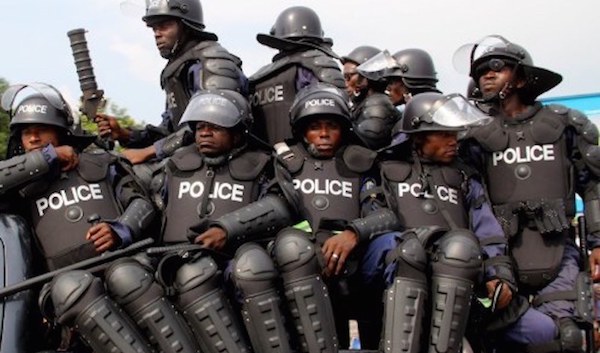
The mystery surrounding the death of a man whose body was found by the roadside in Abuja has taken a new turn, with police tracing the case through his missing mobile phone to a married woman who allegedly spent time with him at a hotel.
The FCT Commissioner of Police, Mohammed Sanusi, disclosed this on Saturday in Abuja, saying investigators arrested Rukayat Muhammed after tracing the deceased’s final communications.
The man was found dead on August 26 along the Kubwa Expressway, near Katampe under the bridge, after his family had earlier reported him missing.
According to the police, the case initially raised suspicion of a possible “one chance” incident. Investigators, however, established that the dead man was the missing person after identifying his remains.
Sanusi said the deceased’s mobile phone was missing and had been switched off. Police investigators subsequently traced his last known communication, leading them to Rukayat, a resident of Garki Area 2.
Investigators reportedly discovered that Rukayat, who is married, was allegedly in a romantic relationship with the deceased. The police said she had saved his contact under the name “Safiyat.”
The CP said the pair had lodged at Good Samaritan Guest House on 2nd Avenue, Gwarinpa, where the man later died.
Sanusi said Rukayat allegedly discovered that the man was no longer breathing but failed to alert the police or hotel management. Instead, she allegedly took his phone and left the hotel.
The case took another turn when hotel management later discovered the man’s body inside the room after attempts to contact the occupants failed.
Rather than reporting the discovery, two hotel staff members, Ibrahim Omeiza and Kefat Bitrus, allegedly removed the body from the room and transported it to the Kubwa Expressway, where they dumped it under the Katampe bridge.
The police said the action was apparently intended to distance the hotel and its management from the death.
Sanusi said detectives were still working to establish exactly how the man died and determine the individual roles of those connected to the incident.
He warned that anyone found to have participated in the death, concealment or abandonment of the body would face prosecution.
The commissioner said the investigation remains ongoing.

The Enugu State Government has suspended His Royal Majesty, Igwe Eze William Ezugwu, the traditional ruler of Ibagwa Ogbozalla Opi Autonomous Community, in Nsukka Local Government Area of Enugu state.
The state government accused Igwe Ezugwu of violating provisions of the state’s Traditional Rulers Law.
In a letter of suspension dated September 24, the Enugu State Government cited his alleged failure to constitute his cabinet, failure to establish a Town Union governing body, and persistent conduct deemed inconsistent with the laws governing traditional rulers in the state.
The suspension comes barely three weeks after Igwe William Ezugwu received NDC presidential candidate Peter Obi at his palace in Opi, Nsukka LGA, where he reportedly blessed Obi’s presidential ambition.
-

 News2 years ago
Senate to speed up conclusion of Nigeria Forest Security Service Bill
-
 News1 year ago
The Many Lies Against Bashir Haske
-

 News3 years ago
Breaking: Tinubu’s authentic ministerial nominees
-

 News3 years ago
“Anytime we want to kill terrorists, President would ask us to take permission from France but they were killing our soldiers-” Niger Republic coup leader
-

 News3 years ago
“I’m leaving the Catholic church because Bishop Onah is oppressing me,” says Okunerere
-

 News3 years ago
My nude photo leak was a mistake- lawyer Ifunanya
-
 News4 months ago
See your state governor’s performance ranking
-

 News3 years ago
Radio Nigeria’s veteran broadcaster Kelvin Ugwu dies three months after retirement from service