
News
Whatever Matawalle Is Doing, He Is Doing Right


On the 30th of September 2024, a video surfaced online, featuring the notorious terrorist Bello Turji—this time, not with his characteristic bravado, but in a startling display of vulnerability. The once-defiant bandit was seen pleading for forgiveness and calling for dialogue with the Federal Government, signaling his desire to end armed violence in Zamfara State. He accused the Governor of Zamfara, Dauda Lawal, and the Minister of State for Defence, Dr. Bello Matawalle, of politicizing insecurity, yet conveniently neglected to acknowledge the undeniable military gains made since Matawalle led the Service Chiefs to Sokoto.
Governor Lawal, despite his criticisms of Matawalle, has repeatedly traveled to Abuja, over 500 kilometers from his state capital, to launch a series of unfounded accusations against the Minister, blaming him for the state’s security challenges while conspicuously omitting recognition of the notable victories that have been achieved since Matawalle’s intervention.
In response, Dr. Bello Matawalle delivered a candid and unyielding rebuttal, presenting the facts to the Nigerian public. He reminded the nation that he is the only political figure from Zamfara State who has taken a solemn oath on the Holy Quran, categorically denouncing any association with banditry or its supporters. In a bold challenge, he called upon his critics, including Dauda Lawal and Gen. Aliyu Gusau, to do the same—if indeed they are free from any connections to the bandits. To date, none have accepted this challenge, leaving much to be inferred about their support for the insurgency in the region.
But I digress. Let us return to the matter at hand—the sudden shift in Turji’s stance. For a terrorist leader who, only weeks ago, boasted of his capacity to challenge the Nigerian Armed Forces, this reversal is no coincidence. Something significant has clearly shaken him.
Consider the context: six days before Turji’s plea, his associate, Kachalla Sani-Black—a feared bandit leader commanding over 150 loyal men—was neutralized in a precisely executed ambush by the local police in Maru Local Government Area of Zamfara State. Not only was Sani-Black eliminated, but his sons also met their demise alongside him, sending a powerful message to other criminal elements.
Before Sani-Black’s elimination, another key bandit leader, Baleri Fakai, along with 30 of his strongest fighters, was taken down in the same region. Days prior, on the 12th of September, the Nigerian Air Force Special Forces struck a decisive blow by eliminating the infamous Halilu Sububu, a terrorist whose attacks on a military base in Katsina in 2021 resulted in the deaths of numerous soldiers. Sububu had since unleashed terror across Sokoto, Niger, and Kaduna States. His demise, followed by the neutralization of another bandit, Halilu Buzu, demonstrated the coordinated efforts of Nigeria’s military forces in dismantling the leadership of these insurgent groups.
Then came the elimination of Sani Wala Burki, a notorious terrorist responsible for years of violence in the Safana and Batsari Local Government Areas of Katsina State. His death on the 14th of September was yet another major victory achieved by the Nigerian Armed Forces.
So, what explains this sudden spate of victories? What transformed the tide of battle in the North-Western region, where terrorists have been neutralized one after the other?
The turning point came on the 1st of September 2024, when Dr. Bello Matawalle, Minister of State for Defence, led the Chief of Defence Staff, General Christopher Musa, and other senior military leaders to Sokoto on a Presidential directive. Tasked with the mission of eradicating banditry in the North-West, Matawalle, a leader known for his courage and resolve, embarked on an intensive operational tour with the service chiefs. He spent over a week on the ground, receiving strategic briefings and collaborating with troops to craft a comprehensive plan to restore peace in the region.
It was in the aftermath of this high-level visit that Nigerians began to witness the cascading military successes that have since garnered national attention. Whatever strategic directives Matawalle provided to the troops, they executed them with precision, delivering the results he has since reported back to President Tinubu.
For those observant enough to read between the lines, the attacks on Dr. Bello Matawalle by his predecessor, Dauda Lawal, reek of jealousy—an attempt to detract from the remarkable progress achieved under Matawalle’s leadership. The spate of victories over banditry is undeniable, and attempts to undermine these achievements are little more than distractions.
Even Senator Shehu Sani, a known critic of Nigeria’s political elite, commended Matawalle’s efforts. In a recent statement, he dismissed the criticisms aimed at the Minister of State for Defence and the National Security Adviser, Nuhu Ribadu, as counterproductive distractions in the ongoing fight against terrorism. “Why are some people unhappy that bandit leaders are being eliminated?” Sani asked. “Anyone genuinely committed to ending the reign of kidnappers and murderers should support these efforts, not engage in frivolous criticisms.”
It is evident that individuals like Governor Dauda Lawal are less than pleased with the recent military successes in Zamfara and beyond. But as history has shown, true leadership rises above such petty grievances.
In the coming days and weeks, it is widely expected that the once loquacious Bello Turji’s fate will be sealed, and the Nigerian Armed Forces will continue their pursuit of him until he, too, is eliminated. The momentum generated since Dr. Matawalle’s strategic tour of the North-West has reinvigorated the morale of our troops. This is the unmistakable hallmark of effective leadership.
On the 2nd of October 2024, as President Bola Ahmed Tinubu departed for his annual leave in the United Kingdom, he was seen exchanging firm handshakes with Dr. Bello Matawalle and National Security Adviser Nuhu Ribadu. The confidence in their exchange was palpable, and one could almost imagine the President’s words: “Whatever you’re doing, you’re doing it right. Finish the job, Matawalle. Bring Turji to his knees and secure our nation.”
Nathaniel C. Adoji writes from Kaduna State.


Health professionals have warned that regular consumption of shawarma containing high amounts of salt, sugar, fat, seasoning and processed meat may contribute to hypertension, obesity, diabetes and kidney disease.
Excessive salt can raise blood pressure and put additional strain on the kidneys, while high-calorie sauces may contribute to weight gain.
Nutrition experts advised Nigerians to eat shawarma in moderation, use less mayonnaise and other sauces, choose lean grilled meat and add more vegetables. Consumers were also urged to check vendors’ cleanliness and avoid food prepared where ingredients are exposed to flies, dust or poor handling.
A recent report by experts also warned that frequent consumption of Shawarma may increase the risk of other food-borne infections and long-term health problems.
The report contains documented cases of people who suffered vomiting, diarrhoea, stomach pain and weakness after eating shawarma, with some requiring hospital treatment.
According to the report, poor hygiene could allow bacteria and other contaminants into shawarma, causing illnesses including cholera, dysentery, typhoid and salmonellosis.
It also raised concerns about mayonnaise and creamy sauces kept without proper refrigeration and warned that poor storage could encourage bacterial growth and increase the risk of food poisoning.
A study cited in the report found bacterial contamination in ready-to-eat shawarma sold on the streets
Experts also raised concerns about processed meat such as sausage, noting that the International Agency for Research on Cancer classifies processed meat as carcinogenic to humans.
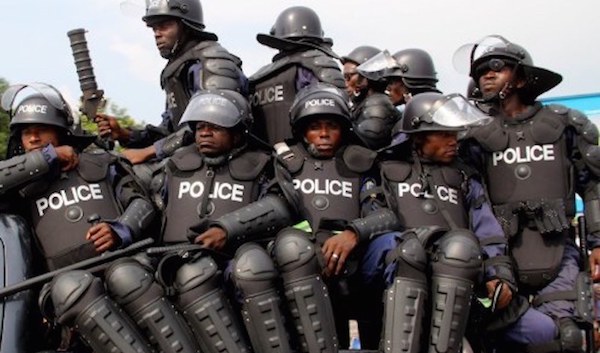
The mystery surrounding the death of a man whose body was found by the roadside in Abuja has taken a new turn, with police tracing the case through his missing mobile phone to a married woman who allegedly spent time with him at a hotel.
The FCT Commissioner of Police, Mohammed Sanusi, disclosed this on Saturday in Abuja, saying investigators arrested Rukayat Muhammed after tracing the deceased’s final communications.
The man was found dead on August 26 along the Kubwa Expressway, near Katampe under the bridge, after his family had earlier reported him missing.
According to the police, the case initially raised suspicion of a possible “one chance” incident. Investigators, however, established that the dead man was the missing person after identifying his remains.
Sanusi said the deceased’s mobile phone was missing and had been switched off. Police investigators subsequently traced his last known communication, leading them to Rukayat, a resident of Garki Area 2.
Investigators reportedly discovered that Rukayat, who is married, was allegedly in a romantic relationship with the deceased. The police said she had saved his contact under the name “Safiyat.”
The CP said the pair had lodged at Good Samaritan Guest House on 2nd Avenue, Gwarinpa, where the man later died.
Sanusi said Rukayat allegedly discovered that the man was no longer breathing but failed to alert the police or hotel management. Instead, she allegedly took his phone and left the hotel.
The case took another turn when hotel management later discovered the man’s body inside the room after attempts to contact the occupants failed.
Rather than reporting the discovery, two hotel staff members, Ibrahim Omeiza and Kefat Bitrus, allegedly removed the body from the room and transported it to the Kubwa Expressway, where they dumped it under the Katampe bridge.
The police said the action was apparently intended to distance the hotel and its management from the death.
Sanusi said detectives were still working to establish exactly how the man died and determine the individual roles of those connected to the incident.
He warned that anyone found to have participated in the death, concealment or abandonment of the body would face prosecution.
The commissioner said the investigation remains ongoing.
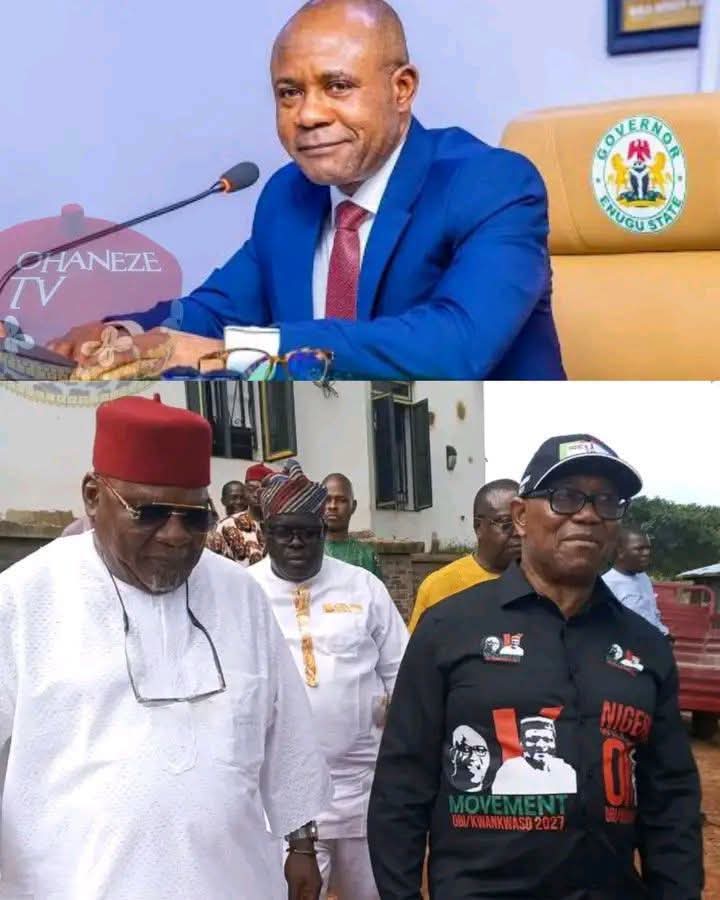
The Enugu State Government has suspended His Royal Majesty, Igwe Eze William Ezugwu, the traditional ruler of Ibagwa Ogbozalla Opi Autonomous Community, in Nsukka Local Government Area of Enugu state.
The state government accused Igwe Ezugwu of violating provisions of the state’s Traditional Rulers Law.
In a letter of suspension dated September 24, the Enugu State Government cited his alleged failure to constitute his cabinet, failure to establish a Town Union governing body, and persistent conduct deemed inconsistent with the laws governing traditional rulers in the state.
The suspension comes barely three weeks after Igwe William Ezugwu received NDC presidential candidate Peter Obi at his palace in Opi, Nsukka LGA, where he reportedly blessed Obi’s presidential ambition.
-

 News2 years ago
Senate to speed up conclusion of Nigeria Forest Security Service Bill
-

 News1 year ago
The Many Lies Against Bashir Haske
-

 News3 years ago
Breaking: Tinubu’s authentic ministerial nominees
-
 News3 years ago
“Anytime we want to kill terrorists, President would ask us to take permission from France but they were killing our soldiers-” Niger Republic coup leader
-
 News3 years ago
“I’m leaving the Catholic church because Bishop Onah is oppressing me,” says Okunerere
-

 News3 years ago
My nude photo leak was a mistake- lawyer Ifunanya
-
 News4 months ago
See your state governor’s performance ranking
-

 News3 years ago
Radio Nigeria’s veteran broadcaster Kelvin Ugwu dies three months after retirement from service