News
Prof. Anosike urges universities to work with NiMet on climate research, hammers on sustainability reporting

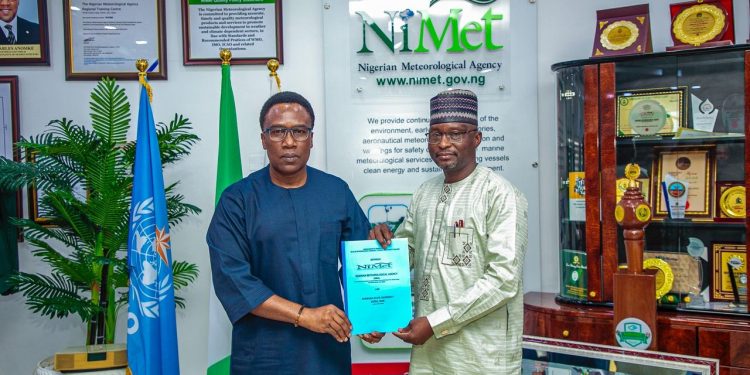
The Nigerian Meteorological Agency (NiMet) and Adamawa State University have signed a Memorandum of Understanding (MoU) designed to strengthen the timely delivery of early warnings and promote targeted research in climatology and climate change.
This is coming as Prof. Charles Anosike, the Director General of NiMet, at another event, highlighted climate risks and the need for collaboration in sustainability reporting.
The partnership with Adamawa State University aims at enhancing the accuracy and speed of early warnings—such as real-time weather alerts and seasonal forecasts tailored for local farmers and communities in Adamawa State; as well as to support the creation of specialized training programs for students and practitioners, and includes the publication of joint research findings that address region-specific climate challenges.
In his remarks, Prof. Anosike, emphasized the need for tertiary institutions to work closely with the agency on research and the effective dissemination of early warnings.
He noted that, in line with the UN’s “Early Warning for All 2027” initiative, such collaborations are critical to strengthening food security, protecting lives and property, and building local resilience to extreme weather events.
Prof. Anosike highlighted specific areas of focus for the partnership, including climate data analysis, drought and flood monitoring, and the integration of climate science into community-based disaster preparedness.
Vice-Chancellor of Adamawa State University, Prof. Augustine Clement, expressed his commitment to fostering collaboration and knowledge exchange. He assured NiMet that the university would actively engage in projects such as co-developing educational workshops, curating climate research internships, and supporting community outreach programs that translate scientific findings into practical guidance for the public and policymakers in the state.
In the same vein, Prof. Anosike, has emphasized the need for tertiary institutions to work closely with the agency on research and the effective dissemination of early warnings.
He spoke at the Investor Roundtable hosted by the Nigerian Stock Exchange Group to commemorate the International Sustainability Standards Board (ISSB), Prepares Readiness Programme.
Anosike noted that the World Economic Forum’s identification of increasing extreme weather events as a top global risk, impacting financial institutions through increased costs, physical risks, and liquidity issues.
He said “extreme weather events are both short-term and long-term risks, highlighting their significant and growing economic costs, disproportionate impact on developing countries, and potential triggers for food price shocks, supply chain disruptions, and increased insurance costs.
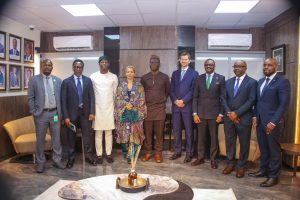
“Climate disasters are not just environmental concerns—they are financial risks. ‘Financial institutions face increased credit risk in Nigeria when borrowers’ ability to repay loans is impacted by climate disasters, and market risks as the value of certain assets declines. Increasing climate damages are straining private insurance markets, shifting more costs to government-run plans and raising questions about their sustainability. We need to work together, integrating contextual meteorological data into Sustainability Reporting and close climate data gaps in Nigeria”, he said.
Highlighting the impact of climate awareness, Professor Anosike notes that meteorology provides the fundamental weather and climate data that forms the foundation of sustainability reporting. Reliable climate data is crucial for informed decisions in our financial markets. It is essential for agricultural productivity and food security, aviation safety, building and construction, disaster preparedness, maritime operations, public health, and infrastructure development among others thereby ensuring sustainable economy
He spotlighted NiMet’s role as the nation’s climate custodian, entrusted solely with the mandate to observe, collate, collect, process, and disseminate weather and climate information for the safety of lives and property. Making weather and climate predictions across various timescales and ensuring timely communication of weather and climate information to support sustainable socio-economic development in Nigeria.
“NiMet has been at the forefront of climate data management and people cantered early Warning Systems,” Anosike said nd emphasised that greater investment, mutual engagement and quality climate data sharing are critical for effective sustainability reporting, fostering trust, transparency and collective progress towards climate informed goals.
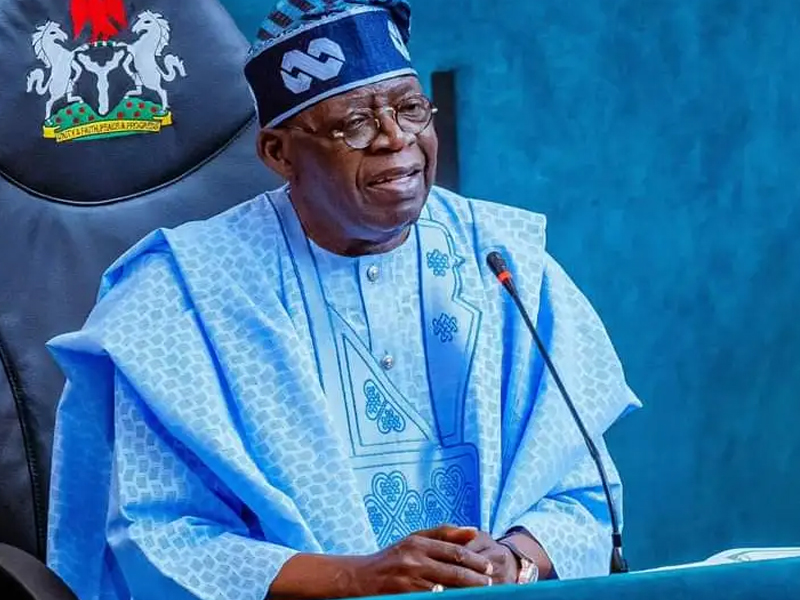
President Bola Tinubu on Monday disclosed that his government has created 650,000 jobs through its National Micro, Small and Medium Enterprises (MSME) Clinics in 19 states of the Federation and the Federal Capital Territory (FCT).
Tinubu also vowed to remove all bottlenecks militating against Nigerians turning ideas and skills into successful businesses.
The President made this known via his verified X handle, @officialABAT and explained that a tailor should not need millions of naira to buy industrial machinery before she can grow her business while a food processor should not have to build a factory before producing at scale.
This, he stated, informed why the Federal Government, “under our Renewed Hope administration, is investing in shared MSME hubs through our National MSME Clinics, giving entrepreneurs access to modern equipment, reliable power and production facilities without carrying the full cost alone.”
According to Tinubu: “Today, 21 shared facilities across 19 states and the FCT are supporting businesses and an estimated 650,000 jobs. ReadPolitical News
“Nigerians do not lack ideas, skill or ambition. Too often, they lack access to the tools and infrastructure needed to turn them into successful businesses.
“Our job is to remove those barriers.
“When small businesses can produce more, at lower cost, they become more competitive. They grow. They employ more people. They create income and opportunity for Nigerian families.
“Giving Nigerian enterprise the tools to succeed is how we build prosperity from the ground up. That is the Nigeria we are building.”

Health professionals have warned that regular consumption of shawarma containing high amounts of salt, sugar, fat, seasoning and processed meat may contribute to hypertension, obesity, diabetes and kidney disease.
Excessive salt can raise blood pressure and put additional strain on the kidneys, while high-calorie sauces may contribute to weight gain.
Nutrition experts advised Nigerians to eat shawarma in moderation, use less mayonnaise and other sauces, choose lean grilled meat and add more vegetables. Consumers were also urged to check vendors’ cleanliness and avoid food prepared where ingredients are exposed to flies, dust or poor handling.
A recent report by experts also warned that frequent consumption of Shawarma may increase the risk of other food-borne infections and long-term health problems.
The report contains documented cases of people who suffered vomiting, diarrhoea, stomach pain and weakness after eating shawarma, with some requiring hospital treatment.
According to the report, poor hygiene could allow bacteria and other contaminants into shawarma, causing illnesses including cholera, dysentery, typhoid and salmonellosis.
It also raised concerns about mayonnaise and creamy sauces kept without proper refrigeration and warned that poor storage could encourage bacterial growth and increase the risk of food poisoning.
A study cited in the report found bacterial contamination in ready-to-eat shawarma sold on the streets
Experts also raised concerns about processed meat such as sausage, noting that the International Agency for Research on Cancer classifies processed meat as carcinogenic to humans.
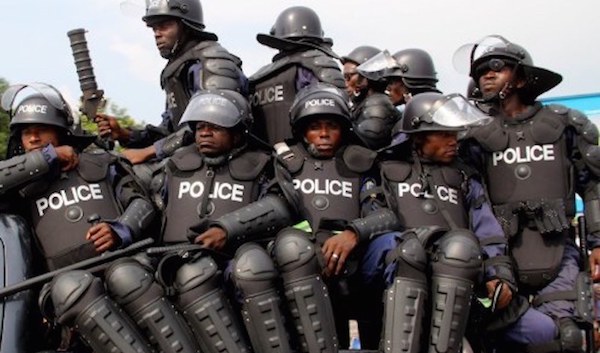
The mystery surrounding the death of a man whose body was found by the roadside in Abuja has taken a new turn, with police tracing the case through his missing mobile phone to a married woman who allegedly spent time with him at a hotel.
The FCT Commissioner of Police, Mohammed Sanusi, disclosed this on Saturday in Abuja, saying investigators arrested Rukayat Muhammed after tracing the deceased’s final communications.
The man was found dead on August 26 along the Kubwa Expressway, near Katampe under the bridge, after his family had earlier reported him missing.
According to the police, the case initially raised suspicion of a possible “one chance” incident. Investigators, however, established that the dead man was the missing person after identifying his remains.
Sanusi said the deceased’s mobile phone was missing and had been switched off. Police investigators subsequently traced his last known communication, leading them to Rukayat, a resident of Garki Area 2.
Investigators reportedly discovered that Rukayat, who is married, was allegedly in a romantic relationship with the deceased. The police said she had saved his contact under the name “Safiyat.”
The CP said the pair had lodged at Good Samaritan Guest House on 2nd Avenue, Gwarinpa, where the man later died.
Sanusi said Rukayat allegedly discovered that the man was no longer breathing but failed to alert the police or hotel management. Instead, she allegedly took his phone and left the hotel.
The case took another turn when hotel management later discovered the man’s body inside the room after attempts to contact the occupants failed.
Rather than reporting the discovery, two hotel staff members, Ibrahim Omeiza and Kefat Bitrus, allegedly removed the body from the room and transported it to the Kubwa Expressway, where they dumped it under the Katampe bridge.
The police said the action was apparently intended to distance the hotel and its management from the death.
Sanusi said detectives were still working to establish exactly how the man died and determine the individual roles of those connected to the incident.
He warned that anyone found to have participated in the death, concealment or abandonment of the body would face prosecution.
The commissioner said the investigation remains ongoing.
-

 News2 years ago
Senate to speed up conclusion of Nigeria Forest Security Service Bill
-

 News1 year ago
The Many Lies Against Bashir Haske
-

 News3 years ago
Breaking: Tinubu’s authentic ministerial nominees
-
 News3 years ago
“Anytime we want to kill terrorists, President would ask us to take permission from France but they were killing our soldiers-” Niger Republic coup leader
-

 News3 years ago
“I’m leaving the Catholic church because Bishop Onah is oppressing me,” says Okunerere
-

 News3 years ago
My nude photo leak was a mistake- lawyer Ifunanya
-
 News4 months ago
See your state governor’s performance ranking
-

 News3 years ago
Radio Nigeria’s veteran broadcaster Kelvin Ugwu dies three months after retirement from service