
News
President Tinubu says Nigeria must address historical injustices to achieve security, peace

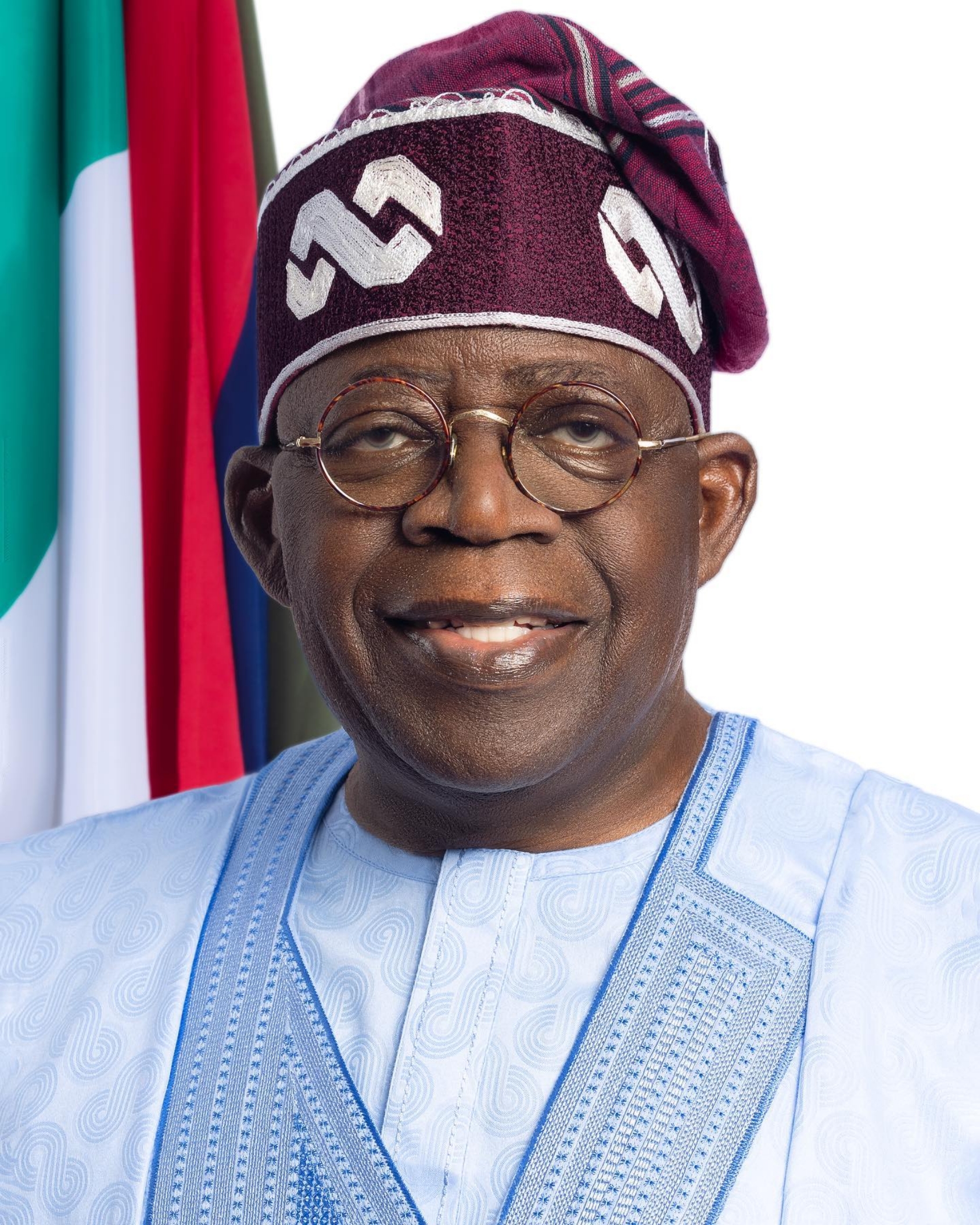
Senator Bola Tinubu, the President of the Federal Republic of Nigeria said on Monday in Abuja, that the country must address historical injustices in order to achieve security and peace.
Tinubu said though steps taken to combat Nigeria’s security challenges had been mapped out before he took up the presidency, achieving security and peace required that historical injustices that had torn communities apart were first fully addressed.
He spoke in Katsina when he declared open the North West Peace and Security Summit, with the theme, “Regional Cooperation for Securing Lives and Livelihoods in North West Nigeria.”
The president assured that his administration would not rest until banditry, terrorism, and other forms of insecurity were completely eliminated from the country.
He said the country had already begun to witness a turning point in security, as the strategies adopted by the security forces, including rules of engagement employed, were beginning to yield result.
The North West Peace and Security Summit, organised by the North West Governors’ Forum, in collaboration with the United Nations Development Programme (UNDP), was held at Government House, Katsina.
Tinubu, who was represented at the two-day event by Vice President Kashim Shettima, declared, “What we are witnessing across the North is an explosion of these damaged relationships, and we have come to say, enough is enough.
“Our first decision was to task our brothers from the North-west and the North-east with the defence and security of the region. Who else can better understand the complexity of the crisis of a region than the people themselves?
“This has been a turning point, and I am proud to share that the strategies we have employed have begun to provide redemption. We are not slowing down until we achieve our aim.”
Tinubu described the summit as a communal gathering to address “the afflictions that have threatened the stability and unity” of the North.
According to him, “Beyond the economic rationale that drove the amalgamation of the Northern and Southern parts of Nigeria, the formation of our great nation was inspired by the need for mutual protection. But, I ask, how can we achieve this sacred objective if one part is afflicted?
“We have long established that whatever ails any part of this federation destabilises the other. So, the issue of national security in the North-west is not a sectional agenda. We promised to make Nigeria safer, and this aim has been our topmost priority since we came to office over a year ago.”
Stating that the bold steps taken to combat the security challenges his administration inherited were mapped out even before embarking on the journey, Tinubu observed that achieving security and peace would require that the historical injustices that had torn communities in Nigeria apart were fully addressed.
He said, “We must also reverse the institutional frailties governing security and the economic dysfunctions that create vulnerabilities to crime. We must also counter the ideological mischief that has pervaded the discourse of peace and security in the region.”
The president stated that the peace and security summit became necessary to proffer solutions to insecurity and ensure a region, “Where every trade is safe, where every group is at peace, and where the policing and military presence of the state is optimal.”
In order to come up with pragmatic solutions to the security challenges in the North-west, Tinubu said his administration adopted kinetic and non-kinetic interventions designed to build the perimeters of the country’s security infrastructure.
He mentioned the Pulaku resettlement initiative as one of the non-kinetic interventions rolled out by the administration. He said it was a timely solution to address some of the root causes of disputes and insecurity in the North-west.
According to him, “Our choice of Sokoto, Kebbi, Benue, Katsina, Zamfara, Niger, and Kaduna states for the pilot phase is strategically planned to create positive, nationwide transformations.
“The comprehensive plan includes building residences, roads, schools, and essential facilities, fulfilling our pledge to the nation.
“This effort symbolises our commitment to sustainable development and a unified, peaceful, and prosperous Nigeria, transforming our diversity into strength. Today, I believe we are going to continue comparing our ideas and thoughts to not only review our strategies and improve upon them, to make the states in the North-west stable and peaceful parts of the nation, but to assure ourselves that we cannot achieve the triumph we desire without any part of the nation being secure.”
Addressing the topic, “Securing Stability: Uniting for Peace in North-west Nigeria,” Shettima, in a release by his media assistant, Stanley Nkwocha, explained why Northern Nigeria was always considered globally as one unified people, saying the region’s unity is firmly “rooted in a culture and bond of shared interests and common pursuits”.
The summit was also attended by the immediate past President of Nigeria, Muhammadu Buhari, as well as Governors Umar Namadi of Jigawa State, Ahmed Aliyu of Sokoto State, and Dauda Lawal of Zamfara State, deputy governors of Kaduna, Kebbi and Kano states as well as the Sultan of Sokoto and other traditional rulers.

Health professionals have warned that regular consumption of shawarma containing high amounts of salt, sugar, fat, seasoning and processed meat may contribute to hypertension, obesity, diabetes and kidney disease.
Excessive salt can raise blood pressure and put additional strain on the kidneys, while high-calorie sauces may contribute to weight gain.
Nutrition experts advised Nigerians to eat shawarma in moderation, use less mayonnaise and other sauces, choose lean grilled meat and add more vegetables. Consumers were also urged to check vendors’ cleanliness and avoid food prepared where ingredients are exposed to flies, dust or poor handling.
A recent report by experts also warned that frequent consumption of Shawarma may increase the risk of other food-borne infections and long-term health problems.
The report contains documented cases of people who suffered vomiting, diarrhoea, stomach pain and weakness after eating shawarma, with some requiring hospital treatment.
According to the report, poor hygiene could allow bacteria and other contaminants into shawarma, causing illnesses including cholera, dysentery, typhoid and salmonellosis.
It also raised concerns about mayonnaise and creamy sauces kept without proper refrigeration and warned that poor storage could encourage bacterial growth and increase the risk of food poisoning.
A study cited in the report found bacterial contamination in ready-to-eat shawarma sold on the streets
Experts also raised concerns about processed meat such as sausage, noting that the International Agency for Research on Cancer classifies processed meat as carcinogenic to humans.
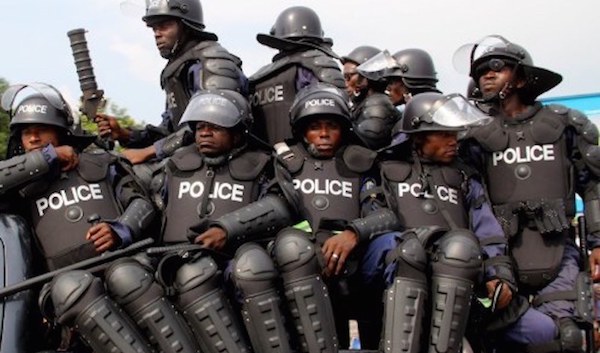
The mystery surrounding the death of a man whose body was found by the roadside in Abuja has taken a new turn, with police tracing the case through his missing mobile phone to a married woman who allegedly spent time with him at a hotel.
The FCT Commissioner of Police, Mohammed Sanusi, disclosed this on Saturday in Abuja, saying investigators arrested Rukayat Muhammed after tracing the deceased’s final communications.
The man was found dead on August 26 along the Kubwa Expressway, near Katampe under the bridge, after his family had earlier reported him missing.
According to the police, the case initially raised suspicion of a possible “one chance” incident. Investigators, however, established that the dead man was the missing person after identifying his remains.
Sanusi said the deceased’s mobile phone was missing and had been switched off. Police investigators subsequently traced his last known communication, leading them to Rukayat, a resident of Garki Area 2.
Investigators reportedly discovered that Rukayat, who is married, was allegedly in a romantic relationship with the deceased. The police said she had saved his contact under the name “Safiyat.”
The CP said the pair had lodged at Good Samaritan Guest House on 2nd Avenue, Gwarinpa, where the man later died.
Sanusi said Rukayat allegedly discovered that the man was no longer breathing but failed to alert the police or hotel management. Instead, she allegedly took his phone and left the hotel.
The case took another turn when hotel management later discovered the man’s body inside the room after attempts to contact the occupants failed.
Rather than reporting the discovery, two hotel staff members, Ibrahim Omeiza and Kefat Bitrus, allegedly removed the body from the room and transported it to the Kubwa Expressway, where they dumped it under the Katampe bridge.
The police said the action was apparently intended to distance the hotel and its management from the death.
Sanusi said detectives were still working to establish exactly how the man died and determine the individual roles of those connected to the incident.
He warned that anyone found to have participated in the death, concealment or abandonment of the body would face prosecution.
The commissioner said the investigation remains ongoing.
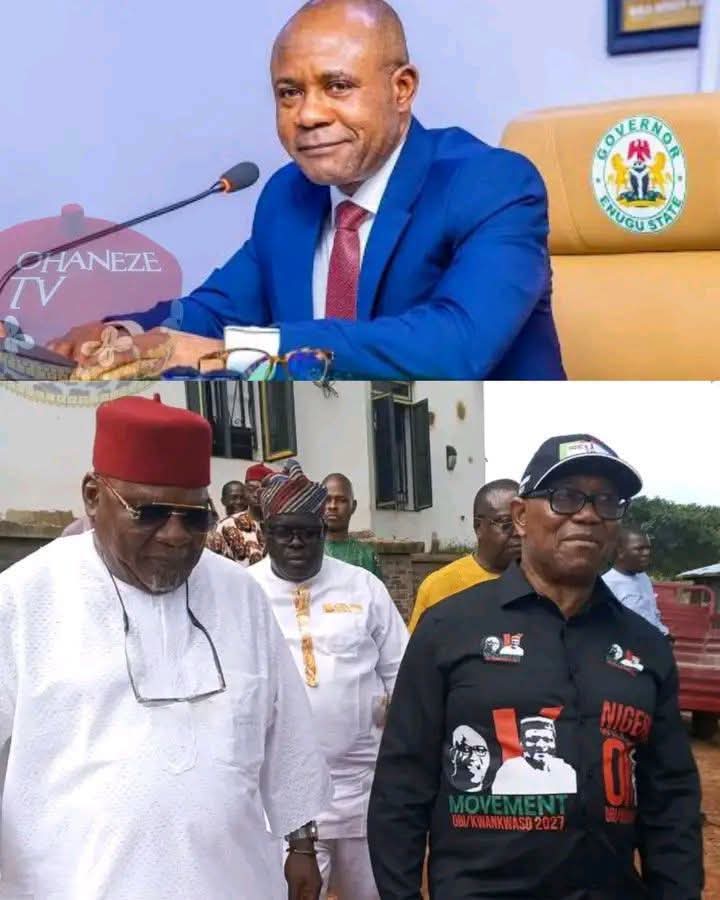
The Enugu State Government has suspended His Royal Majesty, Igwe Eze William Ezugwu, the traditional ruler of Ibagwa Ogbozalla Opi Autonomous Community, in Nsukka Local Government Area of Enugu state.
The state government accused Igwe Ezugwu of violating provisions of the state’s Traditional Rulers Law.
In a letter of suspension dated September 24, the Enugu State Government cited his alleged failure to constitute his cabinet, failure to establish a Town Union governing body, and persistent conduct deemed inconsistent with the laws governing traditional rulers in the state.
The suspension comes barely three weeks after Igwe William Ezugwu received NDC presidential candidate Peter Obi at his palace in Opi, Nsukka LGA, where he reportedly blessed Obi’s presidential ambition.
-

 News2 years ago
Senate to speed up conclusion of Nigeria Forest Security Service Bill
-

 News1 year ago
The Many Lies Against Bashir Haske
-

 News3 years ago
Breaking: Tinubu’s authentic ministerial nominees
-
 News3 years ago
“Anytime we want to kill terrorists, President would ask us to take permission from France but they were killing our soldiers-” Niger Republic coup leader
-
 News3 years ago
“I’m leaving the Catholic church because Bishop Onah is oppressing me,” says Okunerere
-

 News3 years ago
My nude photo leak was a mistake- lawyer Ifunanya
-
 News4 months ago
See your state governor’s performance ranking
-

 News3 years ago
Radio Nigeria’s veteran broadcaster Kelvin Ugwu dies three months after retirement from service