
News
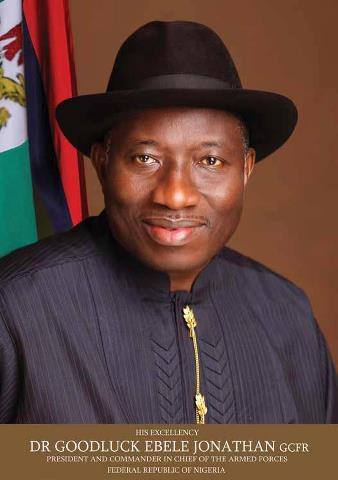
Northern Group shoves Atiku over attack on Goodluck Jonathan

By Bonaventure Phillips Melah
Arewa Mandate for Unity and National Rebirth (AMUNR), has criticized former vice president, Atiku Abubakar for his recent attack on former President Goodluck Jonathan.
Atiku, the presidential candidate of the Peoples Democratic Party (PDP) in the 2023 general election, had on Wednesday described Jonathan’s presidency as a ‘product of inexperience, among other unsavoury remarks.
But reacting to the development on Thursday, AMUNR, through a statement signed by Danladi Luka Ishiaku and Basiru Usman Wakili, National Coordinator and National Secretary respectively, urged Atiku to pursue his presidential ambition without looking for who to blame for his years of political misfortune.
AMUNR said contrary to Atiku’s wrong narrative, Dr. Goodluck Jonathan served Nigeria for 16 uninterrupted years from deputy governor to governor, vice president to acting president and president of the country for five years, adding that he was much more prepared to serve Nigeria at the highest level, with achievements that are yet to be equalled by any Nigerian leader in history.
The group said Atiku has failed to achieve his presidential ambition, partly due to what it described as desperation and impatience which it said was responsible for his movement from PDP to three different parties and back to PDP and now to ADC, saying Atiku would have served as president under the PDP of he had allowed Jonathan to complete his terms without disrupting the system.
It therefore advised the former vice president to blame himself and not Jonathan for his political woes.
AMUNR said- “Our attention has been drawn to the now familiar comments by former Vice-President Atiku Abubakar, who has chosen to substitute revisionism for reality by branding Dr. Goodluck Jonathan’s presidency as a product of “inexperience.” This claim is not just wrong; it is mischievous.
“Dr. Jonathan rose through every constitutional rung of leadership—Deputy Governor, Governor, Vice-President, and Acting President during the national uncertainty that followed the illness of Umaru Musa Yar’Adua. To dismiss that trajectory as “inexperience” is either a willful distortion of facts or a troubling misunderstanding of governance itself.
“But perhaps the more pressing question is this: from what vantage point is this judgment being made?
“Here is a man who has spent decades in perpetual pursuit of the presidency contesting, recalibrating, and returning, yet has never once borne the full weight of that office. It is, therefore, remarkable that someone whose “experience” is defined largely by ambition now seeks to diminish the record of someone whose experience was tested in office, under pressure, and in history’s full glare.
“Under Dr. Jonathan, Nigeria did not drift, it advanced. The economy was rebased, emerging as Africa’s largest. The power sector was unbundled after years of entrenched dysfunction. Agricultural corruption networks were dismantled. Rail and road infrastructure, long abandoned, were revived. These are not opinions; they are verifiable milestones.
“And then came the defining moment: when faced with the choice between personal power and national peace, Dr. Jonathan chose Nigeria. His peaceful concession in 2015 remains one of the most consequential acts of democratic leadership on the continent, an act that secured stability and earned global respect.
“That is what real leadership looks like.
“To now hear that legacy casually reduced to “inexperience” is not merely ironic, it is an attempt to gaslight a nation that lived through, and benefited from, those years.
“Nigerians remember. They remember results. They remember restraint. And they certainly remember who governed, and who merely aspired to.
“If experience is the argument, then the distinction is clear: one man has a record that can be scrutinized; the other has a résumé of repeated attempts.
“Dr. Jonathan’s legacy is not up for casual dismissal. It is written in policy, in progress, and in the democratic stability Nigeria still enjoys today.
“No amount of political revisionism can undo that record,” AMUNR concluded.
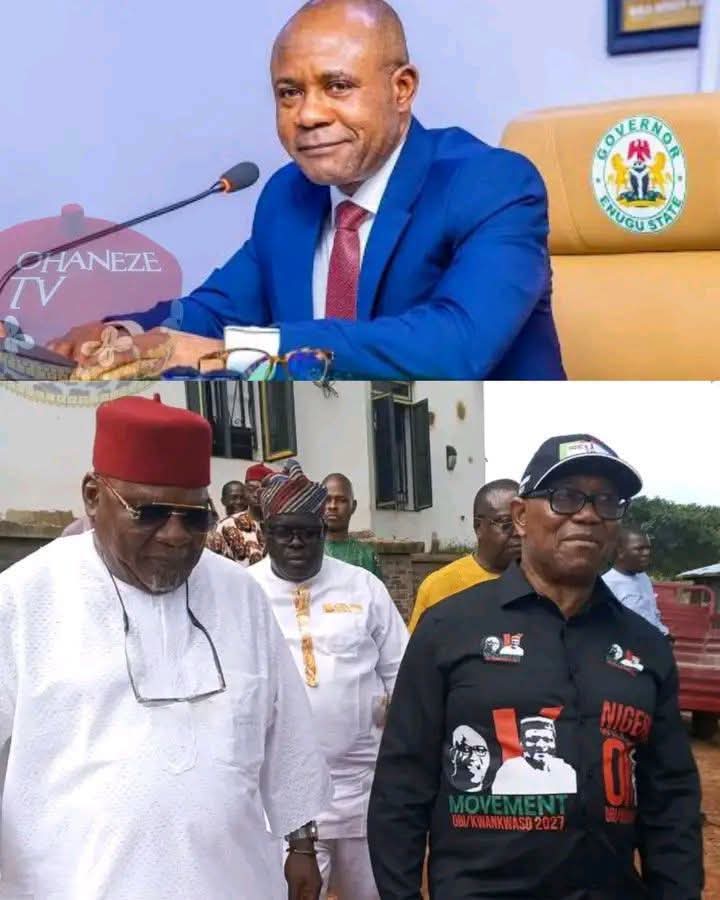
The Enugu State Government has suspended His Royal Majesty, Igwe Eze William Ezugwu, the traditional ruler of Ibagwa Ogbozalla Opi Autonomous Community, in Nsukka Local Government Area of Enugu state.
The state government accused Igwe Ezugwu of violating provisions of the state’s Traditional Rulers Law.
In a letter of suspension dated September 24, the Enugu State Government cited his alleged failure to constitute his cabinet, failure to establish a Town Union governing body, and persistent conduct deemed inconsistent with the laws governing traditional rulers in the state.
The suspension comes barely three weeks after Igwe William Ezugwu received NDC presidential candidate Peter Obi at his palace in Opi, Nsukka LGA, where he reportedly blessed Obi’s presidential ambition.
The Deputy Commander of Operation Rainbow, CSP (Chief Superintendent of Police) Dennis David Babale, has been killed after gunmen suspected to be Fulani Bandits ambushed personnel of the security outfit along the Bokkos-Barkin Ladi road in Barkin Ladi Local Government Area of Plateau State.
Operation Rainbow is a State-backed community security and intelligence-gathering outfit in Plateau State, Nigeria, originally established in 2010 under former Governor Jonah Jang and recently revamped by Governor Caleb Mutfwang to combat rural violence and beef up grassroots security.
The incident reportedly occurred at about 4:06 p.m. on Tuesday, September 22, 2026 when the personnel, travelling in a Toyota Hilux vehicle, came under attack by unidentified gunmen.
Troops of Sector 4, Operation ENDURING PEACE (OPEP), responded to a distress report and moved to the location of the attack.
Sources told reporters that Babale sustained gunshot wounds during the ambush and was evacuated to the General Hospital, Barkin Ladi, for medical attention.
Following the attack, troops, working alongside personnel of other security agencies, launched offensive operations and a manhunt for the assailants within the general area.
Security forces have intensified efforts to track the attackers and prevent further attacks along the route.

Director General/CEO of the Nigerian Meteorological Agency (NiMet) and Nigeria’s Permanent Representative at the World Meteorological Organization, Prof. Charles Anosike and other Chief Executive Officers of similar agencies across the world, have concluded a one week high level dialogue on Climate Science Information for Climate Finance and the 53rd Senior Official Field Exchange (SOFE) in Beijing, China.
The event which was hosted by World Meteorological Organization (WMO), took place from September 14 to 18, 2026 and featured discussions on: strengthening the role and leadership development of National Meteorological and Hydrological Services (NMHSs) in mobilizing climate finance; aligning scientific and technical capabilities with risk-informed, people-centred early warning systems; shifting from technical assistance to sustainable investments by expanding practical cooperation between meteorological frameworks and multilateral financing entities; and support to NMHSs leadership on strengthening strategic thinking and fostering productive partnerships.
Held back-to-back with the High-level dialogue was the 53rd Senior Official Field Exchange to Fujian Province for first-hand exposure to the implementation of Multi-hazard, Alert, Zero-gap and Universal (MAZU) platform – China’s AI-driven meteorological early warning solution in support of the Early Warnings for All (EW4All) initiative and disaster risk reduction practices through technical exchanges, field visits and peer learning.
-

 News2 years ago
Senate to speed up conclusion of Nigeria Forest Security Service Bill
-
 News1 year ago
The Many Lies Against Bashir Haske
-

 News3 years ago
Breaking: Tinubu’s authentic ministerial nominees
-
 News3 years ago
“Anytime we want to kill terrorists, President would ask us to take permission from France but they were killing our soldiers-” Niger Republic coup leader
-
 News3 years ago
“I’m leaving the Catholic church because Bishop Onah is oppressing me,” says Okunerere
-

 News3 years ago
My nude photo leak was a mistake- lawyer Ifunanya
-
 News4 months ago
See your state governor’s performance ranking
-

 News3 years ago
Radio Nigeria’s veteran broadcaster Kelvin Ugwu dies three months after retirement from service