
News
Nigeria’s Quest to Overcome Famine Fiasco

By Chidi Ekeh
Introduction:
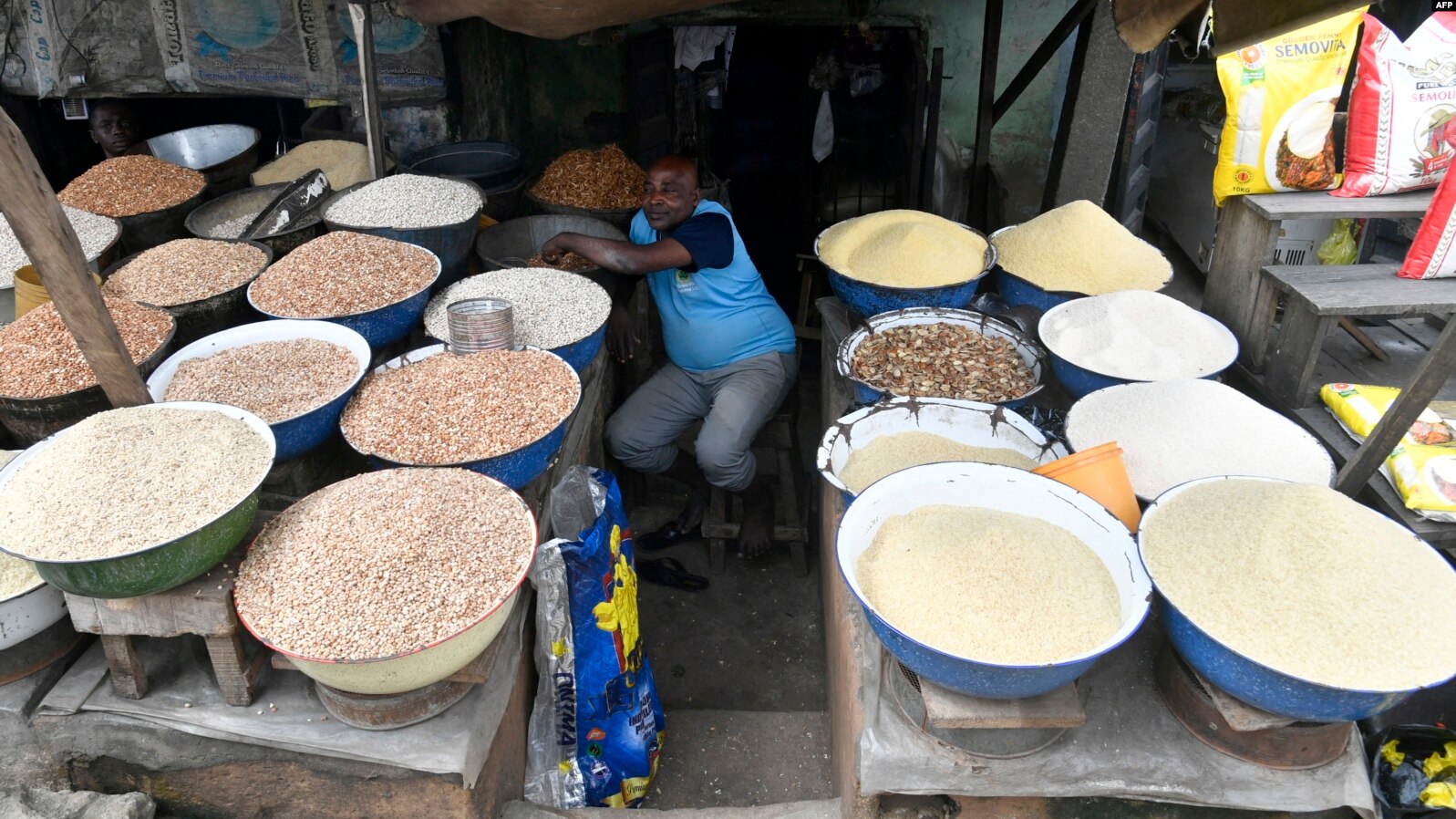
In the fertile lands of Nigeria, where the earth whispers tales of abundance and promise, there exists a shadow that looms large over the nation – hunger. Like weeds choking the life out of a flourishing crop, food insecurity has ensnared millions in its merciless grip, casting a pall of despair over the land. As the sun sets on another day of empty promises and failed policies, it is time for Nigeria to plow the fields of change, sowing seeds of hope and reaping a harvest of prosperity.
Sowing the Seeds of Crisis:
The roots of Nigeria’s hunger crisis run deep, intertwined with a tangled web of factors that have conspired to rob the land of its bounty. Poverty, like a stubborn thorn in the flesh, gnaws at the livelihoods of millions, rendering them powerless to fend off the pangs of hunger. Climate change, with its erratic temper and unrelenting fury, lashes out at the land, leaving behind a trail of desolation and failed crops. Conflict, too, has taken its toll, turning once-thriving farmlands into battlegrounds and forcing farmers to abandon their fields in search of safety. And in the patriarchal landscape of Nigerian agriculture, women toil in the shadows, their voices drowned out by the roar of inequality.
Fallow Fields and Broken Promises:
Amidst the barren landscape of hunger, Nigeria’s leaders have proven themselves to be little more than absentee landlords, content to watch as the land withers and dies. President Tinubu and his ruling APC have offered little more than empty rhetoric and hollow promises, their words falling on deaf ears as the people continue to suffer. Declarations of state emergencies on food insecurity ring hollow in the ears of those who go to bed hungry each night, their stomachs rumbling with hunger and despair. The rejection of food importation and price control measures only serves to exacerbate the crisis, leaving the people at the mercy of market forces and unscrupulous traders. And as the specter of corruption looms large over the land, funds meant for agricultural development vanish into thin air, leaving behind a trail of broken dreams and empty promises.
Cultivating Change: A Roadmap to Recovery
But all is not lost in the fields of Nigeria. Beneath the barren soil lies the potential for a bountiful harvest, waiting to be unleashed by the hands of those brave enough to till the earth and sow the seeds of change.
Investment in Agriculture: Like a farmer investing in quality seeds, Nigeria must prioritize investment in the agricultural sector, providing the resources and support needed to nurture a thriving agricultural economy.
Empowerment of Peasant Farmers: Just as a farmer tends to his fields with care and diligence, Nigeria must empower peasant farmers, providing them with the tools and knowledge needed to cultivate their land and feed their families.
Gender Equality: In the fertile fields of Nigerian agriculture, women must be given the opportunity to thrive, their voices heard and their contributions valued. Gender equality in agriculture is not just a moral imperative – it is a necessary step towards a more prosperous and equitable society.
Conflict Resolution: Like weeds choking the life out of a crop, conflict threatens to destroy the fabric of Nigerian society. Nigeria must work tirelessly to resolve conflicts and create an environment where farmers can tend to their fields in peace.
Diversification and Market Development: Just as a farmer diversifies his crops to minimize risk, Nigeria must encourage diversification of agricultural production and development of robust markets for agricultural produce.
Long-Term Agricultural Development Strategy: Like a farmer planning for the seasons ahead, Nigeria must develop a long-term agricultural development strategy, focusing on mechanization, land reform, and investment in rural infrastructure and technology.
Conclusion:
As the sun rises over the fields of Nigeria, a new dawn beckons – a dawn of hope, of prosperity, and of abundance. But this future will not be realized through empty promises or half-hearted gestures. It will require the concerted effort of all stakeholders – from government leaders to grassroots activists, from farmers to consumers – to till the soil of change and reap a harvest of prosperity for all. As Nigeria stands at the crossroads of history, let us not shrink from the challenge before us, but rather embrace it with open arms and hearts full of hope. For in the fertile fields of Nigeria, the seeds of change have been sown, and the harvest of a brighter tomorrow awaits.

Health professionals have warned that regular consumption of shawarma containing high amounts of salt, sugar, fat, seasoning and processed meat may contribute to hypertension, obesity, diabetes and kidney disease.
Excessive salt can raise blood pressure and put additional strain on the kidneys, while high-calorie sauces may contribute to weight gain.
Nutrition experts advised Nigerians to eat shawarma in moderation, use less mayonnaise and other sauces, choose lean grilled meat and add more vegetables. Consumers were also urged to check vendors’ cleanliness and avoid food prepared where ingredients are exposed to flies, dust or poor handling.
A recent report by experts also warned that frequent consumption of Shawarma may increase the risk of other food-borne infections and long-term health problems.
The report contains documented cases of people who suffered vomiting, diarrhoea, stomach pain and weakness after eating shawarma, with some requiring hospital treatment.
According to the report, poor hygiene could allow bacteria and other contaminants into shawarma, causing illnesses including cholera, dysentery, typhoid and salmonellosis.
It also raised concerns about mayonnaise and creamy sauces kept without proper refrigeration and warned that poor storage could encourage bacterial growth and increase the risk of food poisoning.
A study cited in the report found bacterial contamination in ready-to-eat shawarma sold on the streets
Experts also raised concerns about processed meat such as sausage, noting that the International Agency for Research on Cancer classifies processed meat as carcinogenic to humans.

The mystery surrounding the death of a man whose body was found by the roadside in Abuja has taken a new turn, with police tracing the case through his missing mobile phone to a married woman who allegedly spent time with him at a hotel.
The FCT Commissioner of Police, Mohammed Sanusi, disclosed this on Saturday in Abuja, saying investigators arrested Rukayat Muhammed after tracing the deceased’s final communications.
The man was found dead on August 26 along the Kubwa Expressway, near Katampe under the bridge, after his family had earlier reported him missing.
According to the police, the case initially raised suspicion of a possible “one chance” incident. Investigators, however, established that the dead man was the missing person after identifying his remains.
Sanusi said the deceased’s mobile phone was missing and had been switched off. Police investigators subsequently traced his last known communication, leading them to Rukayat, a resident of Garki Area 2.
Investigators reportedly discovered that Rukayat, who is married, was allegedly in a romantic relationship with the deceased. The police said she had saved his contact under the name “Safiyat.”
The CP said the pair had lodged at Good Samaritan Guest House on 2nd Avenue, Gwarinpa, where the man later died.
Sanusi said Rukayat allegedly discovered that the man was no longer breathing but failed to alert the police or hotel management. Instead, she allegedly took his phone and left the hotel.
The case took another turn when hotel management later discovered the man’s body inside the room after attempts to contact the occupants failed.
Rather than reporting the discovery, two hotel staff members, Ibrahim Omeiza and Kefat Bitrus, allegedly removed the body from the room and transported it to the Kubwa Expressway, where they dumped it under the Katampe bridge.
The police said the action was apparently intended to distance the hotel and its management from the death.
Sanusi said detectives were still working to establish exactly how the man died and determine the individual roles of those connected to the incident.
He warned that anyone found to have participated in the death, concealment or abandonment of the body would face prosecution.
The commissioner said the investigation remains ongoing.

The Enugu State Government has suspended His Royal Majesty, Igwe Eze William Ezugwu, the traditional ruler of Ibagwa Ogbozalla Opi Autonomous Community, in Nsukka Local Government Area of Enugu state.
The state government accused Igwe Ezugwu of violating provisions of the state’s Traditional Rulers Law.
In a letter of suspension dated September 24, the Enugu State Government cited his alleged failure to constitute his cabinet, failure to establish a Town Union governing body, and persistent conduct deemed inconsistent with the laws governing traditional rulers in the state.
The suspension comes barely three weeks after Igwe William Ezugwu received NDC presidential candidate Peter Obi at his palace in Opi, Nsukka LGA, where he reportedly blessed Obi’s presidential ambition.
-

 News2 years ago
Senate to speed up conclusion of Nigeria Forest Security Service Bill
-

 News1 year ago
The Many Lies Against Bashir Haske
-

 News3 years ago
Breaking: Tinubu’s authentic ministerial nominees
-

 News3 years ago
“Anytime we want to kill terrorists, President would ask us to take permission from France but they were killing our soldiers-” Niger Republic coup leader
-

 News3 years ago
“I’m leaving the Catholic church because Bishop Onah is oppressing me,” says Okunerere
-

 News3 years ago
My nude photo leak was a mistake- lawyer Ifunanya
-
 News4 months ago
See your state governor’s performance ranking
-

 News3 years ago
Radio Nigeria’s veteran broadcaster Kelvin Ugwu dies three months after retirement from service