
News
International Human Rights Day: NHRC concludes 16-Day activism as Ojukwu reels out achievements, calls for speedy implementation of SIIP recommendations


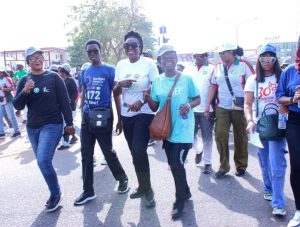
Photo caption: Executive Secretary, National Human Rights Commission, Dr. Tony Ojukwu (centre) leading the awareness walk to mark 2024 International Human Rights Day in Abuja Tuesday.
The National Human Rights Commission, NHRC, on Tuesday, concluded the 16-Day activities it lined up to mark this year’s International Human Rights Day themed “Our Rights, Our Future- Right Now”
Welcoming thousands of participants which include NHRC management, staff, Governing Council, members of the diplomatic community, non- governmental and advocacy organisations; and others at the Abuja headquarters of the Commission, the Executive Secretary, Dr Tony Ojukwu, SAN, said 2024 and a few years back, have been remarkable for Nigeria in the fight against human rights abuses and vowed that the Commission would not rest until Nigeria becomes a country to reckon with globally as a bastion of human rights protection.
 ooo
ooo
Ojukwu also took time out to reel out some of the numerous achievements recorded by the Commission within the period under review, including the setting up of panel on rights violations by the defunct Special Armed Robbery Squad (SAARS) and commended the federal government to releasing over N500m with which victims and their relatives were compensated.
He listed the Special Independent Investigative Panel (SIIP) on human rights abuses by the military while fighting insurgency in the North East and urged the federal government and states involved by the reports to ensure speedy implementation of the panel’s recommendations to bring healing to those affected.

Ojukwu said- I am therefore delighted to inform you that the Commission successfully collaborated with other human rights defenders in carrying out various human rights programmes which set the tone for today’s commemoration.
“For instance, the global 16 Days of Activism against Gender-Based Violence campaign has gained traction in the 36 States of the Federation raising more awareness about gender-based violence, promoting gender equality, and advocating for policy and legislative reforms to prevent and respond to violence against women and girls.
“This year, we expanded our sensitization campaigns, increased engagement with stakeholders, built capacity for responders and also leveraged social media platforms to amplify messages, raise awareness and also engaged with the public. Besides, we deepened our collaboration with civil society organizations, government agencies, and other stakeholders to amplify our efforts ande ensure a coordinated response to gender-based violence.
“Ladies and gentlemen, I make bold to submit that human rights protection is a continuous process and not an event. Therefore, we remain committed to going the extra mile to ensure that our dear country becomes a model and bastion of human rights protection worthy of the attention of other African nations and beyond. Of course, the Commission has for the 5th time earned Grade A Status, awarded by the Global Alliance of National Human Rights Institutions. It has thoroughly and objectively investigated allegations of gross human rights violations. The reports of the defunct SARS Panel has remained a reference point by human rights defenders given the crucial role the Commission’s report has played in ongoing police reforms . It is on record that the panel which submitted its reports to the federal government under the regime of former President Muhammad Buhari, GCFR made far reaching recommendations on how to reform the Police including the establishment of State and Local Government Police. Part of the recommendations also included the payment of compensation to victims of police brutality which amounted to about N500 million. We used this opportunity to commend the Federal Government for providing the funds for the payment of the compensation, which has restored citizens confidence in government ability to protect and enforce their human rights.
“In addition, Nigerian and indeed the international community will not forget in a hurry the landmark report of the NHRC’s Special Independent Investigative Panel on Human Rights Violations in Counter-Insurgency Operations in the North East Nigeria (SIIP NORTH – EAST). Moreover, it is no longer news that Reuters, a foreign Media Organizations levelled grave allegations of human rights violations against the Nigerian Army, alleging that it has been involved in a secret systematic and illegal abortion programme leading to the abortion of 10,000 pregnancies, massacre of children and other forms of Sexual and Gender-Based Violence in the course of its operations in the troubled region.
“The work of the panel lasted for about two years as a result of the complex and difficult nature of investigation that beset it. It happened that Reuters and a couple of other organizations who are supposed to appear before the panel to answer some vital questions refused to honour invitations of the Panel. This constituted additional problem and burden to the Panel. However, the Panel which comprised experts in relevant fields successfully weathered the storm, visited military formations in the Boko Haram ravaged region, ransacked and combed remote and hard-to-reach communities and came out with findings that will stand the test of time. The report categorically exonerated the Nigerian military from the aforementioned allegations, confirming that there was no secret, systematic and illegal abortion programme, let alone wilful killing of children perceived to be offsprings of Boko Haram in order to stop a regeneration of insurgency. As expected, the Panel recommended institutional reforms cutting across the military, some State Governments in the area, International Non-governmental Organisations (INGO) and the need to pay compensation in an isolated case where the military was deemed by the Panel to have operated unprofessionally.
“I use this opportunity to urge the Federal Government and the effected State Governments among others to ensure a speedy and effective implementation of the Panel’s recommendations to heal the wounds of human rights violations. To ease human rights monitoring and reporting while addressing emerging issues head on, the Commission has since January this year established a monthly Dashboard on Human Rights which collates complaints of human rights violations in the 36 State and the FCT. This has graphically segmented issues of human rights violations in the various thematic areas, making it possible for the stakeholders to know trending violations and collectively tackle them as quick as possible rather than waiting for them to fester, get more complicated and cause more harm to the society.
“It is also to the credit of the Commission and other stakeholders that Nigeria now has a comprehensive National Action Plan (NAP) on Business and Human Rights. This document is an inclusive instrument, serving as a roadmap to human rights protection including in the workplaces and business environment.”
The NHRC boss therefore thanked the United Nations and it agencies including the OHCHR, UNODC, UNDP, UNICEF, as well as Ford Foundation, the EU and Rule of Law and Anti-Corruption (RoLAC) Programme, among other partners, for their support to the Commission.
Also speaking, the Attorney General of the Federation and Minister for Justice, Lateef Fagbemi, SAN, reaffirmed Federal Government’s unwavering commitment to the promotion and protection of human rights in Nigeria.
He said that this year’s theme, serves as a strong reminder that human rights are the cornerstone of a just, equitable, and peaceful society adding that it emphasizes the imperative of collective action to safeguard the inherent dignity and worth of every individual, and to ensure that all persons enjoy their rights and freedoms without discrimination or distinction.
“As we celebrate this momentous occasion, we acknowledge the significant progress Nigeria has made in promoting and protecting human rights. Notwithstanding, we recognize that there are still challenges to be addressed, and we recommit ourselves to working tirelessly to ensure that the rights of all Nigerians and every person living in Nigeria are respected, protected, and fulfilled.
“In this regard, the Federal Government has taken concrete steps to strengthen the institutional framework for the promotion and protection of human rights. These include the establishment of the National Human Rights Commission, the passage of the Anti-Torture Act, the Violence against Persons Prohibition Act and the ratification of several international human rights treaties. In May this year, the President approved and gazetted that the National Human Rights Commission be designated as the National Preventive Mechanism of Nigeria (NPM) in fulfillment of Nigeria’s international obligation under the optional protocol to the UN convention against torture.
“Furthermore, we are committed to ensuring that our laws, policies, and practices are aligned with international human rights standards. I assure all Nigerians that the Government of President Bola Ahmed Tinubu is a human rights friendly and listening government. Amongst other commendable steps taken by this government in the interest of justice and human rights is the discontinuation of the prosecution of children and young person arraigned in court for treason following the End bad governance protests of august and October 2024. We will continue to work with relevant stakeholders including civil society organizations, the private sector, etc, to promote a culture of respect for human rights in Nigeria.
“As we commemorate International Human Rights Day today, I call on all Nigerians to join us in this noble endeavour. Let us work together to create a society where every individual can live free from fear, stigma, and persecution. Let us promote a culture of respect, tolerance, and inclusivity, where every person’s rights are valued and protected.
“I commend the National Human Rights Commission for establishing a panel to conduct a comprehensive investigation into the three-part Reuters report against the Nigerian Military. The panel’s findings exonerating the Nigerian Military of alleged gross human rights violations underscores the Commission’s capacity to impartially investigate allegations of human rights violations, ensuring accountability regardless of the parties involved. I encourage the Commission to continue its commendable work.
“In conclusion, I reaffirm the Federal Government’s commitment to the promotion and protection of human rights in Nigeria. We will continue to work tirelessly to ensure that the rights of all Nigerians are respected, protected, and fulfilled.”
Earlier in the day, Ojukwu had led thousands of participants on an awareness road walk that commenced from the Eagle Square to the Maitama Secretariat of the Commission.
Before the take off of the walk, Ojukwu appealed to Nigerians to contribute to the promotion of human rights by donating resources to the Human Rights Fund. The event had as its theme: ‘Equality – Reducing inequalities and advancing human rights’ and was organised in partnership with the Rule of Law and Anti-Corruption (RoLAC), funded by the European Union and implemented by International Institute for Democracy and Electoral Assistance (International IDEA).
Participants carried placards bearing messages, including calls to action such as: ‘Stand for equality, fight for humanity’, ‘human rights are universal rights. Let’s protect them’, ‘Human rights know no boundaries’, ‘Break the chains of inequality, advance human rights’, among others.
Speaking to reporters, Ojukwu underscored the need for Nigerians to recognize that protecting human rights is a collective responsibility that goes beyond government efforts alone.
He lauded RoLAC for its valuable support, which helped ensure the programme’s success.
His words: “We need resources, because all these things cannot be done without resources. The government is trying, but they can do a lot better, they can do a lot more. And also note that it is not only for government to assist in addressing human rights violations.
“Private individuals, companies, can also donate. It doesn’t have to be cash. they can donate equipment. They can donate computers, they can donate laptops, they can donate vehicles. They can donate facilities, tables, chairs, all those kind of things- they all help.
“So we call upon Nigerians to see the addressing rights of Nigerians as a common problem, not only to be left to government. There is a Human Rights Fund, nobody has donated one naira to that fund. Why can’t we have a lot of private individuals in this country that can afford to donate M100 million, and it will not mean anything to them.
“And they will be happy that the number of displaced persons, that the number of people begging on the streets, the number of children who cannot go to school, the number of women who are thrown out of their homes, the number of children who are wandering on the streets who have no shelter. All these are, you can see, when you watch the dashboard every month, you see how many children have been abandoned, because the parents can no longer be the responsibilities”.
On her part, the Chairperson, Governing Council of the National Human Rights Commission, Dr. Salamatu Suleiman, said commemoration of Human Rights Day should not be confined to one day but celebrated every day.
She said emphasis must be placed on out-of-school children, stressing that if they are educated, it will eliminate vices in the society.
On his part, the United Nations High Commissioner for human rights, Volker Turk, in a message explained that “Human rights are not abstract ideas or ideologies. They are about who we are, and how we live. They are grounded in facts, in law and in compassion. They embody our needs and our hopes.
“A safe home. Food and clean water. Health care. Education. Decent work and a liveable minimum
wage. To live in peace. To be free to express your opinion. Human rights do not belong to any political party, or to any region of the world.”
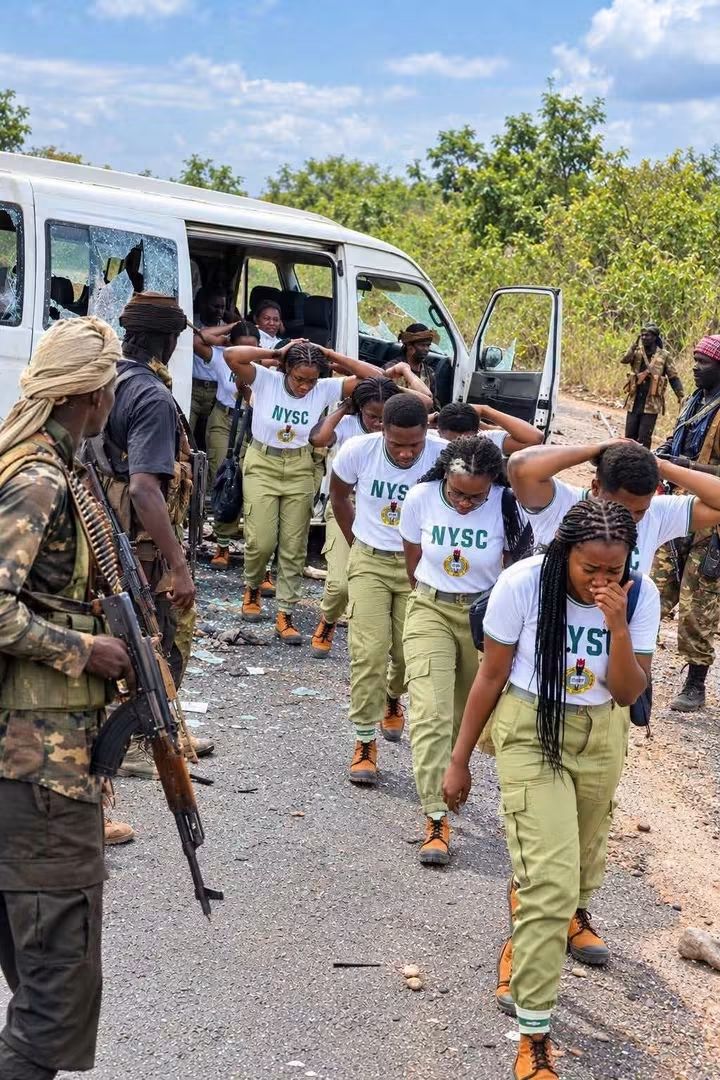
The Inspector General of Police (IGP) Olatunji Disu, has deployed the Deputy Inspector-General of Police (DIG) in charge of Operations, Shehu Umar Nadada, to Imo State to provide operational leadership and strengthen ongoing efforts to rescue the 20 prospective National Youth Service Corps (NYSC) members and other passengers abducted along the Owerri-Onitsha Road at Umunoha on October 1, 2026.
Force Public Relations Officer, Force Headquarters, CSP Anietie Iniedu, disclosed in a statement on Friday that DIG Nadada arrived Imo State alongside two Commissioners of Police and immediately carried out an on-the-spot assessment of the security situation and the search-and-rescue operations being coordinated by the Imo State Police Command.
During the visit, the DIG reviewed operational strategies, personnel deployments, and the utilization of security assets. He also issued fresh directives aimed at enhancing the effectiveness of the coordinated rescue mission.
The assessment was conducted in the company of the Commissioner of Police, Imo State Command, CP Audu Garba Bosso; the Commissioner of Police, Federal Operations, CP Akpan Anifiok; the Commissioner of Police in charge of the Police Mobile Force, CP Nendel Joseph Gomwalk; other service commanders; and members of the Imo State Police Command management team.
According to Iniedu, the police have intensified the search operation, deploying additional tactical teams and operational resources to identified locations.
He said the operation was being reinforced through intelligence-led efforts to track the abductors, alongside coordinated operations with other security agencies.
Nadada, according to the statement, assured members of the public that the police would continue working to secure the safe release of those abducted.
“The Nigeria Police Force is committed to securing the safe rescue of the 20 abducted persons and will sustain the operation until the mission is successfully concluded,” Iniedu quoted Nadada as saying.
The DIG appealed to members of the public and the media to remain calm and vigilant, while urging anyone with credible information that could assist the rescue operation to report to the police or the nearest security formation.
“All information received will be treated with strict confidentiality,” he said.
The police said further information on the rescue operation would be made available as developments unfold.
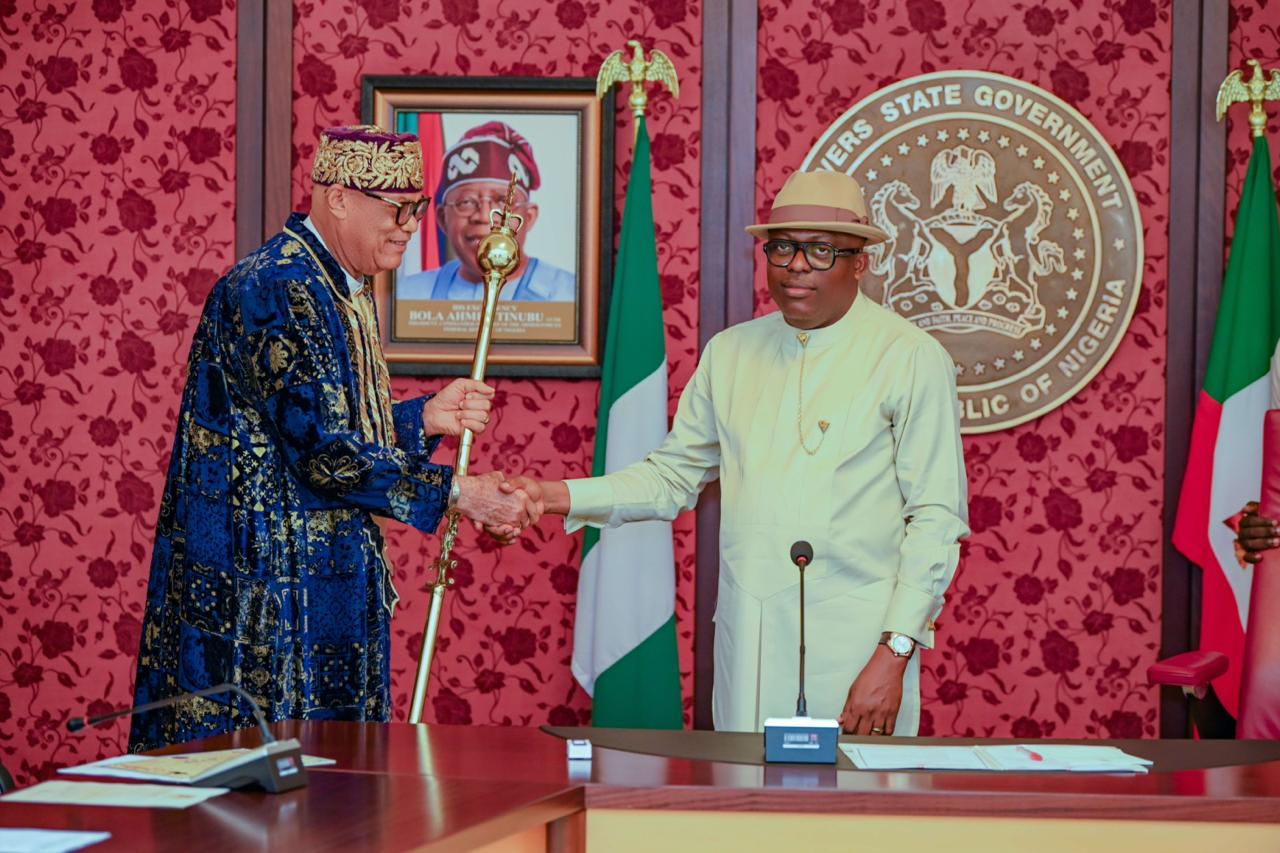
Photo caption: Governor of Rivers State, His Excellency, Sir Siminalayi Fubara (right) presenting the Staff of Office to His Majesty King Charles Douglas Mac-Pepple Jaja Jeki VI (left),the newly crowned Amanyanabo of Opobo Kingdom at Government House Port Harcourt on Friday.
Governor of Rivers State , His Excellency, Sir Siminalayi Fubara, on Friday formally presented the Certificate of Recognition and Staff of Office to the new Amanyanabo of Opobo Kingdom, His Majesty King Charles Douglas Mac-Pepple Jaja, Jeki VI, urging the new monarch to promote peace, unity and inclusiveness in the kingdom.
The governor while congratulating the new monarch, for successfully scaling the hurdles of selection and coronation, urged the royal father to see contenders who lost out of the selection process, not as victims but as comrades who must be carried along for the kingdom to move forward during his reign.
Speaking during the presentation ceremony in Government House, Port Harcourt, Governor Fubara apologized for his absence at the coronation, explaining that it was due to a call to higher national service, but that his spirit and soul were fully with the kingdom throughout the process.
He declared that history will remember his administration for peacefully laying to rest the late King, Douglas Dandeson Jaja, and mid-wifing the emergence of a new monarch without litigation.
The Governor, who said he remains one of the proudest persons on earth for the success of the transition, disclosed that the late king’s stool was enmeshed in a legal battle that lasted over 27 years, and that it took the wisdom and deliberate intervention of his administration to manage the selection process to avoid another round of court cases.
He emphasized that contrary to insinuations by mischief makers who tried to politicise his absence, his government was fully responsible for the entire process from burial of the late king to the coronation and recognition.
“Our presence was not just in that process alone. Every logistics that were required, there is nobody that can say he’s the one that did it. We did it. So, that is also a key issue in the process. So, for those people who like using everything for politics, my absence was not an intentional thing; it was a call to service. So the fact that I was unable to make it doesn’t mean that I do not value, appreciate or support the process,” Governor Fubara said.
He said the true test of kingship is in the management of success, and prayed that the new reign will usher in greater development in education, healthcare and small businesses, which he said remain the only sustainable antidotes to the growing criminality among youths.
The Governor, who described Opobo as one of the most peaceful Local Government Areas in the State, charged the new king to maintain zero tolerance for criminality, to be intentional and decisive in protecting the kingdom, and not to compromise on security on the grounds of kinship.
Governor Fubara assured the monarch of the continuous support of his administration both in and out of office, while also charging the Alapu Council to guide the king and the titled citizens to redirect their purpose from mere ceremonial uniformity to initiating tangible development projects that will be visible in the kingdom within the next one year.
In an acceptance speech, the newly installed Amanyanabo of Opobo Kingdom, His Majesty King Jaja Jeki VI, pledged to build Opobo on the pillars of service, inclusion and vision, in honour of the legacy of the great King Jaja who founded the kingdom 156 years ago with trade and diplomacy.
Describing the Staff of Office as more than a symbol of authority, the monarch said it represents a sacred trust from the government and people of Rivers State to lead with justice, peace and dignity.
In a statement, Onwuka Nzechi, Chief Press Secretary to Governor Fubara, quoted the monarch to have expressed deep gratitude to God, the ancestors, Governor Fubara, the Opobo Council of Alapu, titled citizens, elders, women and youths for the confidence reposed in him to lead Opobo into its Sixth Chapter.
The new king assured the Rivers State Government that under his reign, Opobo Kingdom will remain a dependable partner for peace, development and unity of Rivers State.
Gunmen have abducted 20 corps members serving under the National Youth Service Corps (NYSC) along the Owerri–Onitsha Road by Umunoha community in the Mbaitoli, Imo State, South East Nigeria.
Confirming the unfortunate incident, in a telephone conversation, the Police Public Relations Officer of the Imo State Police Command, Henry Okoye, said the corps members were reportedly travelling in a commercial bus from Ibadan, Oyo State, to different orientation camps in the South-East and South-South states when they were intercepted by the gunmen.
He said the Commissioner of Police, Audu Bosso, visited the scene for an on-the-spot assessment, while the police and other security agencies have intensified efforts to rescue the victims unhurt and unconditionally.
Okoye added that security operatives were currently combing surrounding bushes, while a Rapid Response Team (RRT) had also been deployed to track down the kidnappers and secure the safe release of the corps members.
The incident came weeks after the police said that 11 people, including an unidentified number of corps members serving under the National Youth Service Corps (NYSC), were rescued after gunmen attacked vehicles along the Aloma–Egane Expressway.
-

 News2 years ago
Senate to speed up conclusion of Nigeria Forest Security Service Bill
-
 News1 year ago
The Many Lies Against Bashir Haske
-

 News3 years ago
Breaking: Tinubu’s authentic ministerial nominees
-
 News3 years ago
“Anytime we want to kill terrorists, President would ask us to take permission from France but they were killing our soldiers-” Niger Republic coup leader
-
 News3 years ago
“I’m leaving the Catholic church because Bishop Onah is oppressing me,” says Okunerere
-
 News4 months ago
See your state governor’s performance ranking
-

 News3 years ago
My nude photo leak was a mistake- lawyer Ifunanya
-

 News3 years ago
Radio Nigeria’s veteran broadcaster Kelvin Ugwu dies three months after retirement from service