News
NHRC, African Commission recommit to End Femicide, Protect Women’s Rights

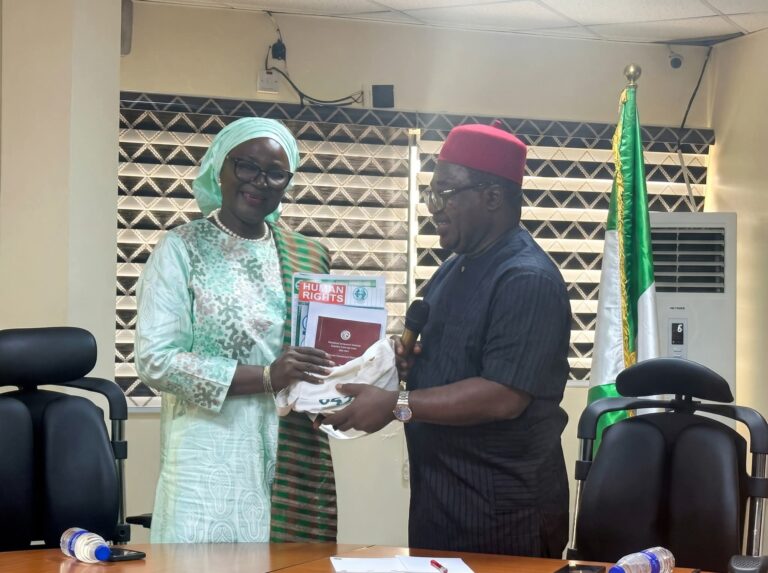
The National Human Rights Commission (NHRC) and the African Commission on Human and Peoples’ Rights (ACHPR) have strengthened their commitment to protecting the rights of women and girls in Nigeria, with a renewed focus on tackling gender-based violence and the rising incidence of femicide across Africa.
The commitment was reaffirmed during an advocacy visit by Hon. Commissioner Janet Ramathulai Sallah-Njie, Special Rapporteur on the Rights of Women in Africa, to the NHRC headquarters in Abuja, where she met with the Commission’s Executive Secretary, Chief Tony Ojukwu, OFR, SAN.
The engagement focused on strengthening institutional collaboration, addressing violence against women and girls, improving access to justice for victims, and ensuring that regional human rights commitments translate into tangible results at the national level.
Both institutions expressed concern over the growing incidence of femicide and gender-based violence across Africa, stressing the need for decisive national action, effective legal accountability and community-based protection mechanisms to safeguard women and girls.
During the meeting, Commissioner Sallah-Njie urged Nigeria to take a leading role in promoting the swift ratification of the African Union Convention on Ending Violence Against Women and Girls, adopted in February 2025.
She noted the importance of building on the gains of the Maputo Protocol by strengthening regional and national frameworks designed to eliminate violence against women and ensure the protection of their fundamental rights.
In his remarks, Ojukwu emphasised that regional human rights standards must translate into concrete action and justice for victims within individual countries.
He highlighted institutional reforms introduced by the NHRC to improve its response to human rights violations, including the establishment of a dedicated Department of Women and Children.
The Executive Secretary also pointed to the Commission’s enhanced digital platforms, which are designed to simplify access to justice and make it easier for victims of human rights violations to seek assistance and report abuses.
On women’s participation in governance, the NHRC reiterated its support for the proposed Special Seats Bill for Women, describing increased representation in legislative institutions as an important step towards addressing the gender imbalance in Nigeria’s political system.
The proposed legislation is aimed at expanding opportunities for women to participate in decision-making and contribute more effectively to national development.
The collaboration between the NHRC and ACHPR is expected to strengthen advocacy, promote accountability and encourage the implementation of policies and legal frameworks that protect women and girls from violence, discrimination and other human rights violations.
The NHRC reaffirmed its commitment to working with government institutions, civil society organisations and international human rights mechanisms to advance gender equality, uphold human dignity and ensure the safety of women and girls across Nigeria.
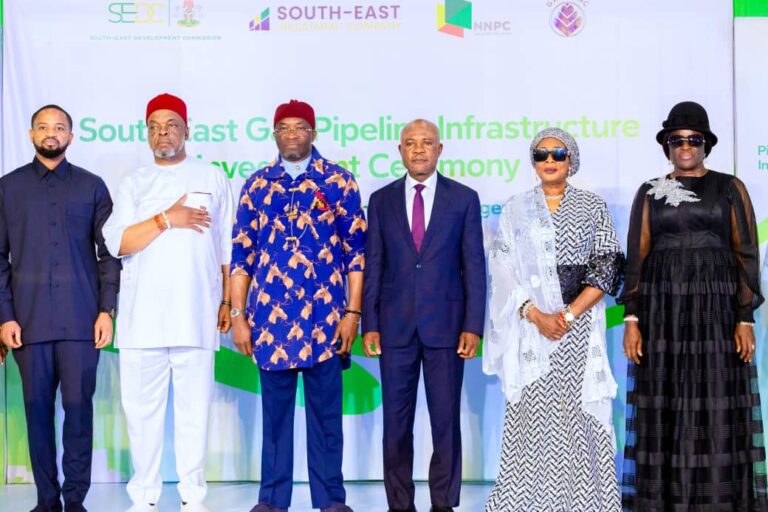
The Federal Government, through the South East Development Commission (SEDC) has kicked off a $100 million gas distribution pipeline project to boost industrialisation, attract investments and create jobs in the South East.
The 400-kilometre pipeline, designed to connect gas resources to industrial and commercial centres across Enugu, Anambra, Imo, Abia and Ebonyi states, has about 150 potential customers identified, with projected demand of 254 million standard cubic feet of gas per day.
The investment agreement for the project was signed on Tuesday at the South-East Gas Infrastructure Investment and Project Development Ceremony held at Hotel Presidential, Enugu, marking a significant step towards establishing a regional gas distribution network.
President Bola Tinubu, represented by the Deputy Speaker of the House of Representatives, Benjamin Kalu, described the project as a strategic investment that would connect the region’s natural gas resources to industries, strengthen manufacturing and unlock economic opportunities across the five states.
“The Southeast’s entrepreneurial spirit is one of Nigeria’s greatest economic assets. I have always believed that the prosperity of the Southeast is inseparable from the prosperity of Nigeria,” the President said.
Enugu State Governor, Dr. Peter Mbah, commended Tinubu for establishing the SEDC, describing the commission as the institutional vehicle needed to realise the Southeast’s longstanding industrialisation aspirations.
Imo State Deputy Governor Lady Chinyere Ekomaru, who represented Governor Hope Uzodimma, commended Tinubu and the SEDC for initiating the project, noting that Imo’s substantial natural gas resources placed the state in a strategic position to benefit.
Anambra State Deputy Governor Dr Onyekachukwu Ibezim, representing Governor Chukwuma Soludo, commended the commission but stressed that its success would ultimately be determined by its impact on the people.
Ebonyi State Deputy Governor Mrs Patricia Obila, representing Governor Francis Nwifuru, described energy as fundamental to industrial growth, lamenting that inadequate power supply had contributed to the decline of several enterprises in the region.
Permanent Secretary of the Federal Ministry of Regional Development, Dr Mary Ogbe, said the SEDC was developing initiatives capable of improving living standards across the Southeast.
Managing Director and Chief Executive Officer of SEDC, Mark Okoye, said the commission had conducted technical, financial and legal due diligence before committing funds to the project, which received approval from its governing board.

Five persons including four students of the Federal University of Technology, Minna, died on Monday in a head-on collision involving a Niger State Government House vehicle and a car conveying the students.
The crash occurred around Gidan Mangoro in Minna and involved a Toyota Hilux carrying Dauda Chikuba, Director-General of the Government House, and a vehicle carrying the five students.
Four students reportedly died at the scene alongside the driver of the government vehicle.
The government vehicle was part of the convoy of Governor Mohammed Bago, which was returning to Minna after a condolence visit to the Etsu Nupe and Chairman of the Niger State Council of Traditional Rulers, Alhaji Yahaya Abubakar.
The governor and his team had visited the traditional ruler to commiserate with him over the death of Sagi Nupe, Hajia Aisha.
The students’ vehicle was reportedly travelling towards Bida when the collision occurred.
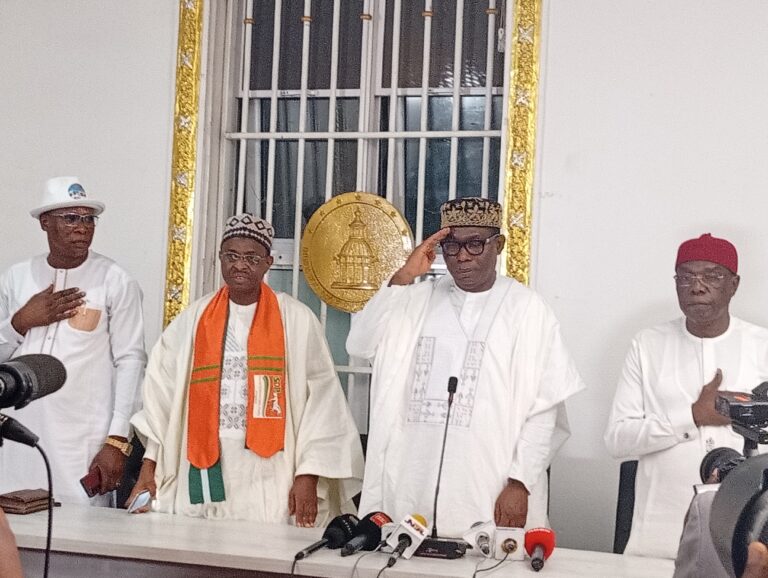
Allocating 445,000 barrels of crude oil daily to local refineries and using revenue from other petroleum products to support cheaper fuel are central to the plan of Social Democratic Party (SDP) presidential candidate, Prince Adewole Adebayo, to bring petrol prices down to N200 per litre.
Adebayo said the proposed arrangement would prioritise domestic refining and reduce the exposure of Nigerian consumers to international oil market prices.
He outlined the proposal at a dinner organised by the SDP leadership on Sunday, arguing that Nigerians should not bear the full burden of global petroleum prices while earning predominantly local wages.
“Any government that says to you that you should buy petrol in Nigeria at international market rates, that government is a liar, is wicked and irresponsible,” he said.
Under the plan, crude oil designated for export would continue to attract international market prices, while a separate allocation would be reserved for domestic refineries.
Adebayo proposed supplying 445,000 barrels daily to local refineries without upfront payment. In return, the facilities would process the crude and supply petroleum products for the Nigerian market.
He said petrol and aviation fuel would be prioritised for domestic consumption, while other products, including naphtha, asphalt and fuel oil, would be sold commercially to generate additional income for refinery operators.
According to him, revenue from these products would help sustain refinery operations and reduce dependence on petrol sales alone.
The proposal is built around the argument that Nigeria’s crude oil resources should support domestic energy needs rather than expose consumers entirely to international price movements.
However, Adebayo did not provide a detailed financial breakdown showing how the arrangement would cover crude oil, refining, transportation and distribution costs while maintaining the proposed N200-per-litre price.
-

 News2 years ago
Senate to speed up conclusion of Nigeria Forest Security Service Bill
-

 News1 year ago
The Many Lies Against Bashir Haske
-
 News3 years ago
“Anytime we want to kill terrorists, President would ask us to take permission from France but they were killing our soldiers-” Niger Republic coup leader
-

 News3 years ago
Breaking: Tinubu’s authentic ministerial nominees
-
 News3 years ago
“I’m leaving the Catholic church because Bishop Onah is oppressing me,” says Okunerere
-
 News5 months ago
See your state governor’s performance ranking
-

 News3 years ago
My nude photo leak was a mistake- lawyer Ifunanya
-

 News3 years ago
Radio Nigeria’s veteran broadcaster Kelvin Ugwu dies three months after retirement from service