News
June 12 and Nigeria’s Democratic Journey

By Victorson Agbenson
When Nigeria became an independent nation in 1960 neither the British colonial masters nor Nigerians themselves were sure of what was in stock for the new country. The amalgamation of 1914 had brought together, the Northern and the Southern protectorates, a deft but tricky political move which has continued to test the will and commitment of the people of the most populous black nation on earth. The tragic events that began to unfold shortly after the British union jack was lowered in 1960 was an offshoot of this complexity.
And so it was only six years down the line – in the early hours of January 15, 1966, that a group of five majors led a military revolt.
It took another thirty-something years in the wilderness of coups and counter coups, including a bitter civil war, before the country could find its way back on the path of democratic governance.
But this was not without a tough battle.
So, about thirty three years ago, on june 12, 1993, millions of Nigerians trooped out to vote in a landmark election that turned out to be the freest and fairest in our chequered history.
When the military annulled that election, eminent and patriotic Nigerians from all walks of life joined the struggle to restore Chief Moshood Kashimawo Abiola’s mandate and for democracy to return to Nigeria.
Some even paid the supreme price.
So in effect, democracy in Nigeria is still much at an infant, since it began to take root only in 1999 with the Abdulsalami – Obasanjo transition.
Democracy seems to have been over-described and over-defined.
But among the many definitions the most common, and yet most apt, remains government of the people, for the people and by the people, which was postulated by President Abraham Lincoln when he declared in a very critical time in America’s history that “the government of the people, for the people and by the people would not perish from the earth forever”
This description of democracy is one that captures the very idea of some form of organised system, with political parties and regular elections through which the will of the people is expressed.
Democracy has come to be accepted by many today as the most desirable form of government, and as man’s best idea on earth for governance. But unfortunately, the Nigerian democracy has been dogged by the challenge of corruption and bad governance – promoted by a systemic elite that has held tightly to power largely for the purpose of self enrichment.
It was our own Chief Emeka Anyaoku, Former Secretary General of Commonwealth, who pointed out the universal, essential ingredients that must be present in a true democracy. These he said, are “the right of the people to freely choose their governments periodically, the right to freedom of association, especially in forming political parties, the right to freedom of expression, especially freedom of speech and a free media, the primacy of the rule law, and the independence of the judiciary; transparency and accountability of governments to the electorate.”
Upon the return to democracy in 1999, the PDP breasted the tape and soon began to ride rough shod, often disregarding the feelings of Nigerians until it was voted out of power in the historic March 28, 2015 presidential elections. It failed to build an inclusive society, creating a few super rich political elite and their cronies which they are now paying dearly for.
The all Progressives Congress APC that took over has not fared much better as it has dawned on many watchers that Nigerians problem is not about the political platform or party but the inherent nature of politicians in the country.
No doubt, quality leadership has always been a problem in Nigeria. Celebrated writer, Late Chinua Achebe in his book The Trouble with Nigeria traced the nation’s woes to the door post of poor leadership.
Today Asiwaju Bola Tinubu, a prime actor in the pro- June struggle is on the saddle as the elected President of the country but his administration has been dogged by mounting economic challenges which he inherited and has been grappling with.
The coherence that is expected from those who run the levers of government and the cooperation in terms of achieving set goals have been largely lacking amongst the political class.
On the overall, we have been witnessing some form of improvements since the return to democracy.
Without controversy, the 2015 presidential election was a watershed in the history of Nigeria as for the first time an opposition party defeated and took over the reins of authority from an entrenched ruling party, the PDP since the country returned to democratic rule in 1999.
This keenly contested election was a big tussle on all fronts. It was a major test for the country as for the first time, major opposition parties fused to wrestle power from the ruling PDP. That is the beauty of democracy.
The legislative arm has also made some slow progress. During the Obasanjo years it was a case of whoever the president wanted became the Senate President and he removed them at will when they fell out of favour with him.
But today we have seen a more stable legislature which is the main bastion of democracy.
As things stand today, there is the urgent need for a new attitude amongst Nigerians elite.
Writing on Nigeria’s political journey, a prime pro democratic students leader during the June 12 struggle , Ezenwa Nwagwu wrote :
“If it was just about service delivery, the military actually held their own. They built bridges, and they built roads and hospitals. In fact, they built some of the most important and enduring infrastructure our country still relies on today. But there were incredible values that they inculcated – negative values, command-style leadership, suppression of dissent, and authoritarian thinking. It is for this reason that we fought to remove the military and entrench democracy”
Ezenwa says he prefers to focus on the attitude of Nigerian politicians:
“after 26 years, has the attitude of our politicians truly changed? Have we strengthened our processes and institutions? Have we built robust political parties—and just as importantly, a credible opposition? Is governance today more open and accountable? Or are we still struggling to shake off the negative values the military left behind?” On quote.
Already, our nation has been left behind by her contemporaries such as India, Malaysia, Brasil and Singapore. So we must all now insist on a sincere, focused and disciplined leadership that can lead us to the much desired manifest greatness. The way to go is rapid industrialization and diversification. The current administration has embarked on reforms sweeping across various sectors, a process that is still unfolding amidst rising economic challenges.
From the streets of protests to the corridors of government, the spirit of June 12 continues to shape nigeria’s democratic journey.
The labours of our heros past shall never be in vain.
Democracy is not a hundred meters dash , it is a journey and Nigeria is gallantly progressing on that journey!
LET’S CELEBRATE OUR DEMOCRATIC JOURNEY!
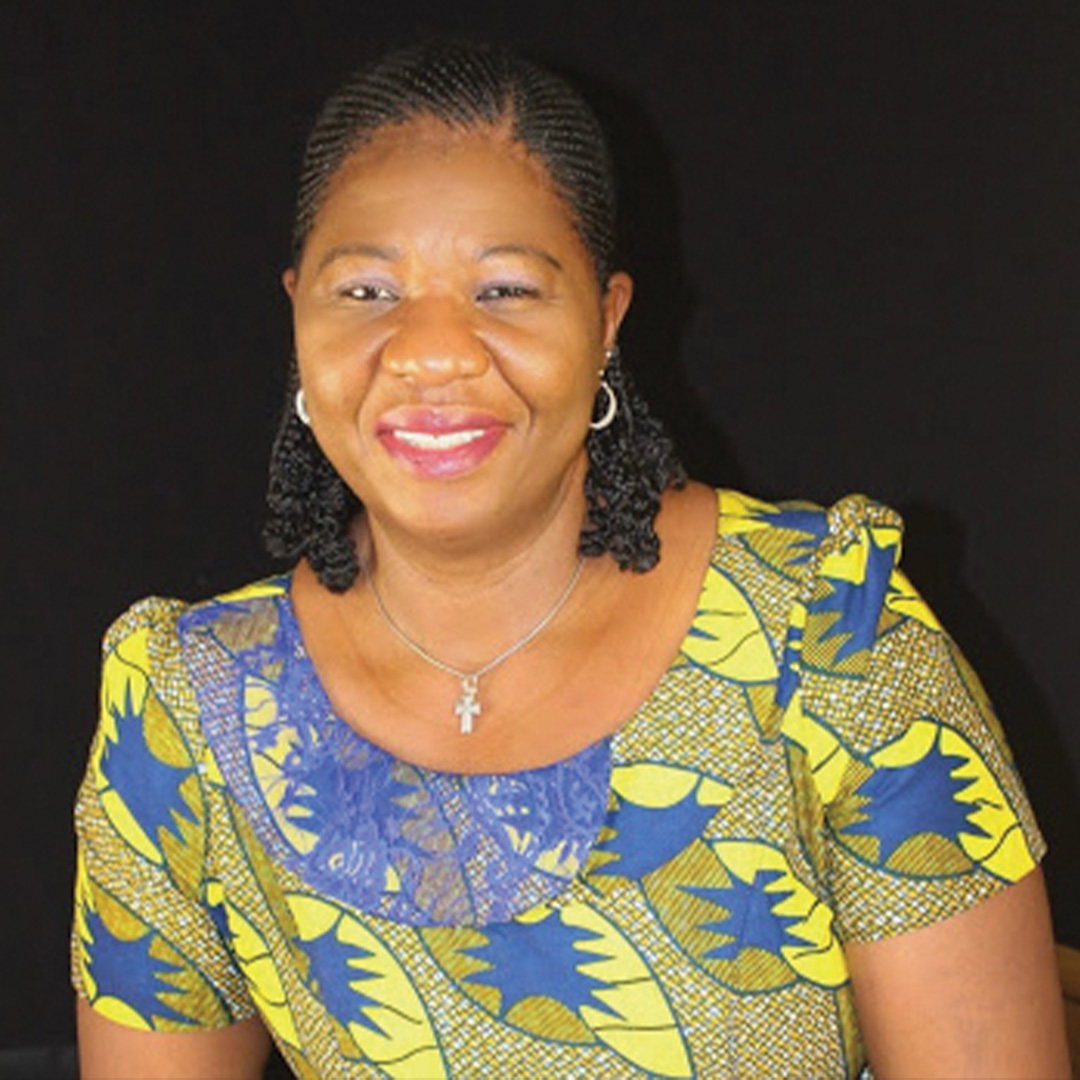
A Nigerian-born man, Dr. Nkechy Ezeh, 61, of Kent County, Michigan, has been sentenced to 70 months in federal prison for orchestrating a fraud scheme that stole $1.4 million in taxpayer and donor money intended for vulnerable preschool children.
According to a statement by the U.S. Attorney’s Office, Western District of Michigan, Dr Ezeh was also sentenced to a concurrent prison term of 60 months for evading income taxes.
Chief U.S. District Judge Hala Y. Jarbou, who imposed the sentence, characterized Ezeh as “a fraud and a thief,” described the scheme as “brazen and widespread,” and noted that Ezeh stole money intended for some of West Michigan’s most vulnerable children. Judge Jarbou ordered Ezeh to pay $1.4 million in restitution to the victims of the fraud and $390,174 to the IRS. Judge Jarbou also remanded Ezeh directly to prison to begin serving her sentence immediately.
“Nkechy Ezeh’s greed is beyond reprehensible,” VerHey said. “She stole taxpayer and private-donor dollars meant for low-income children in our community. Instead of helping kids, she spent that money on herself. The stolen money could have supported hundreds of West Michigan children and their families. Judge Jarbou’s sentence was perfectly appropriate.”
Ezeh – the 2018 West Michigan Woman of the Year, a two-time appointee to the State of Michigan’s Early Childhood Investment Corporation’s Executive Committee, and a tenured professor of education – founded Early Learning Neighborhood Collaborative (ELNC), a West Michigan nonprofit funded by the Department of Health and Human Service’s Early Head Start program, the U.S. Department of Education, and private donors. It provided meals, transportation, funding, advocacy, and other services to children in preschools located in underserved communities.
As a result of the fraud, ELNC had to close its doors in 2023, many West Michigan preschools lost funding, and needy children lost valuable resources. ELNC also had to lay off its 35 employees without any notice. Sharon Killebrew, ELNC’s former bookkeeper and Ezeh’s co-conspirator, was sentenced in November 2025 to 54 months in federal prison for her role in the scheme.
In a sentencing memorandum, the U.S. Attorney’s Office said that Ezeh used the stolen money to fund her lifestyle, pay for a family member’s wedding, and to travel to Hawaii, Europe, and Africa. She placed her family members on a ghost payroll that caused ELNC to pay them hundreds of thousands of dollars for little or no work, and she used money mules to wire hundreds of thousands of dollars of stolen money to her family in Nigeria.
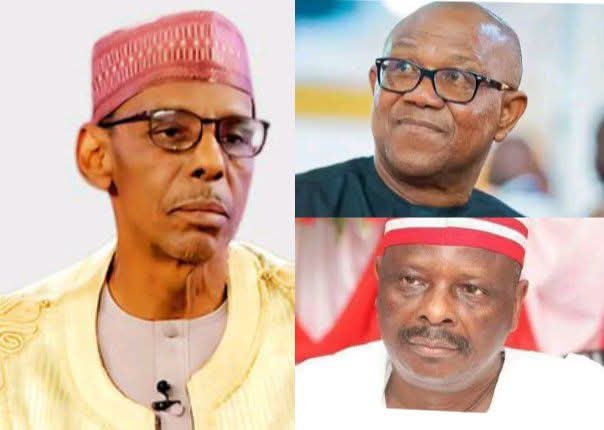
The revelation by the national chairman of Proples Redemption Party, PRP, Hakeem Baba Ahmed, that the party rejected attempt by Peter Obi and Rabiu Kwakwanso to join them before the fuo moved to National Democratic Congress, NDC, has continued to generate public reaction.
Baba Ahmed made the statement in a report that was published on Wednesday, May 13, 2026.
This is coming after the former governor of Anambra state and the former governor of Kano state defected from the African Democratic Congress, ADC to the Nigeria Democratic Congress, NDC.
In the report that surfaced online, the PRP Chairman said he blocked Peter Obi and Rabiu Musa Kwankwaso from joining the party because they demanded for the ticket of the party.
“But for you to come even before a decision is made and ask us to guarantee you the ticket without opposition. If you are truly strong contenders, then why fear competition?”.
News
Nigeria’s human rights body demands accountability over recurrent civilian casualties from military airstrikes
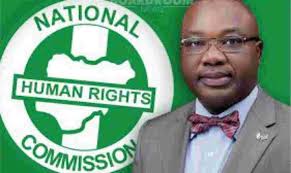
The National Human Rights Commission has expressed deep concern over the recurrent incidents of military airstrikes reportedly resulting in significant civilian casualties across different parts of the country, describing the development as troubling and incompatible with established human rights and humanitarian law standards.
The Executive Secretary of the Commission, Dr. Tony Ojukwu OFR, SAN, who stated this in a statement on Wednesday, said while the fight against insurgency, banditry, and other forms of insecurity remains a legitimate responsibility of the Nigerian State, such operations must at all times be conducted in strict compliance with the Constitution of the Federal Republic of Nigeria, international human rights obligations, and international humanitarian law principles.
According to the statement which was signed by Fatimah Agwai Mohammed, Director, Corporate Affairs and External Linkages, Ojukwu said repeated reports of civilian deaths and injuries, including women, children, and other vulnerable persons, arising from aerial bombardments raise serious concerns regarding the protection of the right to life, human dignity, and the obligation of State actors to exercise precaution and proportionality during security operations.
The Commission therefore calls on the Nigerian Air Force to provide a comprehensive explanation regarding the circumstances surrounding these incidents and the measures being taken to prevent further loss of innocent civilian lives.
“Nigerians deserve to know why this has become a recurring decimal, in April and May alone we have recorded the following casualties, in April Jilli market Yobe, in May Shiroro market Niger, again in May Tumfa market in Zamfara, for how long will this continue?” The Chief Human Rights Officer asked.
The NHRC Cheif emphasized that the principles of distinction, necessity, proportionality, and accountability are fundamental obligations under international humanitarian and human rights law and must guide all military engagements, particularly in conflict-affected communities.
Dr. Ojukwu noted that civilian lives must never be treated as collateral damage and urged security agencies to strengthen intelligence gathering, operational safeguards, and accountability mechanisms in order to minimize harm to non-combatants during military operations.
He further called for prompt, transparent, and independent investigations into all reported incidents of civilian casualties resulting from airstrikes, with a view to ensuring accountability, justice for victims, and adequate remedies, including compensation and psychosocial support for affected families and communities.
The NHRC reiterated that national security objectives and human rights protection are not mutually exclusive, stressing that sustainable peace and public trust can only be achieved where security operations are carried out within the bounds of legality, accountability, and respect for human dignity.
Ojukwu reaffirmed the Commission’s commitment to monitor the situation closely and engage relevant authorities and stakeholders to ensure the protection and promotion of the rights of all persons in Nigeria.
-

 News1 year ago
Senate to speed up conclusion of Nigeria Forest Security Service Bill
-
 News9 months ago
The Many Lies Against Bashir Haske
-

 News3 years ago
Breaking: Tinubu’s authentic ministerial nominees
-
 News3 years ago
“Anytime we want to kill terrorists, President would ask us to take permission from France but they were killing our soldiers-” Niger Republic coup leader
-
 News3 years ago
“I’m leaving the Catholic church because Bishop Onah is oppressing me,” says Okunerere
-

 News3 years ago
Radio Nigeria’s veteran broadcaster Kelvin Ugwu dies three months after retirement from service
-
 News3 years ago
Dokpesi and the Gazebo Mystique
-

 News3 years ago
Tsunami: Tinubu orders dissolution of managements, boards of MDAs, to sack all Buhari’s political appointees