News
Fulani bandits abduct 5 in Imo, one killed, three rescued

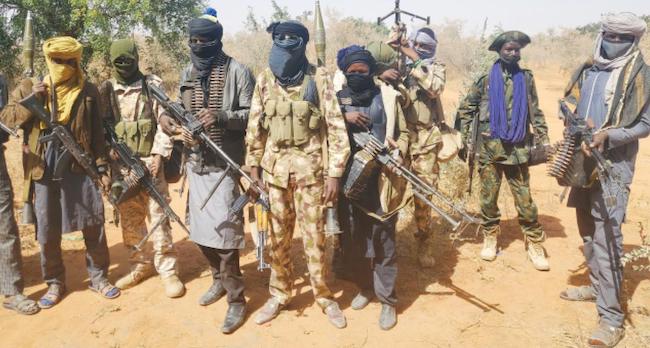
A joint operation by the Nigerian Army and local vigilante groups on Friday, led to the rescue of three kidnapped victims in Ogbaku community of Imo State.
Before the operation, the kidnappers had already obtained ransom from one victim and freed him and another one was killed.
According to Harrison Gwamnidhi, a commander with Safe City Volunteer Foundation who gave details of the operation, the team acted in invitation and went through Ogbaku, Ejemekwuru, Amakohia Ubi, Ndegwu Okuku, and Irete communities in Imo State that have been identified as hiding places for bandits.
“Working in collaboration with the Nigeria Army 34 Artillery Brigade, Imo State Homeland Security, and the Amakohia Ubi Security Network, we carried out a coordinated operation.
“With technical and intelligence support from the Safe City Volunteer Team, we traced the kidnappers to a farmland in Ndegwu Okuku, where security operatives engaged them in a gun battle. The kidnappers fled the scene and abandoned three victims they had held captive while awaiting ransom payments from their families.
“A total of five victims were kidnapped. One release yesterday paid ransom, one was killed by the kidnappers and three was rescued unhurt by us.
“The rescued victims revealed that the kidnappers are eight in number and are strangers speaking Fulani. One of the kidnapped victim said he was kidnapped last week Friday around Portharcourt road and they trekked to Ejemekwuru
“Information gathered shows that these kidnappers are scattered across the above mentioned communities and other parts of Owerri West.
“Special thanks to everyone who made this rescue mission a success 🙌. (NAMES HIDDEN).
“I wish to draw the attention of the Imo State Government to the activities of these armed bandits now taking refuge in some communities within the state,” Harrison narrated.

The Director General and Chief Executive Officer of the Nigerian Meteorological Agency (NiMet), Professor Charles Anosike, has been elected President of the Board of Governors of the African Centre of Meteorological Applications for Development (ACMAD).
Anosike who is also Nigeria’s Permanent Representative at the World Meteorogical Organization, would provide over the Continental body for four years.
The NiMet CEO was elected on 10 September 2026 in Cotonou, Benin Republic, during the 24th Ordinary Session of the ACMAD Board of Governors, held back-to-back with the 22nd African Climate Outlook Forum (ACCOF22).
As President of the Board, Professor Anosike is expected to provide strategic leadership in advancing stronger institutional governance, productive partnerships, and effective climate services for Africa, while supporting ACMAD’s mandate to enhance the application of weather and climate information for sustainable socio-economic development across the continent.
The election further reinforces NiMet’s strategic leadership position within Africa’s meteorological community and Nigeria’s commitment to advancing effective weather and climate services for the safety of lives and property; climate resilience; and stronger economies across the continent.
His emergence comes at a critical time when African countries are strengthening their capacities to anticipate, prepare for and respond to increasing weather and climate-related risks in line with the United Nations Early Warnings for All (EW4All) initiative.
The session brought together members of the ACMAD Board of Governors and key institutional partners to review progress and strengthen the strategic direction and governance of the Centre. The high-level opening featured Dr. Ousmane Ndiaye, Director-General of ACMAD; Dr. Adamou Aïssatou Sitta, Vice-President of the ACMAD Board and Director of Niger Meteorological Services; Mr. Harsen Nyambe, Director of the African Union Commission (AUC) Department of Sustainable Environment and Blue Economy (SEBE); and H.E. Georges Alé, Benin’s Minister of Living Environment and Transport, in charge of Sustainable Development.
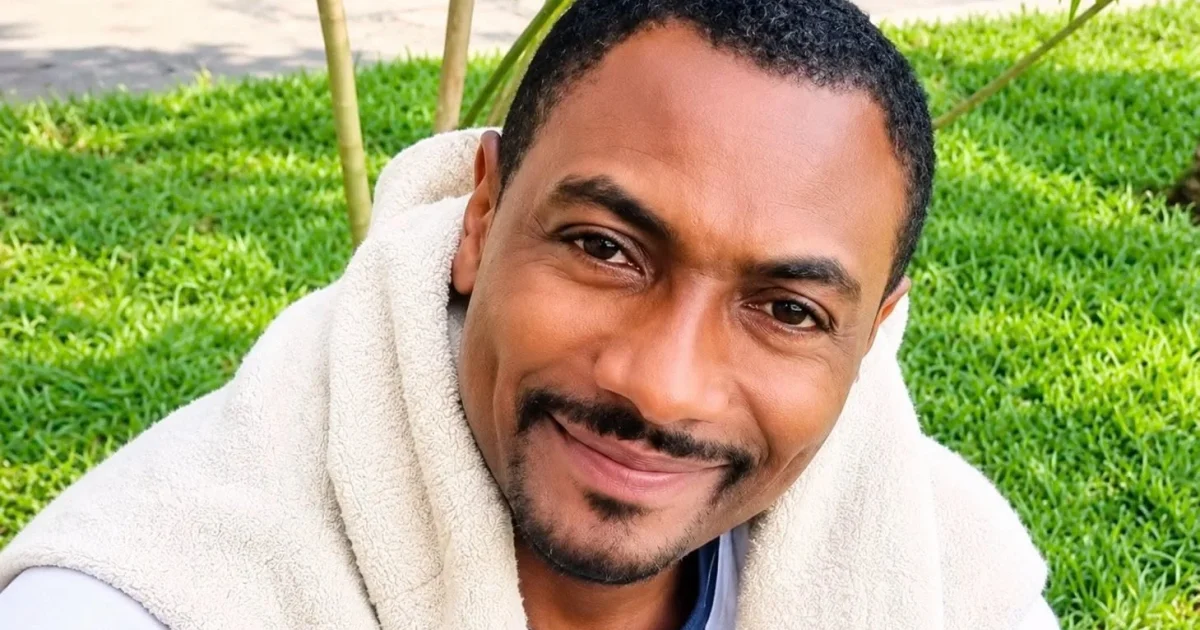
The Executive Secretary of the National Human Rights Commission (NHRC), Chief Tony Ojukwu, OFR, SAN, has condemned the fatal stabbing of Mr. Ibrahim Khalil Danshagamu, a public commentator, at his residence in Gaida Quarters, Kumbotso Local Government Area of Kano State.
Ojukwu said the Commission received with shock the report by the Kano State Police Command that Mr. Danshagamu was attacked by unknown assailants who forcibly entered his residence on Monday, 8 September 2026.
He noted that the victim was subsequently rushed to Murtala Mohammed Specialists Hospital, where he was confirmed dead on arrival.
The Executive Secretary described the killing as a grave violation of the fundamental right to life, guaranteed under Section 33 of the Constitution of the Federal Republic of Nigeria, 1999, as amended, and Article 4 of the African Charter on Human and Peoples’ Rights.
In a statement by Hajia Fatimah Agwai Mohammed, Director Corporate Affairs and External Linkages, the NHRC boss expressed particular concern about the implications of the killing for freedom of expression and civic participation, noting that Mr. Danshagamu was known for expressing views on governance and public policy.
According to him, citizens must be able to express their opinions, criticise public authorities and participate in public discourse without fear of violence, intimidation or reprisal.
Chief Ojukwu acknowledged that the Police had arrested two suspects and commenced investigation, but urged the Inspector-General of Police and the Kano State Police Command to treat the matter as one of urgent national importance.
He called for a prompt, thorough, impartial and transparent investigation, stressing that the authorities must establish not only those who carried out the attack but also the motive, sponsors, financiers, organisers and anyone who aided or facilitated the killing.
The learned Silk further demanded that all suspects against whom credible evidence is established be expeditiously prosecuted, warning that the investigation must not be allowed to stall or disappear into the system.
Chief Ojukwu called on the Federal Government, Kano State Government and all security agencies to immediately review and strengthen protective measures for journalists, bloggers, public commentators, human rights defenders and other citizens whose work or opinions may expose them to threats.
He warned that, as Nigeria approaches a critical political and electoral period, violence must never become a response to criticism, dissent or public commentary, stressing that democratic participation can only thrive where citizens are safe to speak, question and disagree.
The Chief Human Rights Officer of the country extended the Commission’s condolences to the family, friends and associates of the late Mr. Danshagamu and assured them that the NHRC would closely monitor the investigation and engage relevant authorities to ensure that justice is pursued to its logical conclusion.
The NHRC Boss stressed that “in a democracy, dissent is not a crime. Criticism must be answered with dialogue and accountability, not violence.”
He added that the time for condemnation alone was over, insisting that the perpetrators must be found, the truth established and justice done.
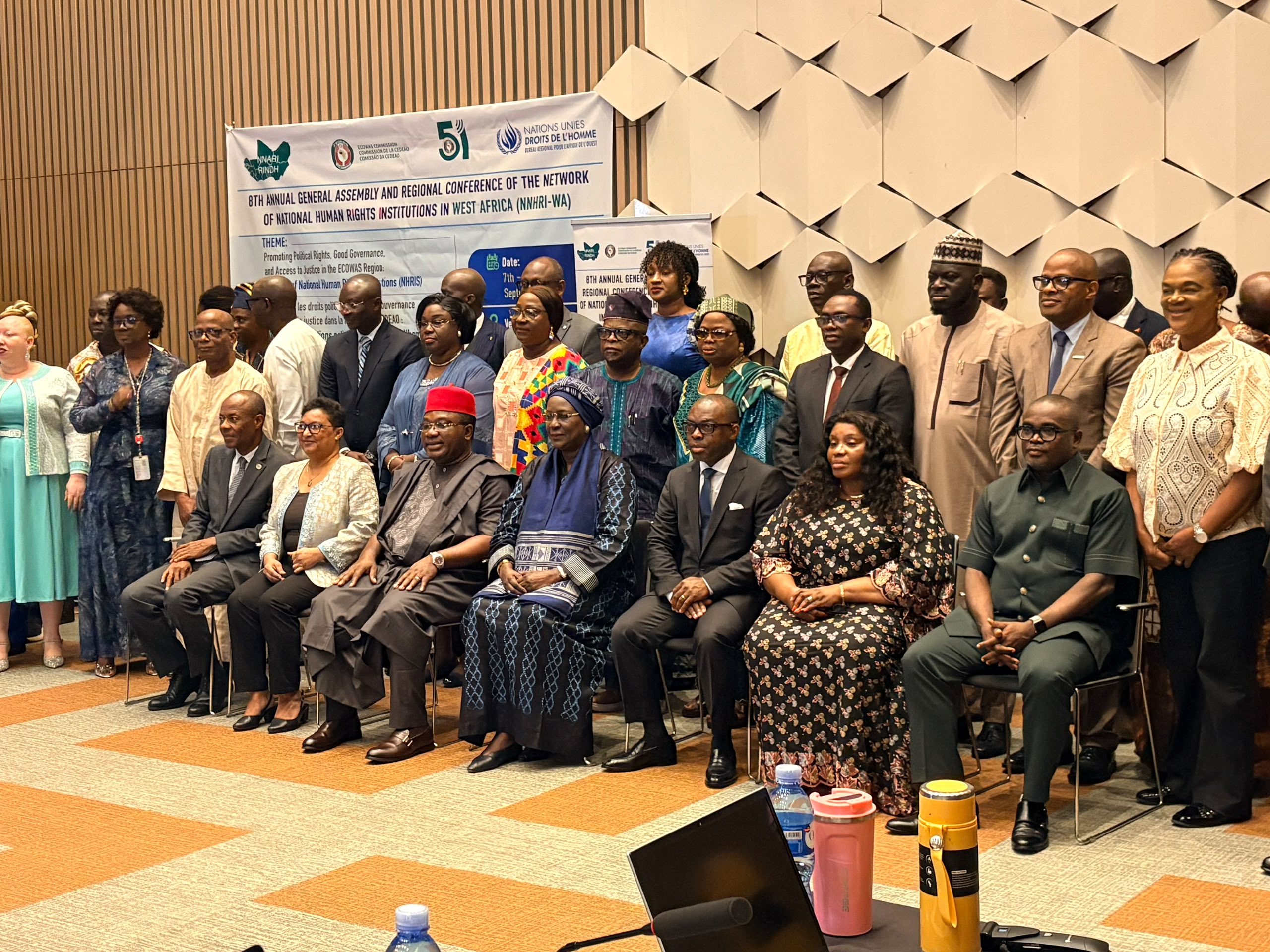
The Network of National Human Rights Institutions in West Africa, NNHRI-WA, has called for stronger independence, funding, and regional collaboration for NHRIs to address rising insecurity, shrinking civic space, and barriers to justice across the ECOWAS region.
President of NNHRI-WA and Executive Secretary of Nigeria’s Human Rights Commission, Dr. Tony Ojukwu OFR, SAN, made the call at Network’s Eighth Regional Conference and Annual General Assembly held in Abidjan from 7 to 8 September 2026.
The event was hosted by the Commission Nationale des Droits de l’Homme de Côte d’Ivoire, CNDH-CI, and supported by the ECOWAS Commission, OHCHR-WARO, UNOWAS and UNAIDS.
Twelve National Human Rights Institutions from Benin, Cabo Verde, Côte d’Ivoire, The Gambia, Ghana, Guinea-Bissau, Liberia, Mali, Nigeria, Senegal, Sierra Leone and Togo participated alongside regional and international partners.
Declaring the conference open, Ojukwu said human rights, democracy, development, peace and good governance are “mutually reinforcing pillars.”
He noted progress in democratic governance across the region, but warned of continuing challenges including unconstitutional changes of government, violent extremism, poverty, displacement, and declining public trust.
He urged NHRIs to move beyond reacting to violations and focus more on prevention and early warning.
A statement by Hajia Fatimah Agwai Mohammed, Director, Corporate Affairs and External Linkages at the NHRC, said the ECOWAS Commission, represented by Mr. Ebenezer Asiedu, reaffirmed its commitment to keep human rights at the heart of the ECOWAS architecture and encouraged NHRIs to be “bold and innovative.”
OHCHR-WARO Regional Representative, Mr. Robert Kotchani, said NHRIs have a key role in protecting women, children, persons with disabilities and other vulnerable groups.
In the review of the 2025 Abuja Communique, member institutions reported progress on OPCAT detention monitoring, transitional justice, migration, climate change, and election observation.
On detention and justice, almost all institutions reported overcrowding and prolonged pre-trial detention.
Ghana reported remand overcrowding above 130 percent capacity and the passage of a new Community Service Act for non-custodial sentencing.
Nigeria cited its toll-free line 6472 and the use of criminal justice committees to identify wrongful detention. Sierra Leone and Togo also reported nationwide prison monitoring.
On political rights, The Gambia, Côte d’Ivoire and Senegal presented models of NHRI involvement across the electoral cycle, including monitoring, hate speech tracking, and voter education.
Delegates called for greater inclusion of women, youth, persons with disabilities and the diaspora.
On business and human rights, Nigeria reported amending the NHRC Act to include an express business-and-human-rights mandate.
Senegal said it is finalizing a draft National Action Plan to become the first francophone country with one, while The Gambia said it is at an early stage following stakeholder consultations.
Delegates also flagged two recurring challenges: difficulties with intra-regional free movement despite the ECOWAS Protocol, and unresolved questions on eligibility and cut-off points in reparations processes.
The Conference resolved to deepen peer learning, conduct joint monitoring missions, and strengthen engagement with ECOWAS, the AU and the UN.
In his closing remarks, Dr. Ojukwu said the legitimacy of NHRIs “is measured not by the offices we occupy, but by the difference we make in the lives of ordinary citizens.”
The Ninth Regional Conference and General Assembly will be convened in 2027.
-

 News1 year ago
Senate to speed up conclusion of Nigeria Forest Security Service Bill
-

 News1 year ago
The Many Lies Against Bashir Haske
-

 News3 years ago
Breaking: Tinubu’s authentic ministerial nominees
-
 News3 years ago
“Anytime we want to kill terrorists, President would ask us to take permission from France but they were killing our soldiers-” Niger Republic coup leader
-
 News3 years ago
“I’m leaving the Catholic church because Bishop Onah is oppressing me,” says Okunerere
-

 News3 years ago
My nude photo leak was a mistake- lawyer Ifunanya
-

 News3 years ago
Radio Nigeria’s veteran broadcaster Kelvin Ugwu dies three months after retirement from service
-
 News3 months ago
See your state governor’s performance ranking