News
Family narrates how female lawyer was tortured to death by kidnappers in Abuja


The Chigbo family has narrated how the death of Abuja-based lawyer, Princess Nwamaka Mediatrix Chigbo happened.
Nationwide Reports had on Thursday, reported that the body of a female lawyer was discovered by the roadside along the Kubwa Expressway, a few days after a similar incident occurred to a nurse.
A post on X had stayed that the deceased was found at a separate location with documents suggesting she might have been a staff member of the FCT High Court.
The social media update included an image of the deceased and her identification card.
In a statement issued by the Publisher of Realnews Magazine, Dr. Maureen Chigbo, the family expressed shock over the incident.
“The family of Princess Nwamaka Mediatrix Chigbo, an Abuja-based lawyer, is saddened to announce her brutal death at the hands of still-to-be-identified kidnappers in the Nigerian Federal Capital Territory on Monday, 5th January 2026.”
“Before her abduction, Barrister Nwamaka was on the phone with her sister Anthonia, who briefly interrupted the call to attend to a client. When she reverted, the barrister’s phone was still live, and Anthonia could hear her sister’s distress cry before the phone suddenly went dead and unreachable.
“Anthonia alerted her elder sister, Maureen Chigbo, and other family members, who called the lawyer’s number repeatedly to reach her or her abductors to no avail.
“When a call finally went through, a male voice rained curses in English and Hausa language, saying: “Thunder fire you there, send three million Naira or else we will kill her.” The captors gave no further details and abruptly terminated subsequent calls.
“Barrister Nwamaka’s family later tried to contact the Police Public Relations Officer (FCT Police Command) and left a text message on her phone. They were referred to two police complaint numbers.
“The family equally sent a distress text and WhatsApp message to the Inspector General of Police (IGP), and also contacted the FCT Police Commissioner, who immediately linked them up to the Commander of the Scorpion Squad, in charge of kidnapping in Abuja.
“The Commander later called to inform the family that the police were tracking the kidnappers, who were said to be “in motion and would likely drop the lawyer off once they might have collected the ransom.”
The statement said the kidnappers never initiated any calls, and when the family members reached them through her phone for clarification on how the ransom would be paid, they only heard the lawyer screaming in pain.
“I am dying. …save me, please send the money, I am dying,” before the phone finally went dead again,” she was quoted to have said.
“The family maintained contact with the Police Commander throughout Monday night to follow up on the rescue operation.
“At 4am on Tuesday, 6th January, when Maureen called the Commander, he expressed surprise that the lawyer had not called or returned home. He then promised to escalate the rescue operation.
“The Commander later called to inform the family that “a lady had been found in a critical condition” and taken to an Abuja specialist hospital. He requested that Nwamaka’s picture be sent for identification purposes.
“Maureen immediately took a flight from Lagos to Abuja and on reaching the hospital, saw her sister’s lifeless body in the mortuary with bruises, swollen eyes and a cracked skull, all signs of a tortured death.
“The Chigbo family has met with the Police authorities, who assured them that the case was under investigation and that the culprits would be apprehended.
“Nwamaka was an active member and former treasurer of the Nigerian Bar Association, Abuja, member of the International Federation of Women Lawyers (IFWL).”
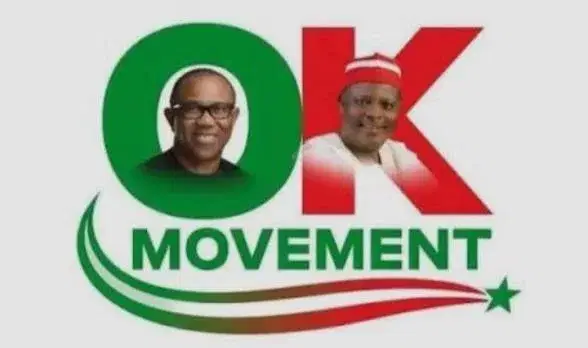
The internal dispute between the Obi/ Kwakwanso support group also known as OK Movement and the leadership of National Democratic Congress, NDC has escalated over the presidential campaign council set up by the movement ahead of the 2027 general election.
Recall that the Movement recently unveiled a 57 member presidential campaign council to work for the Peter Obi and Rabiu Kwakwanso ticket but the NDC issued a statement weekend and disowned the council.
Reacting to the development, the, OK Movement said tt does not require the personal validation or approval of any individual within the Nigeria Democratic Congress (NDC) before exercising its legitimate organisational functions in accordance with established processes.
The OK Movement National Secretary Saadatu Sani said this in a statement on Sunday in Abuja.
Sani rejected a statement credited to the party’s National Chairman, Sen. Moses Cleopas, urging him to familiarise himself with NDC’s constitution before making assertions.
Sani, in her statement, said the movement recognised the supremacy of political parties within constitutional and statutory spheres, but maintained that it remained an independent organisation with its leadership and internal processes.
She insisted that the movement would campaign for the NDC presidential and vice-presidential candidates as well as other party candidates where it had resolved to support them.
“The OK Movement does not require the personal validation or approval of any individual before exercising its legitimate organisational functions in accordance with established processes,” she said.
Sani said the movement was established from the grassroots and did not depend on sponsorship from any individual or political office holder for its activities.
She added that the movement was not seeking political appointments or positions within the NDC as a condition for its support, saying its principles remained its guiding values.
She said the movement had developed a nationwide grassroots structure, with internal membership records indicating approximately 2.5 million registered members and coordinators, supported by relevant data.
The leadership of Nigeria Democratic Congress, NDC, has disowned the Presidential Campaign Council, PCC, set up by the OK Movement ahead of the 2027 general elections.
This is contained in a statement signed by the party’s National Chairman, Cleopas Moses, on Saturday.
Moses stated that the announcement made by one John Ugulu was not authorised and did not come from the party.
According to him, going forward, no individual or group is authorised to announce, constitute or publish any campaign structure or organ in the name of the party without the approval of the party’s National Working Committee, NWC.
The statement partly read: “The leadership of our party, the Nigerian Democratic Congress, NDC, has noted with concern a publication credited to one John Ugulu, announcing a Presidential Campaign Council, PCC, under the guise of the OK Movement.
“For the avoidance of doubt, the party wishes to state categorically as follows: The party hereby dissociates itself in totality from the said OK Movement PCC announcement. It did not emanate from the party and should be disregarded by the public and the media.
“All candidates of the party must appreciate that they are not running as independent candidates. They are products of the party and remain subject to the authority and discipline of the party. Therefore, only the party’s leadership can constitute and announce a PCC.
“No member, candidate or support group should, under any guise, undermine the party or demarcate the party. The party recognises and deeply appreciates the contribution of all support groups and encourages their continued support. We welcome even more support groups who identify with our mission to rescue Nigeria.
“While the party will continue to work collaboratively with all support groups, such groups should not see themselves as alternative party structures or parallel organs of the party.”
News
25 dead bodies recovered as families remain uncertain over fate of 500 residents abducted from Niger communities
25 decomposing bodies belonging to victims of a mass abduction that took place in four communities in Niger state have been recovered.
They were part of residents that were abducted by terrorists Dekara, Kpenya, Sabon-Gida and Gidan-Zana in Borgu Local Government Area.
The bodies were recovered after the communities were reportedly alerted on Monday by the abductors to come and identify and retrieve the bodies.
The victims were said to be among about 500 worshippers abducted after Friday Jumm’at prayers on August 21, 2026.
25 bodies were recovered and later given a mass burial in a nearby bush.
The reported killings have heightened anxiety among families whose relatives remain in captivity, with residents saying they are increasingly uncertain about the fate of the remaining abductees.
A source said the abductors allegedly warned that more captives could be killed if their ransom demands were not met.
“They first asked each family to bring N10 million for each captive, but later reduced it to N5 million. There is no way we can afford it,” he said.
-

 News2 years ago
Senate to speed up conclusion of Nigeria Forest Security Service Bill
-

 News1 year ago
The Many Lies Against Bashir Haske
-

 News3 years ago
Breaking: Tinubu’s authentic ministerial nominees
-
 News3 years ago
“Anytime we want to kill terrorists, President would ask us to take permission from France but they were killing our soldiers-” Niger Republic coup leader
-
 News3 years ago
“I’m leaving the Catholic church because Bishop Onah is oppressing me,” says Okunerere
-

 News3 years ago
My nude photo leak was a mistake- lawyer Ifunanya
-

 News3 years ago
Radio Nigeria’s veteran broadcaster Kelvin Ugwu dies three months after retirement from service
-
 News4 months ago
See your state governor’s performance ranking