
News
Ex-minister Yuguda tackles Atiku over attack on Jonathan

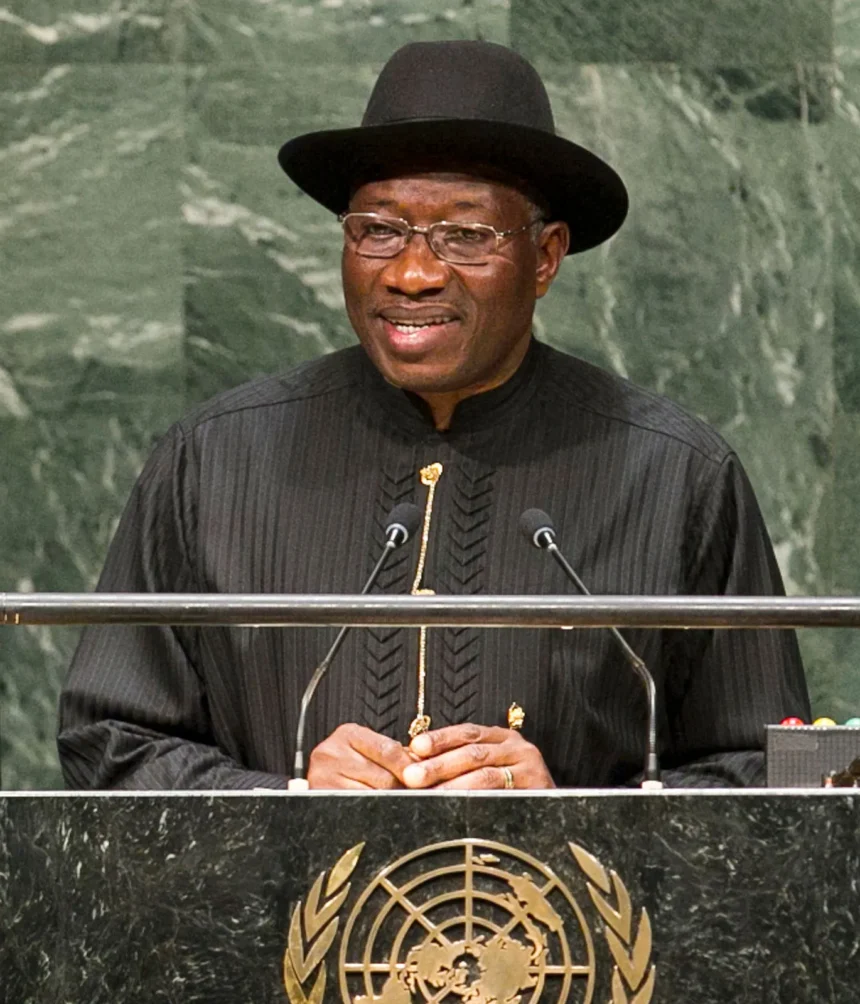
By Bonaventure Phillips Melah
Bashir Yuguda, a former Minister of National Planning and Minister of State for Finance, has said that the administration of former President Goodluck Jonathan left a legacy of good governance, democratic leadership, economic reforms, and statesmanship that cannot be undermined by false narratives.
Yuguda who also served Nigeria as Ambassador to the United Arab Emirates and Qatar, was reacting to a remark credited to former vice president Atiku Abubakar who was quoted to have said that Jonathan’s administration was affected by inexperience.
Yuguda said in a statement on Friday that the former President governed with honour, experience, vision, and restraint, particularly during the 2015 transfer of power.
Atiku had said during an interview on ARISE News Channel, that many young leaders in Nigeria have found it difficult to succeed in office because they lack adequate experience and are not fully prepared for the demands of governance.
The former Vice-President pointed to Nigeria’s leadership transition after the tenure of the late Umaru Musa Yar’Adua, stating that although Yar’Adua had a promising start in office, the administration that followed under Goodluck Jonathan later struggled amid growing national challenges.
“For instance, like this case of Umaru Yar’Adua, who started very well and was succeeded by Goodluck Jonathan. I know Jonathan very well — a decent young man — but he was inexperienced, and that, I believe, also contributed to his failure to manage the affairs of the country, particularly when he was faced with challenges,” he said.
Reacting to the former Vice-President’s remarks, Yuguda described Atiku’s comments as inaccurate and inconsistent with the facts.
He stressed that before Jonathan took the presidential oath, he had already served in key executive positions as Deputy Governor, Governor, Vice-President, and later Acting President during the illness of the late Yar’Adua, adding that these were not ceremonial roles but critical leadership experiences that prepared him for governance at the highest level.
The former minister stated, “During that period, Nigeria’s economic profile expanded significantly. The country attained the status of Africa’s largest economy, attracted strong investor confidence, and maintained relative stability in key indicators. Poverty levels declined to some of the lowest recorded since the return to democratic rule in 1999. These are not retrospective claims; they are outcomes documented by credible institutions.
“In agriculture, the administration moved the conversation from subsistence to sustainability. Reforms in the sector improved food availability and earned Nigeria global recognition for progress towards hunger reduction targets.
“The Jonathan administration revived train routes across Nigeria to provide an inexpensive alternative to road and air travel. On behalf of the President, I personally commissioned the rehabilitation and restoration of the Zaria–Gusau–Kaura Namoda rail line, which had deteriorated over time following 26 years of neglect.
“His vision for transformational development also found expression in the attention he gave to the education sector. He established no fewer than 12 new federal universities, with nine of them in the North, and about 165 Almajiri schools to enhance access to education across the country. Those of us in government at the time understood that these gains were the result of focused policy execution, not happenstance.”
Yuguda said what stood out most about former President Jonathan to many of those who served with him was his temperament.
The former Minister of State for Finance continued:
“He possessed a calmness that steadied governance, even in moments of pressure. I recall numerous occasions when he would discourage any attempt by his appointees to respond sharply to critics, including former leaders. His position was clear: leadership must not descend into unnecessary confrontation.
“That disposition was consistent with the loyalty he demonstrated to his own principal, President Umaru Musa Yar’Adua of blessed memory. Even in trying times, he upheld the dignity of that office and the sanctity of that relationship. Even as a former President, he has continued to visit his successors, including President Bola Ahmed Tinubu, to consult them on important national and sub-regional issues. It is a standard worth reflecting on, especially when contrasted with the well-known strains that existed between Vice-President Atiku Abubakar and President Olusegun Obasanjo during their time in office.
“No leader is beyond criticism, and President Jonathan himself would be the first to acknowledge that he is human and capable of error. But to reduce his presidency to a question of inexperience is to overlook both the depth of his preparation and the substance of his record.
“His most enduring legacy, in my view, lies in his respect for democratic values. Despite the security challenges at the time of the 2015 elections, Jonathan did not use them as an excuse to prolong his stay in office. He not only ensured that elections were conducted even in areas with the most difficult security challenges, he also pioneered the deployment of technology to enhance the transparency and credibility of the electoral process.”
Yuguda recalled that Jonathan honourably conceded power without hesitation, placing national stability above personal ambition — a decision he said profoundly shaped Nigeria’s democratic culture.
The statement added, “President Jonathan has remained consistent even out of office, measured in speech, respectful of institutions, and disinclined towards inflammatory commentary. That is why he has continued to be in high demand in peace negotiations and election observation missions within and outside Africa. In an era where political discourse is often heated, that restraint is not weakness; it is statesmanship.
“Ultimately, Nigerians will judge based on evidence, not assertions. They can differentiate between leadership that left tangible footprints and narratives that seek, after the fact, to redefine it. President Jonathan’s contributions are visible, documented, and enduring.
“They do not require embellishment, and they certainly cannot be diminished by revisionist claims, especially by one whose claim to experience in the last two decades has remained an unrealised ambition to be elected President of our great country.”
“We must reflect on what might have become of our nation’s democracy if those who now criticise Jonathan had found themselves in his position when his former boss, President Yar’Adua of blessed memory, fell ill.
“Would they have acted with the same wisdom, decorum, and restraint that Jonathan demonstrated in the interest of preserving the nation’s fragile democracy, or would personal ambition have driven them to destabilise it?” he asked.
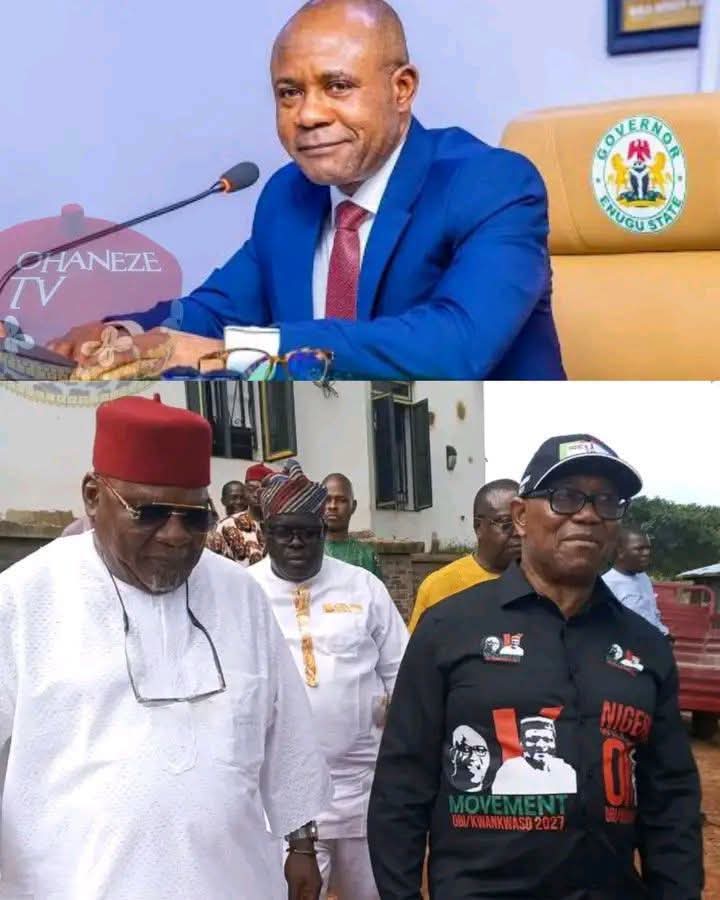
The Enugu State Government has suspended His Royal Majesty, Igwe Eze William Ezugwu, the traditional ruler of Ibagwa Ogbozalla Opi Autonomous Community, in Nsukka Local Government Area of Enugu state.
The state government accused Igwe Ezugwu of violating provisions of the state’s Traditional Rulers Law.
In a letter of suspension dated September 24, the Enugu State Government cited his alleged failure to constitute his cabinet, failure to establish a Town Union governing body, and persistent conduct deemed inconsistent with the laws governing traditional rulers in the state.
The suspension comes barely three weeks after Igwe William Ezugwu received NDC presidential candidate Peter Obi at his palace in Opi, Nsukka LGA, where he reportedly blessed Obi’s presidential ambition.
The Deputy Commander of Operation Rainbow, CSP (Chief Superintendent of Police) Dennis David Babale, has been killed after gunmen suspected to be Fulani Bandits ambushed personnel of the security outfit along the Bokkos-Barkin Ladi road in Barkin Ladi Local Government Area of Plateau State.
Operation Rainbow is a State-backed community security and intelligence-gathering outfit in Plateau State, Nigeria, originally established in 2010 under former Governor Jonah Jang and recently revamped by Governor Caleb Mutfwang to combat rural violence and beef up grassroots security.
The incident reportedly occurred at about 4:06 p.m. on Tuesday, September 22, 2026 when the personnel, travelling in a Toyota Hilux vehicle, came under attack by unidentified gunmen.
Troops of Sector 4, Operation ENDURING PEACE (OPEP), responded to a distress report and moved to the location of the attack.
Sources told reporters that Babale sustained gunshot wounds during the ambush and was evacuated to the General Hospital, Barkin Ladi, for medical attention.
Following the attack, troops, working alongside personnel of other security agencies, launched offensive operations and a manhunt for the assailants within the general area.
Security forces have intensified efforts to track the attackers and prevent further attacks along the route.

Director General/CEO of the Nigerian Meteorological Agency (NiMet) and Nigeria’s Permanent Representative at the World Meteorological Organization, Prof. Charles Anosike and other Chief Executive Officers of similar agencies across the world, have concluded a one week high level dialogue on Climate Science Information for Climate Finance and the 53rd Senior Official Field Exchange (SOFE) in Beijing, China.
The event which was hosted by World Meteorological Organization (WMO), took place from September 14 to 18, 2026 and featured discussions on: strengthening the role and leadership development of National Meteorological and Hydrological Services (NMHSs) in mobilizing climate finance; aligning scientific and technical capabilities with risk-informed, people-centred early warning systems; shifting from technical assistance to sustainable investments by expanding practical cooperation between meteorological frameworks and multilateral financing entities; and support to NMHSs leadership on strengthening strategic thinking and fostering productive partnerships.
Held back-to-back with the High-level dialogue was the 53rd Senior Official Field Exchange to Fujian Province for first-hand exposure to the implementation of Multi-hazard, Alert, Zero-gap and Universal (MAZU) platform – China’s AI-driven meteorological early warning solution in support of the Early Warnings for All (EW4All) initiative and disaster risk reduction practices through technical exchanges, field visits and peer learning.
-

 News2 years ago
Senate to speed up conclusion of Nigeria Forest Security Service Bill
-

 News1 year ago
The Many Lies Against Bashir Haske
-

 News3 years ago
Breaking: Tinubu’s authentic ministerial nominees
-
 News3 years ago
“Anytime we want to kill terrorists, President would ask us to take permission from France but they were killing our soldiers-” Niger Republic coup leader
-

 News3 years ago
“I’m leaving the Catholic church because Bishop Onah is oppressing me,” says Okunerere
-

 News3 years ago
My nude photo leak was a mistake- lawyer Ifunanya
-
 News4 months ago
See your state governor’s performance ranking
-

 News3 years ago
Radio Nigeria’s veteran broadcaster Kelvin Ugwu dies three months after retirement from service