
News
Dangote: Our CNG truck drivers are covered by Life Insurance

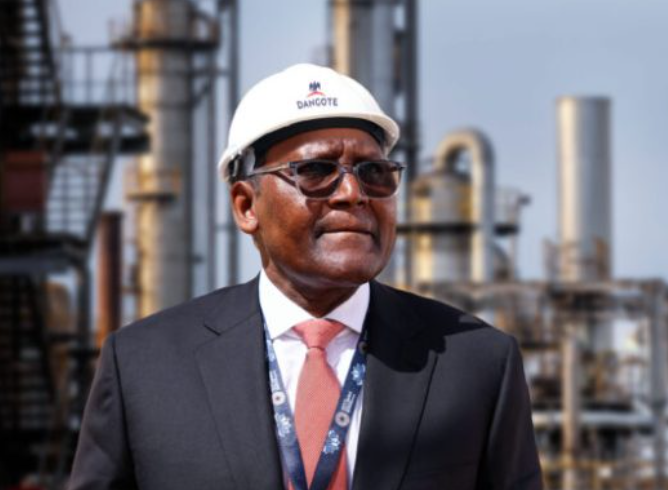
Aliko Dangote, President of the Dangote Group, has revealed that his resolve to take thousands of Nigerians off the unemployment market remains intact, noting that his companies will continue to employ Nigerians and contribute to further reducing the country’s unemployment rate.
Speaking to the media at his Refinery complex, Dangote said his company respects trade unions, but that membership is a personal choice for each driver.
“We are not trying to take anybody out of the market. These trucks that we launched didn’t stop anybody from their work…You are saying there will be a loss of jobs, will our own tankers be driven by robots?… We have not displaced any jobs; we are creating many more…Our employees earn salaries three times the minimum wage. Our drivers receive a living wage, life insurance, health insurance covering themselves, their spouses, and up to four children, as well as a lifelong pension. We are not only employing drivers but also mechanics, fleet managers, and other professionals to support the CNG fleet.”
He further revealed that the company’s CNG truck drivers can apply for and get a housing loan after five years of working and not being involved in any accident, and that it is optional for them to join the Union.
Acknowledging the numerous challenges the refinery has faced since its inception, Dangote emphasised the company’s unwavering commitment to Nigeria and Africa.
“The journey has been challenging because we sought to transform the downstream sector in Nigeria. Some believed we were taking food from their tables, which simply isn’t true. What we have done is to make our country and continent proud. Previously, only two African countries were not importing petrol, but regrettably, they have since resumed imports. This is detrimental to Africa,” he added.
Reflecting on the challenges faced during the refinery’s development, Dangote disclosed that the project involved enormous risk. He received repeated warnings from industry experts, investors, local and foreign government officials, who argued that only sovereign nations undertake such large-scale refinery ventures. He admitted that had the project failed, he would have lost all his assets to lenders.
“The decision to build the refinery was not easy. If it had gone wrong, lenders would have taken our assets. But we believed in Nigeria and Africa,” he said.
Despite opposition and economic headwinds, the refinery has successfully reduced the price of petrol from nearly N1,100 before production began to N841 in the Southwest, Abuja, Delta, Rivers, Edo, and Kwara. With the gradual rollout of CNG-powered trucks, Dangote anticipates that this price reduction will soon be felt nationwide.
He noted that the refinery has sufficient capacity to meet Nigeria’s domestic demand while also generating foreign exchange through exports. He revealed that between June and the first week of September 2025, the facility had exported over 1.1 billion litres of Premium Motor Spirit (PMS), underscoring its capacity to meet domestic demand and contribute significantly to foreign exchange earnings.
He reaffirmed his commitment to Nigeria’s industrialisation, describing it as essential for the continent’s development. Dangote emphasised the urgent need for Nigeria to protect its local industries and discourage the dumping of cheap foreign goods, citing the collapse of the once-thriving textile sector as a cautionary example.
He noted that Nigeria’s path to sustainable economic growth lies in industrialisation, which not only boosts local productivity but also supports a circular economy.
“Other nations were not industrialised by outsiders. We must build and industrialise our own economies. Without this, how can others invest? That is why I believe the National Assembly should enact legislation to support the Federal Government’s ‘Nigeria First’ policy. My goal is to see Africa prosper, as we have the fastest-growing population in the world. Relying on imports means exporting jobs and importing poverty. Many individuals with greater financial resources than myself want to invest, but the challenges we face discourage them. Numerous sectors are still in urgent need of industrialisation,” he said.
News
NiMet DG Anosike commends Minister Abubakar Kyari on climate-smart agriculture, urges stakeholders to develop practical, measurable roadmap on weather, climate services
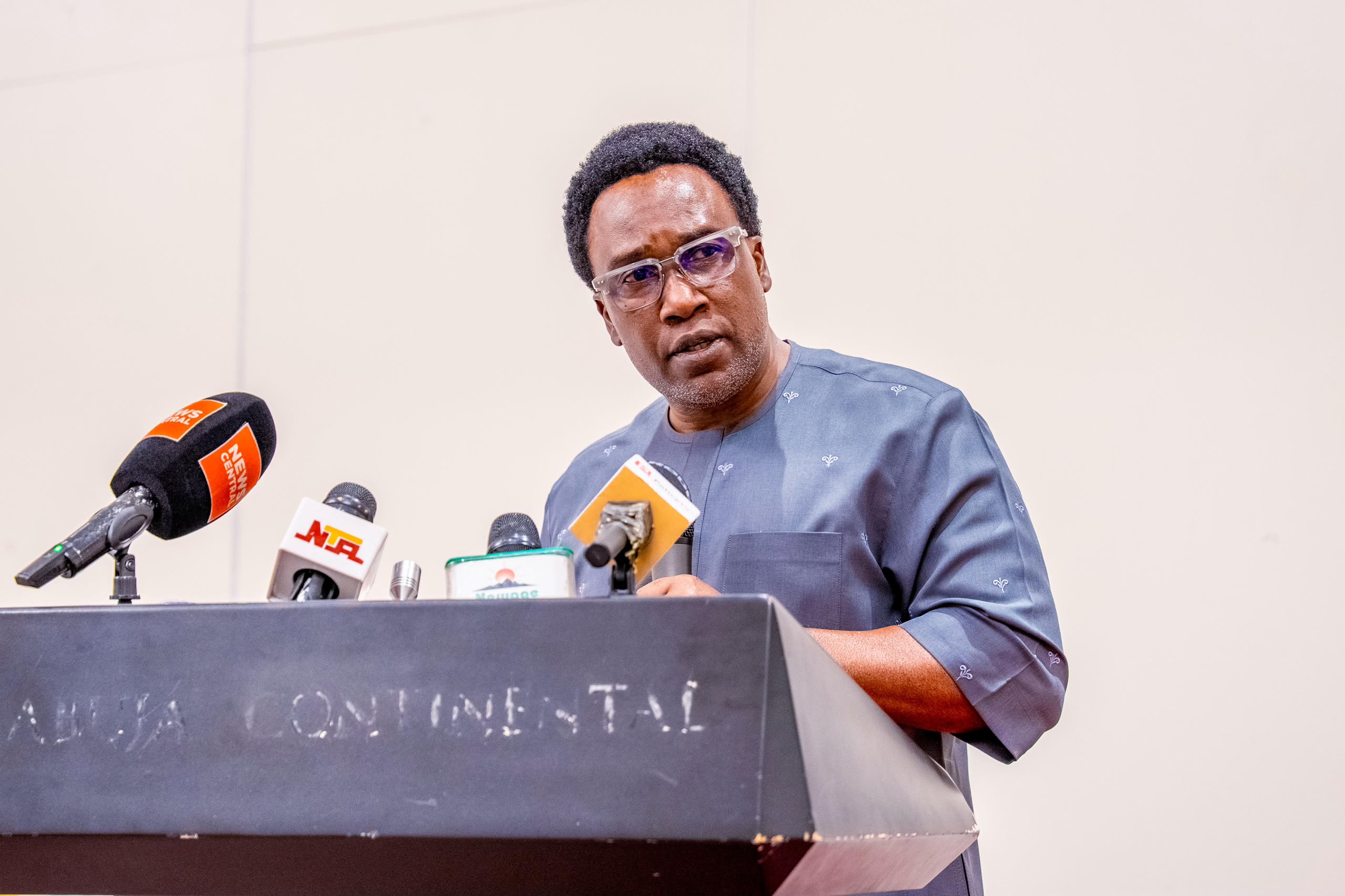
Photo caption: NiMet DG/CEO Prof. Charles Anosike speaking at the strategic dialogue.
Director General/CEO of the Nigerian Meteorological Agency (NiMet), Prof Charles Anosike, has commended the Minister of Agriculture and Food Security, Senator Abubakar Kyari, CON, for his efforts towards promoting climate-smart agriculture.
Anosike also urged stakeholders in the agriculture and good sector, to develop a practical, inclusive and measurable roadmap for integrating weather and climate services into decision-making across the sector’s value chain.
The NiMet boss stated this in his goodwill message at a National Strategic Dialogue on the Preparation of the AGROW Component 2.2 – National Implementation Strategy and Digital Agriculture Architecture, organised by the Federal Ministry of Agriculture and Food Security under the World Bank-supported Nigeria Sustainable Agricultural Value Chain (AGROW) Project.
The dialogue, held under the theme, “Building a Unified, Inclusive and Future-Ready Digital Agriculture Ecosystem for a More Productive, Resilient and Food-Secure Nigeria,” brought together key stakeholders to deliberate on strengthening Nigeria’s digital agriculture ecosystem.
Anosike confirmed NiMet’s commitment to strengthening weather and climate information services for farmers as part of efforts to build a more productive, resilient and food-secure agricultural sector in Nigeria.
He said the dialogue was important to NiMet given its mandate to provide weather and climate information that protects lives, supports livelihoods and enables informed planning across climate-sensitive sectors.
According to Anosike, climate variability, changing rainfall patterns and extreme weather events are increasingly affecting agriculture, making timely and reliable climate information critical to agricultural planning and decision-making.
He noted that NiMet provides Seasonal Climate Predictions, regular weather updates, agric meteorological services and impact-based advisories to help farmers make informed decisions on planting, water and input management, while reducing avoidable losses.
Some participants at the dialogue.
He emphasized the importance of digital agriculture as a critical pathway for translating climate information into practical, farm-level action and also highlighted NiMet’s partnerships with Tomorrow.io and MTN on the Digital Climate Advisory Services (DCAS) System, which is designed to deliver location specific weather advisories to farmers through mobile SMS.
The above, Anosike said, was in addition to NiMet’s collaboration with the Agricultural Innovation Mechanism for Scale (AIM for Scale) to strengthen the integration of AI-based weather forecasting with digital advisory systems.
He stressed the need for digital agricultural services to reach farmers through accessible and trusted channels, noting that collaboration with extension services, technology providers, telecommunications companies, community radio and farmer organisations would be essential for effective last-mile delivery.
The NiMet CEO also emphasised the importance of making such services responsive to farmers’ realities, including language, literacy, connectivity, affordability and gender inclusion, while involving farmers in the development of climate services.
He concluded his remark by expressing optimism that the dialogue would advance climate-smart, digitally enabled and farmer-centred agriculture, while reaffirming NiMet’s readiness to provide the technical leadership needed to strengthen climate services, support food security and build resilient livelihoods in Nigeria.
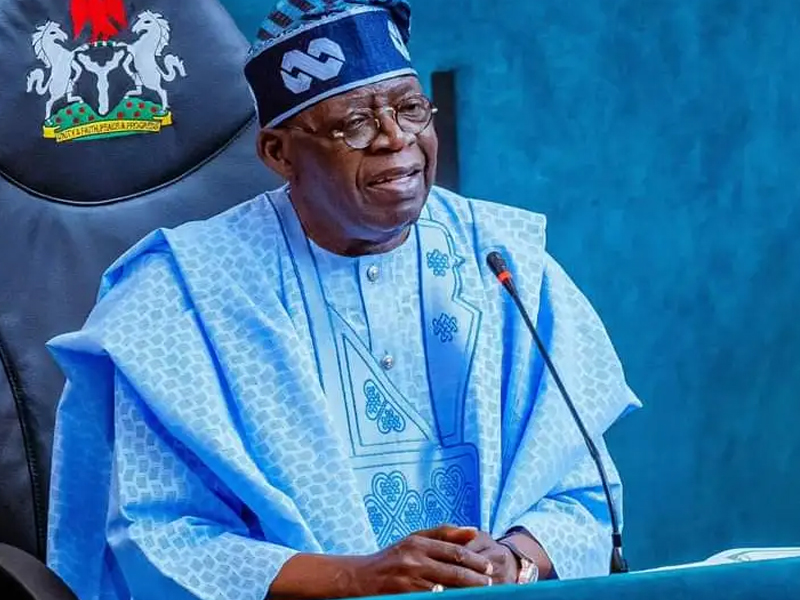
President Bola Tinubu on Monday disclosed that his government has created 650,000 jobs through its National Micro, Small and Medium Enterprises (MSME) Clinics in 19 states of the Federation and the Federal Capital Territory (FCT).
Tinubu also vowed to remove all bottlenecks militating against Nigerians turning ideas and skills into successful businesses.
The President made this known via his verified X handle, @officialABAT and explained that a tailor should not need millions of naira to buy industrial machinery before she can grow her business while a food processor should not have to build a factory before producing at scale.
This, he stated, informed why the Federal Government, “under our Renewed Hope administration, is investing in shared MSME hubs through our National MSME Clinics, giving entrepreneurs access to modern equipment, reliable power and production facilities without carrying the full cost alone.”
According to Tinubu: “Today, 21 shared facilities across 19 states and the FCT are supporting businesses and an estimated 650,000 jobs. ReadPolitical News
“Nigerians do not lack ideas, skill or ambition. Too often, they lack access to the tools and infrastructure needed to turn them into successful businesses.
“Our job is to remove those barriers.
“When small businesses can produce more, at lower cost, they become more competitive. They grow. They employ more people. They create income and opportunity for Nigerian families.
“Giving Nigerian enterprise the tools to succeed is how we build prosperity from the ground up. That is the Nigeria we are building.”
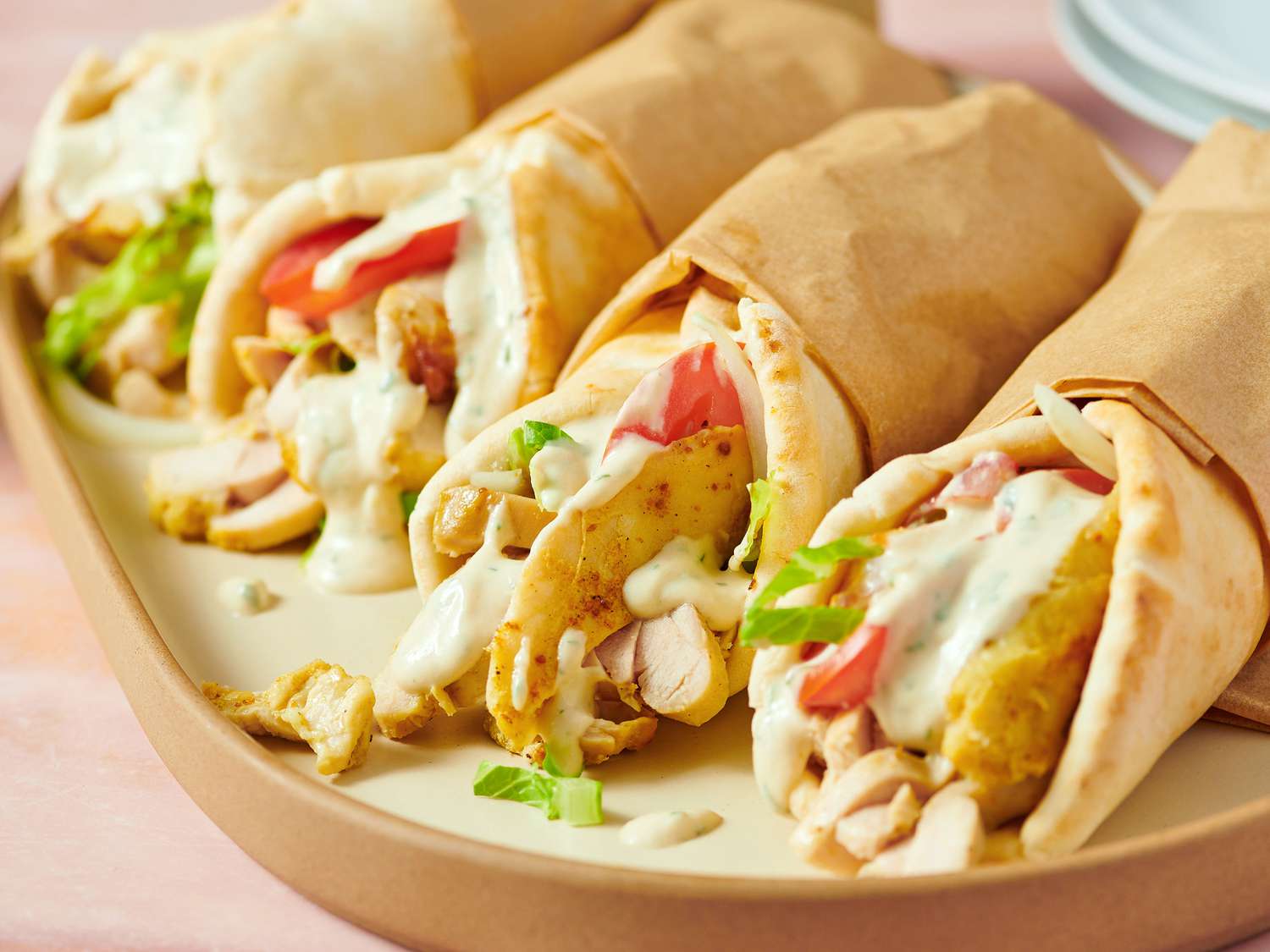
Health professionals have warned that regular consumption of shawarma containing high amounts of salt, sugar, fat, seasoning and processed meat may contribute to hypertension, obesity, diabetes and kidney disease.
Excessive salt can raise blood pressure and put additional strain on the kidneys, while high-calorie sauces may contribute to weight gain.
Nutrition experts advised Nigerians to eat shawarma in moderation, use less mayonnaise and other sauces, choose lean grilled meat and add more vegetables. Consumers were also urged to check vendors’ cleanliness and avoid food prepared where ingredients are exposed to flies, dust or poor handling.
A recent report by experts also warned that frequent consumption of Shawarma may increase the risk of other food-borne infections and long-term health problems.
The report contains documented cases of people who suffered vomiting, diarrhoea, stomach pain and weakness after eating shawarma, with some requiring hospital treatment.
According to the report, poor hygiene could allow bacteria and other contaminants into shawarma, causing illnesses including cholera, dysentery, typhoid and salmonellosis.
It also raised concerns about mayonnaise and creamy sauces kept without proper refrigeration and warned that poor storage could encourage bacterial growth and increase the risk of food poisoning.
A study cited in the report found bacterial contamination in ready-to-eat shawarma sold on the streets
Experts also raised concerns about processed meat such as sausage, noting that the International Agency for Research on Cancer classifies processed meat as carcinogenic to humans.
-

 News2 years ago
Senate to speed up conclusion of Nigeria Forest Security Service Bill
-

 News1 year ago
The Many Lies Against Bashir Haske
-

 News3 years ago
Breaking: Tinubu’s authentic ministerial nominees
-

 News3 years ago
“Anytime we want to kill terrorists, President would ask us to take permission from France but they were killing our soldiers-” Niger Republic coup leader
-

 News3 years ago
“I’m leaving the Catholic church because Bishop Onah is oppressing me,” says Okunerere
-

 News3 years ago
My nude photo leak was a mistake- lawyer Ifunanya
-
 News4 months ago
See your state governor’s performance ranking
-

 News3 years ago
Radio Nigeria’s veteran broadcaster Kelvin Ugwu dies three months after retirement from service