News
Danger alert: Rabis outbreak in Enugu


Enugu State Ministry of Agriculture and Agro-Industrialization has issued an urgent public health alert following a confirmed outbreak of canine rabies in the Igbo Etiti Local Government Area.
In an official statement released today, March 31, 2026, the Honorable Commissioner, Hon. Patrick Nwabueze Ubru, warned that the situation requires immediate community cooperation to prevent human fatalities.
Rabies is a viral disease that, while preventable, is almost 100% fatal once clinical symptoms appear.
Rabies is primarily transmitted through the saliva of infected animals, typically via bites or scratches. While dogs are the most common carriers in this region, the virus can affect all mammals, including humans.
Authorities are urging residents to keep a close eye on local animals. A “rabid” animal may exhibit: Unusual aggression or irritability, Excessive salivation or foaming at the mouth, Abnormal behavior (e.g., a wild animal appearing overly friendly), Partial or total paralysis.
To prevent the spread of the virus, the Ministry has outlined six critical steps for all residents and pet owners:
Mandatory Vaccination: All dog and pet owners must vaccinate their animals immediately.
Strict Restraint: Pets should be confined to compound walls and prevented from roaming freely.
Avoid Strays: Do not approach or attempt to feed stray or unfamiliar animals.
Report Suspected Cases: Immediately notify the nearest veterinary authority of any animal behaving strangely.
Community Sensitization: Leaders and stakeholders are asked to spread awareness to ensure every household understands the danger.
If you or someone you know is bitten or scratched by an animal, the Ministry advises the following life-saving protocol:
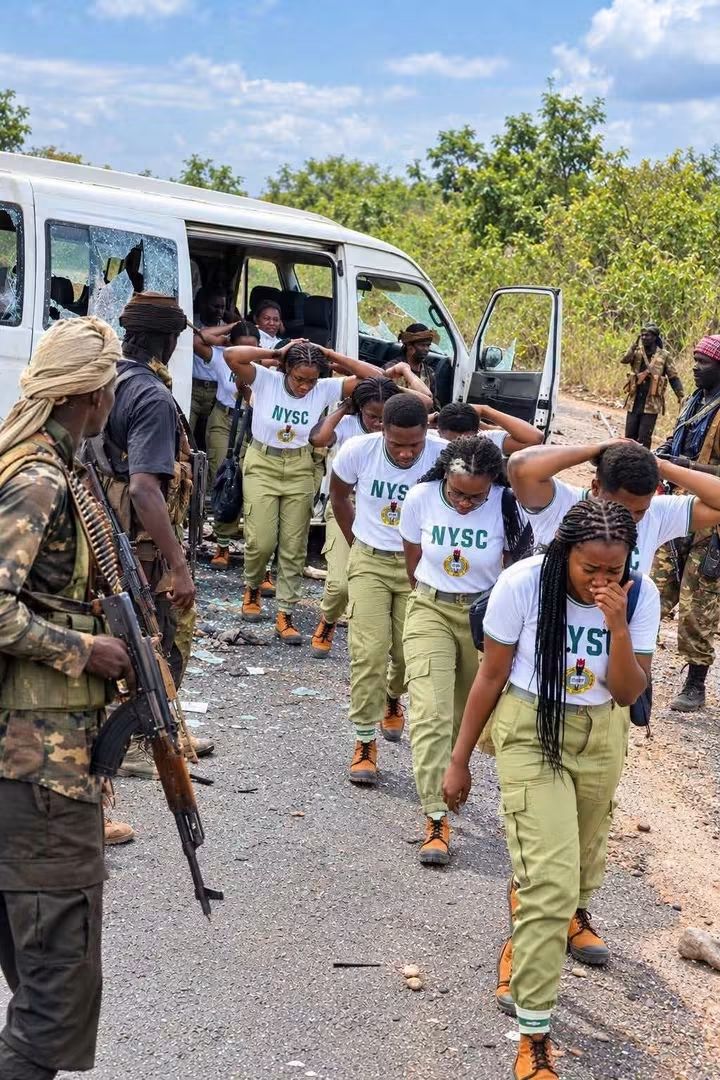
Families of the rescued 20 abducted National Youths Service Corps, NYSC, members have said they paid millions of naira in ransom before learning of their release.
Accordding to them, some relatives paid more than N3 million, while others reportedly paid up to N6 million each.
The hat security agencies, including the military, Department of State Services, DSS, police and other security formations rescued the corps members and another hostage in Imo State on Wednesday.
“I paid as much as N3 million as ransom while I was hoping that nothing happened to my child. I ran helter-skelter to raise the money. I eventually got the money and sent someone to Imo State to deliver the ransom,” a mother of one of the corps members said.
A father, who spoke to News Central Television, said he paid N6 million for the release of his abducted son.
“We had to converge somewhere in Ibadan, Oyo State to put the money together. Some of us even changed the money to dollars and sent it to Imo State to meet whoever was coming to pick it.
“I am excited that my son is coming back. However, how do I repay the N6 million I borrowed? I’m just a farmer,” he said.
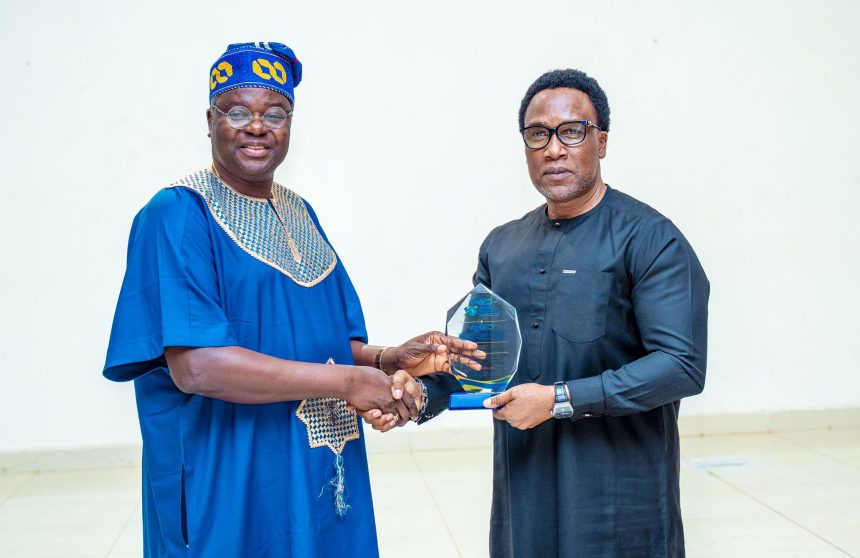
The Nigerian Meteorological Agency (NiMet) has been honoured with the AfriGEO Weather, Climate and Early Warning Services Award for its outstanding contributions to weather and climate services, early warning systems and climate resilience through the effective use of Earth observation technologies.
The prestigious award was presented to the Director-General/Chief Executive Officer of NiMet, Prof. Charles Anosike, by the Director-General of the National Space Research and Development Agency (NASRDA), Prof. Matthew Olumide Adepoju, at the 10th AfriGEO Gala Dinner held in Abuja on October 7, 2026.
The presentation formed part of activities marking the 10th AfriGEO Symposium, a major continental platform dedicated to promoting the application of Earth observation, geospatial information and environmental intelligence in addressing Africa’s development and environmental challenges.
The 2026 symposium, held under the theme, “Earth Observations for a Resilient Africa,” brought together policymakers, scientists, development partners, private-sector stakeholders and practitioners from the 33 African member states of AfriGEO.
The recognition places NiMet among institutions making significant contributions to the advancement of weather and climate information services on the continent, particularly in the areas of early warning, climate adaptation and the application of Earth observation data to strengthen resilience.
NiMet’s recognition is also significant against the backdrop of increasing climate-related risks across Africa, including extreme rainfall, flooding, drought, heatwaves and other weather and climate hazards that continue to pose challenges to communities, agriculture, infrastructure and economic activities.
Through its mandate, NiMet provides meteorological and climatological information used by various sectors of the Nigerian economy, including agriculture, aviation, water resources, disaster risk management and other climate-sensitive sectors.
The Agency has increasingly focused on ensuring that weather and climate information is not only generated but also translated into timely and actionable information capable of supporting decision-making and protecting lives and livelihoods.
The AfriGEO award therefore underscores the growing importance of NiMet’s contribution to strengthening Nigeria’s capacity to anticipate and respond to weather and climate-related hazards.
Earth observation has become an increasingly important tool in understanding environmental changes, monitoring weather and climate patterns and developing effective early warning systems.
By combining Earth observation technologies with meteorological and climate information, institutions can improve their ability to monitor hazards, provide forecasts and support governments and communities in taking preventive and adaptive measures.
For Nigeria, where weather and climate conditions have direct implications for food production, transportation, water resources, public safety and economic activities, reliable meteorological information remains critical to national development and resilience.
The recognition also highlights the importance of collaboration among national institutions, scientific organisations and international and regional partners in strengthening Africa’s capacity to harness Earth observation for sustainable development.
The 10th AfriGEO Symposium provided an avenue for stakeholders across the continent to exchange knowledge, showcase innovations and examine practical approaches to using Earth observation and geospatial technologies to address emerging environmental and development challenges.
With the theme, “Earth Observations for a Resilient Africa,” the symposium placed particular emphasis on the need for African countries to strengthen their ability to generate, share and utilise environmental intelligence in responding to climate change and other risks.
NiMet has reaffirmed its commitment to advancing the use of weather, climate and Earth observation information to strengthen early warning and support evidence-based decision-making in Nigeria.
The Agency said it would continue to pursue innovation and strategic partnerships aimed at improving the delivery of timely and actionable climate information to stakeholders across the country.
According to the Agency, the objective is to ensure that weather and climate information contributes meaningfully to national planning, disaster preparedness, climate adaptation and the protection of vulnerable communities.
NiMet also emphasised its commitment to supporting the Federal Government’s climate-resilience agenda through the continued provision of scientific and technical information needed to manage climate-related risks.
The recognition of the Agency at the AfriGEO platform is expected to further reinforce the importance of meteorological and Earth observation services in Nigeria’s efforts to build a safer and more climate-resilient society.
As climate variability and extreme weather events continue to challenge communities across Africa, stakeholders at the symposium stressed the need for stronger investments in science, technology, innovation and early warning systems.
For NiMet, the AfriGEO award represents recognition of its contribution to this continental effort and reinforces the Agency’s role in using science, technology and environmental intelligence to support national development.
The Agency said it would continue to work with relevant stakeholders to expand access to reliable weather and climate information, strengthen early warning mechanisms and promote informed decision-making.
The ultimate goal, it said, is to contribute to a safer, better-informed and climate-resilient Nigeria, while supporting broader African efforts to harness Earth observation for sustainable development and resilience.

Elon Musk’s wealth has again topped US$1 trillion as stocks of his companies SpaceX and Tesla surged.
Forbes estimated the world’s richest man’s net worth at $1 trillion on Monday, an increase of $30.6 billion from Friday last week, the last stock market trading day.
The gain reinforces Musk’s position as the world’s wealthiest person, far ahead of Bezos, who ranks second with a fortune of $371.5 billion. Google co-founder Larry Page followed with $284.3 billion, while Dell Technologies chairman Michael Dell ranked fourth with $272.2 billion.
`Musk became the world’s first trillionaire in June as SpaceX shares soared following its record-breaking initial public offering, but soon lost that status when the stock fell amid concerns about the company’s lofty valuation, according to Bloomberg.
His fortune has approached the trillion-dollar threshold again in recent days as both companies’ shares rallied. Tesla’s third-quarter deliveries exceeded analysts’ expectations last week, helping increase Musk’s wealth by $61 billion on Friday alone.
-

 News2 years ago
Senate to speed up conclusion of Nigeria Forest Security Service Bill
-

 News1 year ago
The Many Lies Against Bashir Haske
-

 News3 years ago
Breaking: Tinubu’s authentic ministerial nominees
-
 News3 years ago
“Anytime we want to kill terrorists, President would ask us to take permission from France but they were killing our soldiers-” Niger Republic coup leader
-

 News3 years ago
“I’m leaving the Catholic church because Bishop Onah is oppressing me,” says Okunerere
-
 News4 months ago
See your state governor’s performance ranking
-

 News3 years ago
My nude photo leak was a mistake- lawyer Ifunanya
-

 News3 years ago
Radio Nigeria’s veteran broadcaster Kelvin Ugwu dies three months after retirement from service