
News
Bayelsa relatively calm as tension envelops Imo, Kogi over off-season election

Nationwide Reports correspondents in Imo, Kogi and Bayelsa say there is tension across the three states as off-season election is set to begin this Saturday morning.
Communities in Kogi and Imo states are said to be in fear of violence while there is relative calm in Bayelsa state.
However, Police and other security authorities have assured voters of maximum security and this could be seen from the fact that the three states have been saturated with operatives from the Police, Army, Civil Defence, the DSS and others.
On its part, the Independent National Electoral Commission (INEC) on Friday, pleaded with the political parties for a peaceful poll.
The commission disclosed that 5,169,692 registered voters who collected their PVCs would cast their votes in the three states today.
The breakdown indicates that out of 1,056,862 registered voters in Bayelsa State, 1,017,613 have collected PVCs. In Imo State, the number of registered voters is 2,419,922 out of which 2,318,919 have collected PVCs. In Kogi State, out of 1,932,654 registered voters, 1,833,160 have collected PVCs.
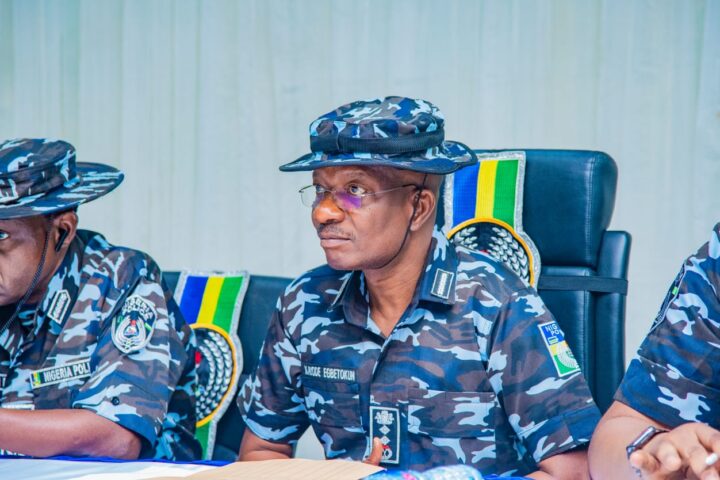
The Inspector-General of Police, Kayode Egbetokun, has ordered restriction of vehicular movement in the three states from 11:59 p.m yesterday to 6.00 p.m today to curb the movement of illicit arms and political thugs.
Egbetokun has deployed no fewer than 92,000 officers and men for election duties in the three states.
By yesterday morning, the Police had completed its operational deployment in the three states. The IG assured that the force has enough manpower ready for election duty.
Egbetokun said his men will deal with hoodlums who may be planning to snatch ballot boxes during today’s governorship elections.
Egbetokun said: “Concerning security at the collation centres, if collation centres have been porous in the past, I’ve said it before now, collation centres in this election will be heavily secured.”The IG also ordered the distribution of additional 220 operational vehicles for election security management across the states. Anti-riot equipment, including water cannons, Armoured Personnel Carriers, helmets, bulletproof vests, and tear gas canisters have also been deployed across the three states.
Also yesterday, the National Security Adviser, Nuhu Ribadu, assured residents of Kogi, Bayelsa, and Imo states of their security during the governorship elections. This is as he warned political actors against any act of violence in the states.
Ribadu stressed that there would be “severe consequences” for anyone found trying to disrupt the elections in the three states and noted a monitoring system had been established with monitors deployed to the field to collect any evidence of violence and irregularities.
For Kogi in particular, the gubernatorial election is a three-horse race in Kogi State.
The leading contestants are Usman Ododo of the APC, Dino Melaye of the PDP and Murtala Ajaka also known as Muri of the SDP.
Indications show that the three candidates are from different ethnic backgrounds, namely Ebira, Okun and Igala, respectively and that the voting pattern may likely reflect the same.
For Imo, the key contestants in today’s election are incumbent Governor Hope Uzodinma of the APC, Sam Anyanwu of the PDP and Athan Achonu of the Labour Party.
While the Governor is relying on power of incumbency and support from Abuja, the race is seen as unpredictable and could swing in favour of any of the three leading contenders.
For Athan Achonu, the candidate of Labour Party, his selling points is the fact that Uzodinma has never been a popular leader in Imo State due to the factors that made him governor as well as the huge insecurity in the state. Achonu is therefore expected to pool the majority of the votes from the Okigwe zone. The Peter Obi LP sentiments would equally enhance Achonu’s chances, especially in the metropolitan capital city of Owerri where collapsing infrastructure, particularly road network, had distanced the people from Uzodinma. But the LP is weakened by internal bickering after its hotly contested governorship primary which led to the exodus from the party of several ‘Obedients’ who would have brought the Peter Obi wave to bear on the election.
The PDP candidate, Sam Anyanwu is also faced with internal bickering, including the Emeka Ihedioha factor which may work against his chances today. It would seem the absence of Ihedioha in the race united his Mbaise people to solidly line up behind Uzodinma. The PDP boasts of widespread structures, but the bickering and sabotage rocking the party had clearly diminished its potential and robbed Anyanwu of the enormous goodwill the party hitherto enjoyed.
In Bayelsa state, the leading candidate is incumbent Governor Douye Diri of the PDP, followed by Timipre Sylva of the APC and Udengs Eradiri of the LP.
Douye Diri was a Senator, a former member of the House of Representatives, and former Commissioner for Youth and Sports in the state.
The incumbent governor is looking good for a second term based on his first term performance and the fact that leading opposition parties in the state are in crisis.
Timipre Sylva, based on his antecedent and pedigree, is the strongest among those jostling to wrestle power from Diri. However, his campaign was negatively affected by the failed attempts to disqualify him through the court. He was a former governor of the state for four years and immediate past Minister of State for Petroleum Resources.
Some members have accused him of running the party as his private estate and abysmal performance of the party in the state at the 2023 elections on his overbearing attitude.
Udengs Eradiri is the youngest among the leading candidates at just 47. The former President, IYC worldwide was Commissioner for Youths and later Environment under the Seriake Dickson administration. Eradiri is regarded as the dark horse among those jostling to occupy the Creek.
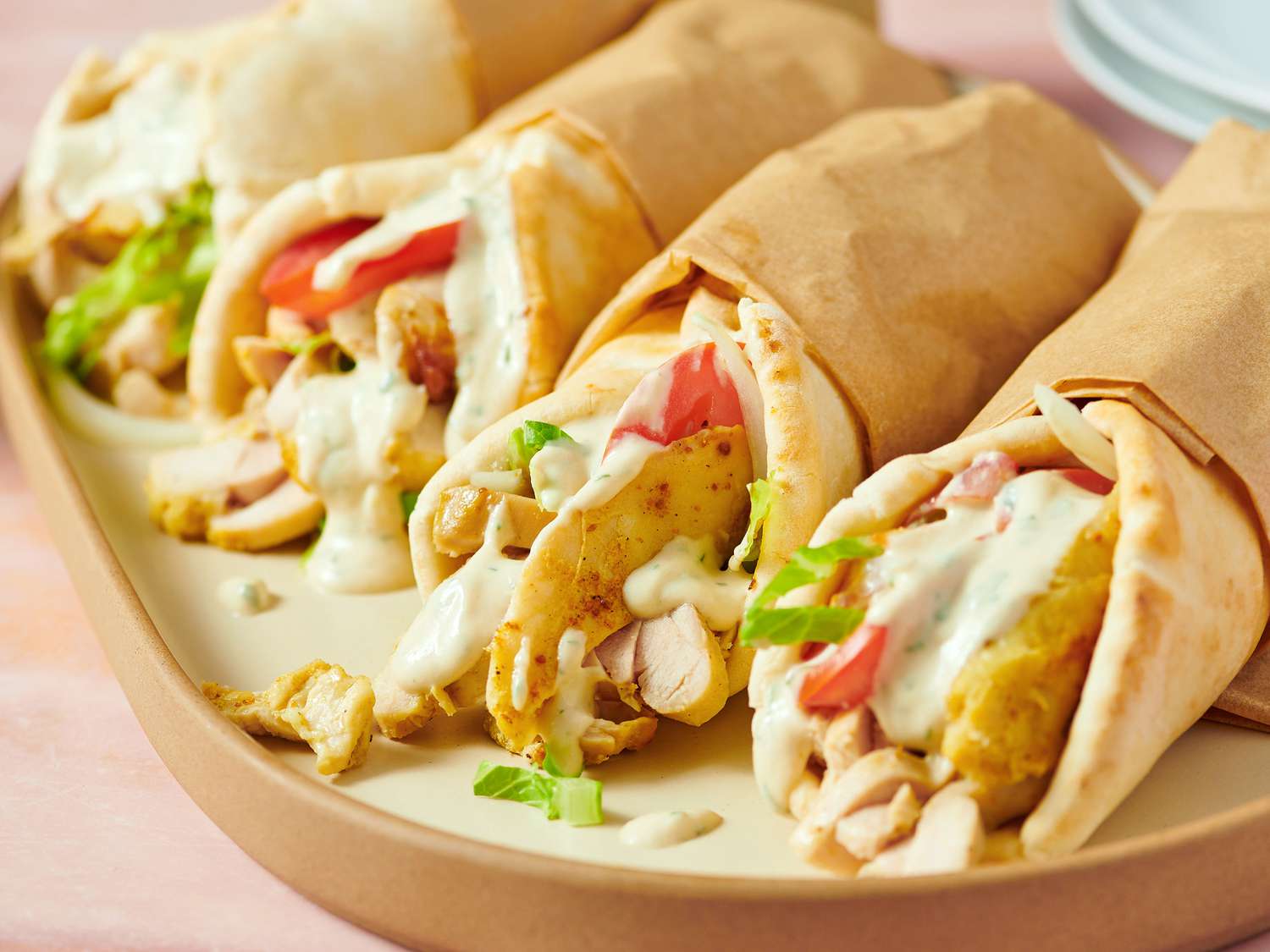
Health professionals have warned that regular consumption of shawarma containing high amounts of salt, sugar, fat, seasoning and processed meat may contribute to hypertension, obesity, diabetes and kidney disease.
Excessive salt can raise blood pressure and put additional strain on the kidneys, while high-calorie sauces may contribute to weight gain.
Nutrition experts advised Nigerians to eat shawarma in moderation, use less mayonnaise and other sauces, choose lean grilled meat and add more vegetables. Consumers were also urged to check vendors’ cleanliness and avoid food prepared where ingredients are exposed to flies, dust or poor handling.
A recent report by experts also warned that frequent consumption of Shawarma may increase the risk of other food-borne infections and long-term health problems.
The report contains documented cases of people who suffered vomiting, diarrhoea, stomach pain and weakness after eating shawarma, with some requiring hospital treatment.
According to the report, poor hygiene could allow bacteria and other contaminants into shawarma, causing illnesses including cholera, dysentery, typhoid and salmonellosis.
It also raised concerns about mayonnaise and creamy sauces kept without proper refrigeration and warned that poor storage could encourage bacterial growth and increase the risk of food poisoning.
A study cited in the report found bacterial contamination in ready-to-eat shawarma sold on the streets
Experts also raised concerns about processed meat such as sausage, noting that the International Agency for Research on Cancer classifies processed meat as carcinogenic to humans.
The mystery surrounding the death of a man whose body was found by the roadside in Abuja has taken a new turn, with police tracing the case through his missing mobile phone to a married woman who allegedly spent time with him at a hotel.
The FCT Commissioner of Police, Mohammed Sanusi, disclosed this on Saturday in Abuja, saying investigators arrested Rukayat Muhammed after tracing the deceased’s final communications.
The man was found dead on August 26 along the Kubwa Expressway, near Katampe under the bridge, after his family had earlier reported him missing.
According to the police, the case initially raised suspicion of a possible “one chance” incident. Investigators, however, established that the dead man was the missing person after identifying his remains.
Sanusi said the deceased’s mobile phone was missing and had been switched off. Police investigators subsequently traced his last known communication, leading them to Rukayat, a resident of Garki Area 2.
Investigators reportedly discovered that Rukayat, who is married, was allegedly in a romantic relationship with the deceased. The police said she had saved his contact under the name “Safiyat.”
The CP said the pair had lodged at Good Samaritan Guest House on 2nd Avenue, Gwarinpa, where the man later died.
Sanusi said Rukayat allegedly discovered that the man was no longer breathing but failed to alert the police or hotel management. Instead, she allegedly took his phone and left the hotel.
The case took another turn when hotel management later discovered the man’s body inside the room after attempts to contact the occupants failed.
Rather than reporting the discovery, two hotel staff members, Ibrahim Omeiza and Kefat Bitrus, allegedly removed the body from the room and transported it to the Kubwa Expressway, where they dumped it under the Katampe bridge.
The police said the action was apparently intended to distance the hotel and its management from the death.
Sanusi said detectives were still working to establish exactly how the man died and determine the individual roles of those connected to the incident.
He warned that anyone found to have participated in the death, concealment or abandonment of the body would face prosecution.
The commissioner said the investigation remains ongoing.
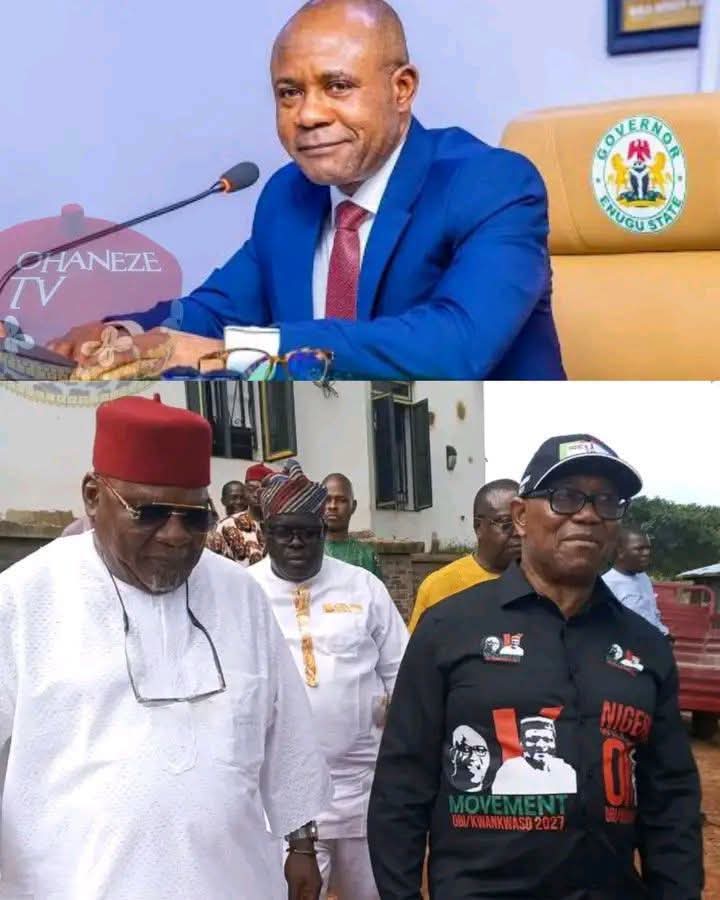
The Enugu State Government has suspended His Royal Majesty, Igwe Eze William Ezugwu, the traditional ruler of Ibagwa Ogbozalla Opi Autonomous Community, in Nsukka Local Government Area of Enugu state.
The state government accused Igwe Ezugwu of violating provisions of the state’s Traditional Rulers Law.
In a letter of suspension dated September 24, the Enugu State Government cited his alleged failure to constitute his cabinet, failure to establish a Town Union governing body, and persistent conduct deemed inconsistent with the laws governing traditional rulers in the state.
The suspension comes barely three weeks after Igwe William Ezugwu received NDC presidential candidate Peter Obi at his palace in Opi, Nsukka LGA, where he reportedly blessed Obi’s presidential ambition.
-

 News2 years ago
Senate to speed up conclusion of Nigeria Forest Security Service Bill
-

 News1 year ago
The Many Lies Against Bashir Haske
-

 News3 years ago
Breaking: Tinubu’s authentic ministerial nominees
-
 News3 years ago
“Anytime we want to kill terrorists, President would ask us to take permission from France but they were killing our soldiers-” Niger Republic coup leader
-
 News3 years ago
“I’m leaving the Catholic church because Bishop Onah is oppressing me,” says Okunerere
-

 News3 years ago
My nude photo leak was a mistake- lawyer Ifunanya
-
 News4 months ago
See your state governor’s performance ranking
-

 News3 years ago
Radio Nigeria’s veteran broadcaster Kelvin Ugwu dies three months after retirement from service