
News
June 12 election was suspended without my permission – Babangida

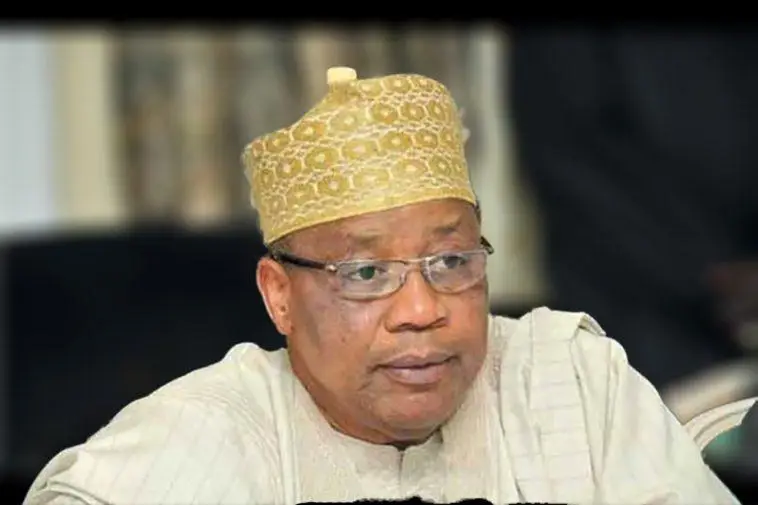
Former Nigeria’s military president, Ibràhim Babangida, has unveiled his side of the story about the annulment of the June 12, 1993, presidential election.
In his memoir, “A Journey in Service,” Babangida claimed that the election annulment was carried out by forces led by Sani Abacha, his chief of defense staff, without his knowledge or permission.
According to a story published Thursday by The Cable, Babangida recounted that he was in Katsina attending a funeral when he received news of the annulment.
He claimed that he expressed alarm and horror at the sudden turn of events, stating that he had previously decided to proceed with the elections despite opposition from some military officers.
According to Babangida, he later discovered that the forces against the June 12 election were led by Sani Abacha who later became military head of state.
Babangida, who did a national broadcast on June 24, 1993 to officially announce the annulment of the election, said Abacha had become a major force in a “factionalised” military and it was difficult to remove him when he stepped down from power.
The former president added that the events leading up to the annulment began with an injunction obtained by the Association to Better Nigeria (ABN), led by Arthur Nzeribe, to stop the electoral commission from conducting the election.
Babangida admits that Nzeribe was close to him, but denies supporting ABN’s activities.
“From out of nowhere, on June 10, two days before the presidential election, the same shadowy group, ABN, which had been campaigning for an extension of military rule, approached the Abuja High Court of Justice Bassey Ikpeme for an injunction to stop NEC (National Electoral Commission) from conducting the elections,” Babangida wrote in his memoir.
“Unknown to me at the time, Justice Ikpeme, who was relatively young at the Bench, had worked in the chambers of the Attorney-General and Minister of Justice, Clement Akpamgbo. Strangely, Justice Ikpeme, in the dead of night, in clear violation of Decree 13, which barred any court from interfering with INEC’s conduct or scheduling of the elections, granted the ABN an injunction stopping NEC from conducting the June 12 elections. There was confusion everywhere.”
He said he quickly convened an emergency meeting of the National Defence and Security Council (NDSC), the country’s highest governing body, to discuss the way forward.
“On Friday, June 11, as the NDSC meeting was going on, I learned that a Lagos High Court had ruled that NEC should go ahead with the elections. The NDSC meeting on Friday, June 11, only hours before the scheduled elections, was one of the stormiest meetings I ever conducted as President. Strangely, the Attorney General and Justice Minister, Akpamgbo, who was the nation’s chief law officer and who ought to know that the Justice Ikpeme court order violated an extant law (and was tacitly supported, it turned out by some of my topmost military officers), advised that the elections be postponed in compliance with the Abuja court order. Professor (Humphrey) Nwosu (NEC chairman) insisted, to the dismay of my top military colleagues, that he had enough powers under the law to proceed with the elections.
“The arguments went on for hours in a tense atmosphere, peopled by some who wanted the elections postponed, among them the Chief of Defence Staff, General Sani Abacha, Lt-General Joshua Dogonyaro and a few Service Chiefs. But I had my views bottled inside me! Even before Professor Nwosu presented his compelling argument, I decided that the elections should proceed, backed firmly by the Chief of Army Staff, Lt-General Salihu Ibrahim.”
Babangida said he looked across the room and said to Nwosu: “Go ahead with the elections. Go to your office, hold a world press conference and tell everyone the elections will be held tomorrow as planned.”
He said on June 16, Nwosu suddenly stopped the announcement of the election results even though the voting was peaceful and orderly.
“And then, on June 16, without my knowledge or prior approval, NEC Chairman, Professor Nwosu, announced the suspension of the June 12 election results ‘until further notice’. I knew instantly that certain fifth columnists were at work and that there was a need for extra care! And even after that suspension of the announcements of results, ABN obtained another ‘strange’ court order from Justice Saleh’s court in Abuja, stopping the release of the results of the elections,” he wrote.
On June 23, Babangida said he left Abuja for Katsina to commiserate with the Yar’Adua family over the death of their patriarch, Musa Yar’Adua, former minister of Lagos affairs and father of Umaru, the late Nigerian president who died in office in 2007.
Babangida narrated: “The funeral had taken place, and as I got ready to leave, a report filtered to me that the June 12 elections had been annulled. Even more bizarre was the extent of the annulment because it terminated all court proceedings regarding the June 12 elections, repealed all the decrees governing the Transition and even suspended NEC! Equally weird was the shabby way the statement was couched and made. Admiral (Augustus) Aikhomu’s press secretary, Nduka Irabor, had read out a terse, poorly worded statement from a scrap of paper, which bore neither the presidential seal nor the official letterhead of the government, annulling the June 12 presidential elections. I was alarmed and horrified. Online newspaper subscriptions
“Yes, during the stalemate that followed the termination of the results announcement, the possibility of annulment that could lead to fresh elections was loosely broached in passing. But annulment was only a component of a series of other options. But to suddenly have an announcement made without my authority was, to put it mildly, alarming. I remember saying: ‘These nefarious ‘inside’ forces opposed to the elections have outflanked me!’ I would later find out that the ‘forces’ led by General Sani Abacha annulled the elections. There and then, I knew I was caught between ‘a devil and the deep blue sea’!! From then on, the June 12 elections took on a painful twist for which, as I will show later, I regrettably take responsibility.”
Babangida’s memoir
Babangida’s memoir sheds light on the complex web of events surrounding the June 12 election and its annulment. He takes responsibility for the painful twist the election took, acknowledging that he was caught between opposing forces.
The annulment of the June 12 election remains a significant event in Nigeria’s history, with many regarding it as a missed opportunity for democratic transition.
Babangida’s revelations provide new insight into the circumstances surrounding the annulment, highlighting the complex power dynamics at play.

Health professionals have warned that regular consumption of shawarma containing high amounts of salt, sugar, fat, seasoning and processed meat may contribute to hypertension, obesity, diabetes and kidney disease.
Excessive salt can raise blood pressure and put additional strain on the kidneys, while high-calorie sauces may contribute to weight gain.
Nutrition experts advised Nigerians to eat shawarma in moderation, use less mayonnaise and other sauces, choose lean grilled meat and add more vegetables. Consumers were also urged to check vendors’ cleanliness and avoid food prepared where ingredients are exposed to flies, dust or poor handling.
A recent report by experts also warned that frequent consumption of Shawarma may increase the risk of other food-borne infections and long-term health problems.
The report contains documented cases of people who suffered vomiting, diarrhoea, stomach pain and weakness after eating shawarma, with some requiring hospital treatment.
According to the report, poor hygiene could allow bacteria and other contaminants into shawarma, causing illnesses including cholera, dysentery, typhoid and salmonellosis.
It also raised concerns about mayonnaise and creamy sauces kept without proper refrigeration and warned that poor storage could encourage bacterial growth and increase the risk of food poisoning.
A study cited in the report found bacterial contamination in ready-to-eat shawarma sold on the streets
Experts also raised concerns about processed meat such as sausage, noting that the International Agency for Research on Cancer classifies processed meat as carcinogenic to humans.
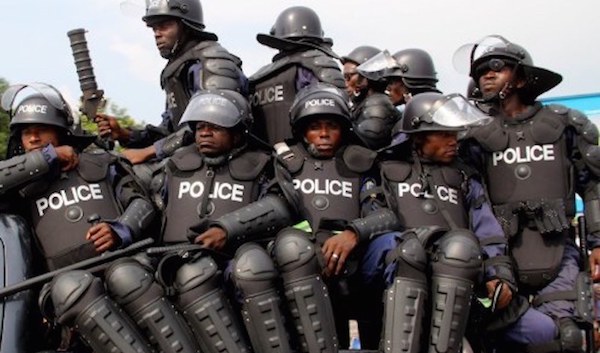
The mystery surrounding the death of a man whose body was found by the roadside in Abuja has taken a new turn, with police tracing the case through his missing mobile phone to a married woman who allegedly spent time with him at a hotel.
The FCT Commissioner of Police, Mohammed Sanusi, disclosed this on Saturday in Abuja, saying investigators arrested Rukayat Muhammed after tracing the deceased’s final communications.
The man was found dead on August 26 along the Kubwa Expressway, near Katampe under the bridge, after his family had earlier reported him missing.
According to the police, the case initially raised suspicion of a possible “one chance” incident. Investigators, however, established that the dead man was the missing person after identifying his remains.
Sanusi said the deceased’s mobile phone was missing and had been switched off. Police investigators subsequently traced his last known communication, leading them to Rukayat, a resident of Garki Area 2.
Investigators reportedly discovered that Rukayat, who is married, was allegedly in a romantic relationship with the deceased. The police said she had saved his contact under the name “Safiyat.”
The CP said the pair had lodged at Good Samaritan Guest House on 2nd Avenue, Gwarinpa, where the man later died.
Sanusi said Rukayat allegedly discovered that the man was no longer breathing but failed to alert the police or hotel management. Instead, she allegedly took his phone and left the hotel.
The case took another turn when hotel management later discovered the man’s body inside the room after attempts to contact the occupants failed.
Rather than reporting the discovery, two hotel staff members, Ibrahim Omeiza and Kefat Bitrus, allegedly removed the body from the room and transported it to the Kubwa Expressway, where they dumped it under the Katampe bridge.
The police said the action was apparently intended to distance the hotel and its management from the death.
Sanusi said detectives were still working to establish exactly how the man died and determine the individual roles of those connected to the incident.
He warned that anyone found to have participated in the death, concealment or abandonment of the body would face prosecution.
The commissioner said the investigation remains ongoing.
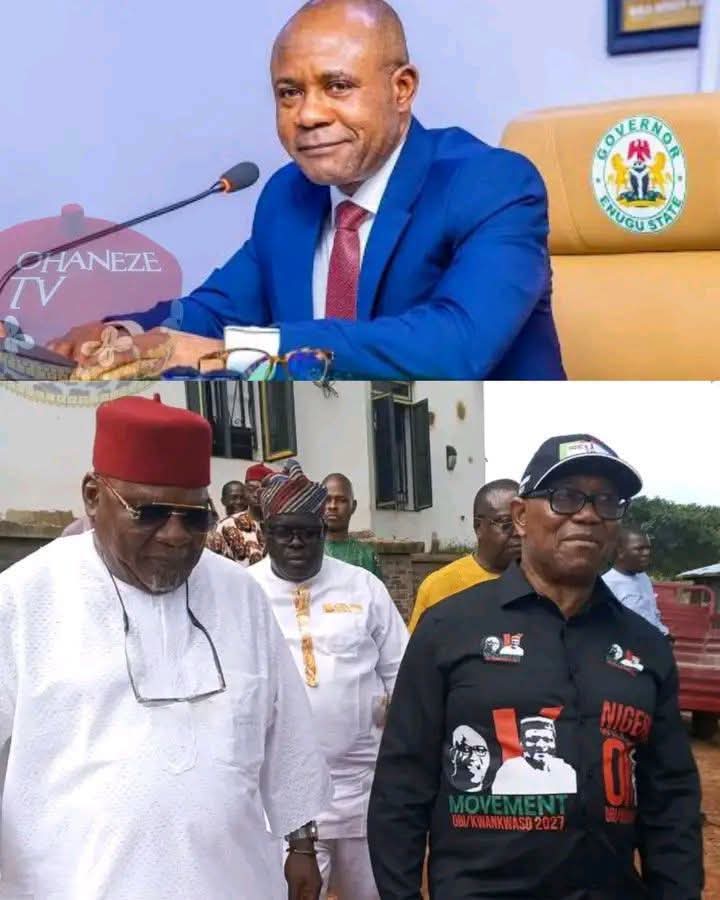
The Enugu State Government has suspended His Royal Majesty, Igwe Eze William Ezugwu, the traditional ruler of Ibagwa Ogbozalla Opi Autonomous Community, in Nsukka Local Government Area of Enugu state.
The state government accused Igwe Ezugwu of violating provisions of the state’s Traditional Rulers Law.
In a letter of suspension dated September 24, the Enugu State Government cited his alleged failure to constitute his cabinet, failure to establish a Town Union governing body, and persistent conduct deemed inconsistent with the laws governing traditional rulers in the state.
The suspension comes barely three weeks after Igwe William Ezugwu received NDC presidential candidate Peter Obi at his palace in Opi, Nsukka LGA, where he reportedly blessed Obi’s presidential ambition.
-

 News2 years ago
Senate to speed up conclusion of Nigeria Forest Security Service Bill
-
 News1 year ago
The Many Lies Against Bashir Haske
-

 News3 years ago
Breaking: Tinubu’s authentic ministerial nominees
-
 News3 years ago
“Anytime we want to kill terrorists, President would ask us to take permission from France but they were killing our soldiers-” Niger Republic coup leader
-
 News3 years ago
“I’m leaving the Catholic church because Bishop Onah is oppressing me,” says Okunerere
-

 News3 years ago
My nude photo leak was a mistake- lawyer Ifunanya
-
 News4 months ago
See your state governor’s performance ranking
-

 News3 years ago
Radio Nigeria’s veteran broadcaster Kelvin Ugwu dies three months after retirement from service