
Uncategorized
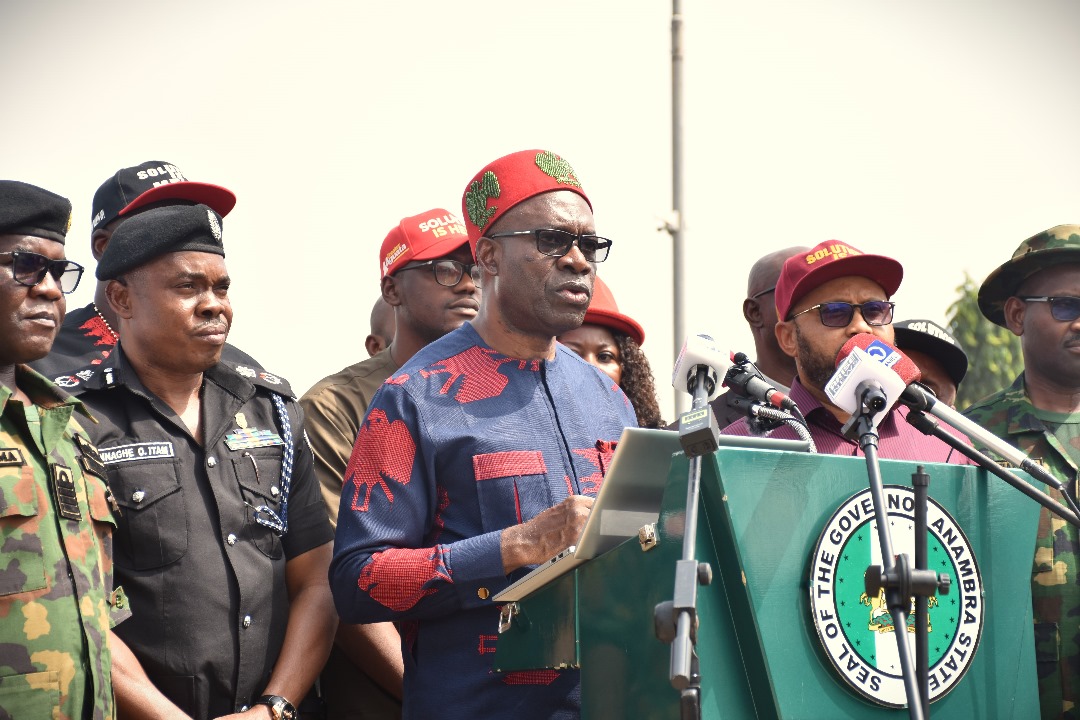
Insecurity in Anambra: A Call for Collective Action Rather Than Panic

By Christian ABURIME
As long as society remains imperfect and imperfect humans inhabit society, crime will never cease to exist, but it can be reduced. Thus, threats to the security of lives and property are a recurring global phenomenon, no matter how advanced societies are. The recent incidents of crime, particularly kidnapping, in Anambra State have understandably raised concerns among citizens and sparked heated discussions about public safety. While these concerns merit attention, it is crucial to approach the security discourse with objectivity and a balanced perspective that acknowledges both challenges and progress.
It would be recalled that there was a time that fiendish criminals notoriously tagged Unknown Gun Men held sway in Anambra State. They unleashed their malevolence at will, robbing, killing, and terrorising Ndi Anambra with brazen impunity across precincts of the state. Then, it was the first, most urgent challenge that Governor Chukwuma Charles Soludo’s new government had to confront, and it did so decisively with the cooperation of our gallant security agencies. The so-called Unknown Gun Men beat a retreat, violent crimes were drastically reduced, and Ndi Anambra breathed a sigh of relief.
With the rising costs of living, many people were and are still under pressure of survival. Hence, some may have taken to crimes like kidnapping as the fastest routes to making money. But contrary to some alarmist narratives, recent Crime Experience and Security Perception Survey (CESPS) data from the National Bureau of Statistics (NBS) presents a more nuanced picture. According to the NBS report, the Southeast region, which includes Anambra State, actually recorded the lowest crime rates among all regions in Nigeria in 2024. This statistical evidence suggests that while security challenges exist, they are neither unique to Anambra nor as severe as sometimes portrayed by critics in public discourse.
Meanwhile, the state government has demonstrated commitment to addressing security concerns through consistent support to law enforcement agencies. From providing logistics to ensuring adequate funding, these efforts reflect an understanding that security infrastructure requires sustained investment.
It will also be recalled few weeks ago that Governor Soludo made profound pronouncements on the readiness of the State government to deal decisively with criminals with the new security apparatus in place. This is also inspite of the two months amnesty given to the criminals to surrender themselves to the state government for proper rehabilitation or face devastating consequences
However, the government’s role, while crucial, represents only one piece of a complex puzzle.
Security, by its nature, universally demands a collaborative approach. The most effective security systems worldwide rely on active citizen participation, intelligence sharing, and community engagement. When citizens withhold information or choose political criticism over constructive dialogue, they inadvertently weaken the security architecture they seek to strengthen.
Indeed, critics of the current security situation raise valid points that deserve attention. However, sometimes, the tendency to politicise security challenges or exaggerate incidents for ulterior motives serves no one’s interests. Such approaches only create unnecessary panic and potentially hamper ongoing security operations. What Anambra needs now is a unified approach where government efforts are complemented by citizen cooperation. This means regular intelligence sharing between communities and security agencies, constructive dialogue between critics and government officials, community-level security awareness and vigilance, and reduced politicisation of security issues.
The path forward thus requires acknowledging that security threats exist while avoiding overamplification of these challenges. It demands recognition of government efforts while pushing for continued improvement. Most importantly, it calls for understanding that security is a shared responsibility that transcends political affiliations. It requires the active participation of all stakeholders, working together with a shared commitment to public safety. While the government maintains its leadership role in security matters, citizens must step up to play their part in this crucial endeavour.
This is wishing Ndi Anambra a safer New Year.
Aburime is the Press Secretary to Governor Soludo
Former Director-General of the Department of State Services (DSS), Chief Albert Korubo Horsfall, has died at the age of 84.
Horsfall reportedly died on Wednesday, September 9, 2026, at a hospital in Lagos after a prolonged illness.
He served as the Director-General of the State Security Service (SSS), now known as the DSS, from 1990 to 1992.
Horsfall also made history as the pioneer Director-General of the National Intelligence Agency (NIA), where he played a key role in the development of Nigeria’s modern intelligence system.
Before rising to the top positions in the country’s intelligence community, he served as a police officer and was among the foundation staff of the former National Security Organisation (NSO).
After his service in the intelligence sector, Horsfall was appointed as the pioneer chairman of the Oil Mineral Producing Areas Development Commission (OMPADEC), where he was involved in efforts to promote development in oil-producing communities across the Niger Delta.
His career in public service spanned several decades and included responsibilities in national security, intelligence and regional development.
Director-General of the DSS, Adeola Ajayi announced his death on Friday in a statement.
Operatives of Akwa Ibom state command of Marine Police, acting on a tip-off, have foiled a kidnapping attempt along the Oron waterways in the state.
The police spokesperson in the state, DSP Timfon John, who made this known during the week via a press statement in Uyo, said operatives of the Marine Police, Oron, acted on credible intelligence regarding the planned kidnapping operation.
She also disclosed the police embarked on the joint intelligence-led operation with Marine Hunters to the suspected criminal camp along the Calabar–Oron Channel.
She said the operation was targeted at disrupting the activities of a suspected criminal syndicate allegedly planning to carry out a kidnapping operation within the Oron axis.
“Upon arriving the camp, the operatives recovered the following items: one (1) Jojeef English pump-action gun; Two (2) cartridges; One (1) white rope suspected to be intended for criminal use; Two (2) speedboats; Three (3) 200HP outboard engines; and One (1) 15HP outboard engine,” the statement said.
She added that the recovered items have been secured for safe custody, proper documentation and further necessary investigative action.
The statement noted that the commissioner of Police, CP Baba Mohammed, while commending the operatives and the marine hunters for their professionalism and proactiveness has reassured residents, particularly those in riverine communities, boat operators, fishermen and other waterways users, of their readiness to protect them and maintain security.
Fetus Keyamo, SAN, Minister of Aviation and Aerospace Development, has condemned the disruption of Peter Obi’s political engagement in Benue State, saying no candidate should be prevented from moving freely because of political differences.
Obi, the presidential candidate of National Democratic Congress, NDC, was reportedly stopped from proceeding to the venue of his planned visit in the state on Tuesday.
The minister said the incident should be condemned regardless of who was behind it, including claims by the Benue State Government that the disruption was connected to disagreements within Obi’s party.
He also dismissed suggestions that Obi’s planned visit to Yelwata, the scene of deadly attacks in 2025, justified attempts to stop him.
“Yesterday’s report of the prevention of the Presidential candidate of the NDC, Mr. Peter Obi, by some angry protesters from proceeding to the venue of his visit in Benue State must be condemned by all men of goodwill,” Keyamo said in a post on X on Wednesday.
“That is still not acceptable; everyone should be allowed to move about freely and play their politics without such crude interference,” he added.
Beyond the Benue incident, Keyamo turned his attention to the way political confrontations are portrayed in the media, accusing some outlets of using different descriptions depending on the party involved.
He alleged that when an APC candidate encounters an angry crowd, some media reports portray the incident as evidence of “rejection” by Nigerians, whereas similar confrontations involving opposition politicians are described as attacks by “sponsored thugs” or “hoodlums.”
“Many a time when an angry crowd confronts or molests an APC candidate at any level, the partisan Press shamelessly dubs or spins it as ‘rejection’ by ‘Nigerians’. When it concerns the opposition, then it is ‘attack’ by ‘sponsored thugs’ or ‘hoodlums’,” he said.
Keyamo urged journalists to apply the same standards to all parties and candidates, warning that partisan reporting could further deepen political tensions ahead of the 2027 elections.
“What is good for the goose is also good for the gander. The Press must extricate itself from such partisanship and be fair to all,” he said.
The minister also criticised opposition politicians who, he alleged, encourage supporters to attack APC candidates in areas where the party has little support.
He maintained that voters should express their approval or rejection of candidates through their votes rather than violence.
“Whoever is angry at any candidate of any political party should display the anger with the ballot paper on voting day by a simple thumbprint, not by violent acts during campaigns,” Keyamo added.
-

 News2 years ago
Senate to speed up conclusion of Nigeria Forest Security Service Bill
-

 News1 year ago
The Many Lies Against Bashir Haske
-

 News3 years ago
Breaking: Tinubu’s authentic ministerial nominees
-
 News3 years ago
“Anytime we want to kill terrorists, President would ask us to take permission from France but they were killing our soldiers-” Niger Republic coup leader
-

 News3 years ago
“I’m leaving the Catholic church because Bishop Onah is oppressing me,” says Okunerere
-

 News3 years ago
My nude photo leak was a mistake- lawyer Ifunanya
-
 News4 months ago
See your state governor’s performance ranking
-

 News3 years ago
Radio Nigeria’s veteran broadcaster Kelvin Ugwu dies three months after retirement from service