
News
How El-Rufai’s revenge destroyed Ribadu

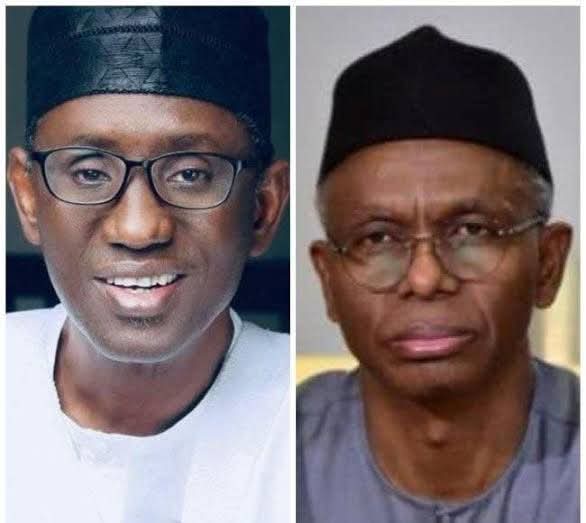
By Mohammed Bello Doka
Somewhere in a detention cell, Nasir El-Rufai must be smiling because the man who put him there—the once all-powerful National Security Adviser, Nuhu Ribadu—has just been dumped, neutered, and reduced to an international errand boy. It is the sweetest revenge, served slowly and silently, by the very system Ribadu helped to build.
Robert Greene, in The 48 Laws of Power, warned that “the danger is long, the blow is sudden.” In Ribadu’s case, the blow came from a man he once called a friend, and it landed with the precision of a master strategist.
The story of El-Rufai and Ribadu is not merely a political feud; it is a Shakespearean tragedy of ambition, betrayal, and the brutal arithmetic of power in Nigeria. The two men were once bosom friends, climbing the greasy pole together, sharing confidences and strategies. But power, as Lord Acton famously observed, corrupts, and absolute power corrupts absolutely. When Ribadu began to harbour ambitions for the 2031 presidency, he reportedly saw El-Rufai as a threat to be eliminated. He not only abandoned the man who stood by him but, according to the former governor, set out to destroy him using the entire machinery of the state.
El-Rufai has repeatedly accused Ribadu of directing security operatives to arrest political opponents without proper investigation, interfering in judicial processes, and weaponising the Department of State Services (DSS), the Police, and the EFCC to “tame” him. In a devastating interview on Arise Television in February 2026, he declared that he was “ashamed” of their past friendship, leveling a public indictment that echoed far beyond the television screen.
The most dangerous accusation came when El-Rufai, in a now-infamous interview on Arise Television’s Prime Time programme, claimed that “someone wiretapped” Ribadu’s phone, allowing him to listen to a conversation in which the NSA purportedly gave the order for his arrest. For a man charged with the nation’s most sensitive security apparatus to be caught in such a compromising position was not only unprofessional; it was catastrophic. The state responded with force. The Department of State Services (DSS) filed criminal charges against El-Rufai, accusing him of unlawfully intercepting the NSA’s phone communications. But the damage was done. The perception of a compromised NSA, one who cannot even secure his own communications, stuck like a poisonous dart.
Yet El-Rufai did not stop there. In a letter dated January 30, 2026, he formally wrote to Ribadu demanding an explanation for why the Office of the NSA (ONSA) allegedly imported approximately 10 kilograms of thallium sulphate—an odourless, colourless, and extremely hazardous toxic chemical—from a supplier in Poland. Ribadu, in an attempt to deflect the blow, referred the allegation to the DSS for investigation and challenged El-Rufai to submit evidence. But the accusation of importing “dangerous toxic chemicals” into the country is not the kind of stain that easily washes off. The very suggestion that the NSA has access to such substances has irrevocably tarnished his reputation.
The charade reached its most absurd and tragic moment on March 29, 2026. Ribadu, who had allegedly orchestrated El-Rufai’s persecution, attended the funeral prayer of El-Rufai’s mother, Hajiya Umma El-Rufai, at the National Mosque in Abuja. Thousands of mourners, including President Bola Ahmed Tinubu and other top government officials, watched as nations security chief, dripping with crocodile tears, paid tribute to a woman he claimed to have fond memories of. For the shrewd observer, it was not a moment of peace; it was the chilling silence before the storm. As Niccolò Machiavelli wrote, “Men are so simple and so much inclined to obey immediate needs that a deceiver will never lack victims for his deceptions.” Ribadu may have seen this as reconciliation; El-Rufai likely saw it as a confirmation of his enemy’s hubris.
By the time the French news agency Agence France-Presse (AFP) published its explosive report on February 23, 2026, claiming that Ribadu orchestrated a multimillion-dollar helicopter ransom payment to Boko Haram, the NSA’s reputation was already in ruins. The so-called “French Dagger” was not the killing blow; it was merely the alibi, the final piece of paper that gave Tinubu the excuse he needed to act. The newly created position of the Special Adviser on Homeland Security, awarded to a Yoruba kinsman of the President, was the executioner’s blade. It stripped Ribadu of his domestic security portfolio, leaving him with only the hollow title of NSA and the demeaning task of handling international liaison. As Baltasar Gracián wrote in The Art of Worldly Wisdom, “Never depend on the arms of others.” Ribadu had no political base, no governors, no party. He was a man of power only because Tinubu lent it to him, and when the wind changed, the power was taken back.
Ribadu, who was once the most powerful Northerner in the Villa, has been reduced to the same ghostly status as Vice President Kashim Shettima—visible in photographs but absent in influence. The man who used the security apparatus to fight his northern rivals has now been fought by the very same machine. El-Rufai sits in a detention cell, not because of Ribadu’s power, but because he dared to speak the truth. And yet, in a bitter twist of irony, Ribadu is the one who has been politically executed. The man who tried to destroy his friend has been destroyed by the very system he helped entrench. As Napoleon Bonaparte once noted, “He who fears being conquered is sure of defeat.” Ribadu feared El-Rufais ambition and tried to crush it, but in doing so, he exposed his own fatal weakness. The wiretap, the poison gas, the ransom payments—whether true or false, these allegations have defined his legacy.
The new Homeland Security Adviser, Retired Major General Famadewa, now controls internal security coordination, intelligence fusion on domestic threats, and hostage negotiation protocols. Ribadu has been handed the impossible task of defending his legacy from a position of complete irrelevance. He will travel, attend meetings, and smile for the cameras. But the real power has departed. The chickens have finally come home to roost.
El-Rufai, for all his troubles, has achieved a monumental feat. He has not only destroyed the reputation of his once-friend but has also forced Tinubu to act, exposing the hollow core of the administration’s much-vaunted security architecture. The French dagger was just the delivery boy. The real knockout punch was thrown by a man who knew Ribadu better than anyone else—and who used that knowledge to bring him down.
Congratulations, Nuhu Ribadu. You are now officially dumped. And in that cell, believe it or not, Nasir El-Rufai is laughing.
As the ancient warrior-philosopher Sun Tzu wrote, “The supreme art of war is to subdue the enemy without fighting.” El-Rufai did not need to fire a single shot. He simply told the truth, and the truth—no matter how inconvenient—had the power to destroy an empire. May this serve as a lesson to those who entrench dictatorships: you will always be its first victim.
Mohammed Bello Doka can be reached via bellodoka82@gmail.com
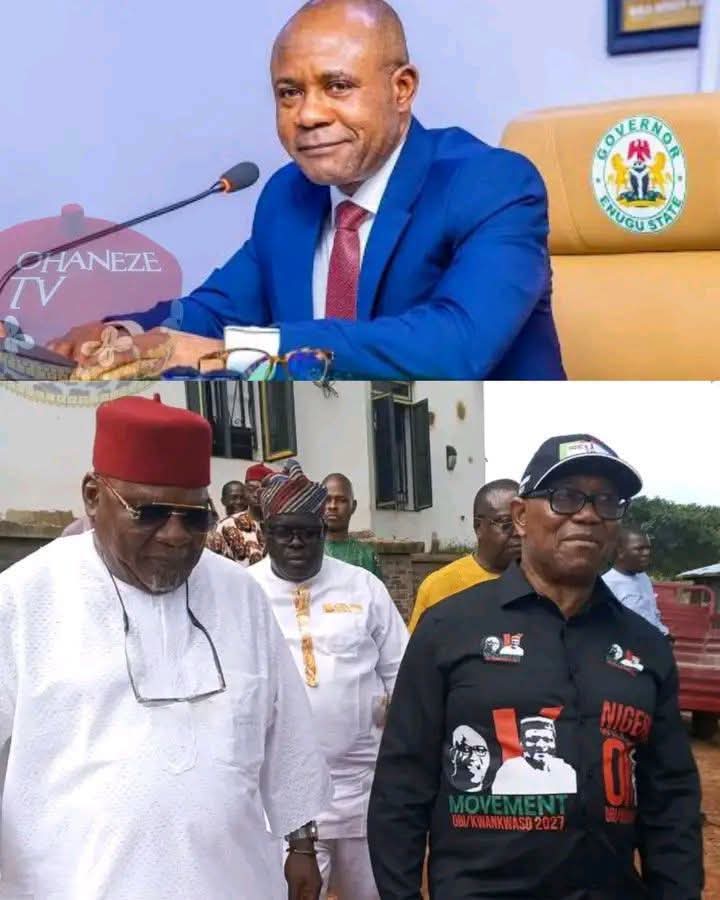
The Enugu State Government has suspended His Royal Majesty, Igwe Eze William Ezugwu, the traditional ruler of Ibagwa Ogbozalla Opi Autonomous Community, in Nsukka Local Government Area of Enugu state.
The state government accused Igwe Ezugwu of violating provisions of the state’s Traditional Rulers Law.
In a letter of suspension dated September 24, the Enugu State Government cited his alleged failure to constitute his cabinet, failure to establish a Town Union governing body, and persistent conduct deemed inconsistent with the laws governing traditional rulers in the state.
The suspension comes barely three weeks after Igwe William Ezugwu received NDC presidential candidate Peter Obi at his palace in Opi, Nsukka LGA, where he reportedly blessed Obi’s presidential ambition.
The Deputy Commander of Operation Rainbow, CSP (Chief Superintendent of Police) Dennis David Babale, has been killed after gunmen suspected to be Fulani Bandits ambushed personnel of the security outfit along the Bokkos-Barkin Ladi road in Barkin Ladi Local Government Area of Plateau State.
Operation Rainbow is a State-backed community security and intelligence-gathering outfit in Plateau State, Nigeria, originally established in 2010 under former Governor Jonah Jang and recently revamped by Governor Caleb Mutfwang to combat rural violence and beef up grassroots security.
The incident reportedly occurred at about 4:06 p.m. on Tuesday, September 22, 2026 when the personnel, travelling in a Toyota Hilux vehicle, came under attack by unidentified gunmen.
Troops of Sector 4, Operation ENDURING PEACE (OPEP), responded to a distress report and moved to the location of the attack.
Sources told reporters that Babale sustained gunshot wounds during the ambush and was evacuated to the General Hospital, Barkin Ladi, for medical attention.
Following the attack, troops, working alongside personnel of other security agencies, launched offensive operations and a manhunt for the assailants within the general area.
Security forces have intensified efforts to track the attackers and prevent further attacks along the route.

Director General/CEO of the Nigerian Meteorological Agency (NiMet) and Nigeria’s Permanent Representative at the World Meteorological Organization, Prof. Charles Anosike and other Chief Executive Officers of similar agencies across the world, have concluded a one week high level dialogue on Climate Science Information for Climate Finance and the 53rd Senior Official Field Exchange (SOFE) in Beijing, China.
The event which was hosted by World Meteorological Organization (WMO), took place from September 14 to 18, 2026 and featured discussions on: strengthening the role and leadership development of National Meteorological and Hydrological Services (NMHSs) in mobilizing climate finance; aligning scientific and technical capabilities with risk-informed, people-centred early warning systems; shifting from technical assistance to sustainable investments by expanding practical cooperation between meteorological frameworks and multilateral financing entities; and support to NMHSs leadership on strengthening strategic thinking and fostering productive partnerships.
Held back-to-back with the High-level dialogue was the 53rd Senior Official Field Exchange to Fujian Province for first-hand exposure to the implementation of Multi-hazard, Alert, Zero-gap and Universal (MAZU) platform – China’s AI-driven meteorological early warning solution in support of the Early Warnings for All (EW4All) initiative and disaster risk reduction practices through technical exchanges, field visits and peer learning.
-

 News2 years ago
Senate to speed up conclusion of Nigeria Forest Security Service Bill
-
 News1 year ago
The Many Lies Against Bashir Haske
-

 News3 years ago
Breaking: Tinubu’s authentic ministerial nominees
-
 News3 years ago
“Anytime we want to kill terrorists, President would ask us to take permission from France but they were killing our soldiers-” Niger Republic coup leader
-
 News3 years ago
“I’m leaving the Catholic church because Bishop Onah is oppressing me,” says Okunerere
-

 News3 years ago
My nude photo leak was a mistake- lawyer Ifunanya
-
 News4 months ago
See your state governor’s performance ranking
-

 News3 years ago
Radio Nigeria’s veteran broadcaster Kelvin Ugwu dies three months after retirement from service