News
NiMet Act Amendment and Anosike’s quest for Best Quality Service Delivery


By Bonaventure Phillips Melah
Although Professor Charles Anosike has continued to receive commendations from workers, labour unions, journalists and others stakeholders for his exemplary leadership and huge achievements recorded within just one year and some months in office as the Director General/CEO, of the Nigerian Meteorological Agency (NiMet), his unquenchable appetite for excellence and to provide best quality service wherever he finds himself, are some of the factors behind NiMet management’s current efforts to amend the Agency’s establishment Act.
Consequently, the House of Representatives on Monday, July 21, 2025, organized a Public Hearing on a bill initiated by its Committee on Aviation Technology which was sponsored by the former Chairman of the Committee, Hon. Isiaq Abiodun Akinlade, seeking to provide clear and detailed framework for the Agency’s cost recovery across various sectors, especially for non-aviation bodies as well as strengthen NiMet’s capacities to fulfill its mandate, promote efficiency, improve infrastructure, ensure safety and enhance staff welfare.
At the event, Anosike succinctly summed up the reason for seeking the amendment, saying the practice of cost recovery was an acceptable norm; and in line with global best practices. He stressed that it was a critical requirement for the sustainability of the Agency.
He said- “The NiMet Bill, 2025 is principally about fulfilling the statutory responsibilities of the Agency and ensuring attendant costs for services rendered are duly recovered as envisaged by the Principal Act. This is crucial in order to ensure the Agency is self-sustaining, efficient, and responsive to national development needs, in line with its Mandate. We therefore respectfully request that the amendments proposed in the NiMet Bill be approved.”
He said that although the NiMet Act was amended as recently as 2022 to strengthen the Agency’s legal and operational framework, the realities of implementation have revealed some gaps that hinder its full effectiveness and mentioned in particular, challenges in the areas of cost recovery, rulemaking, and compliance/enforcement.
“We must acknowledge that no law, however well-conceived, can anticipate every future challenge at the time of enactment. Legal frameworks must therefore remain flexible and responsive to evolving needs, especially in rapidly changing, data-driven sectors such as meteorology. Against this backdrop, it is pertinent to note that NiMet has made significant progress over the years in enhancing the quality, accuracy, and reach of its services. Nevertheless, to keep pace with the growing demands of Nigeria’s dynamic economy and to ensure the long-term sustainability of its operations, it is imperative that the Agency be equipped with a strengthened legal framework that addresses existing gaps and aligns with both national development priorities and international best practices.
“The Purpose of this presentation is simply to justify the amendments proposed in the NiMet Bill, 2025. Particularly, those geared towards the establishment of a cost recovery framework that ensures the sustainable delivery of critical meteorological services to sectors such as marine, construction and telecommunications. These amendments are intended to: Strengthen national meteorological infrastructure and resilience; Enhance safety, efficiency, and planning across sectors; Ensure that users of specialized meteorological services in the stated sectors pay costs associated with the provision of such services.”
Anosike noted that while the current Act (Sections 7(1)(l) and 7(2)) empowers NiMet to issue meteorological information and to impose cost and sustainability recovery charges, it only provides a detailed framework for cost recovery within the aviation sector, adding that there is currently no equivalent mechanism for non-aeronautical sectors, resulting in unrecovered operational costs, increased pressure on government funding, poor infrastructural development and limited-service coverage.
“It is also important to clarify that International best practices support cost recovery from specialized services. Both WMO Resolution 40 and Resolution 25 endorse cost recovery from commercial and non-core public good services.”
The Speaker of the House of Representatives, Hon. Tajudden Abbas, represented by the Deputy Chief Whip, Hon. Adewumi Onanuga (Ogun, APC), while declaring the public hearing open, reiterated the commitment of the National Assembly to people-oriented legislature. He said critical and strategic MDAs such as NiMet, would be strengthened to ensure they have capacities for public growth, transparency and responsive to national needs, including climate changes and hazardous weather mitigation for safety of lives, especially vulnerable communities, among others.
Others who attended the public hearing and gave overwhelming support for amendment of NiMet Act include representatives of World Meteorological Organisation (WMO), NIMASA, FAAN, NCC, Trade Unions and three past Directors-General of NiMet, namely, Engr. Dr. Jide Adeniji, Dr. Anthony Anuforom and Professor Mansur Matazu as well as many former Directors of the Agency who made written and oral presentations. They all commended Prof. Anosike for the ongoing transformation in NiMet.
Many of those who have worked with or currently working with Prof. Charles Anosike have described him as a workaholic and perfectionist. They also attribute the milestones recorded by NiMet management under Anosike’s leadership to his goal-achieving approach to work, making reference to his past successful career and achievements in both the public and private sectors and therefore his insatiable thirst for A-Grade results.
Towards achieving its statutory mandate and self-set goals as well as surpass expectations of its various publics, including the federal government, the Anosike-led NiMet management has, in the last few months, initiated and implemented series of policies and programmes that are both innovative and forward-moving, in pursuit of excellence.
The above include continuous training and retraining of workers so they can acquire additional skills and knowledge as well as signing of agreements and MoUs with local, regional and international organisations and bodies, among others.
Within the period, the agency partnered with Korean Meteorological Administration, aimed at boosting Artificial Intelligence (AI)-based weather forecasting capacity; hosted the 14th meeting of ECOWAS Directors of Meteorological and Hydrological Services where agreement was reached to collaborate for enhancement of disaster preparedness among member countries. At the meeting, Prof. Anosike was elected President of the regional body.
NiMet also received Automatic Weather stations from the United Nations Development Programme (UNDP); joined other stakeholders at the launch of the National Agribusiness Policy Mechanism (NAPM) which is an initiative of the Presidential Food Security Coordinating Unit (PFSCU NG) aimed to enhance agricultural productivity, stabilize food prices, and stimulate economic growth; and entered a partnership with IPE Global Limited, India, to explore avenues for collaboration in the dissemination of agro-meteorological information to stakeholders in the agricultural value chain.
The agency has also assured Nigerians that it currently has world class forecast infrastructure following the unveiling of MeteoSat 3rd Generation Satellite system with advanced capabilities to provide quality data and higher resolution to improve weather forecasting.
Professor Anosike gave the assurance while speaking at a meeting convened by the Secretary to the Government of the Federation, Senator George Akume, which had as its theme ‘Prevention and management of the devastating effect of flooding in Nigeria.’
He said- “Our forecasts range from daily, weekly, and seasonal outlooks. Some of our products in support of flood risk management includes, daily weather outlooks, three days Impact-based forecasts, weekly heavy rainfall forecasts, rainfall intensity frequency duration curve, flash flood risk mapping, quarterly drought and flood monitoring bulletin and our flagship product- the seasonal climate prediction.”
On Tuesday, June 3, 2025, NiMet hosted a delegation from the World Bank at its headquarters in Abuja. The meeting focused on Disaster Risk Management (DRM) in Nigeria.
On July 2nd 2025, NiMet hosted a dialogue where Prof. Anosike reiterated the agency’s commitment to strengthening collaboration with the media and civil society in order to enhance public awareness, preparedness, and resilience in the face of climate-related risks and extreme weather events.
Anosike and some NiMet Directors, also inspected the on-going Safe Tower Upgrade at Abuja Airport with the installation of the ceilometers, transmissiometers lightning and thunderstorm detection systems, automatic weather stations and the complete solarisation of the systems for uninterrupted power supply.
NiMet management also officially unveiled Meteosat Third Generation (MTG) technology developed by the European Organisation for the Exploitation of Meteorological Satellites (EUMETSAT). The system, donated to Nigeria and deployed by the African Union Commission (AUC) funding support from the European Union (EU), was formally presented at NiMet’s headquarters in Abuja on Monday, May 5, 2025.
The successful installation of the topnotch facility, marks a significant milestone in Nigeria’s weather monitoring and early warning infrastructure.
At the occasion, Prof. Anosike described the MTG system as a transformative advancement in meteorological technology. He emphasized that its enhanced capabilities will greatly improve the resolution, frequency, and accuracy of weather data collection and forecasts, thereby strengthening early warning systems and national preparedness for extreme weather events.
“The installation of the PUMA 2025 system is timely and aligns with President Bola Ahmed Tinubu’s renewed commitment to modernizing weather services for the protection of lives and property. This is a critical step forward in our journey to ensure climate resilience in Nigeria,” the NiMet boss said.
Bonaventure Phillips Melah is an Abuja based Journalist, Publisher and author. He can be reached on mobile number 08036062975
bonamelah123@gmail.com

Health professionals have warned that regular consumption of shawarma containing high amounts of salt, sugar, fat, seasoning and processed meat may contribute to hypertension, obesity, diabetes and kidney disease.
Excessive salt can raise blood pressure and put additional strain on the kidneys, while high-calorie sauces may contribute to weight gain.
Nutrition experts advised Nigerians to eat shawarma in moderation, use less mayonnaise and other sauces, choose lean grilled meat and add more vegetables. Consumers were also urged to check vendors’ cleanliness and avoid food prepared where ingredients are exposed to flies, dust or poor handling.
A recent report by experts also warned that frequent consumption of Shawarma may increase the risk of other food-borne infections and long-term health problems.
The report contains documented cases of people who suffered vomiting, diarrhoea, stomach pain and weakness after eating shawarma, with some requiring hospital treatment.
According to the report, poor hygiene could allow bacteria and other contaminants into shawarma, causing illnesses including cholera, dysentery, typhoid and salmonellosis.
It also raised concerns about mayonnaise and creamy sauces kept without proper refrigeration and warned that poor storage could encourage bacterial growth and increase the risk of food poisoning.
A study cited in the report found bacterial contamination in ready-to-eat shawarma sold on the streets
Experts also raised concerns about processed meat such as sausage, noting that the International Agency for Research on Cancer classifies processed meat as carcinogenic to humans.

The mystery surrounding the death of a man whose body was found by the roadside in Abuja has taken a new turn, with police tracing the case through his missing mobile phone to a married woman who allegedly spent time with him at a hotel.
The FCT Commissioner of Police, Mohammed Sanusi, disclosed this on Saturday in Abuja, saying investigators arrested Rukayat Muhammed after tracing the deceased’s final communications.
The man was found dead on August 26 along the Kubwa Expressway, near Katampe under the bridge, after his family had earlier reported him missing.
According to the police, the case initially raised suspicion of a possible “one chance” incident. Investigators, however, established that the dead man was the missing person after identifying his remains.
Sanusi said the deceased’s mobile phone was missing and had been switched off. Police investigators subsequently traced his last known communication, leading them to Rukayat, a resident of Garki Area 2.
Investigators reportedly discovered that Rukayat, who is married, was allegedly in a romantic relationship with the deceased. The police said she had saved his contact under the name “Safiyat.”
The CP said the pair had lodged at Good Samaritan Guest House on 2nd Avenue, Gwarinpa, where the man later died.
Sanusi said Rukayat allegedly discovered that the man was no longer breathing but failed to alert the police or hotel management. Instead, she allegedly took his phone and left the hotel.
The case took another turn when hotel management later discovered the man’s body inside the room after attempts to contact the occupants failed.
Rather than reporting the discovery, two hotel staff members, Ibrahim Omeiza and Kefat Bitrus, allegedly removed the body from the room and transported it to the Kubwa Expressway, where they dumped it under the Katampe bridge.
The police said the action was apparently intended to distance the hotel and its management from the death.
Sanusi said detectives were still working to establish exactly how the man died and determine the individual roles of those connected to the incident.
He warned that anyone found to have participated in the death, concealment or abandonment of the body would face prosecution.
The commissioner said the investigation remains ongoing.
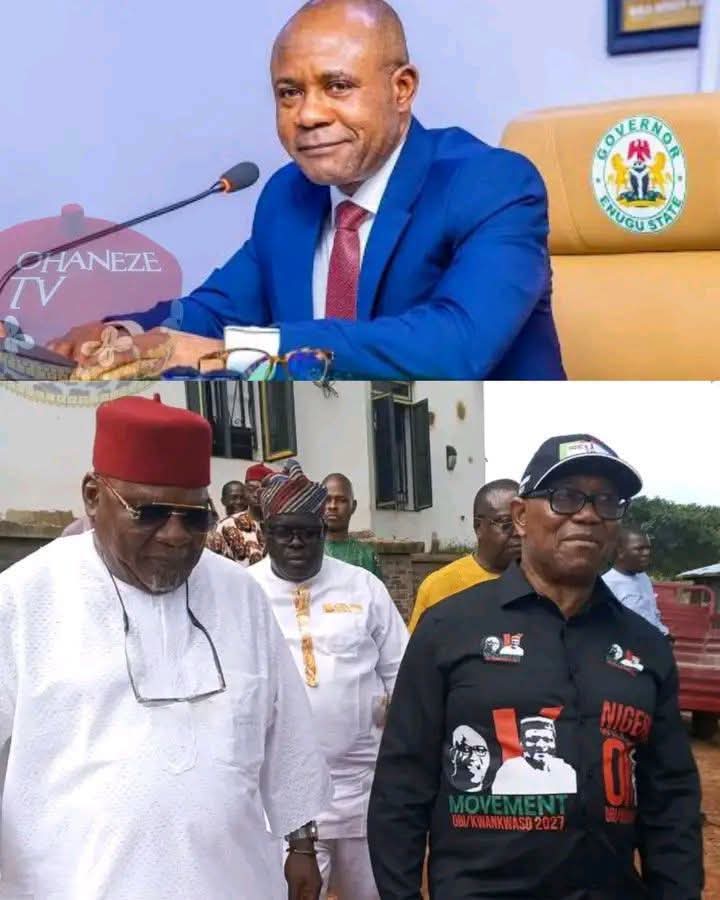
The Enugu State Government has suspended His Royal Majesty, Igwe Eze William Ezugwu, the traditional ruler of Ibagwa Ogbozalla Opi Autonomous Community, in Nsukka Local Government Area of Enugu state.
The state government accused Igwe Ezugwu of violating provisions of the state’s Traditional Rulers Law.
In a letter of suspension dated September 24, the Enugu State Government cited his alleged failure to constitute his cabinet, failure to establish a Town Union governing body, and persistent conduct deemed inconsistent with the laws governing traditional rulers in the state.
The suspension comes barely three weeks after Igwe William Ezugwu received NDC presidential candidate Peter Obi at his palace in Opi, Nsukka LGA, where he reportedly blessed Obi’s presidential ambition.
-

 News2 years ago
Senate to speed up conclusion of Nigeria Forest Security Service Bill
-

 News1 year ago
The Many Lies Against Bashir Haske
-

 News3 years ago
Breaking: Tinubu’s authentic ministerial nominees
-
 News3 years ago
“Anytime we want to kill terrorists, President would ask us to take permission from France but they were killing our soldiers-” Niger Republic coup leader
-

 News3 years ago
“I’m leaving the Catholic church because Bishop Onah is oppressing me,” says Okunerere
-

 News3 years ago
My nude photo leak was a mistake- lawyer Ifunanya
-
 News4 months ago
See your state governor’s performance ranking
-

 News3 years ago
Radio Nigeria’s veteran broadcaster Kelvin Ugwu dies three months after retirement from service