News
WHD: Ojukwu makes case for medicare, shelter, food, other humanitarian interventions


As Nigeria joins the rest of the global community to commemorate the 2023 World Humanitarian Day (WHD), the Executive Secretary of National Human Rights Commission (NHRC), Chief Tony Ojukwu, SAN, has called on well-meaning citizens to be mindful of their compatriots and assist those who are in need of basic necessities of life.
Expressing concern over the sufferings being experienced by many Nigerians and others from around the world, Ojukwu solicited intervention for the needy in the areas water supply, medicine, food and shelter, among others.
Chief Ojukwu stated this on the eve of the commemoration of WHD in Abuja and called on Nigerians to reflect on the global challenges that communities around the world face, admonishing that it is imperative for all to unite in efforts to address the critical humanitarian issues confronting the nation.
He noted that the recent removal of fuel subsidy has created untold hardship to majority of Nigerian especially the low-income earners, making them deserving of humanitarian assistance as they are no longer able to provide for some basic needs of life.
The NHRC boss said there is an urgent need to address the adverse consequences of the subsidy removal on Nigerians, adding that it has resulted in job losses, depression, violent reactions and increased poverty.
The Executive Secretary said the theme of this year’s commemoration “No Matter What” is very significant as it serves as a reminder that compassion, solidarity and support transcend all obstacles in addressing humanitarian needs, emphasizing that no challenge is insurmountable when humanity unites
Speaking further, Chief Ojukwu said the WHD provides an opportunity to recognize the tireless efforts of humanitarian workers who selflessly dedicate their lives to alleviating sufferings and providing assistance to vulnerable population regardless of challenges they face. “No Matter What” we can collectively pave way for a brighter future for all, he added.
He emphasized that the well-being of every individual is intrinsically linked to the well-being of the entire human family. Injury to one is injury to all and as Mother Teresa said, “if you cannot feed one hundred people, then feed just one”
According to a statement issued by Agharese Arase, Director, Corporate Affairs and External Linkages, Ojukwu further said that the Commission’s shared commitment to human rights demands that Nigerians stand in solidarity with those who are vulnerable, marginalized, and in need. “Together, we can build a stronger and more compassionate world, where every person’s rights are upheld, regardless of their background or circumstances”.
The Senior Advocate of Nigeria is using the opportunity of this year’s commemoration to call on governments, civil society organizations, and individuals to work collaboratively in addressing issues such as poverty, conflict, displacement, and environmental degradation confronting the less privileged Nigerians.
He said fostering a culture of empathy, understanding, and active engagement to address humanitarian crisis can ensure that the principles of human rights remain at the forefront of our actions.
Continuing, the Chief Human Rights Officer of Nigeria said that providing humanitarian services can help create a world where justice reigns, respect for human dignity is upheld, the weak and vulnerable are strengthened, people are happy and conflicts will ultimately be reduced.
On this World Humanitarian Day, let us reaffirm our commitment to the values that bind us together as a nation, recognizing that it is our collective responsibility to create a just and inclusive society where every individual’s rights are respected and upheld. Together, we can advance the cause of humanity “No Matter What”, he stated.
He used this medium to pay tributes to humanitarian heroes who lost their lives in providing selfless services to humanity all over the world. Of special importance is the Office of United Nations High Commissioner for Refugees UNHCR, which has been collaborating with the Commission to address the humanitarian needs of Nigerians in several parts of the country. The United Nations has set aside every 19th of August as World Humanitarian Day.

The Nigerian Meteorological Agency (NiMet) is advancing a national digital platform intended to give farmers, livestock keepers and agricultural advisers more reliable access to location-specific weather and climate information. The NiMet Data Hub, developed with the International Livestock Research Institute (ILRI) and Crea2Solutions, has moved from design and mock-up review to an advanced Minimum Viable Product, with NiMet weather and climate services now under testing.
Work on the hub began in February 2026 under the Climate Services for Youth (CS4Y) and AGRA programmes. By July 2026 the project had progressed from early design to a testable product. The initiative is intended to improve access to historical, monitored and forecast climate information and to support risk analysis, seasonal planning and climate-informed decision-making.
Officials and partners have described the hub as a response to persistent weaknesses in agricultural climate services, including fragmented data, limited coordination among information providers, and the difficulty of turning technical forecasts into timely, practical advice. Stakeholder engagement co-hosted by NiMet and ILRI has focused on mapping Nigeria’s agro-meteorological data and advisory landscape, identifying information and delivery gaps, strengthening institutional linkages, improving last-mile communication, and supporting gender and social inclusion.
The platform is expected to serve farmers, pastoralists, extension professionals, researchers, government institutions and private advisory providers. NiMet resources such as online map rooms and agricultural climate products are expected to feed the system, enabling the development of context-specific agro-weather advisories. ILRI’s contribution is aligned with its wider work of organising research data, developing digital tools and making information more usable for partners and decision-makers.
The project is consistent with the food security, climate-smart agriculture and digital service priorities of President Bola Ahmed Tinubu’s Renewed Hope Agenda. By seeking to place usable climate information in the hands of producers and advisers, the hub is intended to support preparedness, reduce climate-related losses and strengthen agri-food livelihoods.
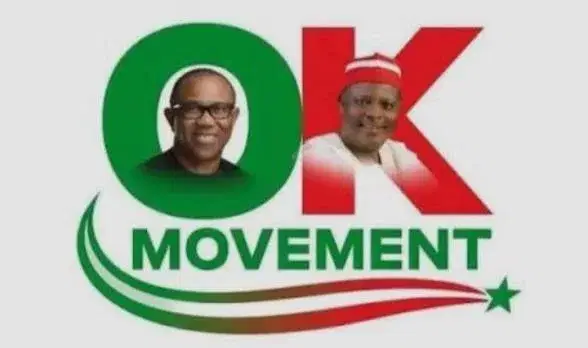
The internal dispute between the Obi/ Kwakwanso support group also known as OK Movement and the leadership of National Democratic Congress, NDC has escalated over the presidential campaign council set up by the movement ahead of the 2027 general election.
Recall that the Movement recently unveiled a 57 member presidential campaign council to work for the Peter Obi and Rabiu Kwakwanso ticket but the NDC issued a statement weekend and disowned the council.
Reacting to the development, the, OK Movement said tt does not require the personal validation or approval of any individual within the Nigeria Democratic Congress (NDC) before exercising its legitimate organisational functions in accordance with established processes.
The OK Movement National Secretary Saadatu Sani said this in a statement on Sunday in Abuja.
Sani rejected a statement credited to the party’s National Chairman, Sen. Moses Cleopas, urging him to familiarise himself with NDC’s constitution before making assertions.
Sani, in her statement, said the movement recognised the supremacy of political parties within constitutional and statutory spheres, but maintained that it remained an independent organisation with its leadership and internal processes.
She insisted that the movement would campaign for the NDC presidential and vice-presidential candidates as well as other party candidates where it had resolved to support them.
“The OK Movement does not require the personal validation or approval of any individual before exercising its legitimate organisational functions in accordance with established processes,” she said.
Sani said the movement was established from the grassroots and did not depend on sponsorship from any individual or political office holder for its activities.
She added that the movement was not seeking political appointments or positions within the NDC as a condition for its support, saying its principles remained its guiding values.
She said the movement had developed a nationwide grassroots structure, with internal membership records indicating approximately 2.5 million registered members and coordinators, supported by relevant data.
The leadership of Nigeria Democratic Congress, NDC, has disowned the Presidential Campaign Council, PCC, set up by the OK Movement ahead of the 2027 general elections.
This is contained in a statement signed by the party’s National Chairman, Cleopas Moses, on Saturday.
Moses stated that the announcement made by one John Ugulu was not authorised and did not come from the party.
According to him, going forward, no individual or group is authorised to announce, constitute or publish any campaign structure or organ in the name of the party without the approval of the party’s National Working Committee, NWC.
The statement partly read: “The leadership of our party, the Nigerian Democratic Congress, NDC, has noted with concern a publication credited to one John Ugulu, announcing a Presidential Campaign Council, PCC, under the guise of the OK Movement.
“For the avoidance of doubt, the party wishes to state categorically as follows: The party hereby dissociates itself in totality from the said OK Movement PCC announcement. It did not emanate from the party and should be disregarded by the public and the media.
“All candidates of the party must appreciate that they are not running as independent candidates. They are products of the party and remain subject to the authority and discipline of the party. Therefore, only the party’s leadership can constitute and announce a PCC.
“No member, candidate or support group should, under any guise, undermine the party or demarcate the party. The party recognises and deeply appreciates the contribution of all support groups and encourages their continued support. We welcome even more support groups who identify with our mission to rescue Nigeria.
“While the party will continue to work collaboratively with all support groups, such groups should not see themselves as alternative party structures or parallel organs of the party.”
-

 News2 years ago
Senate to speed up conclusion of Nigeria Forest Security Service Bill
-

 News1 year ago
The Many Lies Against Bashir Haske
-

 News3 years ago
Breaking: Tinubu’s authentic ministerial nominees
-
 News3 years ago
“Anytime we want to kill terrorists, President would ask us to take permission from France but they were killing our soldiers-” Niger Republic coup leader
-
 News3 years ago
“I’m leaving the Catholic church because Bishop Onah is oppressing me,” says Okunerere
-

 News3 years ago
My nude photo leak was a mistake- lawyer Ifunanya
-

 News3 years ago
Radio Nigeria’s veteran broadcaster Kelvin Ugwu dies three months after retirement from service
-
 News4 months ago
See your state governor’s performance ranking