
News
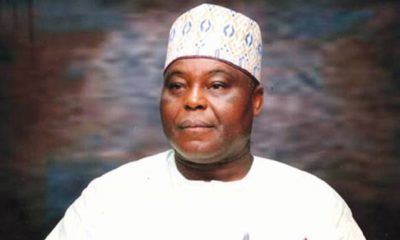
Outstanding Lawmaker of the Month: Senator Ali Ndume


By Bonaventure Phillips Melah
Popularly known as Senator Ali Ndume, he has been representing Borno South Senatorial District in the upper chamber of the national assembly since 2011.
Born on November 20, 1959, Ndume is an outspoken lawmaker who does not brood mediocrity and is ready to confront every topic in issue frankly, without fear or favour.
Recently, he shocked his colleague senators when he supported President Bola Tinubu’s directive that Police escorts should be withdrawn from VIPs as the country needs every police personnel available for the fight against crime and criminalities. On the other hand, majority of senators have been clamouring for the reversal of the policy, for selfish reason.
Ndume has also spoken strongly against terrorism, banditry and other violent criminalities. He has advocated there should be no clemency for those who kill Nigerian citizens in cold blood, arguing that the campaign for justice and respect for human dignity should not apply in the case of terrorists who kill their victims without mercy, therefore urged fighting military officers in the field to take out anyone with intent to kill them or their colleagues in battle.
Mohammed Ali Ndume was born in Gwoza Town of Borno State. He attended Gadamayo Primary School, Comprehensive Secondary School Mubi, Kaduna Polytechnic where he obtained Ordinary and Higher National Diplomas as well as Federal Polytechnic Ilaro in Ogun State for his compulsory National Youth Service Corps (NYSC) after which he joined Ramat Polytechnic Maiduguri as a lecturer in 1983, rising to the position of Senior Lecturer.
In 1988, Ndume was awarded the United States Agency for International Development (USAID) Post-Graduate Scholarship to study Business and Computer Education at the University of Toledo, Ohio, United States of America and graduated in 1990, was awarded Magna Cum Laude academic honour. He was also admitted into the Phi Kappa Phi academic society for outstanding performance. On graduation, he returned to Nigeria and continued with his teaching career with the Ramat Polytechnic Maiduguri, Borno State until 2003, when he fully involved in politics.
Ndume was elected to represent the people of Chibok/Damboa/Gwoza Federal Constituency in the House of Representatives on the platform of the All Nigeria Peoples Party (ANPP) from 2003 to 2011. Upon the inauguration of the 6th Assembly in 2007, he was unanimously elected as the Minority Leader and has also served as Chief Whip of the Senate. The Borno State-born lawmaker served as the Chairman of the Senate Committee on MDGs in the 7th Senate.
Ndume has moved several motions and sponsored many bills in the Parliament. A few of them include: Constituencies Development Fund Bill; Electoral Act Amendment Bill that enabled Internally Displaced Persons (IDPs) vote in 2015 elections; Nigerian Peace Corps (Establishment) Bill; North East Development Commission Bill; Unemployed youths, elderly and indigent sustainability allowance Trust Fund Bill; Communication Service Tax Bill; Environmental Health office (Registration etc.) Act 2002 (Amendment) Bill; Federal Audit Service Commission Bill; Capital Expenditure Budget Roll Over Bill and the Nigerian Oil and Gas Industry Content Development Act 2010 (Amendment) Bill.
Other people-oriented Bills to his credit are: Anti-torture Bill; Telecommunications and Post Offices Act CAP T5 LFN 2004 (Amendment); National Crop Varieties and Livestock Breeds (Registration, etc) Act CAP N27, LFN 2004 (Amendment) Bill; Produce (Enforcement of Export Standard) Act CAP P32 LFN 2004 (Amendment) Bill; Corruption Practices and other Related offences Act CAP 31 LFN 200; Federal Capital Territory Hospital Management Board (Establishment) Bill; Federal Capital Territory Civil Service Bill; Prevention of Crime Act (Amendment) Bill; Water Resources Act (Amendment) Bill; National Agriculture Land Development Authority Act (Amendment) Bill; Chartered Institute of Stockbrokers Act CAP LFN, 2004 (Amendment) Bill and the Treaty to Establishment Africa Economic Community Relating to Pan African Parliament (Accessions & joint solution) CAP T25 LFN 2004 (Amendment) Bill. The list is endless.
Senator Ali Ndume has constituency projects spread across all nine local government areas in his senatorial district (Borno South) and other parts of the state. As a grassroots leader, he devotes most of his time thinking of strategies that would uplift the downtrodden members of the society and is always ready to stand alone, if the need be, to ensure that policies and progammes of government are tailored towards achieving the same goal of ensuring that the poor and vulnerable citizens ate carried along in governance.
Ndume has, on many occasions, run into ‘trouble’ with the powers that be, due to his views and stand on national issues which has led to several unpleasant outcomes like his removal as 10th Assembly Chief Whip among others, he has remained resolute and undeterred in his pursuit of what he believed to be the truth, equity, fairness and justice, a combination of factors that earned him African Leadership Scorecard Magazine Outstanding Lawmaker of the Month (December 2025).
Footnote: This article was first published in the December 2025 Edition of African Leadership Scorecard Magazine
Bonaventure Phillips Melah is the Publisher/CEO of African Leadership Scorecard Magazine; Nationwide Reports (online newspaper) and the Founder/Facilitator, Nigeria’s Pride Awards
Contact: Gmail: bonamelah123@gmail
.com Mobile 08036062975

Edo State Governor, Senator Monday Okpebholo, has announced plans to establish a special court to fast-track the prosecution of suspected kidnappers and cultists in the state.
He said anyone convicted by the special courts would face public execution, adding that he would not hesitate to sign their execution order
He spoke in Benin during the parade of suspected kidnappers and cultists arrested by the Edo State Police Command.
He warned residents against engaging in kidnapping and cult-related activities, saying such crimes would only lead to the loss of lives and property.
The governor said the proposed special court would become operational within the next few weeks to ensure speedy trial of suspects.
“We are setting up a special court to try kidnappers and cultists. In the next two or three weeks, it should be ready,” he said.

River State Governor, Sir Siminalayi Fubara has been served a new impeachment threat by his political tomentor, former governor and Minister of the Federal Capital Territory, Nyesom Wike.
This time, Fubara, who has faced series of troubles from Wike, has allegedly been ordered by the FCT Minister to join the Rainbow coalition or face impeachment.
This would be the third time the Governor has been threatened with impeachment since he assumed office in May 2023, all coming from Wike.
According to reports, Wike sent a delegation headed by Ambassador Desmond Akwor to governor Fubara.
The delegate met the governor behind closed doors to deliver an ultimatum from Nyesom Wike to to the effect that he must join the Rainbow Coalition within a two-week timeline.
It was reported that although the delegation did not tell the governor that if he refuses to join the coalition that he will be impeached, the request was delivered in a manner as though it were a command rather than persuasion or appeal.
However, Fubara was said to be currently unperturbed about whatever they are conspiring against him as he is focused on delivering good governance to the Rivers state people adding that the source said Fubara aware of the plot and does not seem bothered.
“Ambassador Desmond Akwor of Oyigbo who also heads the LGA campaigns for Rainbow Coalition led the delegation from Wike to governor Sim Fubara. The meeting was behind closed doors. They came to order the governor to join their Rainbow Coalition–I said order because of the way they came and how they made it as a demand rather than a persuasion. I heard they have concluded that if the governor refuses to join them in two weeks time, they will remove him but his excellency is not even concerned about their desperation. He is currently focused on delivering his campaign promises to the people,” the reported quoted a source to have said.
News
UN investigators condemn non-prosecution of religious freedom violators in Nigeria, urges domestication of ICC Charter
By Bonaventure Phillips Melah 08036062975
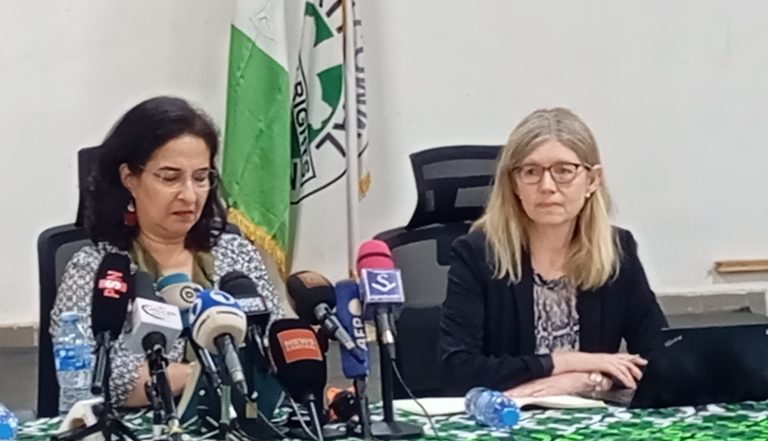
A special investigative body set up by the United Nations on religious freedom, has submitted preliminary report, indicting Nigerian government for failing to protect its citizens from various forms of abuse and death over their religious inclinations.
The investigative body led by the United Nations Special Rapporteur on Freedom of Religion or Beliefs (FoRB), Professor Nazila Ghanea, at a press conference on Friday, released preliminary report on a two-week mission in Nigeria which visited Kano and Plateau States.
The preliminary report was presented at the headquarters of the National Human Rights Commission, NHRC in Abuja with the Executive Secretary of the Commission, Dr, Tony Ojukwu, SAN in attendance, alongside directors, senior officers and representatives of some local and international organizations.
Prof. Nazila Chanea who lamented the rampant killings going on across Nigeria, committed by religious extremists and organisations affiliated international terror groups, said thousands of Nigeria’s have been killed without any punishment against the perpetrators, adding that Nigeria has become a slaughter house where life longer matters.
The UN Special Rapporteur therefore called on the federal government to domesticate the International Criminal Court, ICC Charter and other UN laws to try violators of regions freedom rights in the country.
She also called on religious leaders to denounce those who preach extremist ideologies and condemn their violent acts to serve as deterrent to others.
According to her, the investigation was meant to explore how freedom of thought, conscience and religion interacts with human rights realities on the ground throughout this vast land.
She noted that they were able to meet and interface with several top Nigerian officials, including the National Security, Solicitor-General/Permanent Secretary of the Ministry of Justice, the Permanent Secretary of the Ministry of Foreign Affairs, representatives of various departments of the Ministry of Justice, the Ministry of Women’s Affairs and Social Development, the Nigeria Police Force, Nigeria Immigration Service, Supreme Court Justices and the Nigerian Human Rights Commission (NHRC).
She said- “I had asked for a number of other official meetings at the Federal level and regret that these could not be facilitated.”
She said: “Pockets of horrendous mass atrocities and international crimes were observed, but investigators found no evidence of a nationwide, intentional government policy to destroy a religious community. Inadequate security responses and repeated violence are major drivers of harm. Freedom of religion/conscience is being constrained by labels, silos, and political instrumentalisation; victims must lead the narrative until proper investigations and justice occur.”
She affirmed that the prevailing insecurity in Nigeria prevented her from extending her investigations to other parts of Nigeria, called for accountability processes and victim‑centred investigations to determine individual and institutional responsibility.
She noted that labels, cultural frames and polarisation prevent many people in Nigeria from freely expressing conscience and religious belief.
She called for the need to break silos and enable plural, conscience‑based expression across communities.
According to the preliminary report, ” Discussion of freedom of religion or belief in Nigeria elicits very acute concerns about insecurity, violence and conflict which has spread throughout the country and has generated huge alarm, albeit to different intensities and for different reasons.
“These include terrorist actions, gang violence and banditry incursions, land grabbing to mass displacement, armed conflict and cattle rustling, hostage taking to arson attacks, destruction of holy places and schools, large scale kidnappings in remote areas and civil unrest around protests and strikes, decimation of irrigated farmlands and whole villages and livelihoods, through endless cycles of threats, fear and death in expanding areas of the country. Impunity and lack of accountability have reportedly entrenched these cycles of fear and violence and encouraged its spread. Previously these cycles were focused in particular regions, for example in the Northwest and North Central.”
-

 News1 year ago
Senate to speed up conclusion of Nigeria Forest Security Service Bill
-
 News11 months ago
The Many Lies Against Bashir Haske
-

 News3 years ago
Breaking: Tinubu’s authentic ministerial nominees
-
 News3 years ago
“Anytime we want to kill terrorists, President would ask us to take permission from France but they were killing our soldiers-” Niger Republic coup leader
-
 News3 years ago
“I’m leaving the Catholic church because Bishop Onah is oppressing me,” says Okunerere
-

 News3 years ago
Radio Nigeria’s veteran broadcaster Kelvin Ugwu dies three months after retirement from service
-
 News3 years ago
Dokpesi and the Gazebo Mystique
-

 News3 years ago
Tsunami: Tinubu orders dissolution of managements, boards of MDAs, to sack all Buhari’s political appointees