
News
VP Shettima says Nigeria is emerging best investment destination for agribusiness

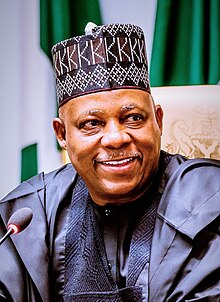
***Says we’re exploring innovative strategies to achieve food, nutrition security
Nigeria’s Vice President, Senator Kashim Shettima, has wooed foreign investors to invest in Nigeria’s agricultural sector, assuring them that the country is ready for agribusiness.
He said Nigeria remained the best place to invest given its 70 million hectares of underutilised arable land, which, according to him, is 75% of the country’s total land mass.
Senator Shettima, who stated this on Tuesday in Iowa, United States, during the 2023 Norman Borlaug International Dialogue, noted that there were substantial opportunities in Nigeria for local and foreign investors to boost agricultural productivity.
Stanley Nkwocha, Senior Special Assistant to the President on Media and Communications, Office of the Vice President, in a statement Wednesday, said that the Norman E. Borlaug International Dialogue, also referred to as the “Borlaug Dialogue,” is a gathering of individuals from more than 65 countries fully prepared to address cutting-edge issues related to global food security and nutrition.
Speaking at this year’s edition of the Dialogue with the theme, “Harnessing Change,” the Vice President told the gathering that under President Bola Ahmed Tinubu’s watch, Nigeria has since demonstrated that the Agrifood sector was a top priority.
Delivering his address titled, “Nigeria’s Agribusiness Roadmap for a Prosperous Future,” VP Shettima said, “Our primary objective is to empower our farmers and attract investors. We are increasing primary production to harness the economic potential of agro-processing and industrialisation. This is why, upon assuming office, the President declared a state of emergency in agriculture.
“The connection between food and national security is too significant for us not to be alarmed by happenings around the world, whether in response to unforeseen disasters like the COVID-19 pandemic or the geopolitical frictions around us.”
Restating Nigeria’s firm belief in the power of partnership, the VP explained that it was for this reason that the country had prioritized interventions, which he said present profound economic opportunities for investors.
He listed the interventions to include the National Agriculture Growth Scheme (NAGS), the Technologies for African Agricultural Transformation (TAAT), the Livestock Productivity and Resilience Support Project (L-PRES), the Green Imperative Project (GIP) and the Special Agro-Industrial Processing Zones (SAPZ) programmes.
“Allow me to share that Nigeria understands the essence of partnerships in sustaining the dreams and promises that have brought us together today. This is why we are already collaborating with institutions such as the African Development Bank, the World Bank, the International Fund for Agricultural Development (IFAD), the Islamic Development Bank, and the United States Agency for International Development (USAID) to achieve food and nutrition security in Nigeria and beyond.
“With the invaluable support of our partners, we are exploring innovative strategies to transform this quest for food security into a thriving enterprise,” Senator Shettima stated.
The Vice President highlighted critical areas Nigeria was assisting its farmers to increase productivity, including essential infrastructure for industries to increase their capacity.
He said, “With about 70 million hectares of underutilized arable land, which is 75% of our total land area, Nigeria offers a substantial opportunity to both local and foreign investors to boost agricultural productivity. This is why we’ve embraced the TAAT, GIP, and SAPZ programmes and are investing in agricultural research through the National Agricultural Development Fund (NADF).
“This is why we are helping our farmers increase production and providing essential infrastructure for industries in peri-urban areas to expand their capacity. This, yes this, is the wisdom for our resolve to establish Mechanization Service Centres in all our 774 Local Government Areas to facilitate essential primary production services.”
He further stated that, while much of the demand for agribusiness products was satisfied through imports, the Tinubu administration is dedicated to reversing Nigeria’s over-reliance on importation.
VP Shettima noted that apart from the fact that its strategic location in West Africa provides easy access to regional and international markets, Nigeria was also poised to dismantle investment barriers.
This, he said, is being achieved through a supportive policy framework such as the National Agricultural Technology and Innovation Policy (NATIP).
He continued: “Because we believe that import rules are a significant factor, we’ve established a policy of zero duties on agricultural machinery and imposed restrictions on certain agricultural commodities to stimulate local production. We are also offering preferential financing and subsidies, exemplified by an agricultural credit guarantee scheme that guarantees up to 75% of loans for agricultural ventures.
“We’ve also introduced a range of tax incentives, including tax holidays, deductions for locally sourced materials, labour incentives, and pioneer status incentives, making it easier to conduct business. Notably, we’ve opened the doors to foreign investors, allowing them to have 100% ownership in companies and repatriate their profits and dividends without hindrance.”
Declaring that Nigeria was ready for agribusiness, the Vice President pointed out that the country was “committed to the journey towards a world where food security and nutrition are not luxuries but fundamental rights for all.”
While introducing VP Shettima earlier, Ambassador Terry Branstad, President of the World Food Prize Foundation and former U.S. Ambassador to China, described the Nigerian Vice President as a rare African statesman whose leadership qualities, loyalty as well as sense of commitment to nationhood and development can best be described as legendary.
He expressed optimism that the Bola Ahmed Tinubu Presidency would be successful given its devotion to results-oriented diplomacy.
Attending the Dialogue with the Vice President are the governor of Plateau State, Barr. Caleb Mutfwang, Minister of Agriculture, Sen. Abubakar Kyari; Consul General (New York), Amb. Lot Egopija, and Senior Special Assistant to the President on Agribusiness and Productivity Enhancement (Office of the Vice President), Dr Kingsley Uzoma, among others.

President Bola Tinubu Federal Government has drawn down $1.5bn from a $5bn financing facility arranged with the United Arab Emirates’ largest lender, First Abu Dhabi Bank, despite growing concerns from global financial institutions over the increasing use of complex derivative financing by African sovereigns.
Bloomberg reported on Friday that the latest drawdown represents the first tranche of a $5bn Total Return Swap facility approved by the National Assembly on March 31, 2026, and is expected to support the 2026 budget, finance infrastructure projects, and refinance existing debt obligations.
The report quoted people familiar with the transaction, who asked not to be identified because they were not authorised to speak to the media.
The report read, “Nigeria has accessed the first tranche of a $5bn derivatives deal with the United Arab Emirates’ largest lender, pressing ahead with a transaction that has been scrutinised for being opaque.
“The West African nation drew about $1.5bn in the last couple of weeks from a total return swap transaction with First Abu Dhabi Bank PJSC, according to people familiar with the transaction, who asked not to be identified because they were not authorised to speak to the media.”
The transaction comes at a time when Nigeria is facing higher borrowing costs in international capital markets, forcing the government to seek alternative financing arrangements to shore up its fiscal position and improve access to foreign exchange liquidity.
Under the arrangement, Nigeria is required to pledge Federal Government securities worth about 133 per cent of any amount drawn under the facility. This means that for the full $5bn facility, the government would have to post approximately $6.65bn worth of naira-denominated bonds as collateral.
In return, the Abu Dhabi-based lender provides dollar liquidity to the Nigerian government. The Federal Government will pay a floating interest rate benchmark plus about four percentage points, while the lender receives the returns generated by the underlying government securities.
The transaction effectively allows Nigeria to unlock immediate dollar funding without issuing new Eurobonds or taking on traditional external loans at prevailing market rates, which have become increasingly expensive for frontier economies.
The government has already indicated that the proceeds from the initial $1.5bn drawdown will be deployed to support budget implementation, fund critical infrastructure projects, and refinance costlier domestic and external debts.
However, the financing arrangement has attracted criticism from international financial institutions and market analysts over concerns about transparency and potential hidden liabilities.
In its June 2026 assessment of African sovereign debt markets, the International Monetary Fund warned that derivative financing structures such as total return swaps are often opaque and difficult for investors and creditors to monitor.
The IMF noted that such arrangements are “hard to track, hard to value in real time, and can obscure the true extent of a country’s financial obligations.”
Three days ago, Fitch Ratings warned that Nigeria’s planned $5bn financing arrangement with First Abu Dhabi Bank could increase sovereign debt risks and reduce transparency in public debt reporting.

At least 700 Nigerians remain stranded in South Africa three days before the June 30 deadline issued by anti-immigration groups.
It was gathered that despite President Bola Tinubu’s approval of funds for their evacuation, bureaucratic delays have prevented the release of the money, leaving hundreds stranded amid escalating xenophobic tensions.
Although the president approved funding for four additional rescue flights after the first evacuation brought home 258 Nigerians, the money had yet to reach the designated carrier, Air Peace.
This delay, according to officials of the Ministry of Foreign Affairs, the Nigerians in Diaspora Commission and the Nigeria High Commission in South Africa, is stalling the evacuation operation and leaving hundreds of Nigerians exposed to attacks.
The delay has heightened fears among the stranded Nigerians as xenophobic tensions continue to escalate across South Africa.
The President of the Nigerian Citizens Association in South Africa, Rev. Frank Onyekwelu has said over 20 Nigerians had died since the renewed wave of anti-foreigner attacks, while many others had been assaulted, displaced or forced to abandon their businesses.
According to the officials, over 1,000 Nigerians registered with the federal government for evacuation. However, only 324 have been successfully brought home so far through a combination of government efforts and private intervention, leaving more than 700 Nigerians at risk of attacks and exposed to the elements.
The first batch of returnees (258) arrived in Lagos on June 11 aboard Air Peace, while the second batch (66) arrived on June 24 aboard ValueJet.
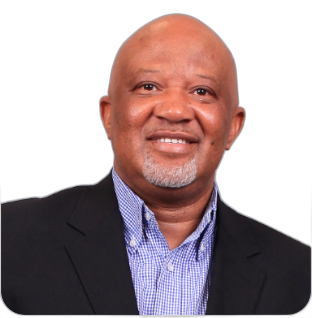
The Group Chairman of MTN, Mcebisi Jonas, has condemned the ongoing attack on foreigners in South Africa , saying the country’s economic growth would suffer without the rest of Africa.
Delivering a deeply political eulogy at the funeral of Zimbabwean-born activist and public servant Thokozani Damasane, the former South African Deputy Minister of Finance turned private-sector leader issued one of the most direct interventions by a major African business figure on the country’s immigration crisis.
He pushed back against the narrative that removing foreign nationals would solve South Africa’s socioeconomic woes, attributing the crisis instead to state failure and cynical political exploitation.
“Foreigners can leave tomorrow – inequality will be with us,” Jonas told the congregation. “Foreigners will leave tomorrow – unemployment will be with us. Foreigners will leave tomorrow – our police will remain corrupt. Foreigners will leave tomorrow – our politicians will still be concerned with one thing: being elected and re-elected.”
He placed responsibility for the crisis squarely on the South African government, arguing that weak law enforcement and failing systems have created fertile ground for political manipulation. “The problem is the failure of the state. The state doesn’t manage immigration. It doesn’t manage its borders. It doesn’t enforce law enforcement. It doesn’t manage education. What are you expecting?” he asked.
When citizens feel the burn of state failure, Jonas noted, they become vulnerable to opportunists. “When people feel the burn, they become vulnerable to politicians whose sole purpose is to be elected and re-elected. Some of them have no credibility whatsoever. But they lead marches and tell our people that the problem is not us – it is foreigners.”
Beyond immediate political failures, Jonas offered a sharp historical critique of tribalism and ethno-nationalism, describing them as colonial inheritances designed to divide African people. “The tribe is a product of colonial powers,” he argued, noting that ethnic divisions were historically amplified to enforce indirect rule.
He lamented that this colonial logic has mutated into the engine driving contemporary xenophobic violence. “You would see in the streets, it’s no longer about whether you are from South Africa or not from South Africa. It’s about the tribe, it’s about who you are, you are not like us, and you are different, and therefore we have to persecute you. Something fundamental has been lost in our country. Something fundamental has been lost in our nations,” Jonas said.
,
-

 News1 year ago
Senate to speed up conclusion of Nigeria Forest Security Service Bill
-
 News11 months ago
The Many Lies Against Bashir Haske
-

 News3 years ago
Breaking: Tinubu’s authentic ministerial nominees
-
 News3 years ago
“Anytime we want to kill terrorists, President would ask us to take permission from France but they were killing our soldiers-” Niger Republic coup leader
-

 News3 years ago
“I’m leaving the Catholic church because Bishop Onah is oppressing me,” says Okunerere
-

 News3 years ago
Radio Nigeria’s veteran broadcaster Kelvin Ugwu dies three months after retirement from service
-
 News3 years ago
Dokpesi and the Gazebo Mystique
-

 News3 years ago
Tsunami: Tinubu orders dissolution of managements, boards of MDAs, to sack all Buhari’s political appointees