
News
To study Masters Degree in US, you must present these six documents


As a Nigerian citizen, if you want to travel to the United States of America to study Masters Degree in any field, these are the six documents you must present before you are offered admission:
1. International passport
One of the first documents you must possess before commencing your master’s application abroad is the Nigerian international passport.
A valid international passport is one of the first documents a prospective master’s student should possess if they wish to relocate to the US.
The international passport is like an identity card that identifies you as a citizen of your country. It is required before you will be given admission, and it is also needed as a travel document.
2. Academic transcript
Anyone planning to travel to the US to study for a master’s degree must have their first degree or Higher National Diploma (HND) transcript with them.
The transcript is an academic document that spells out your performance in school while studying for your first degree or HND.
Any American university you are applying to will ask for your transcript to assess your suitability before offering you admission.
And it is very pertinent to note that these US universities expect your transcript to be original copies from the issuing schools. Sometimes, your graduate school sends it directly to the admitting school.
3. Statement of purpose
Many universities in the US require you to tell them why they should offer you admission. The statement of purpose assists you to cover other things that could not be covered in your certificates and other documents.
It is the document that helps get you admitted for a master’s degree in the US if it is well-written, and has to be clear and precise.
SOP offers a better understanding of your motivations and qualifications to the admission panel and helps them foresee you as a potential fit for the academic programme you are pursuing.
4. Reference letters
Other crucial documents for your master’s degree admission in the US are your reference letters.
Nigerian students seeking to gain admission for a master’s degree are required to present at least one reference letter except otherwise stated by the school.
In some cases, the schools demand that you get reference letters from your school lecturers or a direct boss who can vouch for your suitability for admission. These letters are important because some universities may not admit students without them.
5. IELTS/TOEFL or any other English test
As a Nigerian student seeking to study for a master’s degree in the US, the universities over there will require you to prove that you can study in English without language barriers.
International English Language Testing System (IELTS) and Test of English as a Foreign Language (TOEFL) are the most common tests required by US schools and others which Nigerian students must pass before advancing to have a master’s degree.
The IELTS is jointly owned and administered by British Council, IDP, IELTS Australia and Cambridge Assessment English.
According to the Education Testing Services, TOEFL is accepted by more than 11,500 universities, including in the US.
However, it should be noted that many universities in the USA have actually started waiving English tests for Nigerian students.
6. University certificate
The last but not the least document you are required to have while applying for admission to study for your master’s degree programme in the US is your university certificate.
Many schools in the US require you to submit this at the point of application. Also, other schools require you to present original copies of your degree certificate on arrival at the school.
Source: Vanguard

The Economic and Financial Crimes Commission, EFCC, has revealed that it investigated the founder of Streams of Joy International, Pastor Jerry Eze, for six months over suspected money laundering before clearing him.
Ola Olukoyede, chairman of the Commission, disclosed this on Wednesday while speaking at the Jerry Eze Foundation Business Grant Award Ceremony in Abuja.
According to him, the probe was triggered by intelligence reports and petitions after the commission observed large inflows of foreign currencies into the cleric’s domiciliary account.
“We work by intelligence, we work by petitions. At some point, I saw there was an account, a domiciliary account. Dollars, pounds were dropping in like raindrops, from Colombia, from America, from Sri Lanka, even from Togo.
“I said who is this man? Yes, I’ve been hearing about his name, I’ve seen his face a couple of times. I never bothered about what he was doing. I knew he was a pastor.
“So they said this one pastor of streams of joy, go and investigate him. So we went to the investigation. We combed the books,” Olukoyede stated.
The EFCC boss said he subsequently invited Eze for questioning after preliminary findings were compiled by investigators.
He added that upon meeting the cleric and reviewing the findings of the investigation, the commission found no wrongdoing.
“So he came to my office. He told me what happens and all of that, and how the money came, what he does, how he has been helping people, and all of that.
“I said, you know what, I didn’t call you here to explain to me. We have already done our work. I called you here to commend you,” he stated.
The remark drew applause from the audience, as Eze, who was present at the event, acknowledged the commendation.
He noted that the commission has a responsibility not only to investigate financial crimes but also to recognise individuals found to have acted with integrity.
The EFCC chairman, however, stated that the agency would continue to monitor financial activities where necessary, stressing that its preventive mandate remains critical in tackling corruption.
News
Court bars David Mark, others from interfering with functions, tenure of elected ADC state executives

The Federal High Court in Abuja on Wednesday restrained the Independent National Electoral Commission from recognising or participating in any congress organised by a disputed caretaker leadership of the African Democratic Congress.
The court, in a judgment delivered by Justice Joyce Abdulmalik, also barred former Senate President, David Mark, and other prominent figures in the party from interfering with the functions and tenure of elected state executives.
The ruling is the latest development in the festering leadership dispute within the ADC, with clear implications for the control of party structures ahead of future political activities.
The case arose from an originating summons filed by Norman Obinna and six others on behalf of state chairpersons and executive committees of the party.
The plaintiffs challenged the legality of actions taken by a caretaker or interim national leadership, particularly the move to organise state congresses through an appointed committee.
They argued that the caretaker body lacked constitutional authority to organise such congresses or to appoint any committee for that purpose.
According to them, only duly elected party organs recognised under the party’s constitution possess the power to conduct congresses.
The plaintiffs, therefore, asked the court to affirm the tenure of the state executive committees and restrain any parallel processes that could undermine their authority.
In resolving the dispute, Justice Abdulmalik held that the claims brought before the court were valid and deserving of judicial consideration, especially in view of alleged breaches of constitutional and statutory provisions.
She stated that she found “the issue in the originating summons meritorious”.
The judge framed the central issue as whether the second to sixth defendants, including Mark, had the constitutional or statutory authority to assume the powers of elected state organs of the ADC, whose tenure is guaranteed under the party’s constitution.
She relied on section 223 of the 1999 Constitution, which mandates political parties to conduct periodic elections based on democratic principles, as well as Article 23 of the ADC Constitution, which provides that national and state officers shall hold office for a maximum of two terms spanning eight years.
According to her, “the question is whether there is any infraction committed by Mr Mark and co-defendants when they convened meetings and appointed a body known as a congress committee to organise state congresses.”
On the defence raised by the defendants that the matter was an internal affair of a political party and therefore outside the jurisdiction of the court, the judge acknowledged the settled legal position but clarified its limits.
She held that while courts are generally reluctant to interfere in internal party matters, they will intervene where there is a clear allegation of violation of constitutional or statutory provisions.
“The law is settled that courts will not interfere. However, where there is an allegation of breach of constitutional or statutory provisions, the court has a duty to intervene,” she ruled.
“Where a party alleges that its constitution has been violated, the court is bound to adjudicate. Any argument that this court lacks jurisdiction on that basis fails,” she added.
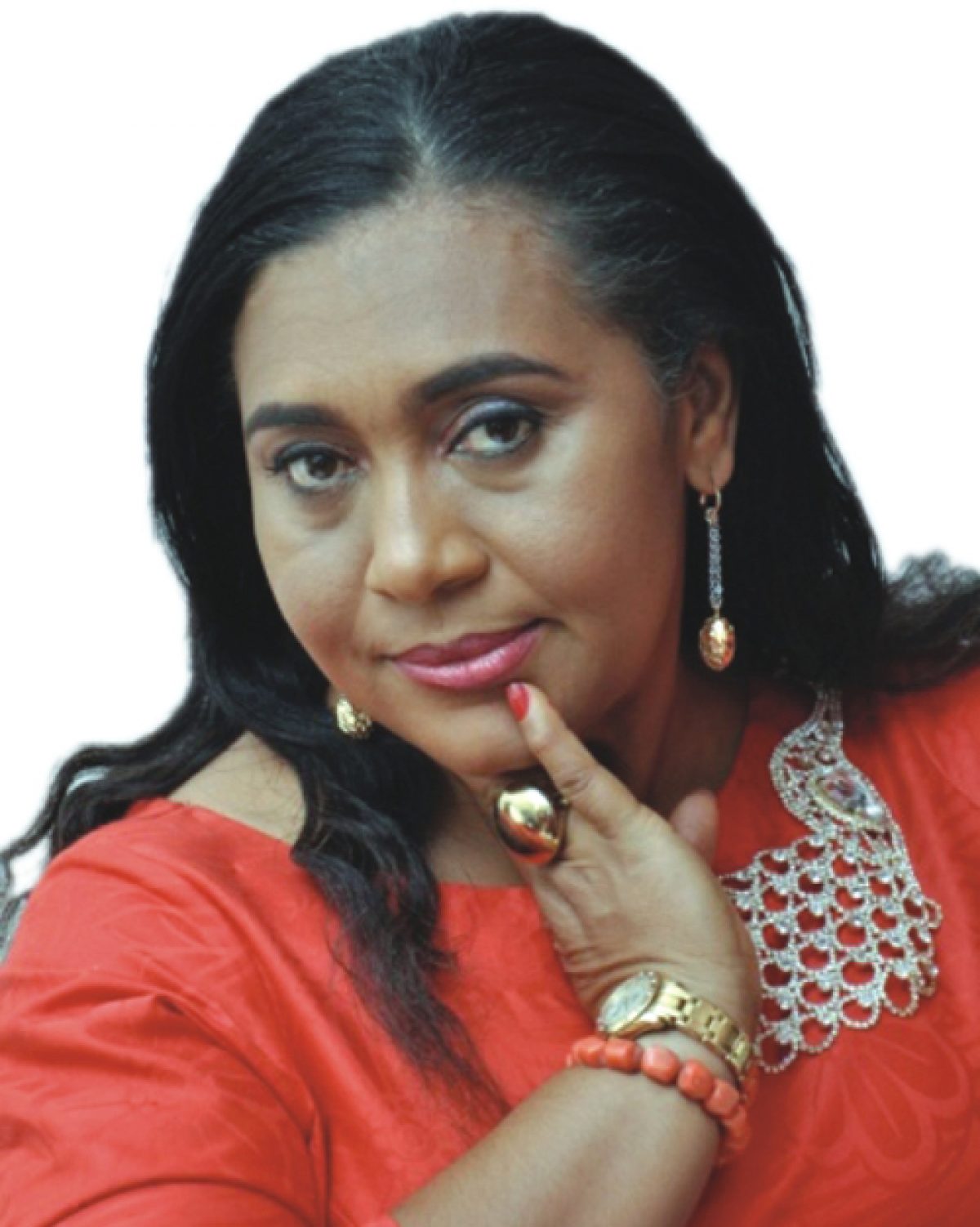
Hilda Dokubo, a veteran Nollywood actress, has been elected as National Woman Leader of the Labour Party (LP) after her months of suspension from the party was lifted by the National Working Committee, NWC.
Apart from Dokubo, the suspension of 25 other members was also lifted. They include Emmanuel Agida, Abayomi Arabambi, Ogar Osim, Muhammed Aliyu, Casmir Uchenna, Airen Igbinedion, Auwal Ahmed, and others.
The suspension was lifted on Tuesday during the national convention of the party held at the International Conference Centre, Umuahia, Abia State.
The decision to lift the suspension was taken through a voice vote by delegates from all states in attendance at the convention.
The chairman of the elective national convention, Ginger Onwusibe, announced the recall of the 26 members after a unanimous voice vote by the delegates.
Explaining the development, the newly elected National Chairman of the LP, Esther Nenadi-Usman, said the party followed the path of reconciliation and forgiveness.
-

 News1 year ago
Senate to speed up conclusion of Nigeria Forest Security Service Bill
-
 News9 months ago
The Many Lies Against Bashir Haske
-

 News3 years ago
Breaking: Tinubu’s authentic ministerial nominees
-
 News3 years ago
“Anytime we want to kill terrorists, President would ask us to take permission from France but they were killing our soldiers-” Niger Republic coup leader
-
 News3 years ago
“I’m leaving the Catholic church because Bishop Onah is oppressing me,” says Okunerere
-

 News3 years ago
Radio Nigeria’s veteran broadcaster Kelvin Ugwu dies three months after retirement from service
-
 News3 years ago
Dokpesi and the Gazebo Mystique
-

 News3 years ago
Tsunami: Tinubu orders dissolution of managements, boards of MDAs, to sack all Buhari’s political appointees