
News
Tinubu vows to crush terrorism, prosper Nigeria


President Bola Ahmed Tinubu today restated his administration’s commitment to eliminating poverty, terrorism and all forms of criminality in Nigeria.

The Nigerian leader who is also Chairman of the Economic Community of West African States (ECOWAS) said the administration is currently implementing programmes and policies that would empower Nigerians to combat the challenges of poverty, criminality and terrorism.
President Tinubu, who was represented by his deputy, Vice President Kashim Shettima, gave the hint Saturday during the passing-out parade of Cadets of the 70 Regular Course, Direct Short Service Course 27 (Army) and Direct Short Service Course 31 (Air Force) of the Nigerian Defence Academy in Kaduna.
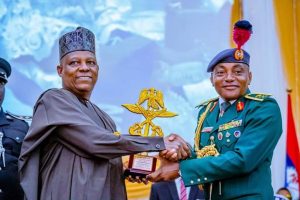
Reading the President’s address titled, “The Heroes of Nigeria’s Path to Prosperity and Security,” at the passing-out parade, VP Shettima said, “Every day, every minute, we are reminded of the consequences of economic and social disintegration around us. This is why we favour cooperation and the formation of bilateral and multilateral alliances to create opportunities for our people.
Stanley Nkwocha, Senior Special Assistant to the President on Media and Communication, Office of the Vice President had that Shettima said- “We are implementing programmes and policies to empower our citizens to combat the challenges of poverty, criminality, and terrorism. From preparing for the food security crisis triggered by the Russian-Ukrainian war, to responding to banditry attacks on farmers, natural flood disasters, and the repercussions of military coups, this administration has remained vigilant in devising solutions to mitigate their impact and enhance national security”.
As part of moves to deal decisively with the criminal elements, President Tinubu noted that his government has embarked on a new era in the country’s national defence and security strategy.
This, he said, would be driven by a resolute commitment to confront the substantial threats and challenges that confront us within the West African sub-region.
“I have directed all heads of defence and security institutions to unite in their efforts to protect our nation’s integrity and well-being, and as Chairman of the ECOWAS, we are diligently working to enhance our regional conflict management and development mechanisms. To forge a path towards greater peace, stability, and progress across West Africa and beyond is not negotiable,” he added.
The President noted, however, that in tackling poverty inflicted on Nigerians by activities of the terror groups, he would treat every region equally and give them a sense of belonging in his government.
He stated: “Distinguished ladies and gentlemen, justice is the mainstay of prosperity, and so we are going to be fair to each region. Whether in tackling the secessionist elements disrupting the peace and economic activities of the good people of the South-East or doubling up our efforts in winning the counter-insurgency in the North East, and whether in pursuing normalcy in the North-West or in making the farmer-herder crises a thing of the past in the North-Central, every group will be treated as equal and given a sense of belonging in our government.
“While I acknowledge that we have made bold decisions to bolster our economy, even as some developed economies face the threat of recession, our commitment remains resolute. We are intensifying our efforts to implement tangible measures that will alleviate the hardships caused by the removal of fuel subsidies and the unification of exchange rates.
“Our immediate actions, such as reducing taxes on strategic manufacturing industries, distributing grains from the national reserve to vulnerable demographics, providing fertilizer and farm inputs, and extending soft loans to small and medium-scale industries, all serve as a clear message to our nation.
“We stand firmly with our citizens, determined to guide our country towards a path of accelerated economic growth and opportunities, where no one lives on handouts.”
The president further said he was proud of the devotion and dignity with which the NDA and its alumni have safeguarded Nigeria, noting that the passing-out parade was not just a ceremony to honour the transition of the graduants to a more active phase of duty to their fatherland.
According to him, the ceremony “stands as a symbol of our enduring commitment to the ideals of patriotism and investment in our human capital.
“I am, therefore, delighted to witness the passing-out parade of the Cadets of the 70 Regular Course, Direct Short Service Course 27 (Army), and Direct Short Service Course 31 (Air Force),” he added.
President Tinubu continued: “Our solemn commitment to safeguarding Nigeria’s security hinges upon a crucial realisation: without vigilant attention to the very foundations and individuals who fortify order and stability, this promise remains unattainable. It is here, at the Nigerian Defence Academy, that this promise crystallises into action.
“In a world characterised by swift advancements and transformative technologies, our mission is clear: we strive to nurture not just ordinary defenders but paragons of excellence, both among men and women, who serve as vigilant protectors of our cherished nation.
“Since 1964, this institution has moulded the character, physique, and intellect of valiant officers and academic specialists beyond the shores of this country. Year after year, this Academy attracts the most ambitious among us to train them and reintegrates them into society.
“Year after year, we reaffirm that sound education is the ultimate security strategy, and our resilient Armed Forces are proof of this. This prized legacy, thankfully, is one to which we are not the only testifiers. There’s an international consensus on the quality of this Academy, an institution that has given a sense of purpose to alumni from as far as Zimbabwe, Uganda, Togo, Sierra Leone, Niger, Central African Republic, Chad, and Burkina Faso”.
Addressing the graduating Cadets, President Tinubu pointed out that like those before them, they were “stepping into a world fraught with threats, a world that demands unique skill-sets to conquer the adversaries of the state.
“They are going to find themselves in a dynamic landscape, one marked by combat and regimental realities vastly different from those encountered by their predecessors”.
The President further asked the authorities of the NDA to access the support it requires to invest in scientific research and technological innovations, as well as develop prototypes and concepts that align with local content policies of the Federal Government.
He noted: “The future of our great country doesn’t only rest upon the valour of these young patriots but also the curricula with which our warriors and scholars are formed.
“If we must take the centre stage in protecting our people, this Academy must access the support it requires to invest in scientific research and technological innovations and develop prototypes and concepts that align with the Federal Government’s local content policies.
“This esteemed institution was founded to lead the way and boasts research centers dedicated to exploring scientific inquiries and translating the our grandest ideas and theories into reality. Now is the time for us to be the model for the continent.”
Welcoming the young cadets as they join the ranks of the nation’s patriotic heroes, President Tinubu congratulated the Commandant and the entire NDA community for upholding their noble tradition.
Earlier, the Commandant, Nigeria Defence Academy (NDA), Maj.-Gen. John O. Ochai, expressed gratitude to President Tinubu for his unwavering commitment and support to the academy towards the realisation of the noble dreams of its founding fathers.
He applauded the personnel and staff of the academy for their unwavering efforts in discharging their duties, as well as the graduating cadets for their tireless efforts throughout their training.
The commandant reminded the graduating cadets that the training they have undergone in the academy would enable them to take leadership responsibilities and positions as military officers of Nigeria.
The event witnessed parades, march past, presentation of prizes to best graduating Cadets, conferment of commission, presentation of parchment of commission as well as administering of the oath of allegiance.
The passing-out parade was well attended by eminent dignitaries, including Senate President, Sen. Godswill Akpabio; Senate Chief Whip, Sen. Ali Ndume; Governors Uba Sani of Kaduna State and Kefas Agbu of Taraba State; Deputy Governor of Borno State, Umar Kadafur; Minister of Defence, Alhaji Abubakar Badaru, and Minister of State for Defence, Alhaji Bello Matawalle.
Others are Chief of Defence Staff, Gen. Christopher Musa; Chief of Army Staff, Lt. Gen. Taoreed Lagbaja; Chief of Naval Staff, Vice Admiral Emmanuel Ogalla; Chief of Air Staff, Air Marshal Hassan Abubakar, and Commandant, Nigerian Defence Academy (NDA), Maj.-Gen. John Ochai, among others.

The Supreme Court of Nigeria will on Thursday, deliver judgments in two cases involving the leadership crises rocking the African Democratic Congress and the Peoples Democratic Party.
According to information on the official website of the court, the matters, listed under “Political Appeals”, have been added to the cause list for Thursday, April 30, 2026.
While judgment in the ADC matter, marked SC/CV/180/2026, has been fixed for 2 pm, there is no time yet for that if the PDP.
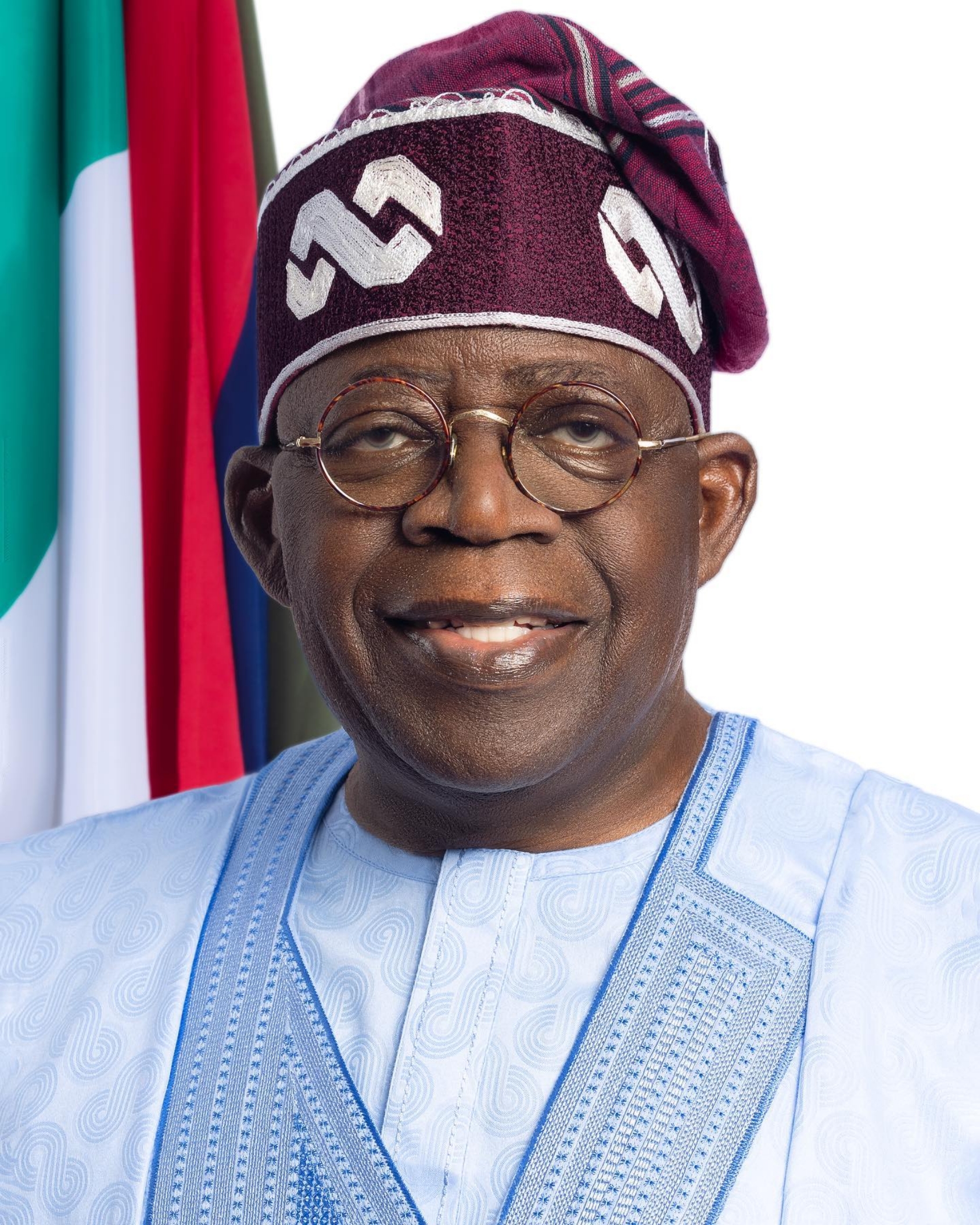
President Bola Tinubu has written the Senate, seeking the screening and subsequent confirmation of fifteen nominees to the National Human Rights Commission (NHRC).
The letter was read by the President of the Senate, Senator Godswill Akpabio.
The letter seeks the reconstitution of the commission’s board in line with statutory provisions with the list comprising nominees from diverse professional backgrounds, including the media and legal sectors.
Among the nominees are the President, Nigeria Guild of Editors and Editor, Vanguard Newspapers, Mr. Eze Anaba; and Dr. Salamatu Hussaina Suleiman, who has been proposed as chairman of the board.
The Executive Secretary of the Commission, Dr. Anthony Ojukwu (SAN) is to retain his position as the Chief Executive Officer.
Other nominees include Mrs Roseline Tasha, Ambassador Adam Yubak Baku, ACG Felix Lawrence, Mr. Edmund Chinonye, Mr. Chinonye Obiaku (SAN), Oluwakemi Asiwaju Okere-Odo, Professor Adedeji Ogunji, Kingsley Chidozie, Mohammed Adelodu, Maupe Ogun Yusuf, and Otunba Francis Meshioye as members.
Also nominated are Patience Patrick and Hawwa Ibrahim, listed as members.
The President said the nominations were made pursuant to Section 2(3) of the National Human Rights Commission (Establishment) Act, 2010, which empowers him to constitute the board subject to Senate confirmation.
He explained that the reconstitution of the board was necessary to enhance the commission’s institutional capacity and enable it to more effectively discharge its mandate to promote and protect human rights across the country.
If confirmed, the new board is expected to play a critical role in reinforcing the NHRC’s oversight functions, particularly at a time of heightened concerns over rights protection and accountability in Nigeria.
Following the presentation of the request, the Senate referred the nominations to its Committee on Judiciary, Human Rights and Legal Matters for screening and report within two weeks.

The Economic and Financial Crimes Commission, EFCC, has revealed that it investigated the founder of Streams of Joy International, Pastor Jerry Eze, for six months over suspected money laundering before clearing him.
Ola Olukoyede, chairman of the Commission, disclosed this on Wednesday while speaking at the Jerry Eze Foundation Business Grant Award Ceremony in Abuja.
According to him, the probe was triggered by intelligence reports and petitions after the commission observed large inflows of foreign currencies into the cleric’s domiciliary account.
“We work by intelligence, we work by petitions. At some point, I saw there was an account, a domiciliary account. Dollars, pounds were dropping in like raindrops, from Colombia, from America, from Sri Lanka, even from Togo.
“I said who is this man? Yes, I’ve been hearing about his name, I’ve seen his face a couple of times. I never bothered about what he was doing. I knew he was a pastor.
“So they said this one pastor of streams of joy, go and investigate him. So we went to the investigation. We combed the books,” Olukoyede stated.
The EFCC boss said he subsequently invited Eze for questioning after preliminary findings were compiled by investigators.
He added that upon meeting the cleric and reviewing the findings of the investigation, the commission found no wrongdoing.
“So he came to my office. He told me what happens and all of that, and how the money came, what he does, how he has been helping people, and all of that.
“I said, you know what, I didn’t call you here to explain to me. We have already done our work. I called you here to commend you,” he stated.
The remark drew applause from the audience, as Eze, who was present at the event, acknowledged the commendation.
He noted that the commission has a responsibility not only to investigate financial crimes but also to recognise individuals found to have acted with integrity.
The EFCC chairman, however, stated that the agency would continue to monitor financial activities where necessary, stressing that its preventive mandate remains critical in tackling corruption.
-

 News1 year ago
Senate to speed up conclusion of Nigeria Forest Security Service Bill
-
 News9 months ago
The Many Lies Against Bashir Haske
-

 News3 years ago
Breaking: Tinubu’s authentic ministerial nominees
-
 News3 years ago
“Anytime we want to kill terrorists, President would ask us to take permission from France but they were killing our soldiers-” Niger Republic coup leader
-
 News3 years ago
“I’m leaving the Catholic church because Bishop Onah is oppressing me,” says Okunerere
-

 News3 years ago
Radio Nigeria’s veteran broadcaster Kelvin Ugwu dies three months after retirement from service
-
 News3 years ago
Dokpesi and the Gazebo Mystique
-

 News3 years ago
Tsunami: Tinubu orders dissolution of managements, boards of MDAs, to sack all Buhari’s political appointees