
News
TInubu call DSS to order

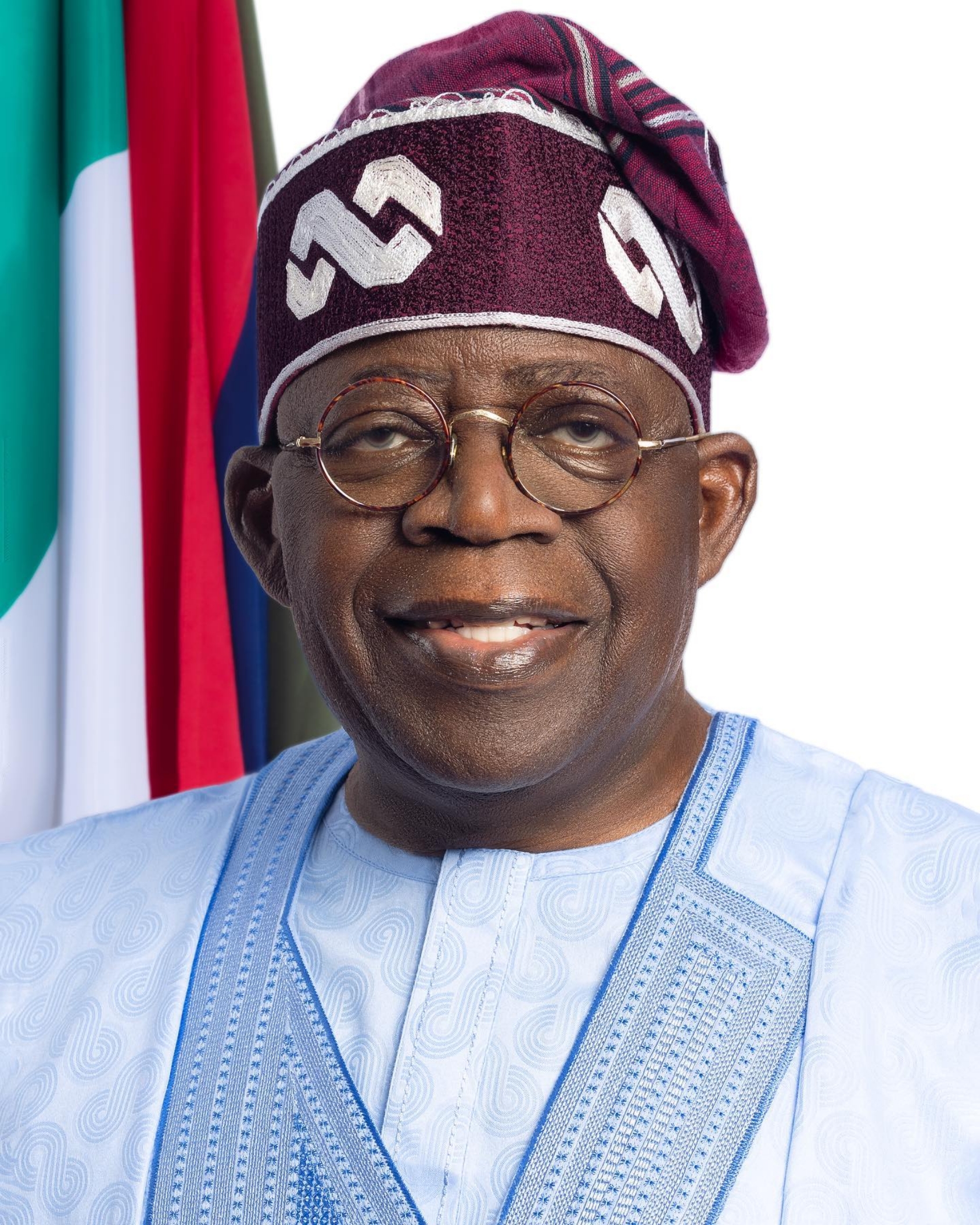
Daily Trust Editorial of Monday July 31, 2023
In his Democracy Day speech to Nigerians last month, then Speaker of the House of Representatives, Femi Gbajabiamila, now the top presidential aide, described President Bola Ahmed Tinubu as “a product of democracy” and “a thoroughbred democrat who is noted for his tenacious defence of democracy”.
We do not question the president’s claim to democratic credentials, but those credentials are now being put to test by the public behaviour of the Department of State Services (DSS), an agency that had its origins in Nigeria’s undemocratic past. How President Tinubu responds to the DSS’s increasingly erratic, and in several instances outrightly illegal behaviour towards Nigerian laws, sister agencies and citizens will go a long way in burnishing or tarnishing the President’s reputation as a democrat.
Unlike Tinubu, the DSS is not much known as a champion of democracy. Established near the twilight of military rule, the DSS was still an infant—scarcely a decade old—when Nigeria returned to democracy in 1999. By all reasonable expectations then, the agency should have matured along with democratic norms and practices. But few will credit the DSS with such a reputation. As late as last week, legal experts, civil society organizations and the media lambasted the DSS for yet more of its undemocratic practices, the litany of which, sadly, has by now become legion.
Not once but several times in the recent past, the DSS had laid siege on the National Assembly and barred members either from accessing their chambers, or from holding sessions. It has been on several occasions accused of interfering in election matters. Its men have clashed with those of other agencies, particularly the Police and the Armed Forces, sometimes at the real risk of agency-on-agency gun fights. The DSS has stormed or taken over buildings belonging to other government agencies, without legal warrants, in the name of conducting “investigations.”
And yet, as if in a bid to outdo its own undistinguished past, the DSS has literally run amok lately. We do not make this assertion lightly. First, we note, with concern that the DSS has conducted its activities more in the open and on the pages of newspapers than in the clandestine fashion required of an organization originally designed to be known only by its positive impact on internal security, but not to be seen or heard. This much was raised lately by many newspapers and civil society organizations in the country.
More worrisome still, the DSS has turned incompetent aggression into an operational method of sorts. In December, the Chief Judge of the Federal High Court, no less, declined, for lack of sufficient evidence, an application by the DSS to arrest and detain then Governor of the Central Bank, Mr Godwin Emefiele, in order to pursue further investigations into allegations of “terrorism financing and economic crimes” against him.
Two weeks ago, three separate judges ruled that the DSS should release Mr Emefiele or charge him to court after having detained him since 10th June. The DSS then proceeded to court, but rather than with charges for terrorism financing or other economic crimes, the agency charged Emefiele for illegal possession of firearms and , leaving Nigerians asking, ‘what took you so long if this was all you had?
Still, when a judge granted Emefiele bail for that, the DSS promptly re-arrested him for yet to be disclosed charges, never mind the public show of shame between the DSS operatives and officials of the Nigeria Correctional Service who, by law, should have custody of accused persons processing bail terms and conditions.
We are deeply concerned by how the DSS has conducted itself in public through all these proceedings. First, all of these point to incompetence for an agency that should do its homework about allegations it makes against citizens before going public with them. Otherwise, security agencies are known to secretly share classified information with legislators and judges when pursuing sensitive cases that cannot be publicly disclosed. If this be the case with Emefiele, all the DSS needs to do is to share evidence of its allegations with respective judges and pursue the case more competently in classified fashion, rather than turn itself into a laughing stock before the whole nation.
We are equally concerned because Nigeria currently faces internal security challenges from disparate collection of non-state actors, from insurgents in the Northeast, to violent secessionists in the Southeast, to bandits and organized criminals almost everywhere else.
These are the challenges the DSS should be best equipped to help the Nigerian State deal with as a secret Police outfit. But to do that requires credibility and public confidence of Nigerians, both of which are now being frittered away.
We, therefore, call on President Tinubu to call the DSS to order. A democrat must oversee institutions that are seen to be democratic.
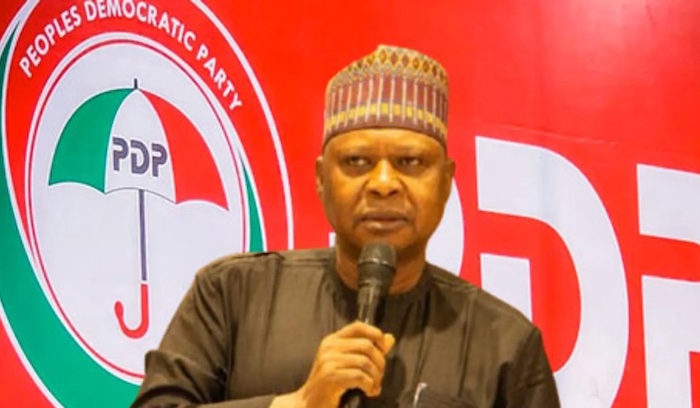
The Supreme Court has nullified the national convention of the Peoples Democratic Party (PDP) held in Ibadan, Oyo State, on November 15 and 16, 2025.
The convention had produced a factional national executive of the party led by Tanimu Turaki, SAN.
The apex court’s decision has now affirmed earlier judgments which held that the exercise was conducted in violation of subsisting court orders.
The Ibadan convention had been the subject of prolonged legal disputes before the Supreme Court’s verdict.
A Federal High Court had earlier restrained the PDP from going ahead with the convention, citing alleged breaches of the party’s constitution and failure to comply with due process.
The court also noted unresolved disputes from state congresses and the alleged exclusion of some aspirants from the process.
Despite the order, the convention went ahead, leading to further litigation. The Court of Appeal subsequently upheld the decision of the lower court.
It affirmed that the convention was held in violation of valid judicial pronouncements and that its outcome could not stand.
Dissatisfied with the concurrent judgments, the Turaki-led faction approached the Supreme Court, seeking to overturn the decisions and validate the convention as well as the executives it produced.
The Supreme Court’s decision to void the convention has effectively settled the legal dispute over the legitimacy of the factional leadership that emerged from the exercise.
….The Commission wants IGP to address use of excessive force by police
The Executive Secretary of the National Human Rights Commission (NHRC), Dr. Tony Ojukwu OFR, SAN, has strongly condemned the alleged extrajudicial killing of a 28-year-old Nigerian, Mene Ogidi, by a police officer, ASP Nuhu Usman, on April 26, 2026, in Efurun, Uvwie Local Government Area of Delta State.
In a statement issued in Abuja, Dr. Ojukwu described the incident as “deeply disturbing and a direct assault on human dignity, the Constitution of the Federal Republic of Nigeria, and the rule of law.”
He stressed that no Nigerian should lose their life at the hands of those sworn to protect them, reiterating that every life matters and must be protected.
According to him, “the reported action of the officer involved is condemnable, unacceptable, and completely inconsistent with the principles of justice and a civilized society.”
The statement which was signed by Hajia Fatimah Agwai Mohammed, Director, Corporate Affairs and External Linkages, quoted Ojukwu to have expressed grave concern over the recurring incidents of excessive use of force by law enforcement officers and called on the Nigeria Police Force to take urgent and decisive steps to address the issue.
He specifically urged the police authorities to subject officers deployed on special duties to periodic mental and psychological evaluations to ensure they are fit to carry arms and engage with civilians responsibly.
Dr. Ojukwu further called for the immediate disciplinary action against ASP Nuhu Usman in line with extant laws and police regulations.
He also emphasized the need for the Nigeria Police Force to fully implement the recommendations of the Commission’s Panel on Police Brutality as a necessary step toward meaningful reform and prevention of future violations.
“The Commission demands immediate arrest and a transparent investigation into the incident, dismissal of the officer involved, and swift prosecution in accordance with the law.
We hereby call for adequate compensation and justice for the family of the victim,” he stated.
He warned that justice delayed only deepens public distrust in state institutions and undermines confidence in law enforcement.
The Executive Secretary assured that the NHRC will continue to monitor the case closely and will persist in its advocacy for accountability, justice, and the protection of the fundamental rights of all Nigerians.
“Nigeria must never normalize brutality. Justice must speak louder than silence,” he concluded.

The Supreme Court of Nigeria will on Thursday, deliver judgments in two cases involving the leadership crises rocking the African Democratic Congress and the Peoples Democratic Party.
According to information on the official website of the court, the matters, listed under “Political Appeals”, have been added to the cause list for Thursday, April 30, 2026.
While judgment in the ADC matter, marked SC/CV/180/2026, has been fixed for 2 pm, there is no time yet for that if the PDP.
-

 News1 year ago
Senate to speed up conclusion of Nigeria Forest Security Service Bill
-

 News9 months ago
The Many Lies Against Bashir Haske
-

 News3 years ago
Breaking: Tinubu’s authentic ministerial nominees
-
 News3 years ago
“Anytime we want to kill terrorists, President would ask us to take permission from France but they were killing our soldiers-” Niger Republic coup leader
-
 News3 years ago
“I’m leaving the Catholic church because Bishop Onah is oppressing me,” says Okunerere
-

 News3 years ago
Radio Nigeria’s veteran broadcaster Kelvin Ugwu dies three months after retirement from service
-
 News3 years ago
Dokpesi and the Gazebo Mystique
-

 News3 years ago
Tsunami: Tinubu orders dissolution of managements, boards of MDAs, to sack all Buhari’s political appointees