
News
The Marabouts of Yahaya Bello

By Festus Adebayo
The enchanter recited the incantation with utmost fury: “River Niger and River Benue, the confluence is in Kogi State. Except say River Niger and River Benue no come meet for Kogi; if River Niger and River Benue come meet for Kogi, dem no go fit arrest Bello… Dem dey use EFCC pursue am, dem no go succeed o. Dem go lay siege for im house for Abuja… Except say I no be born of Igala kingdom… EFCC dey front, you dey back; you dey back, dem dey front; you dey left, dem dey right; you dey right, dem dey left; you dey centre, dem come there, you jump dem pass!…a lion cannot give birth to a goat…”
The repertoire is a typical exchange in African rituals. The target was the Economic and Financial Crimes Commission (EFCC), an organisation headed by Ola Olukoyede. Olukoyede is said to be a pastor in Enoch Adeboye’s RCCG. So, three men gather in a place that looks like a forest. Woven around the heads of two of them like a bandana is a white cloth. They crouch on their knees. The third, kneeling in the middle, carries a brown pot from which oozes a thick smoke. Libation ingredients are ready. They are a black cock, tortoise, a green bottle which ostensibly harbours in its bosom sacrificial liquor. The liquor is then sprinkled on the ground as libation. Two egg-like objects complete the ingredients of sacrifice. Either as an effigy or in person, the presence of the recipient of the ritual is always needed. His spirit needs to connect with the spirits.
So, a portrait of the man who gave himself the sobriquet of White Lion, Yahaya Bello, is procured for the libation process. He is dressed in all-white attire like the god, Obatala. Obatala is a Yoruba god of purity. Then the one who looks like the chief priest begins to render a monologue that is known in African ritual practice as incantation. It is similar to the allocutus lawyers enter into on behalf of their guilty client. The aim is for the de-escalation of the pursuit of Bello by the EFCC, his alleged theft of Kogi state’s N82 billion notwithstanding. Bello’s matter got escalated towards the end of the week when the EFCC chairman alleged that the ex-governor paid in advance, the sum of $845,852.84 to the Abuja school of his children. Bello has made a feeble attempt to denounce this from his hiding hole with the ill logic that it was paid with his hard-earned sweats. Why the rush to pay school fees till 2034 if where the money was got today would remain permanent?
Yahaya Bello and his apologists have been spurting out bunkum. They allege that the EFCC is hounding him. Let us assume they are right. First, it is shameful for a self-styled lion to hide inside a hole like a coyote, thereby eating stale food reserved for effeminate animals. Don’t they say that the leopard, and by extension, the lion, does not eat stale food? (Ekun kii je’ran ikasi). It is thus lawless of Yahaya Bello not to honour the anti-graft body’s lawful invitation. Bello’s eight-year reign was notorious for his naked stomping on the opposition’s human rights, running a government fittingly described as an orgy of violence. Why are executioners always afraid when swords are flung in their faces
His is reminiscent of the story of an executioner in the Old Oyo Kingdom whose speciality was in decapitating his victims with relish. Upon courting the ire of the Alaafin and being sentenced to death, the ex-executioner suddenly became jittery. When the man about to decapitate him began to do the traditional acrobatics pre-cutting off of his head, jittery, the ex-executioner’s voice shaky, he asked what part of his body would be cut off, “My head or feet?” Celebratory townsmen who had gathered to witness his comeuppance were angered and demanded rhetorically what part of his victims’ bodies he relished in cutting off during his reign of terror.
Anthropologists in the pre-colonial era of the 20th century studying witchcraft were shocked. They had earlier submitted that occult practices would die with modernisation and urbanisation. However, in the last two decades, modernity seems to have lost the battle in Africa. The miserable and insecure nature of everyday life has made African politicians go two steps backwards. Rather than the Gods of Christianity and Islam which they inherited from the colonisers, they have gone back to ancient practices preceding the incursion of Arab and European lords. Now, the patronage of priests, priestesses of divinities, herbalists, sorcerers and occults is key to the resolution of political dilemmas. Politicians use charms, amulets, rings, belts, rituals, and incantations for the attainment of political goals. Whether it was a skit or reality, that viral video of enchanters seeking Yahaya Bello to be set free typifies the usual scene in power relations in Africa. In the bid to attain, sustain or vend off irritants in political power struggles, there is widespread evidence confirming that many Africans today strongly hold on to beliefs that they got from traditional cosmologies. These have now constituted the core of their everyday lives. The Kenyan Mau Mau revolt is said to have been fought with African magical powers.
Magical and ritual practices are pervasive in power relations in Nigeria. This affirms that when complicated issues and challenges of life confront Nigerian politicians, they quickly run to their traditions and origins. This equally demonstrates the ease with which they momentarily throw away their Christian and Islamic cloaks to hold on to the utilitarian purpose that magic and sorcery serve them. Late University of Leiden scholar, Stephen Ellis, in a 2001 article, “Mystical Efforts: Some evidence from the Liberian war” (Journal of Religion in Africa, XXX1, 2) described how young fighters in the Liberian war, sporting amulets which assumably made them bullet-proof, filled the streets with corpses. Monrovians were shocked at how the soldiers “(disembowelled) the bodies of their victims and (eat) their flesh or internal organs, particularly the heart.” The art of eating a human heart is borne of a residue of practices in Africa. The belief is that a person’s essence is contained in the heart and the blood. So, once the hearts and blood of these warriors are eaten and drunk, “the one who had just eaten them acquires some of the power formerly possessed by his victim.”
Wherever Bello is at the moment, no one needs to be told that he is engrossed with one or a combination of three elements in the bid to confront the coercive power of the Nigerian state. In the tragedy that is Yahaya Bello, these three elements must be making gross harvests from his calamity. They are, on the one hand, the religious combine made up of Pastors, Alfas and African indigenous religious rituals and magic. The second is, lawyers scrambling to profit from what they perceive as the loot from Kogi. Some shameless ones gathered in court last week to protest against the EFCC. The third is bloggers/journalists who by now must have offered to defreeze adversarial comments against him on traditional and social media platforms.
As guest speaker at a two-day education summit held in Port Harcourt, Rivers state in 2013, Nobel Laureate, Prof. Wole Soyinka, waded into the now popular syncretic practices among Nigerian leaders. His particular beef was with Nigerian leaders’ dependence on consultation of marabouts and prophets to acquire and sustain political power. “Give me the name of any head of state who has not been consulting marabouts and prophets and so on, sacrificing goats, animals in the dead of night to receive a third term in office and so on,” he said. The veiled reference was to Olusegun Obasanjo. Marabouts have become notorious for the incestuous relationship between politics and religion in northern Nigeria. They are traditionally Muslim religious leaders and teachers who functioned historically as chaplains serving in the Islamic army of North Africa, the Sahara, and the Maghreb.
Soyinka was right. After the Gideon Orkar volley of bullets on the Dodan Barracks seat of power had subsided, it occurred to General Ibrahim Babangida that kinetic power alone could not guarantee his safety in power. IBB was reported to have consulted marabouts from Senegal who promptly buried live cows in Aso Rock to guarantee his fortification. The same went for General Sani Abacha who reportedly imported seasoned marabouts to spiritually guard Aso Rock. Bowels of the four corners of Abuja reportedly opened up their wombs and swallowed countless cows in sacrifice. Marabouts from Cameroun were also said to have assured the then Vice President Atiku Abubakar that Olusegun Obasanjo would not have a second term, thus exacerbating the animosity between the president and his vice.
Spiritism is not strictly a Nigerian phenomenon in power relations. In political in-fighting among political elites, the belief is that, once the elites gain access to the spiritual world, they have clinched the needed vital resource in the constant struggle to secure an advantage over their political rivals. Communication with the spirit world, the use of sacrifices and protective objects, and divinations were potent means of achieving this. For instance, in Senegal, marabouts or Islamic holy men who belong to Sufi brotherhoods, wield such phenomenal influence that made them a source of political influence for decades. When Zimbabwe was fighting its war of liberation, the advice offered by mediums, believed to be possessed by spirits of ancestors, constituted a major requirement for anyone who sought the people’s political support.
President Felix Houphouet-Boigny was an example. A devout Catholic, he was said to have privately resorted to African mediums. Mobutu Sese Seko of Zaire also ran a government of elite conspiracy of witches where marabouts were consulted at every point for the enhancement of political power.
For very many other African heads of state, clerics and known spiritualists were their advisors. Kenneth Kaunda was top among them. As president of Zambia, he had an Indian, Dr Ranganathan, as a consultant on power matters. So also did President Mathieu Kerekou of Benin. He had a Malian marabout called Mohamed Amadou Cisse, also known as ‘Djine’ or ‘the Devil’ as his spiritual advisor. Cisse once publicly espoused the Devil. He was hitherto advisor to some other African leaders like Mobutu and Omar Bongo of Gabon. Kerekou later appointed Cisse minister of state whose responsibility in the Beninese government was secret services. President Didier Ratsiraka of Madagascar too had a palace that boasted an extravagant temple dedicated to the Rosicrucian god. So also did Paul Biya of Cameroon and Joaquim Chissano of Mozambique, both of whom were followers of Transcendental Meditation.
Marabouts, herbalists, sorcerers and occult chiefs of the Yahaya Bellos of this world and other African leaders become repositories of highly confidential state information. These are in the process of spiritual interventions for the captive leaders. Feckless and desperate in the bid to attain and cling to power, they divulge details of innermost governmental secrets to them. A 1998-published journal article written by Stephen Ellis and Gerrie ter Haar with the title, “Religion and Politics in Sub-Saharan Africa” (The Journal of Modern African Studies, Vol. 36, No. 2, pp. 175-201) discusses how leading marabouts have pre-knowledge of coups and other secrets of power. Amadou Cisse, for instance, knew virtually all the secrets of power in Benin. So did another marabout, Amadou Oumarou ‘Bonkano’, who was appointed chief of the national intelligence service. Having known details of President Seyni Kountche of Niger’s operations, Oumarou attempted a coup against Kountche, his patron and employer.
At a random and conservative estimate, 90% of Nigerian politicians, aside from the Christianity and Islam that they profess in broad daylight, patronise priests, herbalists, sorcerers and occults. They probably have discovered that the immediacy of execution that these African deities possess cannot be found in the Western God. Again, I tend to submit that the rash of theft of public money among them is borne out of the presumed fortification they are promised by African deity priests and priestesses. They offer human beings as sacrifices in the process. Unknown to them, they kill the proverbial hunchback, Abuke Osin, the favourite servant of the Obatala god, in the process of acquiring these powers. Unjustly shed blood fights back.
According to a renowned living archive of Yoruba traditional institution, Yemi Elebuibon, in his The Adventures of Obatala: Ifa and Santeria God of creativity, (2016) the hunchback was one of the faithful servants of Obatala who he sent on errands. Having become rich due to his generosity to the Abuke Osin, Tortoise, Alabahun the fabled trickster, envied Ojugbe, his neighbour. Impressed by his generosity to the hunchback, Obatala chanted some incantations which deposited precious beads, gold and other ornaments inside the carapace-like chest of the hunchback. So when Ojugbe rubbed the hunchback’s chest, he became stupendously wealthy. Stingy and unable to compete with Ojugbe-kind generosity, Tortoise lured Abuke Osin into his house and forcefully rubbed his chest which refused to emit money. He then killed this servant of Obatala and incurred the wrath of the god.
The moment the Nigerian state allows Yahaya Bello, for whatever reason, to escape the wrath of the law, its last lever of strength will snap off. Whoever kills the Abuke Osin should pay dearly for it.

The Supreme Court of Nigeria will on Thursday, deliver judgments in two cases involving the leadership crises rocking the African Democratic Congress and the Peoples Democratic Party.
According to information on the official website of the court, the matters, listed under “Political Appeals”, have been added to the cause list for Thursday, April 30, 2026.
While judgment in the ADC matter, marked SC/CV/180/2026, has been fixed for 2 pm, there is no time yet for that if the PDP.
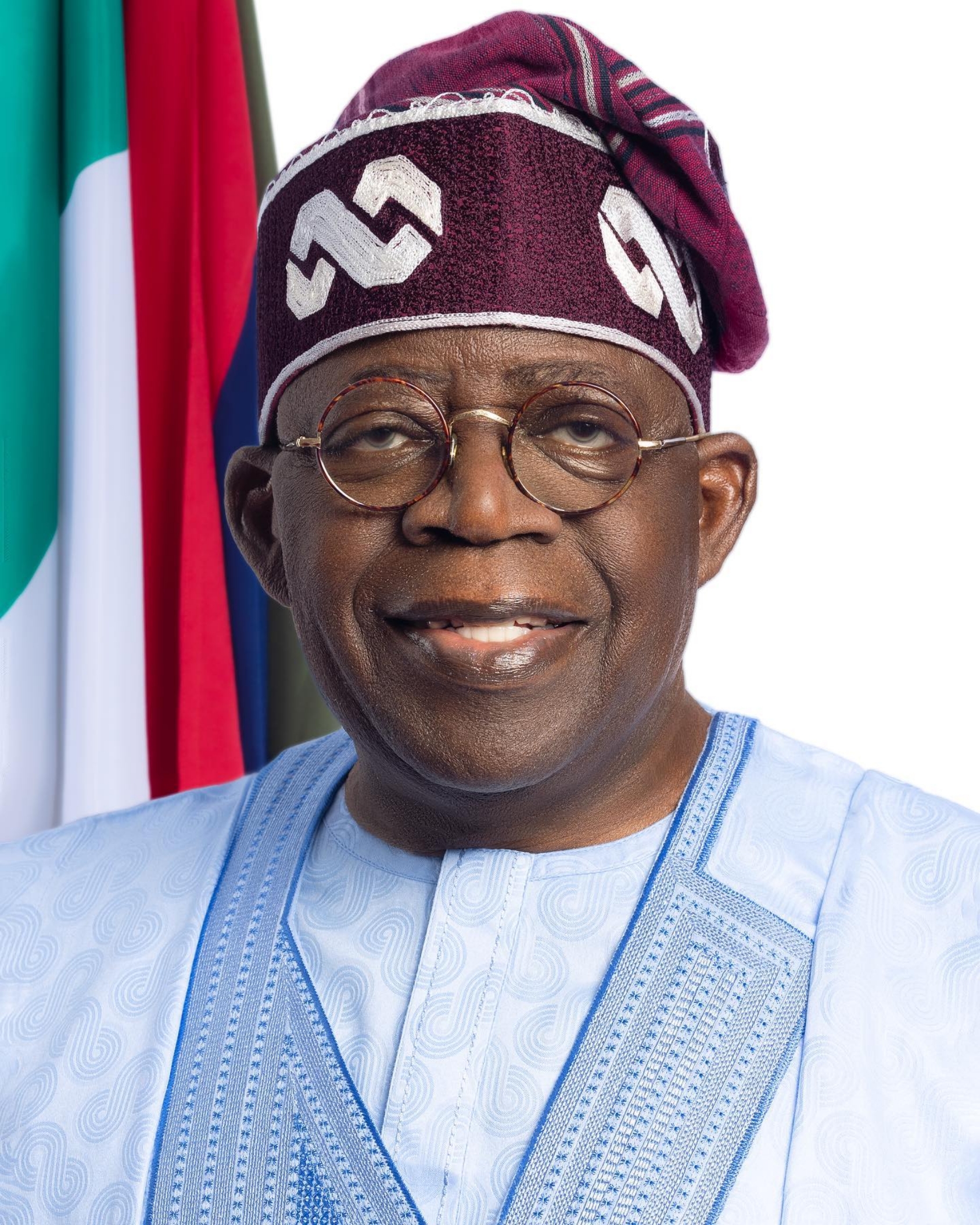
President Bola Tinubu has written the Senate, seeking the screening and subsequent confirmation of fifteen nominees to the National Human Rights Commission (NHRC).
The letter was read by the President of the Senate, Senator Godswill Akpabio.
The letter seeks the reconstitution of the commission’s board in line with statutory provisions with the list comprising nominees from diverse professional backgrounds, including the media and legal sectors.
Among the nominees are the President, Nigeria Guild of Editors and Editor, Vanguard Newspapers, Mr. Eze Anaba; and Dr. Salamatu Hussaina Suleiman, who has been proposed as chairman of the board.
The Executive Secretary of the Commission, Dr. Anthony Ojukwu (SAN) is to retain his position as the Chief Executive Officer.
Other nominees include Mrs Roseline Tasha, Ambassador Adam Yubak Baku, ACG Felix Lawrence, Mr. Edmund Chinonye, Mr. Chinonye Obiaku (SAN), Oluwakemi Asiwaju Okere-Odo, Professor Adedeji Ogunji, Kingsley Chidozie, Mohammed Adelodu, Maupe Ogun Yusuf, and Otunba Francis Meshioye as members.
Also nominated are Patience Patrick and Hawwa Ibrahim, listed as members.
The President said the nominations were made pursuant to Section 2(3) of the National Human Rights Commission (Establishment) Act, 2010, which empowers him to constitute the board subject to Senate confirmation.
He explained that the reconstitution of the board was necessary to enhance the commission’s institutional capacity and enable it to more effectively discharge its mandate to promote and protect human rights across the country.
If confirmed, the new board is expected to play a critical role in reinforcing the NHRC’s oversight functions, particularly at a time of heightened concerns over rights protection and accountability in Nigeria.
Following the presentation of the request, the Senate referred the nominations to its Committee on Judiciary, Human Rights and Legal Matters for screening and report within two weeks.

The Economic and Financial Crimes Commission, EFCC, has revealed that it investigated the founder of Streams of Joy International, Pastor Jerry Eze, for six months over suspected money laundering before clearing him.
Ola Olukoyede, chairman of the Commission, disclosed this on Wednesday while speaking at the Jerry Eze Foundation Business Grant Award Ceremony in Abuja.
According to him, the probe was triggered by intelligence reports and petitions after the commission observed large inflows of foreign currencies into the cleric’s domiciliary account.
“We work by intelligence, we work by petitions. At some point, I saw there was an account, a domiciliary account. Dollars, pounds were dropping in like raindrops, from Colombia, from America, from Sri Lanka, even from Togo.
“I said who is this man? Yes, I’ve been hearing about his name, I’ve seen his face a couple of times. I never bothered about what he was doing. I knew he was a pastor.
“So they said this one pastor of streams of joy, go and investigate him. So we went to the investigation. We combed the books,” Olukoyede stated.
The EFCC boss said he subsequently invited Eze for questioning after preliminary findings were compiled by investigators.
He added that upon meeting the cleric and reviewing the findings of the investigation, the commission found no wrongdoing.
“So he came to my office. He told me what happens and all of that, and how the money came, what he does, how he has been helping people, and all of that.
“I said, you know what, I didn’t call you here to explain to me. We have already done our work. I called you here to commend you,” he stated.
The remark drew applause from the audience, as Eze, who was present at the event, acknowledged the commendation.
He noted that the commission has a responsibility not only to investigate financial crimes but also to recognise individuals found to have acted with integrity.
The EFCC chairman, however, stated that the agency would continue to monitor financial activities where necessary, stressing that its preventive mandate remains critical in tackling corruption.
-

 News1 year ago
Senate to speed up conclusion of Nigeria Forest Security Service Bill
-
 News9 months ago
The Many Lies Against Bashir Haske
-

 News3 years ago
Breaking: Tinubu’s authentic ministerial nominees
-
 News3 years ago
“Anytime we want to kill terrorists, President would ask us to take permission from France but they were killing our soldiers-” Niger Republic coup leader
-
 News3 years ago
“I’m leaving the Catholic church because Bishop Onah is oppressing me,” says Okunerere
-

 News3 years ago
Radio Nigeria’s veteran broadcaster Kelvin Ugwu dies three months after retirement from service
-
 News3 years ago
Dokpesi and the Gazebo Mystique
-

 News3 years ago
Tsunami: Tinubu orders dissolution of managements, boards of MDAs, to sack all Buhari’s political appointees