
News
See list of opposition presidential candidates that met Ganduje and begged Tinubu for appointment


The National Chairman of the ruling All Progressives Congress, APC, Dr. Abdullahi Umar Ganduje, on Thursday received some opposition candidates who participated in the 2023 presidential election in his office at the APC secretariat in Abuja.
The candidates who paid a courtesy visit to the APC National Chairman were reported to have made an appeal to President Bola Tinubu to consider them for appointment in his government of unity.
The candidates, under the aegis of Forum of Concerned Presidential Candidates, comprised the presidential candidate of Action Peoples Party, Charles Nnadi; his counterpart in National Rescue Movement, Felix Osakwe; All Progressives Grand Alliance flag bearer, Prof Peter Umeadi, Action Democratic Party Vice Presidential Candidate, Dr Odey Udo and the leader of the team, Adewale Adeogun.
In his speech, Osakwe disclosed that they are not known to practice politics with bitterness, stressing that it was evident by their refusal to jump on the bandwagon of candidates dragging the president to the Presidential Election Petition Tribunal in the wake of the poll result.
The NRM candidate demanded they be drafted into the campaign councils for the November 11 elections in Imo, Bayelsa and Kogi States, stressing that they are willing to offer their services to the president in the spirit of inclusive politics.
He said, “I feel Mr. chairman you will be the right person to lead us to meet with Mr. President. So that we can air our own views in his presence and also to let him know that it is not all the presidential candidates that were against him. We chose not to go to court because this is Nigeria. We are here to thank you and God.
“The former presidential candidates are willing to offer our services to this country. We have a demand and it is for the party, that a slot in the campaign council for the Governorship elections should be made available to us. Those of us that have piloted this, we held a meeting. And we are asked to demand from you a presence in the campaign Council. We believed that our job is much more wanted now as we prepare to go into the polls in the three states in November.
“I am to submit two names to the chairman. And we believe by your power and by the special grace of God, it shall be done with your help. We will do our best to make sure that the three states that are going for the polls succeed. And with what we have been doing, we are going to mobilise our parties in those states for your party.”
In his response, Ganduje applauded the team for putting for supporting the president’s ideology of inclusive politics and government of national unity.
The APC national chairman also reassured the delegation that he will present their demand to the president.
The former Kano governor also threw a jab at an undisclosed presidential candidate, who he claimed hijacked his party, which he subsequently converted to a revenue generation platform.
“I will convey your request and ensure that you see Mr President eye to eye. I thank you for being faithful to your respective parties. You are not like one political aspirant who became a presidential candidate by accident and by hijacking another party because he was partyless. He could not give account accordingly to INEC because it cannot qualify it to be a political party. He decided to hijack a political party. And since, he could not realise his aspirations he decided to make that party a revenue platform rather than a political party.
“He has now decided to even expel the founder. God forbids. He will not succeed. But I salute you presidential candidates for being good ambassadors of your own political parties, not destroyers of your own political parties and for not turning your political parties to your source of revenue. Since you cannot get the presidential tickets, you will get pocket ticket. I thank you. No doubt we will include you in the three states that we are having elections come November this year,” Ganduje reassured the delegation.

The Supreme Court of Nigeria will on Thursday, deliver judgments in two cases involving the leadership crises rocking the African Democratic Congress and the Peoples Democratic Party.
According to information on the official website of the court, the matters, listed under “Political Appeals”, have been added to the cause list for Thursday, April 30, 2026.
While judgment in the ADC matter, marked SC/CV/180/2026, has been fixed for 2 pm, there is no time yet for that if the PDP.
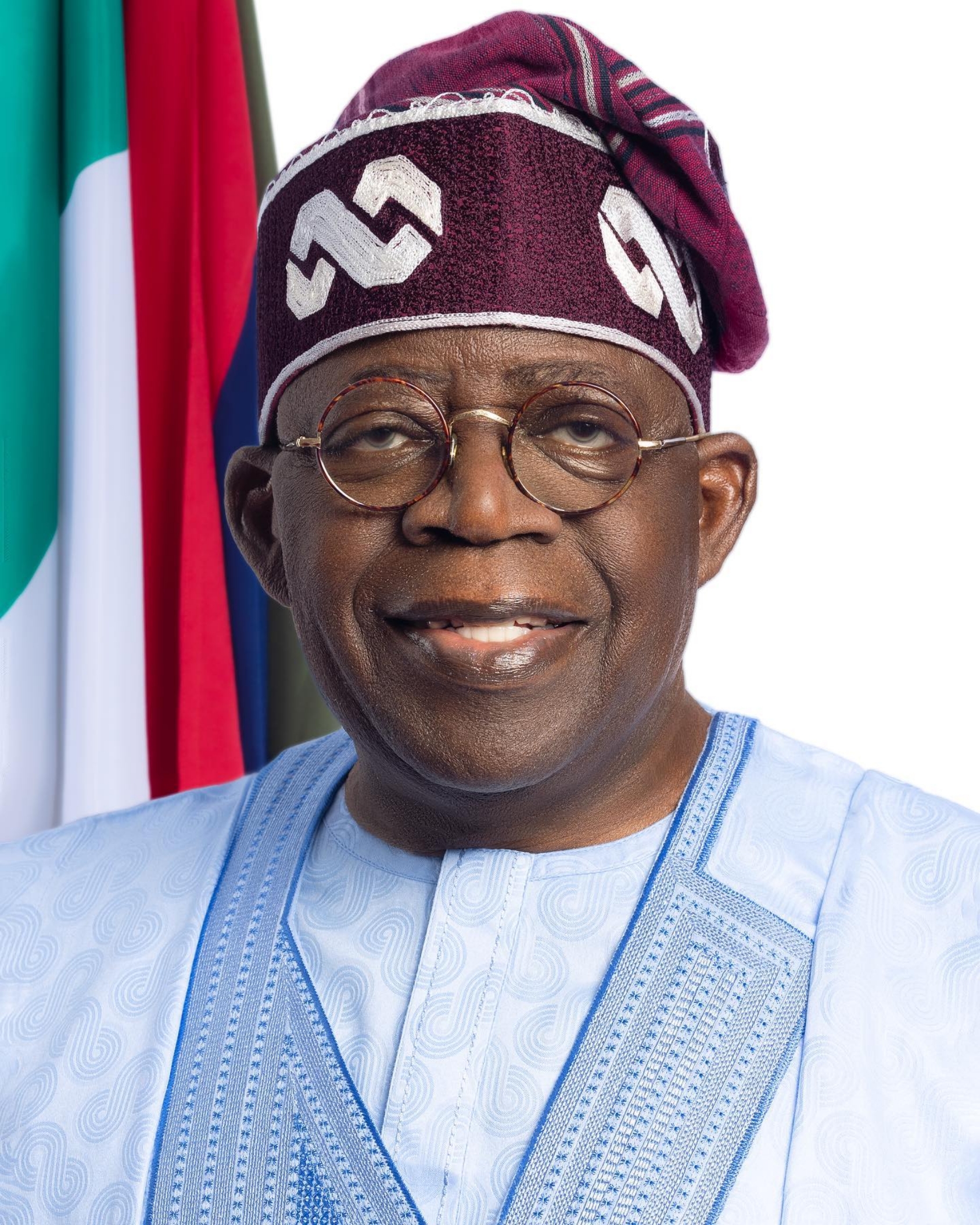
President Bola Tinubu has written the Senate, seeking the screening and subsequent confirmation of fifteen nominees to the National Human Rights Commission (NHRC).
The letter was read by the President of the Senate, Senator Godswill Akpabio.
The letter seeks the reconstitution of the commission’s board in line with statutory provisions with the list comprising nominees from diverse professional backgrounds, including the media and legal sectors.
Among the nominees are the President, Nigeria Guild of Editors and Editor, Vanguard Newspapers, Mr. Eze Anaba; and Dr. Salamatu Hussaina Suleiman, who has been proposed as chairman of the board.
The Executive Secretary of the Commission, Dr. Anthony Ojukwu (SAN) is to retain his position as the Chief Executive Officer.
Other nominees include Mrs Roseline Tasha, Ambassador Adam Yubak Baku, ACG Felix Lawrence, Mr. Edmund Chinonye, Mr. Chinonye Obiaku (SAN), Oluwakemi Asiwaju Okere-Odo, Professor Adedeji Ogunji, Kingsley Chidozie, Mohammed Adelodu, Maupe Ogun Yusuf, and Otunba Francis Meshioye as members.
Also nominated are Patience Patrick and Hawwa Ibrahim, listed as members.
The President said the nominations were made pursuant to Section 2(3) of the National Human Rights Commission (Establishment) Act, 2010, which empowers him to constitute the board subject to Senate confirmation.
He explained that the reconstitution of the board was necessary to enhance the commission’s institutional capacity and enable it to more effectively discharge its mandate to promote and protect human rights across the country.
If confirmed, the new board is expected to play a critical role in reinforcing the NHRC’s oversight functions, particularly at a time of heightened concerns over rights protection and accountability in Nigeria.
Following the presentation of the request, the Senate referred the nominations to its Committee on Judiciary, Human Rights and Legal Matters for screening and report within two weeks.

The Economic and Financial Crimes Commission, EFCC, has revealed that it investigated the founder of Streams of Joy International, Pastor Jerry Eze, for six months over suspected money laundering before clearing him.
Ola Olukoyede, chairman of the Commission, disclosed this on Wednesday while speaking at the Jerry Eze Foundation Business Grant Award Ceremony in Abuja.
According to him, the probe was triggered by intelligence reports and petitions after the commission observed large inflows of foreign currencies into the cleric’s domiciliary account.
“We work by intelligence, we work by petitions. At some point, I saw there was an account, a domiciliary account. Dollars, pounds were dropping in like raindrops, from Colombia, from America, from Sri Lanka, even from Togo.
“I said who is this man? Yes, I’ve been hearing about his name, I’ve seen his face a couple of times. I never bothered about what he was doing. I knew he was a pastor.
“So they said this one pastor of streams of joy, go and investigate him. So we went to the investigation. We combed the books,” Olukoyede stated.
The EFCC boss said he subsequently invited Eze for questioning after preliminary findings were compiled by investigators.
He added that upon meeting the cleric and reviewing the findings of the investigation, the commission found no wrongdoing.
“So he came to my office. He told me what happens and all of that, and how the money came, what he does, how he has been helping people, and all of that.
“I said, you know what, I didn’t call you here to explain to me. We have already done our work. I called you here to commend you,” he stated.
The remark drew applause from the audience, as Eze, who was present at the event, acknowledged the commendation.
He noted that the commission has a responsibility not only to investigate financial crimes but also to recognise individuals found to have acted with integrity.
The EFCC chairman, however, stated that the agency would continue to monitor financial activities where necessary, stressing that its preventive mandate remains critical in tackling corruption.
-

 News1 year ago
Senate to speed up conclusion of Nigeria Forest Security Service Bill
-
 News9 months ago
The Many Lies Against Bashir Haske
-

 News3 years ago
Breaking: Tinubu’s authentic ministerial nominees
-
 News3 years ago
“Anytime we want to kill terrorists, President would ask us to take permission from France but they were killing our soldiers-” Niger Republic coup leader
-
 News3 years ago
“I’m leaving the Catholic church because Bishop Onah is oppressing me,” says Okunerere
-

 News3 years ago
Radio Nigeria’s veteran broadcaster Kelvin Ugwu dies three months after retirement from service
-
 News3 years ago
Dokpesi and the Gazebo Mystique
-

 News3 years ago
Tsunami: Tinubu orders dissolution of managements, boards of MDAs, to sack all Buhari’s political appointees