
News
Reps Speaker Abbas assures improved financing for NHRC in 2025


The House of Representatives has commended the leadership of the National Human Rights Commission, NHRC, for the quality work it is doing to protect the rights of Nigerian citizens and others living in the country.
The Speaker, Hon. Tajudeen Abbas, made the commendation on Tuesday in Abuja, while declaring open Legislative Forum on Human Rights, convened by the NHRC, as part of activities commemorating the 2024 International Human Rights Day.
Abbas said the House would ensure improved funding for the Commission in 2025 and going forward, to ensure it continued to discharge its constitutional obligations.
The Speaker who was represented at the event by the Majority Leader of the House, Prof Julius Ihonbvere said National Assembly will ensure that the Commission’s financial and operational autonomy, is achieved to enable it fulfil its mandate more effectively.
He stated that the National Assembly has consistently demonstrated its commitment to advancing human rights through legislative action, adding that significant achievement has been made in the sustained efforts to place the Commission on first-line charge of the Consolidated Revenue Fund.
He said- “This year’s event reminds us of the historic moment on 10th December 1948, when the United Nations General Assembly adopted the Universal Declaration of Human Rights, a milestone document affirming the equal and inalienable rights of all individuals.
“The theme for this year’s celebration, “Our Rights, Our Future, Right Now,” is both timely and compelling. It serves as a clarion call for immediate and sustained action to advance human rights in Nigeria and underscores the critical role of rights in shaping a secure and prosperous future for all citizens. This theme challenges us to move beyond aspirations and commit to practical steps that translate the promise of rights into tangible improvements in the lives of Nigerians.
“As we reflect on this theme, it is essential to acknowledge the strides we have made in advancing human rights while confronting the challenges that persist. Nigeria’s constitutional guarantees and international commitments establish a strong framework for protecting the dignity and freedoms of all citizens. However, translating these commitments into reality requires addressing issues such as gender-based violence, police accountability, discrimination, and threats to freedom of expression.
“These challenges, exacerbated by insecurity, systemic poverty, and weak enforcement mechanisms, present opportunities for growth and reform. We must strengthen our institutions, enhance enforcement capabilities, and foster trust between the government and the people. By doing so, we can build a nation where human rights are respected and protected as the bedrock of our democracy.
“Insecurity remains a significant obstacle to human rights in Nigeria. From insurgency and banditry to the marginalisation of vulnerable groups in conflict zones, the impact on individuals and communities is profound. Addressing these issues requires holistic legislative and institutional responses that prioritise accountability, justice, and the welfare of the most affected.
“Parliament is the cornerstone of democracy and a critical actor in the promotion and protection of human rights. Through our legislative, oversight, and representative roles, we ensure that the laws we pass uphold fundamental freedoms and that institutions tasked with safeguarding these freedoms are effective and accountable.
“By securing its independence, we are empowering the NHRC to address human rights violations with the responsiveness and integrity Nigerians expect.
“The 9th Assembly also laid an important foundation for the promotion of human rights through the enactment of the Police Act 2020. This landmark legislation requires the Nigerian Police Force to uphold and protect fundamental rights as enshrined in our Constitution, the African Charter on Human and Peoples’ Rights, and other international instruments. Among its key provisions, the Act mandates that every police division have a qualified legal practitioner to ensure compliance with human rights standards. This measure underscores our collective resolve to embed respect for human rights into the operational framework of law enforcement agencies.
“Building on these achievements, the 10th House of Representatives is working to further institutionalise accountability within the security sector. A notable effort is the consideration of amendments to the Armed Forces Act to establish a Human Rights Ombudsman. This initiative seeks to create a structured mechanism for addressing human rights violations within the military, ensuring that justice and accountability remain central to the operations of our armed forces.
“Through the work of its committees, particularly the House Committee on Human Rights and the Public Petitions Committee, the National Assembly continues to address pressing human rights concerns. These committees provide platforms for redress and oversight, ensuring that citizens have accessible mechanisms to seek justice when their rights are infringed. For example, the Public Petitions Committee is currently deliberating on over 70 cases of alleged human rights violations, highlighting its critical role in upholding accountability and justice.
“The NHRC remains at the forefront of human rights advocacy in Nigeria. However, its effectiveness is hindered by resource limitations, including the need for independently owned state offices, expanded headquarters facilities, and operational vehicles across all states and the FCT. The National Assembly is committed to providing the necessary support to ensure that the Commission can meet the growing expectations of Nigerians.
“Education is a powerful tool for fostering a culture of respect for dignity and equality. We must integrate human rights education into school curricula and public enlightenment campaigns to equip citizens with an understanding of their rights and responsibilities. This will not only empower individuals but also foster empathy, civic responsibility, and social cohesion.
“Such initiatives are critical for rebuilding trust between citizens and the government. When institutions are strong, and citizens are well-informed, the prevalence of human rights abuses diminishes, creating a stable and harmonious society.
The House Speaker charged Nigerians to recommit themselves to the collective endeavour of building a Nigeria where every citizen lives with dignity, free from fear and oppression.
Earlier in his welcome address,the NHRC Executive Secretary,Dr.Tony Ojukwu urged stakeholders to join the Commission in its quest to uphold rights of every citizens in Nigeria.He commended members of the National Assembly, civil society groups and the media for the unalloyed support to the commission.
Also in his goodwill message,the Chairman, House Committee on Human Rights,Hon Dr.Abiola P.Makinde, who was represented by his Deputy, Hon.Mudashir Lukman assured that House of Representatives will work towards increasing the budget allocation for the commission in the 2025 Budget.
The Chairman, Senate Committee on Judiciary, Human Rights, and Legal Matters,Senator Adeniyi Adegbomire said the Nigeria Senate and National Assembly will work on legislation,make necessary amendments to ensure that NHRC live to the expectation of Nigerians.He therefore assured that 2025 budget wlll cater for financial challenges being faced by the commission.
There were goodwill messages from other members of the 10th National Assembly, State legislators, NHRC partners and civil society groups.
National Legislative Forum serves as a platform to bridge the gap between legislators, civil society, and human rights defenders. It aims to foster dialogue, collaboration, and actionable strategies to promote and protect fundamental human rights in Nigeria.

The Attorney General of the Federation and Minister of Justice, has urged the Federal High Court in Abuja to compel the Independent National Electoral Commission (INEC) to deregister five political parties, arguing that their continued existence violates constitutional provisions and undermines Nigeria’s electoral integrity.
In court filings, the Attorney General contended that unless the court intervenes, INEC would “continue to act in breach of its constitutional duty” by retaining parties that have failed to meet the minimum requirements prescribed by law.
The filing stressed that the right to associate as a political party is not absolute and must be exercised within constitutional limits. It further argued that it is in the interest of justice for the court to grant the reliefs sought by the plaintiffs.
The suit, marked FHC/ABJ/CS/2637/2026 and filed at the Abuja Judicial Division of the Federal High Court, lists the Incorporated Trustees of the National Forum of Former Legislators as the plaintiff.
The defendants include INEC as the first defendant and the Attorney General of the Federation as the second defendant, alongside five political parties: African Democratic Congress (ADC), Action Alliance (AA), Action Peoples Party (APP), Accord (A), and Zenith Labour Party (ZLP).
At the center of the issue in the case is whether INEC has a constitutional obligation to remove parties that fail to meet electoral performance thresholds set out in Section 225A of the 1999 Constitution (as amended) and reinforced by the Electoral Act 2022 and INEC’s own regulations.
The plaintiffs argue that the affected parties have persistently failed to satisfy the constitutional benchmarks required to retain their registration. These include winning at least 25 per cent of votes in a state during a presidential election or securing at least one elective seat at the national, state or local government level.
They contend that the parties performed poorly in the 2023 general elections and subsequent by-elections, failing to win seats across key tiers of government, yet continue to be recognised by INEC as eligible political platforms.
The plaintiffs maintain that this continued recognition is unlawful and undermines the integrity of Nigeria’s electoral system.
In the affidavit supporting the suit, the forum’s national coordinator, Igbokwe Raphael Nnanna, states that allowing parties that have not met constitutional requirements to remain on the register “is unconstitutional, illegal and a violation” of the governing legal framework.
The suit asks the court to declare that INEC is duty-bound to deregister such parties and to compel the commission to do so before preparations for the 2027 elections advance further.
Beyond declaratory reliefs, the plaintiffs are also seeking far-reaching orders that would bar the affected parties from participating in the next general elections or engaging in political activities such as campaigns, rallies and primaries. They further request injunctions restraining INEC from recognising or dealing with the parties in any official capacity unless and until they comply strictly with constitutional provisions.
Central to the plaintiffs’ argument is their interpretation of the law as imposing a mandatory duty on INEC. They argue that the use of the word “shall” in the Constitution leaves no room for discretion once a party fails to meet the stipulated thresholds.
In their written address, they rely on statutory provisions and judicial precedents to contend that electoral performance is an objective condition that must be enforced to maintain discipline, transparency, and accountability in the political system.
Attorney General backs plaintiff
In a notice filed pursuant to Order 15 Rule 1 of the Federal High Court (Civil Procedure) Rules, 2019, the Attorney General, who is a defendant in the suit, formally admitted the plaintiff’s case to the extent of his constitutional responsibilities.
He maintained that, as the chief law officer of the federation, he is duty-bound to defend and uphold the Constitution, including ensuring compliance with the Electoral Act and other laws governing elections in Nigeria.
The filing emphasised that the Attorney General’s role extends beyond litigation to preventive oversight, ensuring that laws are faithfully implemented to maintain public confidence in the electoral process. It described the case as a public interest litigation aimed at safeguarding democratic integrity and promoting constitutional observance.
According to the document, the Attorney General argued that citizens, including the plaintiff group, have the right to challenge constitutional breaches, particularly where electoral processes are concerned. He added that supporting such litigation aligns with his dual role as both a defender of the state and an advocate for citizens’ rights.
The submission also highlighted the broader implications of non-compliance by political parties. It argued that the continued existence of parties that fail to meet constitutional thresholds contributes to ballot congestion, increases the cost of election administration, and undermines the intent of Section 225A of the 1999 Constitution (as amended), which empowers INEC to deregister underperforming parties.
The plaintiff further contended that INEC has no residual discretion to retain parties that do not satisfy the constitutional criteria, insisting that failure to deregister them constitutes a continuing breach of constitutional duty. The suit warned that such inaction could be challenged through public interest litigation, as is the case before the court.
Additionally, the filing noted that the plaintiff, comprising former legislators, possesses the requisite standing to institute the action, having been directly involved in the enactment and oversight of Nigeria’s constitutional and electoral framework.
The Attorney General also underscored the importance of access to justice, arguing that his support for the suit would help bridge gaps faced by citizens seeking to enforce constitutional rights. He maintained that collaboration between government institutions and civic actors is essential to strengthening legal literacy, accountability, and democratic participation.
The Attorney General of the Federation is represented in the suit by a team of lawyers led by Prof. J. O. Olatoke, SAN, alongside O. J. David, U. O. Olufadi, D. O. Bamidele, V. D. Maiye, Waheed Abdulraheem and A. K. Abdulmumin, all of whom signed the court filing before the Federal High Court in Abuja.
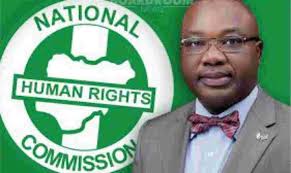
….The Commission wants IGP to address use of excessive force by police
The Executive Secretary of the National Human Rights Commission (NHRC), Dr. Tony Ojukwu OFR, SAN, has strongly condemned the alleged extrajudicial killing of a 28-year-old Nigerian, Mene Ogidi, by a police officer, ASP Nuhu Usman, on April 26, 2026, in Efurun, Uvwie Local Government Area of Delta State.
In a statement issued in Abuja, Dr. Ojukwu described the incident as “deeply disturbing and a direct assault on human dignity, the Constitution of the Federal Republic of Nigeria, and the rule of law.”
He stressed that no Nigerian should lose their life at the hands of those sworn to protect them, reiterating that every life matters and must be protected.
According to him, “the reported action of the officer involved is condemnable, unacceptable, and completely inconsistent with the principles of justice and a civilized society.”
The statement which was signed by Hajia Fatimah Agwai Mohammed, Director, Corporate Affairs and External Linkages, quoted Ojukwu to have expressed grave concern over the recurring incidents of excessive use of force by law enforcement officers and called on the Nigeria Police Force to take urgent and decisive steps to address the issue.
He specifically urged the police authorities to subject officers deployed on special duties to periodic mental and psychological evaluations to ensure they are fit to carry arms and engage with civilians responsibly.
Dr. Ojukwu further called for the immediate disciplinary action against ASP Nuhu Usman in line with extant laws and police regulations.
He also emphasized the need for the Nigeria Police Force to fully implement the recommendations of the Commission’s Panel on Police Brutality as a necessary step toward meaningful reform and prevention of future violations.
“The Commission demands immediate arrest and a transparent investigation into the incident, dismissal of the officer involved, and swift prosecution in accordance with the law.
We hereby call for adequate compensation and justice for the family of the victim,” he stated.
He warned that justice delayed only deepens public distrust in state institutions and undermines confidence in law enforcement.
The Executive Secretary assured that the NHRC will continue to monitor the case closely and will persist in its advocacy for accountability, justice, and the protection of the fundamental rights of all Nigerians.
“Nigeria must never normalize brutality. Justice must speak louder than silence,” he concluded.

The Supreme Court of Nigeria will on Thursday, deliver judgments in two cases involving the leadership crises rocking the African Democratic Congress and the Peoples Democratic Party.
According to information on the official website of the court, the matters, listed under “Political Appeals”, have been added to the cause list for Thursday, April 30, 2026.
While judgment in the ADC matter, marked SC/CV/180/2026, has been fixed for 2 pm, there is no time yet for that if the PDP.
-

 News1 year ago
Senate to speed up conclusion of Nigeria Forest Security Service Bill
-
 News9 months ago
The Many Lies Against Bashir Haske
-

 News3 years ago
Breaking: Tinubu’s authentic ministerial nominees
-
 News3 years ago
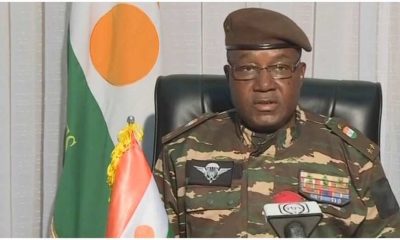
“Anytime we want to kill terrorists, President would ask us to take permission from France but they were killing our soldiers-” Niger Republic coup leader
-
 News3 years ago
“I’m leaving the Catholic church because Bishop Onah is oppressing me,” says Okunerere
-

 News3 years ago
Radio Nigeria’s veteran broadcaster Kelvin Ugwu dies three months after retirement from service
-
 News3 years ago
Dokpesi and the Gazebo Mystique
-

 News3 years ago
Tsunami: Tinubu orders dissolution of managements, boards of MDAs, to sack all Buhari’s political appointees