
News
Prof. Chukwuma Soludo writes on “Nigeria’s Evolving Federalism and the Search for Sustainable Local Government Administration”


The Anambra State House of Assembly passed two progressive legislations pursuant to its powers under the Constitution (Anambra State Economic Planning and Development Law, 2024; and Anambra State Local Government Administration Law, 2024), and I have signed them into law. This has generated commentaries and debates especially in relation to their consistency or inconsistency with the recent Supreme Court judgement and the mantra of “local government autonomy.” My media team, other members of my government as well as well meaning Nigerians have vigorously defended these progressive laws and that should suffice. At this moment in Nigeria, being a state governor is not a fanciful job, especially given the gamut of allegations and innuendoes levelled against governors vis-a-vis local government funds. In the circumstance, any comment by me would be construed as self defence. However, I have a citizen duty to clarify and contribute to the discourse—especially as one who has been extensively involved in the debate and search for a more perfect union.
At the outset, let me make an important disclosure. I am a federalist and a proponent of competitive federalism for a multi-ethnic, multi-religious, vast country as Nigeria. From my limited knowledge, I do not know any federation (except perhaps some variants in Brazil) where a uniform local government system is provided for in a federal constitution or where the local government is treated as a de-facto federating unit. I understand that the issue of appropriate local government system was vigorously debated by the framers of the 1999 Constitution and a compromise was to insert Sections 7 Constitution which, among others, empowers each State through its House of Assembly to make laws which provide “for the establishment, structure, composition, finance, and functions…” of the local governments. Pioneered by Lagos State about 2004 several states have various laws pursuant to these Constitutional powers. The composition or structure of local governments in Lagos or Ebonyi state is certainly different from Anambra.
Also, the debate as to whether local governments should be part of the federal constitution or left to each federating unit (state) to determine its own appropriate local government system is still an unsettled matter. The APC committee on restructuring Nigeria proposed scrapping the local government from the Constitution of Nigeria. As the former chairman of planning and strategy committee of Ohanaeze Ndigbo Worldwide, I know that the published position of Ndigbo in 2018 was that local governments be scrapped from the Constitution and let each state/region determine the type of local administration that suits it. Similar positions have been argued by Afenifere, PANDEF, Middle Belt Forum, etc. This is an issue for another day.
In the context of our evolving federalism, I see the recent Supreme Court judgment regarding the direct transfer of funds belonging to the local governments as an important contribution to our search for effective and transparent administration of resources at the local level. I see the judgment as an opportunity for public good. Given the Constitutional mandate for joint planning between the State and local government, I see the judgment as an opportunity for greater transparency and predictability regarding the sources and uses of funds, as well as greater coordination and collaboration between the State and local government. If there was any state where the State-Local Government Joint Accounts Committee did not manage the LG funds transparently, the Supreme court judgment is an opportunity and mandate to do it differently by further empowering the LG administration.
But there is more work to be done. We all need to think through how the funds transferred to the LGs should be appropriated, spent, or accounted for. Monies meant for the federal or state governments are not spent by the president or governors. The National Assembly and State Assemblies make appropriation laws on how and by whom the monies should be spent and provide oversight functions. What happens to the monies directly sent to the LGs? Who spends the monies, on what and how will they be accounted for?
This is where Section 7 of the Constitution comes handy, and the Anambra State House of Assembly has risen to the occasion. Happily, the Supreme Court did not nullify Section 7 of the Constitution. The new laws by Anambra House of Assembly are therefore consequential to give operational life to the Supreme Court judgment and not to undermine it. If the State House of Assembly abdicates this constitutional duty, the Local Government will then have no law on the use and management of its finance which the Constitution has given the State House of Assembly (and only the House of Assembly) the mandate to legislate on. Indeed, in many states the House of Assemblies retain the power to suspend or remove chairpersons of local governments.
By the way, isn’t the legislative authority exercised by the State Assemblies under Section 7 of the Constitution similar to the powers granted by the Constitution to the National Assembly over the Federal Capital Territory and its Area Councils? I understand that the Senate President had recently at one of the Plenary Sessions rhetorically asked if it was indeed possible to grant the kind of “autonomy” some people talk about without major amendments to the Constitution. Many Nigerians ask the same question. I also understand that the Senate recently resolved to begin the process of Constitutional amendment in this regard. This is a welcome development. But until that is done, our laws pursuant to the Constitution and designed to give operational effect to the Supreme Court judgment remain subsisting and valid.
A critical instrument for muddling through our evolving federation and delivering higher efficiency and effectiveness in development is through structured collaboration among the tiers of government. No tier of government enjoys absolute autonomy. For example, the FGN has exclusive right over solid minerals, but the States have exclusive right over the land. Only a collaborative framework will maximize benefits from natural resources. Currently, there is a collaborative funding for the security agencies. The States and LGs contribute tens of billions monthly and deducted directly from FAAC every month towards the funding of the armed forces which are exclusively under the FGN. At the state levels, each state is spending a fortune of its own revenues on logistics and operational costs for the federal security agencies. The FGN, States and LGs are jointly paying for the FGN initiative on metering, etc. The states understand the above “emergency measures” as part of the collaborative arrangements to make Nigeria work better. A federal agency, the Debt Management Office (DMO) must clear any state government seeking to borrow from domestic financial system, while the National Assembly must approve States’ external borrowing. The federal UBEC insists on counterpart funding by states before it can release federal funds for basic education and also supervises the utilization of the contributions by states. There is a dozen or more areas of oversight of federal agencies over State finances. The above illustrations are simply to make the point that no tier of government can function in absolute autarky without collaboration with others. Given the functions assigned to the LGs by the8 Constitution, it is impossible to see how they can perform them without active collaboration with State governments. Because the Constitution did not envisage “absolute autonomy” for the Local Governments, it gave the State House of Assembly powers to make laws for them and equally did not create a Local Government Judiciary distinct from the State Judiciary.
The two legislations passed by the progressive Anambra House of Assembly seek to achieve three objectives: consistency with the Constitution and judgment of the Supreme Court; enhanced transparency and productive collaboration; and promotion of sustainable finance, democracy, and development at the local government. The laws seek to codify the collaborative arrangements to promote transparency and accountability. We seek to avoid ad-hoc or arbitrary arrangements—- building to last! The good news is that the eminent jurists at the Supreme Court did not outlaw collaboration and cooperation among the LGs in funding joint or common services, nor did they nullify Section 7 of the Constitution. What the new laws simply require is that ALL the chairmen/mayors of the local governments, meeting under the aegis of the State Economic Planning Board (similar to the National Economic Council) decide what percentage of their revenues to contribute to a Joint Local Government Account to pay for common/pooled services such as: (a) payment of salaries, allowances, gratuities and pensions of workers and retirees under the Local Government Service Commission; (b) provision and maintenance of primary, adult and vocational education including all salaries, allowances, gratuities and pensions payable in that regard; (c) provision and maintenance of primary health services including all salaries, allowances, gratuities and pensions payable in that regard; (d) payment of allowances to traditional rulers and Presidents-General of the communities; (e) Subventions to the Local Government Service Commission; and even for community security.
What many people do not know is that the Constitution puts primary education and primary health care under the local governments. Many also do not know that primary school teachers are pooled under the UBEC—Universal Basic Education Commission. Workers in all the LGs are also pooled staff under the Local government service commission. Ditto for primary health workers. Absolute autonomy would mean that each LG would have its own primary education policy, employ its own teachers, and pay them whatever it can afford and whenever it can do so, etc. Now that Anambra has free education for primary and secondary education in all public schools, some LGs may decide that they cannot afford it. It might even get to a point where some LGs might ask “non-indigenes” who are workers in the LGs or teachers in primary schools to “go home” to their LGs of origin due to budgetary or other constraints.
Indeed, absolute autonomy of LGs would mean that institutions that pool resources and workers would be scrapped including the Local Government Service Commission, Local Government Pension Board, the Anambra State Universal Basic Education Board (ASUBEB), the Primary Health Care Agency, etc. Does it mean that the federal UBEC or Federal Ministry of Health would have to deal with each of the 774 LGs in respect of primary education or primary health care instead of coordinated through the State UBEC or state primary health care agency? This would be a recipe for humongous chaos, not only for the administration of local government and pensions, but more so in the primary education and primary health sectors. My administration inherited 4 years arrears of gratuity which we have been clearing systematically. How do you share the outstanding balance among the LGs or pay pensions to over 15,000 LG retirees who served the LGs as a pool without pooling of funds? Some years ago, some LGs rejected teachers posted to their LGs because it would jack up their wage bill.
Yes, our nascent federation is evolving but some of us as practitioners are determined to make it work for the people while we have the opportunity. I believe in building enduring institutions, especially ones founded upon due process, transparency, and rule of law. People remind me that many of the institutional reforms we established at the CBN still endure. Since assumption of office as Governor 30 months ago, we have devoted a lot of efforts in reforming and strengthening institutions, including the local government administration. Today, Anambra State under my watch is ranked number 1 among the 36 states on fiscal transparency by BudgIT, and among the top five states on financial sustainability. We inherited a local government system with four-year arrears (2018-2022) of gratuity to retired primary school teachers and other staff of local government. We have restructured their finances back to sustainability. Everyone who retired from the local government and State civil service since my tenure is paid gratuity/pension, and we are on course to clear the outstanding arrears soon. Three years’ arrears on counterpart funding for Universal Basic Education Commission (UBEC) has been cleared, resulting in billions of Naira recently invested in our primary schools. Some 326 primary health centres are being constructed or modernized in all the 326 wards in the state as well as employing hundreds of medical personnel to man the primary health centres. Most of the local government secretariats have been remodelled and equipped, and the LG system is once again alive. This is not to mention that 3,615 out of the 8,115 new teachers recruited under my administration are for primary schools and they are being paid. We do not want to go back!
So, the laws are designed to protect our gains so far and strengthen the system for the future consistent with the Constitution and laws. I always remind myself that I am a bird of passage, and eventually, I will leave office. But we must build to last— for the next generations. More specifically, the new laws are designed to protect our workers at the local level and protect our primary education and primary health care from chaos and collapse. Many teachers and pensioners wrote me to passionately plead that they do not want the agony of the 1990s–2003 when some primary school teachers in some LGs were paid and others owed salaries. I just read a report that the organized labour (particularly the Nigerian Union of Local Government Employees, NULGE; Nigerian Union of Teachers, NUT; and Nigerian Union of Pensioners) were urging the FGN not to transfer workers/teachers salaries to the local government in the name of “local government autonomy”. No law protects the workers against nonpayment of salaries or pensions by governments. In Anambra we want to ensure that we do not wake up and hear that some LGs paid salaries of primary school teachers and others did not or that some pensioners are paid and others not, or that some contribute towards UBEC counterpart-funding while others do not. The laws seek to create a framework to ensure that the basic functions mandated by the Constitution for the local governments are discharged as a matter of first-line charge or the irreducible minimum. With these laws, workers, and retirees from the local government system in Anambra (primary school teachers, primary health workers, workers in the local government system under the local government service commission) can sleep with their two eyes closed. The LGs and State government can also collaborate in the security of the communities, just as the States and FGN collaborate in funding even the federal security agencies.
It is equally important to understand that the Constitution mandated this collaboration between the States and Local Governments when in its section 7 (3), it provides that “it shall be duty of a local government council within the State to participate in economic planning and development of the area referred to in sub section 2 of this section and to this end, an economic planning board shall be established by a Law enacted by the House of Assembly of the State”. This provision gave rise to the establishment of the Anambra State Economic Planning Board of which all the local government chairpersons are members and who, among other things, decide on the percentage to be contributed to the Local Government Joint Account. It is important to appreciate that this money is not handed over to the State but remains with the Local Governments under a joint pool for the discharge of certain services by the local governments which services are uniform/common among the local governments as stated earlier.
In sum, the laws ensure that the State can function in a cohesively planned, transparent and sustainable manner to maximize the security and welfare of the citizens. They constitute a very smart solution to a possible systemic threat.
Governors are often accused of seeking to “control” LG funds with insinuations that LG funds are mismanaged. Of course, in a society where public office is seen as “dinning table” and public trust is low, people judge others by their own standards: by what they would do if they were in the position. I often ask: control for what? While I cannot hold brief for every governor, I know that most states are struggling to ensure a solvent local government system. I wish I can be spared the headache, if not for the predictable collateral damage to the system if we abdicate from structured oversight and collective accountability. The challenge ahead can be daunting given the quantum rise in wage bills because of the new minimum wage, as well as consequential rise in future pension/gratuity payments. Without active collaboration and coordination between state and local governments, many LGs will end up in a huge financial mess, requiring bailouts by state governments or will FGN directly intervene in every case of insolvency among the 774 LGs?
In conclusion, the progressive legislations by the State Assembly are designed to unleash the creative powers of the LGs, encourage peer learning, optimal development outcomes in planning and execution among the LGs, as well as novel accountability and transparency. The laws are ingenious by creating multiple layers of collaborative oversight whereby the LGs agree on monies to set aside and managed collectively by them for common services or first-line charges, while the rest is appropriated by the Congress of Councillors in each LG. In an innovative sense, the legislative powers – including powers of appropriation and oversight now largely reside with the local government legislature—Congress of Councillors, which is empowered to make bye-laws, which are in the nature of regulations, for the Local Governments (as it is the House of Assembly that is empowered by the Constitution to enact laws to guide the Local Governments).
Since neither the Constitution nor the Supreme Court judgment prescribes the manner of appropriation, expenditure, and audit/accountability for local government funds, the House of Assembly and the Congress of Councillors fill in the blanks under the new laws pursuant to Section 7 of the Constitution. The evolution of our federalism is a work-in-progress, and the new Anambra laws constitute creative and progressive additions to institution-building. May the Federal Republic of Nigeria continue to win.
Soludo is the Governor of Anambra State, Nigeria

The Supreme Court of Nigeria will on Thursday, deliver judgments in two cases involving the leadership crises rocking the African Democratic Congress and the Peoples Democratic Party.
According to information on the official website of the court, the matters, listed under “Political Appeals”, have been added to the cause list for Thursday, April 30, 2026.
While judgment in the ADC matter, marked SC/CV/180/2026, has been fixed for 2 pm, there is no time yet for that if the PDP.
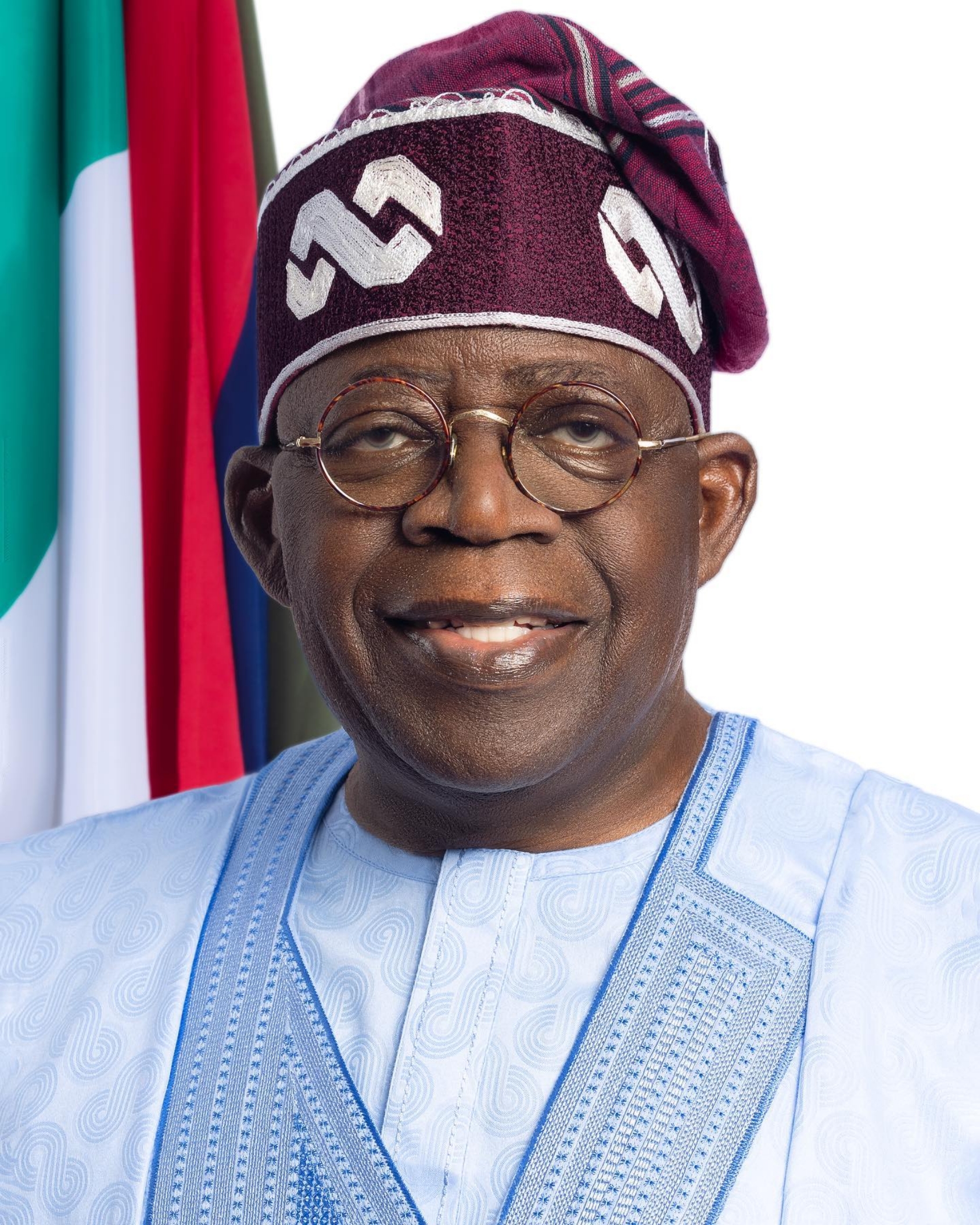
President Bola Tinubu has written the Senate, seeking the screening and subsequent confirmation of fifteen nominees to the National Human Rights Commission (NHRC).
The letter was read by the President of the Senate, Senator Godswill Akpabio.
The letter seeks the reconstitution of the commission’s board in line with statutory provisions with the list comprising nominees from diverse professional backgrounds, including the media and legal sectors.
Among the nominees are the President, Nigeria Guild of Editors and Editor, Vanguard Newspapers, Mr. Eze Anaba; and Dr. Salamatu Hussaina Suleiman, who has been proposed as chairman of the board.
The Executive Secretary of the Commission, Dr. Anthony Ojukwu (SAN) is to retain his position as the Chief Executive Officer.
Other nominees include Mrs Roseline Tasha, Ambassador Adam Yubak Baku, ACG Felix Lawrence, Mr. Edmund Chinonye, Mr. Chinonye Obiaku (SAN), Oluwakemi Asiwaju Okere-Odo, Professor Adedeji Ogunji, Kingsley Chidozie, Mohammed Adelodu, Maupe Ogun Yusuf, and Otunba Francis Meshioye as members.
Also nominated are Patience Patrick and Hawwa Ibrahim, listed as members.
The President said the nominations were made pursuant to Section 2(3) of the National Human Rights Commission (Establishment) Act, 2010, which empowers him to constitute the board subject to Senate confirmation.
He explained that the reconstitution of the board was necessary to enhance the commission’s institutional capacity and enable it to more effectively discharge its mandate to promote and protect human rights across the country.
If confirmed, the new board is expected to play a critical role in reinforcing the NHRC’s oversight functions, particularly at a time of heightened concerns over rights protection and accountability in Nigeria.
Following the presentation of the request, the Senate referred the nominations to its Committee on Judiciary, Human Rights and Legal Matters for screening and report within two weeks.

The Economic and Financial Crimes Commission, EFCC, has revealed that it investigated the founder of Streams of Joy International, Pastor Jerry Eze, for six months over suspected money laundering before clearing him.
Ola Olukoyede, chairman of the Commission, disclosed this on Wednesday while speaking at the Jerry Eze Foundation Business Grant Award Ceremony in Abuja.
According to him, the probe was triggered by intelligence reports and petitions after the commission observed large inflows of foreign currencies into the cleric’s domiciliary account.
“We work by intelligence, we work by petitions. At some point, I saw there was an account, a domiciliary account. Dollars, pounds were dropping in like raindrops, from Colombia, from America, from Sri Lanka, even from Togo.
“I said who is this man? Yes, I’ve been hearing about his name, I’ve seen his face a couple of times. I never bothered about what he was doing. I knew he was a pastor.
“So they said this one pastor of streams of joy, go and investigate him. So we went to the investigation. We combed the books,” Olukoyede stated.
The EFCC boss said he subsequently invited Eze for questioning after preliminary findings were compiled by investigators.
He added that upon meeting the cleric and reviewing the findings of the investigation, the commission found no wrongdoing.
“So he came to my office. He told me what happens and all of that, and how the money came, what he does, how he has been helping people, and all of that.
“I said, you know what, I didn’t call you here to explain to me. We have already done our work. I called you here to commend you,” he stated.
The remark drew applause from the audience, as Eze, who was present at the event, acknowledged the commendation.
He noted that the commission has a responsibility not only to investigate financial crimes but also to recognise individuals found to have acted with integrity.
The EFCC chairman, however, stated that the agency would continue to monitor financial activities where necessary, stressing that its preventive mandate remains critical in tackling corruption.
-

 News1 year ago
Senate to speed up conclusion of Nigeria Forest Security Service Bill
-

 News9 months ago
The Many Lies Against Bashir Haske
-

 News3 years ago
Breaking: Tinubu’s authentic ministerial nominees
-
 News3 years ago
“Anytime we want to kill terrorists, President would ask us to take permission from France but they were killing our soldiers-” Niger Republic coup leader
-

 News3 years ago
“I’m leaving the Catholic church because Bishop Onah is oppressing me,” says Okunerere
-

 News3 years ago
Radio Nigeria’s veteran broadcaster Kelvin Ugwu dies three months after retirement from service
-
 News3 years ago
Dokpesi and the Gazebo Mystique
-

 News3 years ago
Tsunami: Tinubu orders dissolution of managements, boards of MDAs, to sack all Buhari’s political appointees