
News
Over 200,000 terrorists surrender in Nigeria as military go after informants, block logistics supply

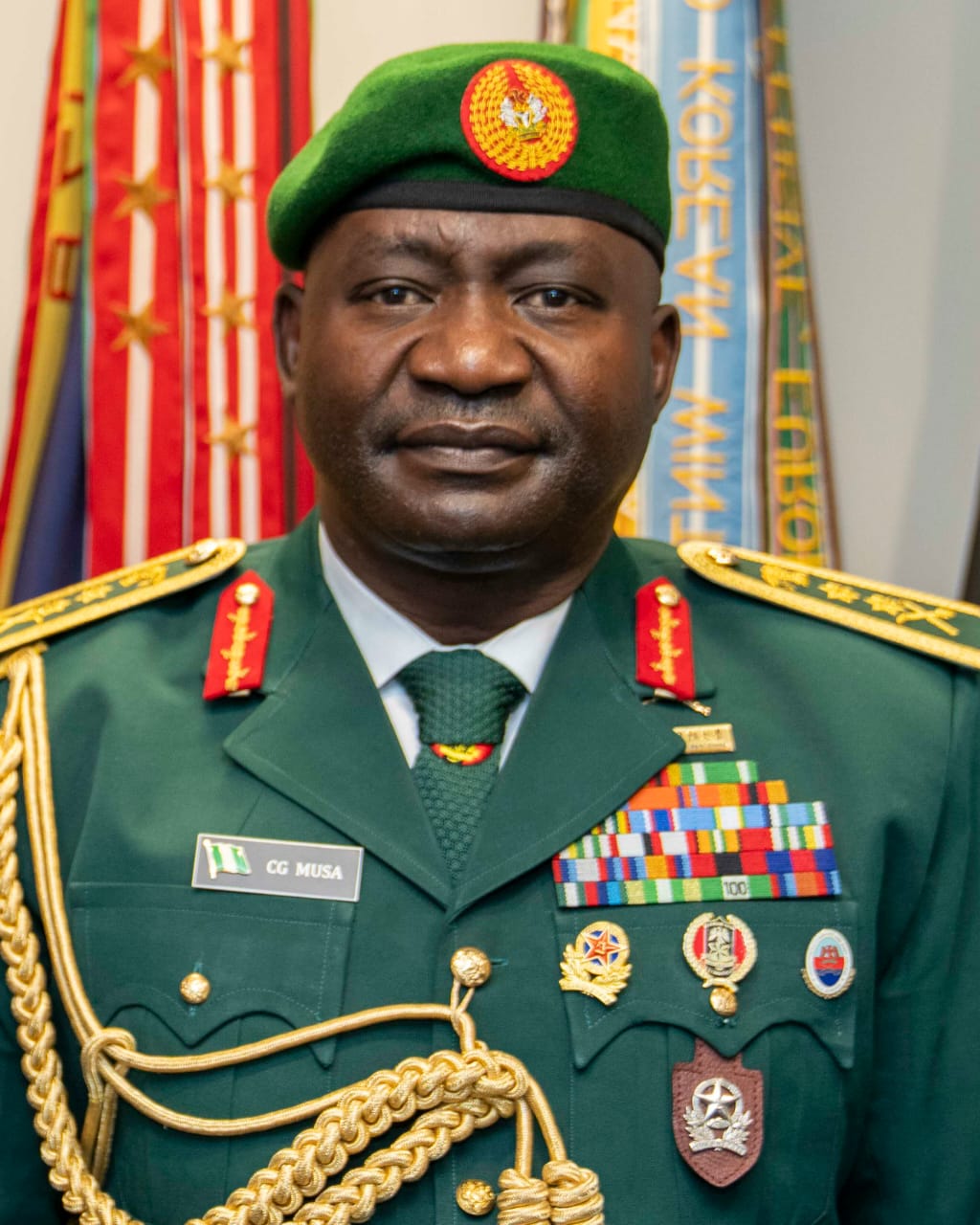
General Christopher Musa, Nigeria’s Chief of Defence Staff, on Tuesday, said going after terrorists’ informants and logistics supply has resulted in almost 200,000 insurgents surrendering to the military.
He described informants, funding and logistics supply as the lifeblood of insurgency, saying that if they were effectively tackled, terrorism would be defeated.
Speaking at a two-day Security and Justice Symposium organised by the National Counter-terrorism Centre, Musa specifically described informants and logistics supplies to terrorists as oxygen to terrorism that must be cut off to end the menace.
“You have to be creative to fight this insurgency, because they are not relenting,” he said. “The issue of informants; we have to look at how we tackle this issue of informants. Because these are the people who have created the issue; those supporting the terrorists by giving them logistics, we have to look for the oxygen.
“Where is the funding? How are they getting the logistics across? As the theatre commander in the North-East, we found out that if we can deny them this logistics, this oxygen, they will not survive. We did that, and that’s why you have almost 200,000 that have surrendered.
“So, I think if we replicate that all over, we will have very good results. It is also very important that we work together as a team. All security agencies.”
The CDS said the country’s security challenges could better be addressed by ensuring that every citizen had a sense of belonging, adding that the use of Improvised Explosives Devices by terrorists remained a major challenge in the counter-insurgency war.
He said, “All the challenges we are facing today have to do with justice, securing peace, ensuring justice, protection, conduct, and accountability. There will not be peace if there is no fairness, equity, and justice anywhere in any society.
“For us in the Armed Forces during our operations, the challenges we are facing, IEDs. IEDs have been the major challenge since the beginning of the insurgency. So we are looking at aspects of how we handle this, what solutions, and what new things we can do.”
Musa also said to win the war the military must be sensitised and communicate with the citizens.
He said, “We cannot do it alone without the public. So the citizens must be sensitised, and that comes about the issue of strategic communication.
“I have observed that with asymmetrical challenges we are facing if you don’t communicate, you might be doing the right thing, but the perception might be different. And the enemy is working on that. So it’s important that we get that part.
“And we cannot work in isolation as a country. We need our international partners working together with us. Our neighbours are also very relevant to us.”
The National Security Adviser, Nuhu Ribadu, said the symposium was a vital platform for dialogue and collaboration among security and justice institutions with the objective “to delve into the successes, challenges, and opportunities for growth within the realms of security and justice.”
According to the NSA, the symposium provided an avenue to review and map existing frameworks, evaluate institutional practices, establish collaborative mechanisms, and chart a course towards a safer and more just society for all.
Ribadu said, “As we embark on this journey of critical analysis and discussion, let us keep in mind the noble goals set before us, from analysing and strengthening the intricate relationship between military operations and law enforcement to enhancing the protection of civilians (very important) and fostering a culture of justice and accountability to promoting a unified approach in countering improvised explosive devices.
“Each objective is poised to make a significant impact. Our intended achievements are ambitious, of course, yet entirely within our reach.”
The British High Commissioner to Nigeria, Richard Montgomery, emphasised that security challenges in Nigeria and across the African continent were complex and, hence, required a multifaceted approach.
He commended the Nigerian government for prioritising both kinetic and non-kinetic approaches in fighting terrorism.
He said, “I am delighted to hear General Musa talk about the nexus between civil and military collaboration, between kinetic and non-kinetic action, and this is an area where we have seen some really important lessons for us emerge from the Nigerian security architecture and Nigeria’s leadership today, and it’s inspiring to be working along with them.”
Solomon Odeniyi
The PUNCH journalist, Solomon, has five years experience covering crime, judiciary and defence beats.
Kindly share this story:
All rights reserved. This material, and other digital content on this website, may not be reproduced, published, broadcast, rewritten or redistributed in whole or in part without prior express written permission from PUNCH.
Contact: theeditor@punchng.com
Stay informed and ahead of the curve! Follow The Punch Newspaper on WhatsApp for real-time updates, breaking news, and exclusive content. Don’t miss a headline – join now!
Join The Punch Newspapers Channel
STOP🛑 🚨 Are you ready to unlock your financial future? 💹 Start trading with IQ Options and seize the opportunity to grow your wealth TODAY! 🌟📈 With just a few clicks, you could make smarter moves and achieve more. 💼✨ Act now! Tap here to begin your journey with IQ Option! 🚀💰
Do you love to earn US Dollars as a Nigerian? Premium domains have helped Doctors, Lawyers, Engineers, Bankers, IT Experts, Retirees and others financially. Click here to learn more.
PROFITABLE FOREX, BITCOIN AND BINARY PROFESSIONAL TRADER: Do you require the service of a professional trader who can help you trade your online Forex, Bitcoin and Binary account for 10-20% weekly profit(ROI)?.
For details visit: www.standfx.org, WhatsApp : +2349126666222
Nigerians can now get over 30% returns from trading commodities and investments from their phones. Join over 30,000 Nigerians already using this app. Start here
Food prices are going up, but smart Nigerians are making millions from trading foods and commodities on this app. Start here
Top News
PH refinery begins operation
PH refinery: 200 trucks load daily, 150,000bpd Eleme plant dormant
February 19, 2022
Ajetunmobi
Hunted and executed: Suspended Sanwo-Olu aide’s comments stir probe call
Yahaya Bello
Alleged N110bn fraud: Bello due in court today as ex-gov reports to EFCC
Yemi-Cardoso
Interest rate hike: Labour, OPS project higher inflation, weaker naira
punch footer logo
News
Sports
Metro Plus
Politics
Featured
Latest News
Business
Business & Economy
Opinion
Entertainment
Auto Famous
Barka Da Sallah
Barrier Breakers
Breaking News
Brexit
Columns
Corona
Anti-corruption
Biafra
Boko Haram
Case Review
Court News
Court Trivia
Campus Champion
Celebrity
City round
Interview
Panorama
Opinion
Special Features
Spice
Technology
Famous Parent
Education
Cartoon
Columns
Diaspora
Advertise
Subscribe
Search
Subscribe
punchng.com © 1971- 2024 Punch Nigeria Limited
About us
Advertise with us
Contact

The Attorney General of the Federation and Minister of Justice, has urged the Federal High Court in Abuja to compel the Independent National Electoral Commission (INEC) to deregister five political parties, arguing that their continued existence violates constitutional provisions and undermines Nigeria’s electoral integrity.
In court filings, the Attorney General contended that unless the court intervenes, INEC would “continue to act in breach of its constitutional duty” by retaining parties that have failed to meet the minimum requirements prescribed by law.
The filing stressed that the right to associate as a political party is not absolute and must be exercised within constitutional limits. It further argued that it is in the interest of justice for the court to grant the reliefs sought by the plaintiffs.
The suit, marked FHC/ABJ/CS/2637/2026 and filed at the Abuja Judicial Division of the Federal High Court, lists the Incorporated Trustees of the National Forum of Former Legislators as the plaintiff.
The defendants include INEC as the first defendant and the Attorney General of the Federation as the second defendant, alongside five political parties: African Democratic Congress (ADC), Action Alliance (AA), Action Peoples Party (APP), Accord (A), and Zenith Labour Party (ZLP).
At the center of the issue in the case is whether INEC has a constitutional obligation to remove parties that fail to meet electoral performance thresholds set out in Section 225A of the 1999 Constitution (as amended) and reinforced by the Electoral Act 2022 and INEC’s own regulations.
The plaintiffs argue that the affected parties have persistently failed to satisfy the constitutional benchmarks required to retain their registration. These include winning at least 25 per cent of votes in a state during a presidential election or securing at least one elective seat at the national, state or local government level.
They contend that the parties performed poorly in the 2023 general elections and subsequent by-elections, failing to win seats across key tiers of government, yet continue to be recognised by INEC as eligible political platforms.
The plaintiffs maintain that this continued recognition is unlawful and undermines the integrity of Nigeria’s electoral system.
In the affidavit supporting the suit, the forum’s national coordinator, Igbokwe Raphael Nnanna, states that allowing parties that have not met constitutional requirements to remain on the register “is unconstitutional, illegal and a violation” of the governing legal framework.
The suit asks the court to declare that INEC is duty-bound to deregister such parties and to compel the commission to do so before preparations for the 2027 elections advance further.
Beyond declaratory reliefs, the plaintiffs are also seeking far-reaching orders that would bar the affected parties from participating in the next general elections or engaging in political activities such as campaigns, rallies and primaries. They further request injunctions restraining INEC from recognising or dealing with the parties in any official capacity unless and until they comply strictly with constitutional provisions.
Central to the plaintiffs’ argument is their interpretation of the law as imposing a mandatory duty on INEC. They argue that the use of the word “shall” in the Constitution leaves no room for discretion once a party fails to meet the stipulated thresholds.
In their written address, they rely on statutory provisions and judicial precedents to contend that electoral performance is an objective condition that must be enforced to maintain discipline, transparency, and accountability in the political system.
Attorney General backs plaintiff
In a notice filed pursuant to Order 15 Rule 1 of the Federal High Court (Civil Procedure) Rules, 2019, the Attorney General, who is a defendant in the suit, formally admitted the plaintiff’s case to the extent of his constitutional responsibilities.
He maintained that, as the chief law officer of the federation, he is duty-bound to defend and uphold the Constitution, including ensuring compliance with the Electoral Act and other laws governing elections in Nigeria.
The filing emphasised that the Attorney General’s role extends beyond litigation to preventive oversight, ensuring that laws are faithfully implemented to maintain public confidence in the electoral process. It described the case as a public interest litigation aimed at safeguarding democratic integrity and promoting constitutional observance.
According to the document, the Attorney General argued that citizens, including the plaintiff group, have the right to challenge constitutional breaches, particularly where electoral processes are concerned. He added that supporting such litigation aligns with his dual role as both a defender of the state and an advocate for citizens’ rights.
The submission also highlighted the broader implications of non-compliance by political parties. It argued that the continued existence of parties that fail to meet constitutional thresholds contributes to ballot congestion, increases the cost of election administration, and undermines the intent of Section 225A of the 1999 Constitution (as amended), which empowers INEC to deregister underperforming parties.
The plaintiff further contended that INEC has no residual discretion to retain parties that do not satisfy the constitutional criteria, insisting that failure to deregister them constitutes a continuing breach of constitutional duty. The suit warned that such inaction could be challenged through public interest litigation, as is the case before the court.
Additionally, the filing noted that the plaintiff, comprising former legislators, possesses the requisite standing to institute the action, having been directly involved in the enactment and oversight of Nigeria’s constitutional and electoral framework.
The Attorney General also underscored the importance of access to justice, arguing that his support for the suit would help bridge gaps faced by citizens seeking to enforce constitutional rights. He maintained that collaboration between government institutions and civic actors is essential to strengthening legal literacy, accountability, and democratic participation.
The Attorney General of the Federation is represented in the suit by a team of lawyers led by Prof. J. O. Olatoke, SAN, alongside O. J. David, U. O. Olufadi, D. O. Bamidele, V. D. Maiye, Waheed Abdulraheem and A. K. Abdulmumin, all of whom signed the court filing before the Federal High Court in Abuja.
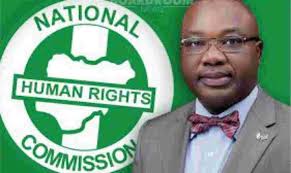
….The Commission wants IGP to address use of excessive force by police
The Executive Secretary of the National Human Rights Commission (NHRC), Dr. Tony Ojukwu OFR, SAN, has strongly condemned the alleged extrajudicial killing of a 28-year-old Nigerian, Mene Ogidi, by a police officer, ASP Nuhu Usman, on April 26, 2026, in Efurun, Uvwie Local Government Area of Delta State.
In a statement issued in Abuja, Dr. Ojukwu described the incident as “deeply disturbing and a direct assault on human dignity, the Constitution of the Federal Republic of Nigeria, and the rule of law.”
He stressed that no Nigerian should lose their life at the hands of those sworn to protect them, reiterating that every life matters and must be protected.
According to him, “the reported action of the officer involved is condemnable, unacceptable, and completely inconsistent with the principles of justice and a civilized society.”
The statement which was signed by Hajia Fatimah Agwai Mohammed, Director, Corporate Affairs and External Linkages, quoted Ojukwu to have expressed grave concern over the recurring incidents of excessive use of force by law enforcement officers and called on the Nigeria Police Force to take urgent and decisive steps to address the issue.
He specifically urged the police authorities to subject officers deployed on special duties to periodic mental and psychological evaluations to ensure they are fit to carry arms and engage with civilians responsibly.
Dr. Ojukwu further called for the immediate disciplinary action against ASP Nuhu Usman in line with extant laws and police regulations.
He also emphasized the need for the Nigeria Police Force to fully implement the recommendations of the Commission’s Panel on Police Brutality as a necessary step toward meaningful reform and prevention of future violations.
“The Commission demands immediate arrest and a transparent investigation into the incident, dismissal of the officer involved, and swift prosecution in accordance with the law.
We hereby call for adequate compensation and justice for the family of the victim,” he stated.
He warned that justice delayed only deepens public distrust in state institutions and undermines confidence in law enforcement.
The Executive Secretary assured that the NHRC will continue to monitor the case closely and will persist in its advocacy for accountability, justice, and the protection of the fundamental rights of all Nigerians.
“Nigeria must never normalize brutality. Justice must speak louder than silence,” he concluded.

The Supreme Court of Nigeria will on Thursday, deliver judgments in two cases involving the leadership crises rocking the African Democratic Congress and the Peoples Democratic Party.
According to information on the official website of the court, the matters, listed under “Political Appeals”, have been added to the cause list for Thursday, April 30, 2026.
While judgment in the ADC matter, marked SC/CV/180/2026, has been fixed for 2 pm, there is no time yet for that if the PDP.
-

 News1 year ago
Senate to speed up conclusion of Nigeria Forest Security Service Bill
-
 News9 months ago
The Many Lies Against Bashir Haske
-

 News3 years ago
Breaking: Tinubu’s authentic ministerial nominees
-
 News3 years ago
“Anytime we want to kill terrorists, President would ask us to take permission from France but they were killing our soldiers-” Niger Republic coup leader
-
 News3 years ago
“I’m leaving the Catholic church because Bishop Onah is oppressing me,” says Okunerere
-

 News3 years ago
Radio Nigeria’s veteran broadcaster Kelvin Ugwu dies three months after retirement from service
-
 News3 years ago
Dokpesi and the Gazebo Mystique
-

 News3 years ago
Tsunami: Tinubu orders dissolution of managements, boards of MDAs, to sack all Buhari’s political appointees