
News
NUBIFIE commends NSITF for expanding ECS to Fintech, Agency Banking


Photo caption: A cross section of participants at the sensitization workshop for stakeholders in agency banking and FINTECH organised by the NSITF at the Islamic Forum of Nigeria Conference Hall, Kano.
The Nigeria Social Insurance Trust Fund (NSITF) has been commended for taking proactive steps to expand the Employees’ Compensation Scheme, ECS to the Agency Banking and Fintech industries.
The National President of the National Union of Banks, Insurance and Financial Institutions Employees (NUBIFIE) Comrade Anthony Abakpa made the commendation in Kano while speaking at a sensitization workshop for stakeholders in the Agency Banking and Fintech industries organized by the NSITF over the weekend in the ancient commercial city.
According to the union leader, a growing collaboration between the NSITF and stakeholders in the mobile money and FINTECH industry will not only provide a networking platform but also a safer and supportive financial service environment for employees across Nigeria. He described the ECS as one of the nine contingencies making up the social security programmes enunciated by the International Labour Organisation (ILO), equally observing that though the NSITF has made remarkable progress in implementing the scheme across the years, the foray into the Fintech industry was strategic and came at the nick of time. He therefore urged participants who thronged the Islamic Forum of Nigeria Conference Hall, Kano, to embrace the scheme.
He further stated that for a seamless implementation of the ECS in the fast growing Fintech and agency banking sector, the NSITF must also brace up with the digitization of its processes and procedures.
According to him, “To get the informal sector employees and employers especially the fintech industry, to register with the Fund, the NSITF must utilize digital platforms (Digital onboarding) and tools to simplify the registration process for informal sector employers. This can include online registration portals and mobile(apps) applications that make it easy for employers to register and manage the contributions.”
He suggested “the development of tailored solutions that
address the specific needs and challenges of the fintech industry, which include flexible contribution plans, customized communication, and support services that cater to the unique characteristics of fintech businesses.
“Inclusive Policies and Programs—Implement inclusive policies and programs that encourage the participation of informal sector employers. This can involve providing incentives such as tax breaks, subsidies, or grants to employers who register with the Fund.
“Financial Cooperatives—Promote the formation of financial cooperatives among informal sector employers, mutual support, making it easier for members to comply with the Fund’s requirements.
“Fostering coordination and collaboration between NSITF and other relevant stakeholders such as Sectoral Unions, industry associations, government agencies, and financial institutions. This can help create a supportive ecosystem that encourages registration and compliance.”
He also stated that the ultimate measure of the NSITF’s effectiveness lies in its ability to disburse benefits to eligible beneficiaries in a timely and efficient manner. While affirming that the NSITF has successfully provided compensation to many workers, “cases of delays, bureaucratic red tape, as well as inadequate communication have impeded the process, leading to dissatisfaction. He, however, expressed happiness that the new management of the Fund was already addressing the situation.
Earlier while presenting the keynote address to the gathering, the Managing Director of the NSITF, Oluwaseun Faleye who was represented by the General Manager, Informal Sector Department of the agency, Chika Onyewuchi said the programme synched with the cardinal agenda of the new administration of the Fund to develop peculiar programmes that can break new grounds in the informal sector which hosts the majority of Nigeria’s active work life. She asserted that the bold initiative of the NSITF was in furtherance of its contributions to financial inclusion.
The NSITF boss said that-“By providing safer , more secure environment for agents , ECA 2010 indirectly supports Nigeria’s financial inclusion goals. The protection it offers can encourage more people to become agents in the Fintech and help banking providers expend their reach to the underserved areas in the remote parts of the nation.
“With the ECS, agency banking becomes a more attractive career option, capable of attracting skilled workers, assured that they will be covered in case of work related accidents, injury or health issues. This assists financial institutions draw a stable workforce of competent agents.
According to Nwachukwu Godson, General Manager, Corporate Affairs, in a statement sent to Nationwide Reports, Faleye, while discussing the numerous benefits of the scheme to the industries’ stakeholders, said, “Many banking agents travel frequently to provide services to customers in various locations. The ECS covers commuting accidents, ensuring that agents who experience accidents while travelling to or from their service locations receive compensation and support.
“By enrolling in the ECS agency banking providers can reduce their legal liability related to workplace accidents and illnesses. The scheme allows employers to transfer risk to the NSITF, which handles compensation claims and payouts, thereby saving banks and agents from potential legal battles and associated costs.”
He argued that to mitigate financial vulnerability, low productivity and bridge the gap between the formal and informal sector, the ECS which narrows inequality through social protection must be embraced by all players in the informal sector.
Other stakeholders at the event included the Kano State Chairman of the Nigeria Labour Congress, Anwali Yaksse, General Secretary NUBIFIE, Mohammed Sheik, Chairman of AMBO, Odetunde Lukman and AMON President, Salihu Umar as well as representatives from the Agent Banking and FINTECH including Zenith Bank, Fidelity, ECO, GTB, Moniepoint as well as Point of Sales Operators among others.

Edo State Governor, Senator Monday Okpebholo, has announced plans to establish a special court to fast-track the prosecution of suspected kidnappers and cultists in the state.
He said anyone convicted by the special courts would face public execution, adding that he would not hesitate to sign their execution order
He spoke in Benin during the parade of suspected kidnappers and cultists arrested by the Edo State Police Command.
He warned residents against engaging in kidnapping and cult-related activities, saying such crimes would only lead to the loss of lives and property.
The governor said the proposed special court would become operational within the next few weeks to ensure speedy trial of suspects.
“We are setting up a special court to try kidnappers and cultists. In the next two or three weeks, it should be ready,” he said.

River State Governor, Sir Siminalayi Fubara has been served a new impeachment threat by his political tomentor, former governor and Minister of the Federal Capital Territory, Nyesom Wike.
This time, Fubara, who has faced series of troubles from Wike, has allegedly been ordered by the FCT Minister to join the Rainbow coalition or face impeachment.
This would be the third time the Governor has been threatened with impeachment since he assumed office in May 2023, all coming from Wike.
According to reports, Wike sent a delegation headed by Ambassador Desmond Akwor to governor Fubara.
The delegate met the governor behind closed doors to deliver an ultimatum from Nyesom Wike to to the effect that he must join the Rainbow Coalition within a two-week timeline.
It was reported that although the delegation did not tell the governor that if he refuses to join the coalition that he will be impeached, the request was delivered in a manner as though it were a command rather than persuasion or appeal.
However, Fubara was said to be currently unperturbed about whatever they are conspiring against him as he is focused on delivering good governance to the Rivers state people adding that the source said Fubara aware of the plot and does not seem bothered.
“Ambassador Desmond Akwor of Oyigbo who also heads the LGA campaigns for Rainbow Coalition led the delegation from Wike to governor Sim Fubara. The meeting was behind closed doors. They came to order the governor to join their Rainbow Coalition–I said order because of the way they came and how they made it as a demand rather than a persuasion. I heard they have concluded that if the governor refuses to join them in two weeks time, they will remove him but his excellency is not even concerned about their desperation. He is currently focused on delivering his campaign promises to the people,” the reported quoted a source to have said.
News
UN investigators condemn non-prosecution of religious freedom violators in Nigeria, urges domestication of ICC Charter
By Bonaventure Phillips Melah 08036062975
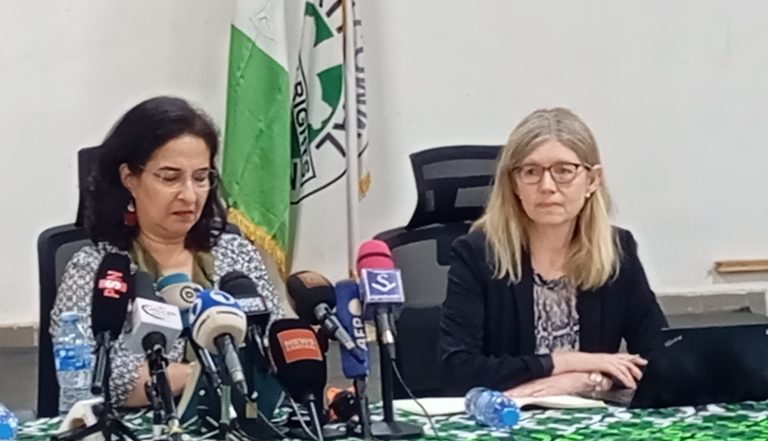
A special investigative body set up by the United Nations on religious freedom, has submitted preliminary report, indicting Nigerian government for failing to protect its citizens from various forms of abuse and death over their religious inclinations.
The investigative body led by the United Nations Special Rapporteur on Freedom of Religion or Beliefs (FoRB), Professor Nazila Ghanea, at a press conference on Friday, released preliminary report on a two-week mission in Nigeria which visited Kano and Plateau States.
The preliminary report was presented at the headquarters of the National Human Rights Commission, NHRC in Abuja with the Executive Secretary of the Commission, Dr, Tony Ojukwu, SAN in attendance, alongside directors, senior officers and representatives of some local and international organizations.
Prof. Nazila Chanea who lamented the rampant killings going on across Nigeria, committed by religious extremists and organisations affiliated international terror groups, said thousands of Nigeria’s have been killed without any punishment against the perpetrators, adding that Nigeria has become a slaughter house where life longer matters.
The UN Special Rapporteur therefore called on the federal government to domesticate the International Criminal Court, ICC Charter and other UN laws to try violators of regions freedom rights in the country.
She also called on religious leaders to denounce those who preach extremist ideologies and condemn their violent acts to serve as deterrent to others.
According to her, the investigation was meant to explore how freedom of thought, conscience and religion interacts with human rights realities on the ground throughout this vast land.
She noted that they were able to meet and interface with several top Nigerian officials, including the National Security, Solicitor-General/Permanent Secretary of the Ministry of Justice, the Permanent Secretary of the Ministry of Foreign Affairs, representatives of various departments of the Ministry of Justice, the Ministry of Women’s Affairs and Social Development, the Nigeria Police Force, Nigeria Immigration Service, Supreme Court Justices and the Nigerian Human Rights Commission (NHRC).
She said- “I had asked for a number of other official meetings at the Federal level and regret that these could not be facilitated.”
She said: “Pockets of horrendous mass atrocities and international crimes were observed, but investigators found no evidence of a nationwide, intentional government policy to destroy a religious community. Inadequate security responses and repeated violence are major drivers of harm. Freedom of religion/conscience is being constrained by labels, silos, and political instrumentalisation; victims must lead the narrative until proper investigations and justice occur.”
She affirmed that the prevailing insecurity in Nigeria prevented her from extending her investigations to other parts of Nigeria, called for accountability processes and victim‑centred investigations to determine individual and institutional responsibility.
She noted that labels, cultural frames and polarisation prevent many people in Nigeria from freely expressing conscience and religious belief.
She called for the need to break silos and enable plural, conscience‑based expression across communities.
According to the preliminary report, ” Discussion of freedom of religion or belief in Nigeria elicits very acute concerns about insecurity, violence and conflict which has spread throughout the country and has generated huge alarm, albeit to different intensities and for different reasons.
“These include terrorist actions, gang violence and banditry incursions, land grabbing to mass displacement, armed conflict and cattle rustling, hostage taking to arson attacks, destruction of holy places and schools, large scale kidnappings in remote areas and civil unrest around protests and strikes, decimation of irrigated farmlands and whole villages and livelihoods, through endless cycles of threats, fear and death in expanding areas of the country. Impunity and lack of accountability have reportedly entrenched these cycles of fear and violence and encouraged its spread. Previously these cycles were focused in particular regions, for example in the Northwest and North Central.”
-

 News1 year ago
Senate to speed up conclusion of Nigeria Forest Security Service Bill
-
 News11 months ago
The Many Lies Against Bashir Haske
-

 News3 years ago
Breaking: Tinubu’s authentic ministerial nominees
-

 News3 years ago
“Anytime we want to kill terrorists, President would ask us to take permission from France but they were killing our soldiers-” Niger Republic coup leader
-

 News3 years ago
“I’m leaving the Catholic church because Bishop Onah is oppressing me,” says Okunerere
-

 News3 years ago
Radio Nigeria’s veteran broadcaster Kelvin Ugwu dies three months after retirement from service
-
 News3 years ago
Dokpesi and the Gazebo Mystique
-

 News3 years ago
Tsunami: Tinubu orders dissolution of managements, boards of MDAs, to sack all Buhari’s political appointees