
News
NNPC records breakthrough, begins oil drilling in Wudi-B


By Bonaventure Melah
After much efforts on what was seen as impossible by many, including petroleum industry pundits, Nigeria has commenced oil drilling campaign at the Wudi-B, located in Here local government area of Borno state.
Mele Kyari, the Group Chief Executive Officer of the Nigeria National Petroleum Company Limited (NNPCL), disclosed this yesterday, saying the company was optimistic that the drilling would help in its efforts to bring prosperity to the people through the elimination of energy poverty currently threatening Africa’s biggest economy.
Kyari made the commitment at the Presidential flag-off of Wadi-B drilling campaign by President Muhammadu Buhari in Borno State.
The NNPC had stopped drilling in Wadi-B in 1995 because successes were weak and findings made during the period were not in commercial quantity.
Kyari said: “We understood very clearly that we need to understand the basin very well. We need to have a different approach to exploration activities in this very basin and that is why NNPC and our partners, the Ministry of Petroleum Resources and the current Upstream Regulatory Commission decided to embark on massive revaluation of all the frontier basins in the country.
“Of course, our findings have been useful. The understanding of the rift system in Nigeria enabled us to have successful outcomes in the Kolmani Area.
”It also enabled us to mobilise to Nasarawa State. Now a drilling activity is going on. It also helped us to understand the geological basin of the Chad Basin which is why we are back here.
“Now we are much more confident, we believe that this campaign will be successful and that this campaign will take us to the ultimate objective which is to increase the reserves of our country and also create opportunities around us. We believe that the time for oil and gas to vanish is still far away.
“We believe that oil and gas will continue to be principal in determination of the prosperity of our country of course more especially, providing energy security for our country.
”This can’t happen unless we have access to the resources and we are able to convert them into value and of course a new approach to doing this that is practical which is what we are doing in the Kolmani area.”“Kyari said the company and its partners would deploy the necessary technology and best approach that would enable it create value for Nigerians in the quickest possible time.“According to Kyari, NNPC Ltd, through the drilling exercise, would combat deforestation as most Nigerians who do not have access to cooking gas fell tree as an alternative for cooking.“He believed that making available cooking gas as a cleaner transition fuel would play a huge role in curbing desert encroachment in the country.“”Where ever we find crude oil, we will consider the concept of integrated production and conversion so that value can be created very quickly. Of course, there is huge energy poverty across the world and more so in sub-Saharan African countries and particularly in our country here.““We know for sure that 70 per cent of our population doesn’t have access to clean cooking fuel and that is why you are seeing the effects of the frustration which is most pronounced in this part of the country.“”The Sahara Desert moves at least a kilometre towards the Southwards area and this can’t be arrested if we dint find alternative sources of energy for the communities and this is what the oil and gas will do.
”They have found oil where others practically ran away and today, they led this regime of the knowledge of the basins in our country and of course in Africa. I am very proud of them.”
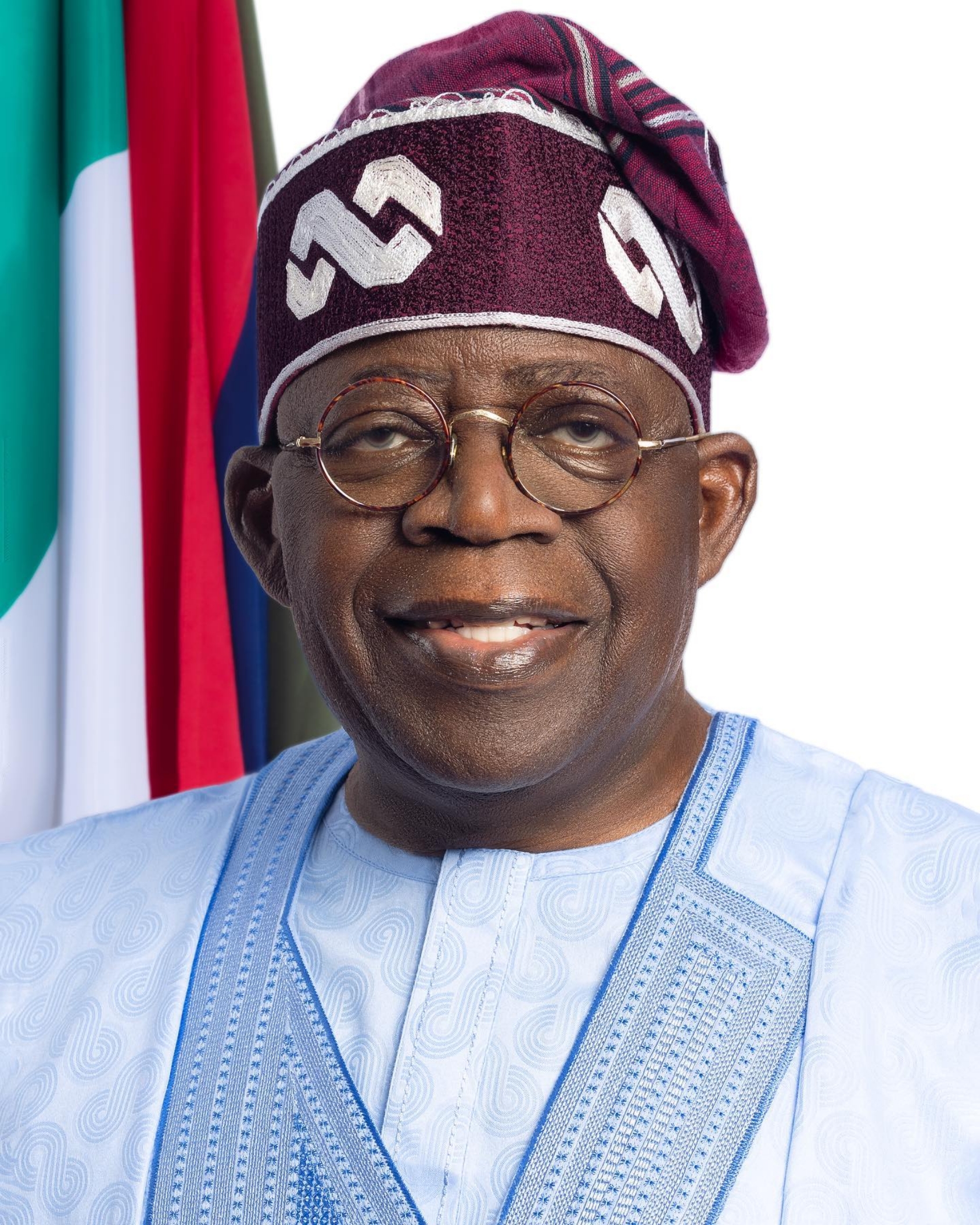
President Bola Tinubu has written the Senate, seeking the screening and subsequent confirmation of fifteen nominees to the National Human Rights Commission (NHRC).
The letter was read by the President of the Senate, Senator Godswill Akpabio.
The letter seeks the reconstitution of the commission’s board in line with statutory provisions with the list comprising nominees from diverse professional backgrounds, including the media and legal sectors.
Among the nominees are the President, Nigeria Guild of Editors and Editor, Vanguard Newspapers, Mr. Eze Anaba; and Dr. Salamatu Hussaina Suleiman, who has been proposed as chairman of the board.
The Executive Secretary of the Commission, Dr. Anthony Ojukwu (SAN) is to retain his position as the Chief Executive Officer.
Other nominees include Mrs Roseline Tasha, Ambassador Adam Yubak Baku, ACG Felix Lawrence, Mr. Edmund Chinonye, Mr. Chinonye Obiaku (SAN), Oluwakemi Asiwaju Okere-Odo, Professor Adedeji Ogunji, Kingsley Chidozie, Mohammed Adelodu, Maupe Ogun Yusuf, and Otunba Francis Meshioye as members.
Also nominated are Patience Patrick and Hawwa Ibrahim, listed as members.
The President said the nominations were made pursuant to Section 2(3) of the National Human Rights Commission (Establishment) Act, 2010, which empowers him to constitute the board subject to Senate confirmation.
He explained that the reconstitution of the board was necessary to enhance the commission’s institutional capacity and enable it to more effectively discharge its mandate to promote and protect human rights across the country.
If confirmed, the new board is expected to play a critical role in reinforcing the NHRC’s oversight functions, particularly at a time of heightened concerns over rights protection and accountability in Nigeria.
Following the presentation of the request, the Senate referred the nominations to its Committee on Judiciary, Human Rights and Legal Matters for screening and report within two weeks.

The Economic and Financial Crimes Commission, EFCC, has revealed that it investigated the founder of Streams of Joy International, Pastor Jerry Eze, for six months over suspected money laundering before clearing him.
Ola Olukoyede, chairman of the Commission, disclosed this on Wednesday while speaking at the Jerry Eze Foundation Business Grant Award Ceremony in Abuja.
According to him, the probe was triggered by intelligence reports and petitions after the commission observed large inflows of foreign currencies into the cleric’s domiciliary account.
“We work by intelligence, we work by petitions. At some point, I saw there was an account, a domiciliary account. Dollars, pounds were dropping in like raindrops, from Colombia, from America, from Sri Lanka, even from Togo.
“I said who is this man? Yes, I’ve been hearing about his name, I’ve seen his face a couple of times. I never bothered about what he was doing. I knew he was a pastor.
“So they said this one pastor of streams of joy, go and investigate him. So we went to the investigation. We combed the books,” Olukoyede stated.
The EFCC boss said he subsequently invited Eze for questioning after preliminary findings were compiled by investigators.
He added that upon meeting the cleric and reviewing the findings of the investigation, the commission found no wrongdoing.
“So he came to my office. He told me what happens and all of that, and how the money came, what he does, how he has been helping people, and all of that.
“I said, you know what, I didn’t call you here to explain to me. We have already done our work. I called you here to commend you,” he stated.
The remark drew applause from the audience, as Eze, who was present at the event, acknowledged the commendation.
He noted that the commission has a responsibility not only to investigate financial crimes but also to recognise individuals found to have acted with integrity.
The EFCC chairman, however, stated that the agency would continue to monitor financial activities where necessary, stressing that its preventive mandate remains critical in tackling corruption.
News
Court bars David Mark, others from interfering with functions, tenure of elected ADC state executives

The Federal High Court in Abuja on Wednesday restrained the Independent National Electoral Commission from recognising or participating in any congress organised by a disputed caretaker leadership of the African Democratic Congress.
The court, in a judgment delivered by Justice Joyce Abdulmalik, also barred former Senate President, David Mark, and other prominent figures in the party from interfering with the functions and tenure of elected state executives.
The ruling is the latest development in the festering leadership dispute within the ADC, with clear implications for the control of party structures ahead of future political activities.
The case arose from an originating summons filed by Norman Obinna and six others on behalf of state chairpersons and executive committees of the party.
The plaintiffs challenged the legality of actions taken by a caretaker or interim national leadership, particularly the move to organise state congresses through an appointed committee.
They argued that the caretaker body lacked constitutional authority to organise such congresses or to appoint any committee for that purpose.
According to them, only duly elected party organs recognised under the party’s constitution possess the power to conduct congresses.
The plaintiffs, therefore, asked the court to affirm the tenure of the state executive committees and restrain any parallel processes that could undermine their authority.
In resolving the dispute, Justice Abdulmalik held that the claims brought before the court were valid and deserving of judicial consideration, especially in view of alleged breaches of constitutional and statutory provisions.
She stated that she found “the issue in the originating summons meritorious”.
The judge framed the central issue as whether the second to sixth defendants, including Mark, had the constitutional or statutory authority to assume the powers of elected state organs of the ADC, whose tenure is guaranteed under the party’s constitution.
She relied on section 223 of the 1999 Constitution, which mandates political parties to conduct periodic elections based on democratic principles, as well as Article 23 of the ADC Constitution, which provides that national and state officers shall hold office for a maximum of two terms spanning eight years.
According to her, “the question is whether there is any infraction committed by Mr Mark and co-defendants when they convened meetings and appointed a body known as a congress committee to organise state congresses.”
On the defence raised by the defendants that the matter was an internal affair of a political party and therefore outside the jurisdiction of the court, the judge acknowledged the settled legal position but clarified its limits.
She held that while courts are generally reluctant to interfere in internal party matters, they will intervene where there is a clear allegation of violation of constitutional or statutory provisions.
“The law is settled that courts will not interfere. However, where there is an allegation of breach of constitutional or statutory provisions, the court has a duty to intervene,” she ruled.
“Where a party alleges that its constitution has been violated, the court is bound to adjudicate. Any argument that this court lacks jurisdiction on that basis fails,” she added.
-

 News1 year ago
Senate to speed up conclusion of Nigeria Forest Security Service Bill
-

 News9 months ago
The Many Lies Against Bashir Haske
-

 News3 years ago
Breaking: Tinubu’s authentic ministerial nominees
-
 News3 years ago
“Anytime we want to kill terrorists, President would ask us to take permission from France but they were killing our soldiers-” Niger Republic coup leader
-
 News3 years ago
“I’m leaving the Catholic church because Bishop Onah is oppressing me,” says Okunerere
-

 News3 years ago
Radio Nigeria’s veteran broadcaster Kelvin Ugwu dies three months after retirement from service
-
 News3 years ago
Dokpesi and the Gazebo Mystique
-

 News3 years ago
Tsunami: Tinubu orders dissolution of managements, boards of MDAs, to sack all Buhari’s political appointees