
News
Nimet DG, Prof. Anosike says timely climate information critical to agriculture, food security


The Director General/CEO, Nigerian Meteorological Agency (NiMet), Prof. Charles Anosike, has said that providing farmers with timely and accurate climate information, is critical to agriculture and food security.
Anosike spoke on Monday at the agency’s headquarters in Abuja during the signing of a Memorandum of Understanding (MoU) between NiMet and the African Agricultural Technology Foundation (AATF).
The MoU is a strategic partnership deal to drive climate-resilient agriculture across and would see both organizations work together to develop climate-smart weather tools, build capacity for farmers, and promote technologies that strengthen agricultural value chains against the impacts of climate change.
“For agriculture to be truly climate-resilient, access to reliable weather and climate information is essential. This MoU enables us to combine our expertise with AATF to deliver impactful solutions to farmers,” Anosike said.
In his remarks, Dr. Jean Baptiste Tignegre, Regional Director of AATF, highlighted the foundation’s mission to remove barriers that hinder small holder farmers in sub-Saharan Africa from accessing transformative agricultural technologies.
He added that this partnership with NiMet is an important step in ensuring that farmers in Nigeria are better equipped to face climate challenges, noting that collaborations like this can scale innovations that will improve food security and livelihoods.
The MoU establishes both parties’ collaboration in key areas including the development of climate-smart weather support tools for women- and youth-led micro, small, and medium-sized enterprises (MSMEs) in agriculture, capacity building on climate-smart agricultural tools, provision of technical support in agreed project locations, and the joint development of funding proposals for climate-smart technologies in Nigeria.
The agreement, which runs until January 31, 2028, sets out frameworks for transparent project implementation and joint planning, while ensuring both organizations retain their mandates to enhance farmers’ resilience to climate change, strengthen Nigeria’s agricultural value chains, and contribute to sustainable food security nationwide.

Three bandits have been arrested in Benue state after a lady who they had kidnapped and released, identified them at a motor park and raised alarm.
The k!kidnappers came to Ihotu park to board a vehicle to Makurdi and were met by the lady they had earlier kidnapped and released after collecting ransom from her relatives.
They were even using a bag they collected from the girl. The girl raised the alarm, held one inside the vehicle, and two took to their heels, but were caught.
They had a ghana-must-go bag at the back of the vehicle. N11m was found inside the bag.
Following the confirmation of their identity by another lady who was also their victim, mob gathered around with the intent to beat them up and possibly set them ablaze.
But the park manager decided to invite the police and soldiers who rescued them and took them to their station.
It was later gathered that the Benue state Governor, Rev. Father Hyacinth Alia called and said he was interested in the case which made the police to take the apprehended bandits to Makurdi, the state capital.

President Bola Tinubu Federal Government has drawn down $1.5bn from a $5bn financing facility arranged with the United Arab Emirates’ largest lender, First Abu Dhabi Bank, despite growing concerns from global financial institutions over the increasing use of complex derivative financing by African sovereigns.
Bloomberg reported on Friday that the latest drawdown represents the first tranche of a $5bn Total Return Swap facility approved by the National Assembly on March 31, 2026, and is expected to support the 2026 budget, finance infrastructure projects, and refinance existing debt obligations.
The report quoted people familiar with the transaction, who asked not to be identified because they were not authorised to speak to the media.
The report read, “Nigeria has accessed the first tranche of a $5bn derivatives deal with the United Arab Emirates’ largest lender, pressing ahead with a transaction that has been scrutinised for being opaque.
“The West African nation drew about $1.5bn in the last couple of weeks from a total return swap transaction with First Abu Dhabi Bank PJSC, according to people familiar with the transaction, who asked not to be identified because they were not authorised to speak to the media.”
The transaction comes at a time when Nigeria is facing higher borrowing costs in international capital markets, forcing the government to seek alternative financing arrangements to shore up its fiscal position and improve access to foreign exchange liquidity.
Under the arrangement, Nigeria is required to pledge Federal Government securities worth about 133 per cent of any amount drawn under the facility. This means that for the full $5bn facility, the government would have to post approximately $6.65bn worth of naira-denominated bonds as collateral.
In return, the Abu Dhabi-based lender provides dollar liquidity to the Nigerian government. The Federal Government will pay a floating interest rate benchmark plus about four percentage points, while the lender receives the returns generated by the underlying government securities.
The transaction effectively allows Nigeria to unlock immediate dollar funding without issuing new Eurobonds or taking on traditional external loans at prevailing market rates, which have become increasingly expensive for frontier economies.
The government has already indicated that the proceeds from the initial $1.5bn drawdown will be deployed to support budget implementation, fund critical infrastructure projects, and refinance costlier domestic and external debts.
However, the financing arrangement has attracted criticism from international financial institutions and market analysts over concerns about transparency and potential hidden liabilities.
In its June 2026 assessment of African sovereign debt markets, the International Monetary Fund warned that derivative financing structures such as total return swaps are often opaque and difficult for investors and creditors to monitor.
The IMF noted that such arrangements are “hard to track, hard to value in real time, and can obscure the true extent of a country’s financial obligations.”
Three days ago, Fitch Ratings warned that Nigeria’s planned $5bn financing arrangement with First Abu Dhabi Bank could increase sovereign debt risks and reduce transparency in public debt reporting.
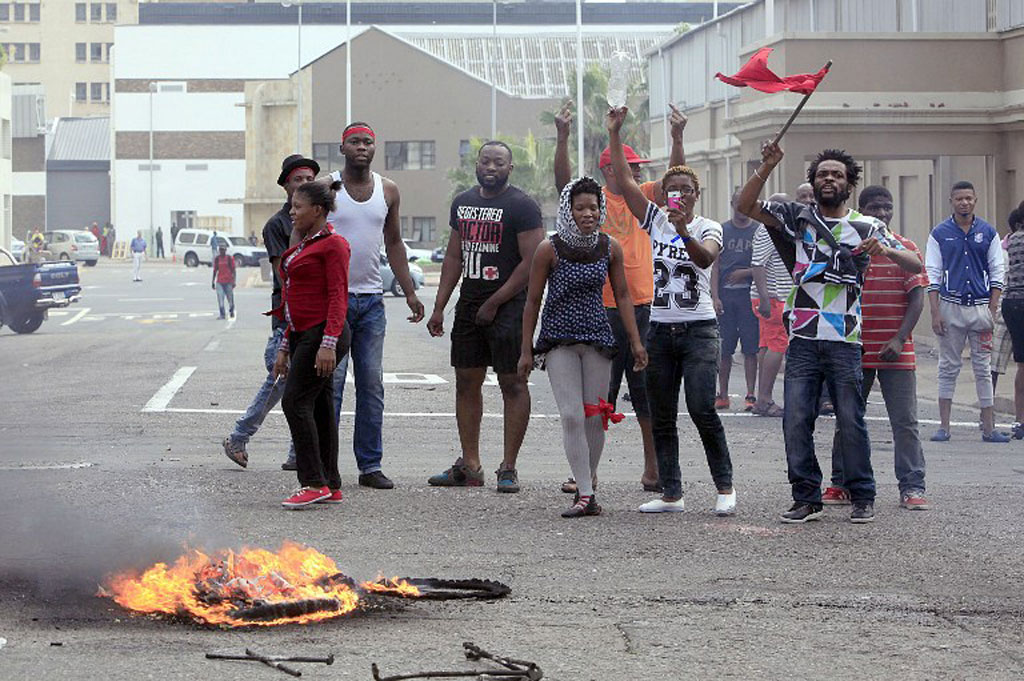
At least 700 Nigerians remain stranded in South Africa three days before the June 30 deadline issued by anti-immigration groups.
It was gathered that despite President Bola Tinubu’s approval of funds for their evacuation, bureaucratic delays have prevented the release of the money, leaving hundreds stranded amid escalating xenophobic tensions.
Although the president approved funding for four additional rescue flights after the first evacuation brought home 258 Nigerians, the money had yet to reach the designated carrier, Air Peace.
This delay, according to officials of the Ministry of Foreign Affairs, the Nigerians in Diaspora Commission and the Nigeria High Commission in South Africa, is stalling the evacuation operation and leaving hundreds of Nigerians exposed to attacks.
The delay has heightened fears among the stranded Nigerians as xenophobic tensions continue to escalate across South Africa.
The President of the Nigerian Citizens Association in South Africa, Rev. Frank Onyekwelu has said over 20 Nigerians had died since the renewed wave of anti-foreigner attacks, while many others had been assaulted, displaced or forced to abandon their businesses.
According to the officials, over 1,000 Nigerians registered with the federal government for evacuation. However, only 324 have been successfully brought home so far through a combination of government efforts and private intervention, leaving more than 700 Nigerians at risk of attacks and exposed to the elements.
The first batch of returnees (258) arrived in Lagos on June 11 aboard Air Peace, while the second batch (66) arrived on June 24 aboard ValueJet.
-

 News1 year ago
Senate to speed up conclusion of Nigeria Forest Security Service Bill
-

 News11 months ago
The Many Lies Against Bashir Haske
-

 News3 years ago
Breaking: Tinubu’s authentic ministerial nominees
-
 News3 years ago
“Anytime we want to kill terrorists, President would ask us to take permission from France but they were killing our soldiers-” Niger Republic coup leader
-

 News3 years ago
“I’m leaving the Catholic church because Bishop Onah is oppressing me,” says Okunerere
-

 News3 years ago
Radio Nigeria’s veteran broadcaster Kelvin Ugwu dies three months after retirement from service
-
 News3 years ago
Dokpesi and the Gazebo Mystique
-

 News3 years ago
Tsunami: Tinubu orders dissolution of managements, boards of MDAs, to sack all Buhari’s political appointees