
News
Nigeria’s Human Rights body elected member of Ganhri Bureau and Working Group


The National Human Rights Commission NHRC was on Thursday 19th October 2023 elected a member of the Governing Board of the Global Alliance of National Human Rights Institutions (GANHRI) based in Geneva Switzerland to represent the African region at the Board.
The elections took place at the 14th Biennial Conference of the Network of African National Human Rights Institutions (NANHRI) which held in Accra Ghana from the 16-20 Oct 2023.
The GANHRI Bureau is the highest organ for the coordination of National Human Rights Institutions worldwide.
The NHRC has also been elected to the GANHRI working groups on Ageing and Business and Human Rights (BHR).These are in recognition of the giant strides recorded by Nigeria in the areas of protection of the rights of older persons and mainstreaming human rights in businesses.
Mrs. Agharese Arase, Director, Corporate Affairs and External Linkages at the NHRC who disclosed this in a statement Saturday, also recalled that Nigeria has established the senior citizens center to enhance improvement of the lives of older people. Again the Federal Executive Council recently approved the National Action Plan on Human Rights and Business which makes Nigeria one of the three countries that have developed such plan in Africa.
Reacting to these developments, Executive Secretary of the Commission, Dr. Tony Ojukwu said Nigeria’s election to these prestigious positions reflects the country’s positive standing on the international human rights stage and underscores its commitment to the protection and promotion of human rights, both at home and abroad.
Speaking further, Dr. Ojukwu said GANHRI is the legitimate and authentic Network of National Human Rights Institutions (NHRIs) from around the world, established pursuant to UN General Assembly Resolution 48/134 of 20th December 1993 on the Paris Principles for the promotion and protection human rights. “It serves as a legitimate and crucial platform for cooperation, information exchange, and advocacy, making Nigeria’s inclusion in the GANHRI Bureau and Working Groups significant achievements ”.
Still recounting Nigeria’s giant strides, the Human Rights Boss said Nigeria has also been elected as a member of the Network of African National Human Rights Institutions Working Group on Migration (NANHRI Working Group on Migration).
According to him, this underscores Nigeria’s active role in addressing the pressing human rights issues related to migration, which has become an area of increasing concern globally.
The Chief Human Rights Officer of Nigeria used this medium to commend the dedication and commitment of the Nigerian government, as well as the collaborative efforts of various stakeholders, including civil society organizations, that made these achievements possible.
Continuing, he said these accomplishments are a testament to the tireless efforts of the NHRC and the Nigerian government in general, they highlight the nation’s strong resolve to uphold the principles of human rights and foster cooperation in addressing critical global issues.
The NHRC looks forward to the invaluable contributions that Nigeria will make within the GANHRI Bureau, Working Groups, and NANHRI Working Group on Migration, and is confident that these roles will strengthen Nigeria’s position as a champion of human rights, the Human Rights Boss said.
News
Court bars David Mark, others from interfering with functions, tenure of elected ADC state executives

The Federal High Court in Abuja on Wednesday restrained the Independent National Electoral Commission from recognising or participating in any congress organised by a disputed caretaker leadership of the African Democratic Congress.
The court, in a judgment delivered by Justice Joyce Abdulmalik, also barred former Senate President, David Mark, and other prominent figures in the party from interfering with the functions and tenure of elected state executives.
The ruling is the latest development in the festering leadership dispute within the ADC, with clear implications for the control of party structures ahead of future political activities.
The case arose from an originating summons filed by Norman Obinna and six others on behalf of state chairpersons and executive committees of the party.
The plaintiffs challenged the legality of actions taken by a caretaker or interim national leadership, particularly the move to organise state congresses through an appointed committee.
They argued that the caretaker body lacked constitutional authority to organise such congresses or to appoint any committee for that purpose.
According to them, only duly elected party organs recognised under the party’s constitution possess the power to conduct congresses.
The plaintiffs, therefore, asked the court to affirm the tenure of the state executive committees and restrain any parallel processes that could undermine their authority.
In resolving the dispute, Justice Abdulmalik held that the claims brought before the court were valid and deserving of judicial consideration, especially in view of alleged breaches of constitutional and statutory provisions.
She stated that she found “the issue in the originating summons meritorious”.
The judge framed the central issue as whether the second to sixth defendants, including Mark, had the constitutional or statutory authority to assume the powers of elected state organs of the ADC, whose tenure is guaranteed under the party’s constitution.
She relied on section 223 of the 1999 Constitution, which mandates political parties to conduct periodic elections based on democratic principles, as well as Article 23 of the ADC Constitution, which provides that national and state officers shall hold office for a maximum of two terms spanning eight years.
According to her, “the question is whether there is any infraction committed by Mr Mark and co-defendants when they convened meetings and appointed a body known as a congress committee to organise state congresses.”
On the defence raised by the defendants that the matter was an internal affair of a political party and therefore outside the jurisdiction of the court, the judge acknowledged the settled legal position but clarified its limits.
She held that while courts are generally reluctant to interfere in internal party matters, they will intervene where there is a clear allegation of violation of constitutional or statutory provisions.
“The law is settled that courts will not interfere. However, where there is an allegation of breach of constitutional or statutory provisions, the court has a duty to intervene,” she ruled.
“Where a party alleges that its constitution has been violated, the court is bound to adjudicate. Any argument that this court lacks jurisdiction on that basis fails,” she added.
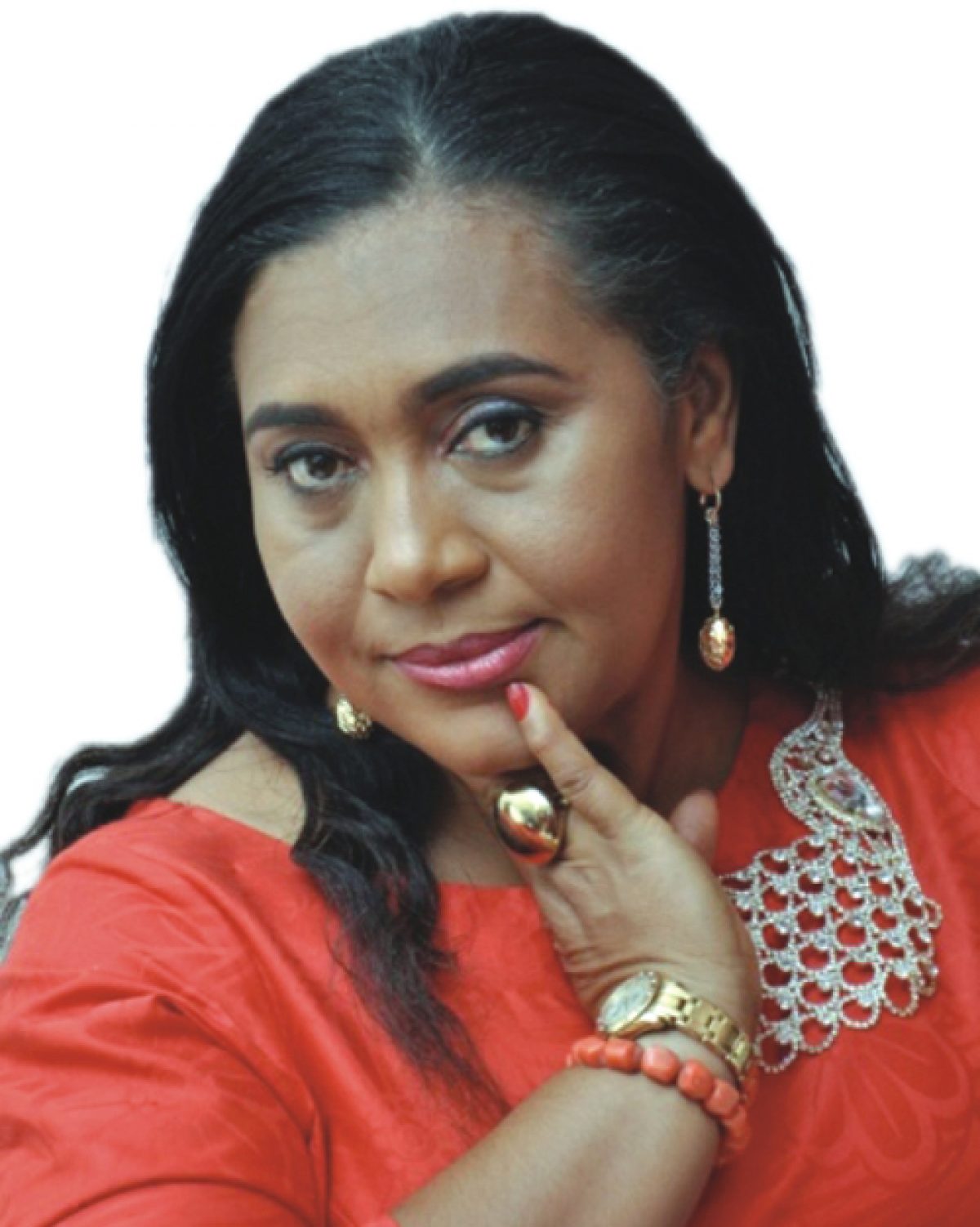
Hilda Dokubo, a veteran Nollywood actress, has been elected as National Woman Leader of the Labour Party (LP) after her months of suspension from the party was lifted by the National Working Committee, NWC.
Apart from Dokubo, the suspension of 25 other members was also lifted. They include Emmanuel Agida, Abayomi Arabambi, Ogar Osim, Muhammed Aliyu, Casmir Uchenna, Airen Igbinedion, Auwal Ahmed, and others.
The suspension was lifted on Tuesday during the national convention of the party held at the International Conference Centre, Umuahia, Abia State.
The decision to lift the suspension was taken through a voice vote by delegates from all states in attendance at the convention.
The chairman of the elective national convention, Ginger Onwusibe, announced the recall of the 26 members after a unanimous voice vote by the delegates.
Explaining the development, the newly elected National Chairman of the LP, Esther Nenadi-Usman, said the party followed the path of reconciliation and forgiveness.
News
“Why did soldiers bury my son’s brain after killing him,” mother of slain Abuja NYSC member questions

Madam Habitat Abubakar, the mother of a 24-year-old civil engineer, Abdulsamad Jamiu, who was allegedly shot dead by soldiers in the Kubwa area of Abuja, has demanded justice for her son.
Abdulsamad, popularly known as Kesh, was reportedly killed inside his bedroom in the early hours of Saturday, April 26, 2026.
His mother was in Okene, Kogi State, with her husband for a burial and firdau prayers when the incident occurred.
She was said to have been shielded from the full details of her son’s death until she arrived at the family compound in Abuja, where she fainted after learning the truth.
She questioned the circumstances surrounding her son’s death and the alleged actions of the soldiers after the incident.
She said, “Why did they jump my fence? Why did they enter my son’s room? Why did they kill him? Why did they call the vigilance team to come and mop his blood? Why did they instruct them to go and bury my son’s brains?”
She described Abdulsamad as a responsible young man with a bright future.
“He was a responsible boy. He did not joke with his five daily prayers. He was straightforward. He had a bright future. He had plans for himself, for his siblings, for his mother. And just like that, his dream was cut off right in his room,” she said.
Abubakar appealed to President Bola Tinubu, the First Lady, Kogi State Governor, Ahmed Ododo, his wife, Sefiya, activists and Amnesty International to intervene and ensure justice for her son.
“This fight is too big for me. This pain is too big for me to bear,” she said.
-

 News1 year ago
Senate to speed up conclusion of Nigeria Forest Security Service Bill
-
 News9 months ago
The Many Lies Against Bashir Haske
-

 News3 years ago
Breaking: Tinubu’s authentic ministerial nominees
-
 News3 years ago
“Anytime we want to kill terrorists, President would ask us to take permission from France but they were killing our soldiers-” Niger Republic coup leader
-
 News3 years ago
“I’m leaving the Catholic church because Bishop Onah is oppressing me,” says Okunerere
-

 News3 years ago
Radio Nigeria’s veteran broadcaster Kelvin Ugwu dies three months after retirement from service
-
 News3 years ago
Dokpesi and the Gazebo Mystique
-

 News3 years ago
Tsunami: Tinubu orders dissolution of managements, boards of MDAs, to sack all Buhari’s political appointees