
News
Nigerian Army Generals say Reuters’ report on North East military operations full of lies


As the Justice Abdu Aboki (rtd) led Special Independent Investigative Panel on Human Rights Violation in Counter Insurgency Operations in North East resumes its sitting in Abuja, Major General James Olubumi Akomolafe (rtd) and two other top military Officers on Monday said the allegations contained in the Reuters’ report were totally false.
Akomolafe, a former Commander of 21 Armored Brigade told the 7-Member panel that Reuters’ report of abortion of 10, 000 pregnancies among other human rights violations could not have been committed by a military fighting to preserve and protect the lives of citizens of the country.
Asked if such acts would have been committed without the knowledge of Commanding Officers, Gen. Akomolafe said it was not possible for any military personnel under his command to sneak out to have any business with civilians, adding that no military personnel can sneak out to render even medical service without his knowledge, as contained the report.
He said such acts were not possible considering that the Brigade Headquarters covers a vast area with a perimeter fencing that has only one functional gate as the second gate was permanently locked for Security reasons.
The former Instructor at Army Armored School told the panel that it was not possible for any soldier to leave the perimeter area because there are military policemen manning the only gate in use.
He said also that not even the people that supply the cows that were slaughtered for meat in the command every other day had access to the area because they were not allowed to go beyond the gate.
The retired Officer therefore said that Reuters’ second report of smothering, poisoning and shooting of children alleged to be fathered by members of Boko Haram sect for the purpose of stopping the regeneration of the sect members was equally false.
He pointed out that by military training, solders are not permitted to shoot carelessly but must have a definite target bearing in mind that their duties among other things include the protection of civilians especially in conflict situations.
In the same manner, he denied any involvement by soldiers, in any Sexual and Gender Based Violence pointing out that Nigeria has a professional Army that does not deviate from the normal and standard practices.
The witness who was the Officer commanding 8 Task Force Division in Monguno, Borno state told the panel that it would be insensitive on the part of the troop that relate with the civilians in the most cordial manner to suddenly turn round and unleash attacks on them in the name of fighting insurgency.
He informed the panel that he was hearing the Reuters’ report for the first time and explained that his Division then “is a special creation that is why it is called a task force, it was temporary and meant to be dissolved later so most of our cases were taken to 7 Division in Maiduguri.
” We did not attend to any civilians medically, we refer any case we have of civilians, arrested or surrendered, take Maiduguri”. he said.
“We had ambulances that take people to 7 Division in Maiduguri. We moved them from Monguno to 7 Division. We don’t hold them beyond the necessary one hour, two hours we move them to Maiduguri.
He said surrendered or captured combatants are usually taken to 7 Division detention centre.
In their separate submissions, the current Force Commander UN military mission to South Sudan, Major General Benjamin Olufemi Sawyer and Major General A.A. Nani (rtd) denied the involvement of the Nigerian Army in any of the allegations made by Reuters’.
They stressed the professional nature of the Nigerian Army saying that such improper acts as reported by Reuters are unknown to the Army.
The panel’s secretary and general counsel,Mr. Hilary Ogbonna informed the panel of additional report by Reuters’ still alleging “abortion assaults” against the military.
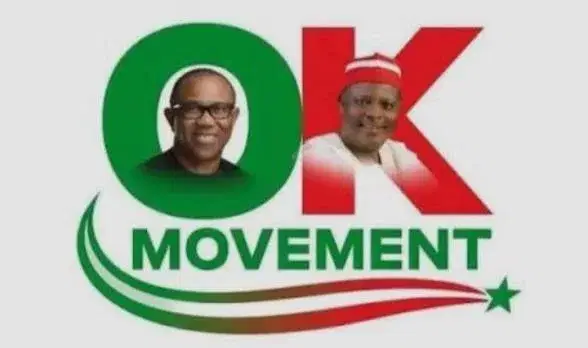
The internal dispute between the Obi/ Kwakwanso support group also known as OK Movement and the leadership of National Democratic Congress, NDC has escalated over the presidential campaign council set up by the movement ahead of the 2027 general election.
Recall that the Movement recently unveiled a 57 member presidential campaign council to work for the Peter Obi and Rabiu Kwakwanso ticket but the NDC issued a statement weekend and disowned the council.
Reacting to the development, the, OK Movement said tt does not require the personal validation or approval of any individual within the Nigeria Democratic Congress (NDC) before exercising its legitimate organisational functions in accordance with established processes.
The OK Movement National Secretary Saadatu Sani said this in a statement on Sunday in Abuja.
Sani rejected a statement credited to the party’s National Chairman, Sen. Moses Cleopas, urging him to familiarise himself with NDC’s constitution before making assertions.
Sani, in her statement, said the movement recognised the supremacy of political parties within constitutional and statutory spheres, but maintained that it remained an independent organisation with its leadership and internal processes.
She insisted that the movement would campaign for the NDC presidential and vice-presidential candidates as well as other party candidates where it had resolved to support them.
“The OK Movement does not require the personal validation or approval of any individual before exercising its legitimate organisational functions in accordance with established processes,” she said.
Sani said the movement was established from the grassroots and did not depend on sponsorship from any individual or political office holder for its activities.
She added that the movement was not seeking political appointments or positions within the NDC as a condition for its support, saying its principles remained its guiding values.
She said the movement had developed a nationwide grassroots structure, with internal membership records indicating approximately 2.5 million registered members and coordinators, supported by relevant data.
The leadership of Nigeria Democratic Congress, NDC, has disowned the Presidential Campaign Council, PCC, set up by the OK Movement ahead of the 2027 general elections.
This is contained in a statement signed by the party’s National Chairman, Cleopas Moses, on Saturday.
Moses stated that the announcement made by one John Ugulu was not authorised and did not come from the party.
According to him, going forward, no individual or group is authorised to announce, constitute or publish any campaign structure or organ in the name of the party without the approval of the party’s National Working Committee, NWC.
The statement partly read: “The leadership of our party, the Nigerian Democratic Congress, NDC, has noted with concern a publication credited to one John Ugulu, announcing a Presidential Campaign Council, PCC, under the guise of the OK Movement.
“For the avoidance of doubt, the party wishes to state categorically as follows: The party hereby dissociates itself in totality from the said OK Movement PCC announcement. It did not emanate from the party and should be disregarded by the public and the media.
“All candidates of the party must appreciate that they are not running as independent candidates. They are products of the party and remain subject to the authority and discipline of the party. Therefore, only the party’s leadership can constitute and announce a PCC.
“No member, candidate or support group should, under any guise, undermine the party or demarcate the party. The party recognises and deeply appreciates the contribution of all support groups and encourages their continued support. We welcome even more support groups who identify with our mission to rescue Nigeria.
“While the party will continue to work collaboratively with all support groups, such groups should not see themselves as alternative party structures or parallel organs of the party.”
News
25 dead bodies recovered as families remain uncertain over fate of 500 residents abducted from Niger communities
25 decomposing bodies belonging to victims of a mass abduction that took place in four communities in Niger state have been recovered.
They were part of residents that were abducted by terrorists Dekara, Kpenya, Sabon-Gida and Gidan-Zana in Borgu Local Government Area.
The bodies were recovered after the communities were reportedly alerted on Monday by the abductors to come and identify and retrieve the bodies.
The victims were said to be among about 500 worshippers abducted after Friday Jumm’at prayers on August 21, 2026.
25 bodies were recovered and later given a mass burial in a nearby bush.
The reported killings have heightened anxiety among families whose relatives remain in captivity, with residents saying they are increasingly uncertain about the fate of the remaining abductees.
A source said the abductors allegedly warned that more captives could be killed if their ransom demands were not met.
“They first asked each family to bring N10 million for each captive, but later reduced it to N5 million. There is no way we can afford it,” he said.
-

 News2 years ago
Senate to speed up conclusion of Nigeria Forest Security Service Bill
-

 News1 year ago
The Many Lies Against Bashir Haske
-

 News3 years ago
Breaking: Tinubu’s authentic ministerial nominees
-
 News3 years ago
“Anytime we want to kill terrorists, President would ask us to take permission from France but they were killing our soldiers-” Niger Republic coup leader
-
 News3 years ago
“I’m leaving the Catholic church because Bishop Onah is oppressing me,” says Okunerere
-

 News3 years ago
My nude photo leak was a mistake- lawyer Ifunanya
-

 News3 years ago
Radio Nigeria’s veteran broadcaster Kelvin Ugwu dies three months after retirement from service
-
 News4 months ago
See your state governor’s performance ranking