News
Nigeria to end petrol import as Dangote reduces price

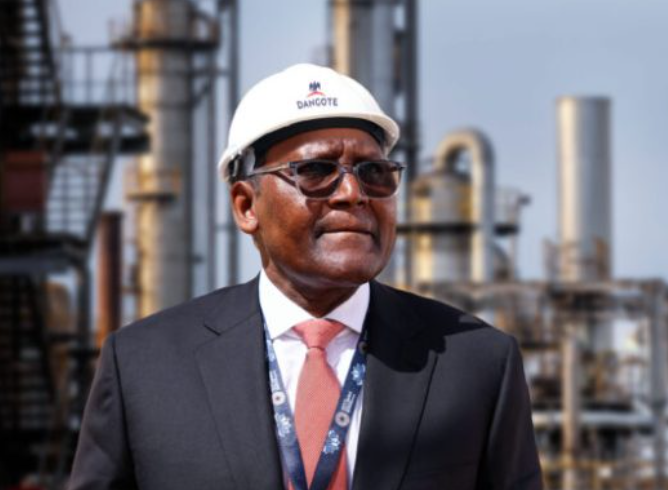
The era of importation of premium motor spirit, PMS, into Nigeria may be coming to and end following a fresh cut in the ex-depot price of the product by the Dangote Petroleum Refinery, which slashed its gantry price by 49 per litre last Friday.
On Monday, major and retail marketers, in separate interviews, admitted that the latest price adjustment has significantly altered the dynamics of fuel supply and competition in the downstream market.
The latest price cut also comes amid the Federal Government’s 15 per cent import tariff on refined fuel, a policy that is expected to further widen the price gap between imported petrol and locally refined products, in favour of the latter.
Industry operators said the move could make petrol imports increasingly unviable, as marketers would struggle to match Dangote’s lower prices and remain profitable.
However, some marketers cautioned that importation remains a vital part of Nigeria’s fuel supply chain, warning that any attempt to halt imports could trigger product shortages across the country.
Last week, the latest price data from Petroleumprice.ng showed that Dangote Refinery reduced its gantry price of Premium Motor Spirit (petrol) by N49 per litre.
The refinery now sells petrol at N828 per litre, down from N877, representing a 5.6 per cent decrease, marking the refinery’s second major adjustment in three months as it responds to market realities and efforts to stabilise domestic supply.
Reacting to this, the Executive Secretary of the Major Oil Marketers Association of Nigeria, Clement Isong, said the latest pricing by Dangote Petroleum Refinery could make fuel imports unviable in the short term.
“It would stop imports now, definitely, since imports are higher than Dangote’s price. That is the logical thing, isn’t it?” Isong said.
He noted that Dangote, like any private refiner, has the discretion to price its products as it sees fit, often referencing import parity pricing, the cost of bringing fuel into Nigeria from abroad.
He explained that import parity is not a fixed price but a range, noting that the cost of bringing petrol into the country varies depending on the source.
“Dangote, barring any regulatory intervention by the authority, can price his product any way he wants. And that’s what he has been doing. He has his reasons for pricing it the way he does, probably for market reasons. But under normal circumstances, it is not unusual that he will have an eye on import parity prices. Import parity means the cost at which products are brought into the country. Now, import parity is not one price. Import parity is a range of prices. So first of all, whether I am buying from Northwestern Europe or I am buying from offshore Togo, gives me different prices. And I can have different prices from those two markets on the same day.
“What we do is for references; you use either Argus pricing or S&P pricing to give you an idea of what the price is. But when you go to the market, you might buy something more expensive or cheaper. Now, if you, depending on the volume that you are bringing in, can get significant reductions, discounts, or premiums. If I bring it into a facility that has a sizable draft. Draft means you can take a big vessel. And then the tanks inside are also big. I can benefit significantly from lower prices related to freight costs.
“Similarly, if I take it in smaller parcels to smaller facilities where the draft is not so deep and where the central tank is not so big, I can be buying it at a higher price. What we call in the business a premium. So, what we publish, we try to explain. These are the assumptions. People can also bring it in cheaper, or people can bring it in more expensive. People who are going to Pinnacle, for instance.”
The leadership of Nigeria Democratic Congress, NDC, has disowned the Presidential Campaign Council, PCC, set up by the OK Movement ahead of the 2027 general elections.
This is contained in a statement signed by the party’s National Chairman, Cleopas Moses, on Saturday.
Moses stated that the announcement made by one John Ugulu was not authorised and did not come from the party.
According to him, going forward, no individual or group is authorised to announce, constitute or publish any campaign structure or organ in the name of the party without the approval of the party’s National Working Committee, NWC.
The statement partly read: “The leadership of our party, the Nigerian Democratic Congress, NDC, has noted with concern a publication credited to one John Ugulu, announcing a Presidential Campaign Council, PCC, under the guise of the OK Movement.
“For the avoidance of doubt, the party wishes to state categorically as follows: The party hereby dissociates itself in totality from the said OK Movement PCC announcement. It did not emanate from the party and should be disregarded by the public and the media.
“All candidates of the party must appreciate that they are not running as independent candidates. They are products of the party and remain subject to the authority and discipline of the party. Therefore, only the party’s leadership can constitute and announce a PCC.
“No member, candidate or support group should, under any guise, undermine the party or demarcate the party. The party recognises and deeply appreciates the contribution of all support groups and encourages their continued support. We welcome even more support groups who identify with our mission to rescue Nigeria.
“While the party will continue to work collaboratively with all support groups, such groups should not see themselves as alternative party structures or parallel organs of the party.”
News
25 dead bodies recovered as families remain uncertain over fate of 500 residents abducted from Niger communities
25 decomposing bodies belonging to victims of a mass abduction that took place in four communities in Niger state have been recovered.
They were part of residents that were abducted by terrorists Dekara, Kpenya, Sabon-Gida and Gidan-Zana in Borgu Local Government Area.
The bodies were recovered after the communities were reportedly alerted on Monday by the abductors to come and identify and retrieve the bodies.
The victims were said to be among about 500 worshippers abducted after Friday Jumm’at prayers on August 21, 2026.
25 bodies were recovered and later given a mass burial in a nearby bush.
The reported killings have heightened anxiety among families whose relatives remain in captivity, with residents saying they are increasingly uncertain about the fate of the remaining abductees.
A source said the abductors allegedly warned that more captives could be killed if their ransom demands were not met.
“They first asked each family to bring N10 million for each captive, but later reduced it to N5 million. There is no way we can afford it,” he said.
News
Democracy: NHRC calls for people-centered policies, robust debate, respect for human rights, dignity
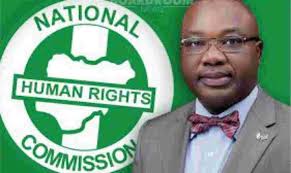
Ahead of the 2027 general election, the National Human Rights Commission (NHRC), has urged authorities and policy makers to prioritize rights of citizens and respect for human dignity over and above the quest to win election and occupy leadership position,
The Executive Secretary of the Commission, Chief Tony Ojukwu, SAN, made the call on Wednesday, as Nigeria joins the rest of the world to commemorate the 2026 International Day of Democracy.
Ojukwu said the day reminds us that democracy is not just about elections, but about the dignity, voice, and rights of every citizen.
He stated that democracy represents the freedom to speak, to choose, to participate, and to hold power accountable without fear; and called on all politicians, political parties and their supporters to exercise restraint and responsibility in public utterances.
He further stressed that democracy thrives on debate, not on hate speech, inciting statements, ethnic profiling, or threats.
A statement by Hajia Fatimah Agwai Mohammed, Director Corporate Affairs and External Linkages at the Commission, quoted Ojukwu to have reiterated that words can build peace or destroy the nation, and urged the political class to make campaigns issue-based and shun any language capable of inciting violence or undermining national unity.
The Chief Human Rights Officer of the country noted that the Commission will continue to monitor hate speech and electoral violence. He called on every eligible Nigerian to rise above voter apathy and actively exercise their civic rights, adding that citizens should not stay away from the polls, sell votes, or believe that votes do not count as these emanate from voter apathy.
Chief Ojukwu lamented that democracy dies when citizens withdraw, and remain silent, he emphasized that the Permanent Voter’s Card remains the power of the people to choose desired leaders.
He therefore urged citizens to come out, vote, and make votes count, describing the choice of leaders as both a right and a duty to Nigeria.
The Executive Secretary who is also the President of the Network of National Human Rights Institutions in West Africa (NNHRI-WA) called on the Federal Government, the Independent National Electoral Commission, and all security agencies to ensure a level playing field for all.
He further stated that government must guarantee the safety of voters, journalists, observers, human rights defenders and the citizens at large.
“Anyone regardless of status or party affiliation, who attempts to make the polity unbearable, who sponsors violence, vote-buying, voter suppression, or attacks on democratic institutions ahead of the 2027 General Elections, must be promptly investigated and prosecuted in accordance with the law, adding that impunity remains the greatest threat to democracy.
In conclusion, Chief Ojukwu called for commitment to a democracy that delivers not just elections, but justice, equality, and human rights for all.
-

 News2 years ago
Senate to speed up conclusion of Nigeria Forest Security Service Bill
-
 News1 year ago
The Many Lies Against Bashir Haske
-

 News3 years ago
Breaking: Tinubu’s authentic ministerial nominees
-
 News3 years ago
“Anytime we want to kill terrorists, President would ask us to take permission from France but they were killing our soldiers-” Niger Republic coup leader
-
 News3 years ago
“I’m leaving the Catholic church because Bishop Onah is oppressing me,” says Okunerere
-

 News3 years ago
My nude photo leak was a mistake- lawyer Ifunanya
-

 News3 years ago
Radio Nigeria’s veteran broadcaster Kelvin Ugwu dies three months after retirement from service
-
 News4 months ago
See your state governor’s performance ranking