
News
Nigeria declares state of emergency on food security


The Nigerian government has declared a state of emergency on food security.
President Bola Tinubu who made declaration on Thursday also approved that all matters pertaining to food and water availability and affordability, as essential livelihood items, be included within the purview of the National Security Council.
This was made known by the Special Adviser to the President on Special Duties, Communications and Strategy, Chief Dele Alake while briefing State House correspondents after consultations with key stakeholders in the agricultural sector at the Presidential Villa, Abuja.
He said that the President has directed an immediate release of fertilizers and grains to farmers and households to mitigate the effects of the subsidy removal.
According to him, “We will immediately release fertilizers and grains to farmers and households to mitigate the effects of the subsidy removal.
“There will be an organic synergy between the Ministry of Agriculture and the use of water resources to ensure adequate irrigation of farmlands and to guarantee that food is available all years round.
“As a country, Mr. President has made it clear that we are no longer comfortable with seasonal farming. We can no longer afford to have farming downtime.”
The Presidential spokesman further explained that the Federal Government will partner with states to create ranches in those that are willing to avail lands.
He said the ranches will have sections dedicated as grazing reserves.
According to him, “We will establish ranches in collaboration with state government and the federal government will pay for the land.”
Alake explained that the government at the centre will activate land banks nationwide, which currently stand at 500,000 hectares mapped “to increase the availability of arable land for farming which will immediately impact food output.”
This is as the Central Bank has advised middlemen withholding grains to release supplies at their disposal as prices are likely to fall when the government begins to distribute grains.
Alake was accompanied to the press briefing by the Special to the President on Revenue, Zacch Adedeji, Special Adviser on Industry, Trade and Investment, John Uwajimogu and the acting Comptroller General of Nigeria Customs Service, NCS, Wale Adeniyi among others.
He explained that the briefing was to update the public on President Bola Tinubu-led administration’s immediate response to the current food inflation in the country.
He said, “As a hands-on- leader who follows developments across the country everyday, Mr. President is not unmindful of the rising cost of food and how it affects the citizens. While availability is not a problem, affordability has been a major issue to many Nigerians in all parts of the country. This has led a significant drop in demand thereby undermining the viability of the entire agriculture and food value chain.
“Accordingly, in line with this administration’s position on ensuring that the most vulnerable are supported, Mr. President has declared, with immediate effect the following actions:
“That a state of emergency on food security be announced immediately, and that all matters pertaining to food & water availability and affordability, as essential livelihood items, be included within the purview of the National Security Council.
“As a direct and immediate response to this crisis, a number of initiatives will be deployed in the coming weeks to reverse this inflationary trend and guarantee future uninterrupted supplies of affordable foods to ordinary Nigerians.
“As with most emergencies, there are immediate, medium- and long-term interventions and solutions.
“In the immediate term, we intend to deploy some savings from the fuel subsidy removal into the Agricultural sector focusing on revamping the agricultural sector.
“In an earlier meeting with Agriculture Stakeholders (today), we drafted a memorandum of partnership between the government and the individual stakeholder representatives that encompasses the decisions taken and actions proposed from our engagements.
“The immediate intervention strategies are as follows: We will immediately release fertilizers and grains to farmers and households to mitigate the effects of the subsidy removal.
“There must be an urgent synergy between the Ministry of Agriculture and the Ministry of Water Resources to ensure adequate irrigation of farmlands and to guarantee that food is produced all-year round.
“We shall create and support a National Commodity Board that will review and continuously assess food prices as well as maintain a strategic food reserve that will be used as a price stabilisation mechanism for critical grains and other food items.
“Through this board, government will moderate spikes and dips in food prices. To achieve this, we have the following stakeholders on board to support the intervention effort of President Bola Ahmed Tinubu:
“The National Commodity Exchange (NCX), Seed Companies, National Seed Council and Research institutes, NIRSAL Microfinance Bank, Food Processing/ Agric Processing associations, private sector holders & Prime Anchors, small holder farmers, crop associations and Fertilizer producers, blenders and suppliers associations to mention a few.
“We will engage our security architecture to protect the farms and the farmers so that farmers can return to the farmlands without fear of attacks.
“The Central Bank will continue to play a major role of funding the agricultural value chain.
“Activation of land banks, there is currently 500,000 hectares of already mapped land that will be used to increase availability of arable land for farming which will immediately impact food output.
“Mechanization and land clearing- The government will also collaborate with mechanization companies to clear more forests & make them available for farming.
“River basins- there are currently 11 rivers basins that will ensure planting of crops during the dry season with irrigation schemes that will guarantee continuous farming production all year round, to stem the seasonal glut and scarcity that we usually experience.
“We will deploy concessionary capital/funding to the sector especially towards fertilizer, processing, mechanization, seeds, chemicals, equipment, feed, labour, etc.”
Continuing, he said, “The concessionary funds will ensure food is always available and affordable thereby having a direct impact on Nigeria’s Human Capital Index (HCI). This administration is focused on ensuring the HCI numbers, which currently ranks as the 3rd lowest in the world, are improved for increased productivity.
“Transportation and Storage: The cost of transporting Agricultural products has been a major challenge (due to permits, toll gates, and other associated costs). When the costs of moving farm produce is significantly impacted-
“…it will immediately be passed to the consumers, which will affect the price of food- the government will explore other means of transportation including rail and water transport, to reduce freight costs and in turn impact the food prices.
“As for storage, existing warehouses and tanks will be revamped to cut waste & ensure efficient preservation of food items.
“We will Increase revenue from food and agricultural exports. As we ensure there is sufficient, affordable food for the populace, we will concurrently work on stimulating the export capacity of the Agric sector.
“Trade Facilitation: Transportation, storage and export will be improved by working with the Nigerian Customs, who have assured us that the bottlenecks experienced in exporting and importing food items as well as intra-city transportation through tolling will be removed.
“These are some of the immediate interventions this government will put in place to tackle this crisis.
Principally, one of the major positive outcomes of these interventions will be a massive boost in employment and job creation.
“Indeed, agriculture already accounts for about 35.21 percent of employment in Nigeria (as at 2021), the target is to double this percentage to about 70% in the long term.”
Alake said that President Tinubu’s mandate to create jobs for the teeming youth population will be achieved with between five to ten million more jobs created within the value chain, working with the current 500,000 hectares of arable land and the several hundreds of thousands more farmlands to be developed in the medium term.
He said, “In closing, this administration understands that food and water are the bedrock of survival and therefore is calling on all Nigerians to partner us in ensuring the success of this strategic intervention. This administration is working assiduously to ensure that Nigerians do not struggle with their essential needs.
“President Bola Ahmed Tinubu wishes to use this medium to continue to assure Nigerians that this administration will not relent in its efforts until all strategic interventions are deployed efficiently and effectively and until every household is positively impacted.
“Our president is the president of all Nigerians and the father of the nation. The renewed hope mandate remains alive and no one, absolutely no one, will be left behind.”

The Supreme Court of Nigeria will on Thursday, deliver judgments in two cases involving the leadership crises rocking the African Democratic Congress and the Peoples Democratic Party.
According to information on the official website of the court, the matters, listed under “Political Appeals”, have been added to the cause list for Thursday, April 30, 2026.
While judgment in the ADC matter, marked SC/CV/180/2026, has been fixed for 2 pm, there is no time yet for that if the PDP.
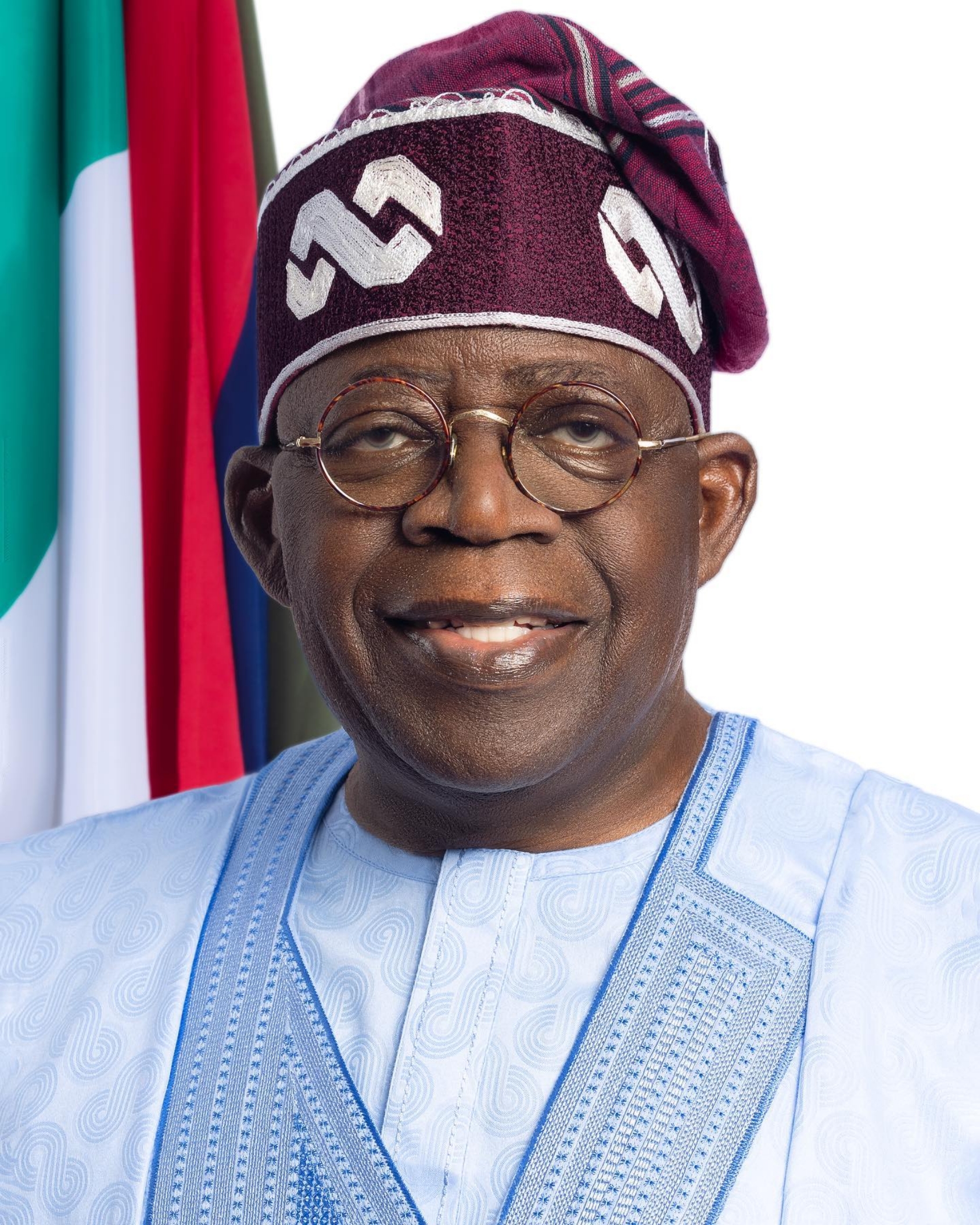
President Bola Tinubu has written the Senate, seeking the screening and subsequent confirmation of fifteen nominees to the National Human Rights Commission (NHRC).
The letter was read by the President of the Senate, Senator Godswill Akpabio.
The letter seeks the reconstitution of the commission’s board in line with statutory provisions with the list comprising nominees from diverse professional backgrounds, including the media and legal sectors.
Among the nominees are the President, Nigeria Guild of Editors and Editor, Vanguard Newspapers, Mr. Eze Anaba; and Dr. Salamatu Hussaina Suleiman, who has been proposed as chairman of the board.
The Executive Secretary of the Commission, Dr. Anthony Ojukwu (SAN) is to retain his position as the Chief Executive Officer.
Other nominees include Mrs Roseline Tasha, Ambassador Adam Yubak Baku, ACG Felix Lawrence, Mr. Edmund Chinonye, Mr. Chinonye Obiaku (SAN), Oluwakemi Asiwaju Okere-Odo, Professor Adedeji Ogunji, Kingsley Chidozie, Mohammed Adelodu, Maupe Ogun Yusuf, and Otunba Francis Meshioye as members.
Also nominated are Patience Patrick and Hawwa Ibrahim, listed as members.
The President said the nominations were made pursuant to Section 2(3) of the National Human Rights Commission (Establishment) Act, 2010, which empowers him to constitute the board subject to Senate confirmation.
He explained that the reconstitution of the board was necessary to enhance the commission’s institutional capacity and enable it to more effectively discharge its mandate to promote and protect human rights across the country.
If confirmed, the new board is expected to play a critical role in reinforcing the NHRC’s oversight functions, particularly at a time of heightened concerns over rights protection and accountability in Nigeria.
Following the presentation of the request, the Senate referred the nominations to its Committee on Judiciary, Human Rights and Legal Matters for screening and report within two weeks.

The Economic and Financial Crimes Commission, EFCC, has revealed that it investigated the founder of Streams of Joy International, Pastor Jerry Eze, for six months over suspected money laundering before clearing him.
Ola Olukoyede, chairman of the Commission, disclosed this on Wednesday while speaking at the Jerry Eze Foundation Business Grant Award Ceremony in Abuja.
According to him, the probe was triggered by intelligence reports and petitions after the commission observed large inflows of foreign currencies into the cleric’s domiciliary account.
“We work by intelligence, we work by petitions. At some point, I saw there was an account, a domiciliary account. Dollars, pounds were dropping in like raindrops, from Colombia, from America, from Sri Lanka, even from Togo.
“I said who is this man? Yes, I’ve been hearing about his name, I’ve seen his face a couple of times. I never bothered about what he was doing. I knew he was a pastor.
“So they said this one pastor of streams of joy, go and investigate him. So we went to the investigation. We combed the books,” Olukoyede stated.
The EFCC boss said he subsequently invited Eze for questioning after preliminary findings were compiled by investigators.
He added that upon meeting the cleric and reviewing the findings of the investigation, the commission found no wrongdoing.
“So he came to my office. He told me what happens and all of that, and how the money came, what he does, how he has been helping people, and all of that.
“I said, you know what, I didn’t call you here to explain to me. We have already done our work. I called you here to commend you,” he stated.
The remark drew applause from the audience, as Eze, who was present at the event, acknowledged the commendation.
He noted that the commission has a responsibility not only to investigate financial crimes but also to recognise individuals found to have acted with integrity.
The EFCC chairman, however, stated that the agency would continue to monitor financial activities where necessary, stressing that its preventive mandate remains critical in tackling corruption.
-

 News1 year ago
Senate to speed up conclusion of Nigeria Forest Security Service Bill
-

 News9 months ago
The Many Lies Against Bashir Haske
-

 News3 years ago
Breaking: Tinubu’s authentic ministerial nominees
-
 News3 years ago
“Anytime we want to kill terrorists, President would ask us to take permission from France but they were killing our soldiers-” Niger Republic coup leader
-
 News3 years ago
“I’m leaving the Catholic church because Bishop Onah is oppressing me,” says Okunerere
-

 News3 years ago
Radio Nigeria’s veteran broadcaster Kelvin Ugwu dies three months after retirement from service
-
 News3 years ago
Dokpesi and the Gazebo Mystique
-

 News3 years ago
Tsunami: Tinubu orders dissolution of managements, boards of MDAs, to sack all Buhari’s political appointees