
News
Nigeria: A whole new approach to security

Daily Trust Editorial Commentary of Sunday, June 25, 2023
Last Monday, President Bola Ahmed Tinubu retired all of his predecessor’s security chiefs, and in the same breadth appointed new ones. He also replaced the Inspector-General of Police and Comptroller-General of the Nigerian Customs Service, in addition to rather sweeping appointments down the lower rungs of the military services.
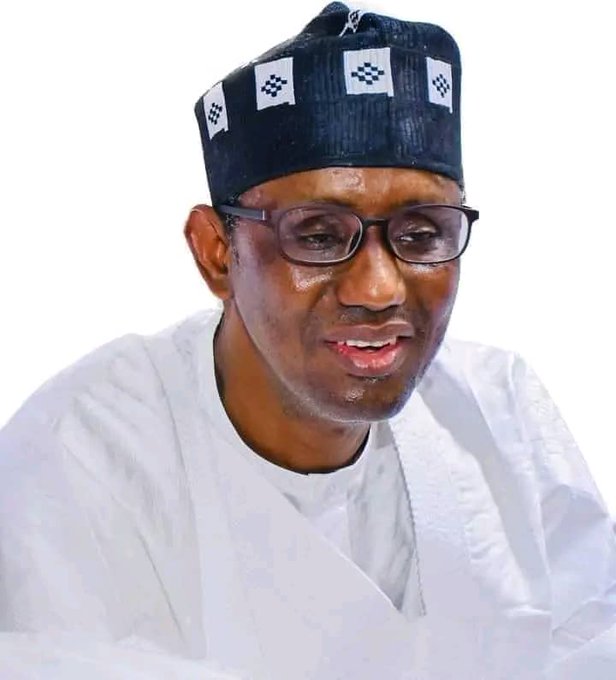
Notable among the new chiefs are the appointment of Malam Nuhu Ribadu as National Security Adviser (NSA), who is now the overall head of our security architecture, after the President himself as the Commander-in-Chief. Tinubu also appointed Major General Christopher Gwabin Musa, a former commander of the military’s joint counter-terrorism effort in the northeast, as the new Chief of Defence Staff (CDS), Maj.-Gen. T. A. Lagbaja as the Chief of Army Staff (COAS), Air Vice Marshal H. B. Abubakar as Chief of Air Staff, Rear Admiral E. A. Ogalla as the Chief of Naval Staff, and Maj.-Gen. EPA Undiandeye has also been appointed as the Chief of Defence Intelligence.
On assuming duty Friday, the new chiefs, reportedly resolved to use “maximum force against terrorists, bandits and other enemies of state”, in order to improve the country’s security. The new CDS said no one should be in doubt about their determination to bring peace, while the Chief of Naval Staff promised to “tackle crude oil theft and illegal refineries head on”. Meanwhile, the Acting Inspector-General of Police, Olukayode Egbetokun has promised a new strategy for fighting crime in the land.
Daily Trust welcomes these men—and they are still all men—to their new posts. We also welcome their promises to Nigerians of a revamped security system, and we wish them all the best as they go about this onerous task individually and collectively.
We must add, however, that the current security situation in Nigeria requires more than word of mouth promises. We are also convinced that while the threat or actual use of force is important, by itself alone, more force will not necessarily end the myriad of security challenges that Nigeria faces. Just more of the same strategies centered on force will not do.
Instead, the President and his government should see the appointment of the new security chiefs as an opportunity for Nigeria to holistically rethink how we approach and understand ‘security’ and ‘insecurity’, and by implication, how we mobilize human and material resources towards attaining the former and avoiding the latter. And to that end, three fundamental aspects of our security system require immediate and serious consideration.
First, nearly all of Nigeria’s external security forces are now aimed inwards at sections of its own citizenry, not outwards against external threats for which they conventionally and constitutionally designed to fight. Nigerian military personnel were said to have been on active deployment in no fewer than 30 of our 36 states in 2016, according to a report by SBM Intelligence, a strategic intelligence analysis firm, at the time. For a country not officially at war with any other, Nigeria must be the most militarized zone in the world.
The point, however, is that such a situation is not only abnormal and gravely concerning, but it should be completely unacceptable. It should worry us all that our army and naval officers have nothing to talk about than domestic threats. But domestic security threats are fundamentally different from external ones. All the four major security threats we face—militancy, insurgency, banditry and secessionist agitation—result from very complex mix of deeply rooted social, political and economic factors that, it must be said, cannot simply be shot down by military force alone.
All of them are borne out of or exacerbated by real or imagined deficits of representation, voice, and agency by one or more communities across the country. Therefore, as the President and his new security chiefs settle down to their respective new jobs, we at Daily Trust urge them all to rethink security not in terms of more deployment of soldiers and airmen in our towns and cities, but in the use of more civil and democratic approaches to building peace and inclusive prosperity.
Second, in addition to more civil and democratic approaches that give representation and voice to all those who feel left out in the Nigeria project in one sense or another, the new government and its security chiefs will do well to focus attention on the economics of conflict and war. As scholars of social dynamics know only too well, nothing sustains conflict and war than the monetary and commercial benefits certain interests derive from it. And those interests who benefit from conflict can be rather very complex, often not even among the ranks of the “non-state actors” who wage it. Therefore, we urge the new security approach to also “follow the money”, as the saying goes, as much as they deploy force across the numerous conflict areas in the country.
Finally, we must all realize that rising insecurity is de-marketing Nigeria and Nigerian businesses. Our regime of “forever violent conflict with self” over the past fifteen years is really hurting the Nigerian economy. It not only shuts out much needed foreign direct investment into our shores, but it also limits opportunities for local businesses and the Nigerian government to attract foreign productive capital and know-how. All of these, in turn, depress growth and entrench economic stagnation.
But as we cannot continue on this track forever, it is time then, for a whole new approach to security and insecurity in Nigeria.

The Supreme Court of Nigeria will on Thursday, deliver judgments in two cases involving the leadership crises rocking the African Democratic Congress and the Peoples Democratic Party.
According to information on the official website of the court, the matters, listed under “Political Appeals”, have been added to the cause list for Thursday, April 30, 2026.
While judgment in the ADC matter, marked SC/CV/180/2026, has been fixed for 2 pm, there is no time yet for that if the PDP.
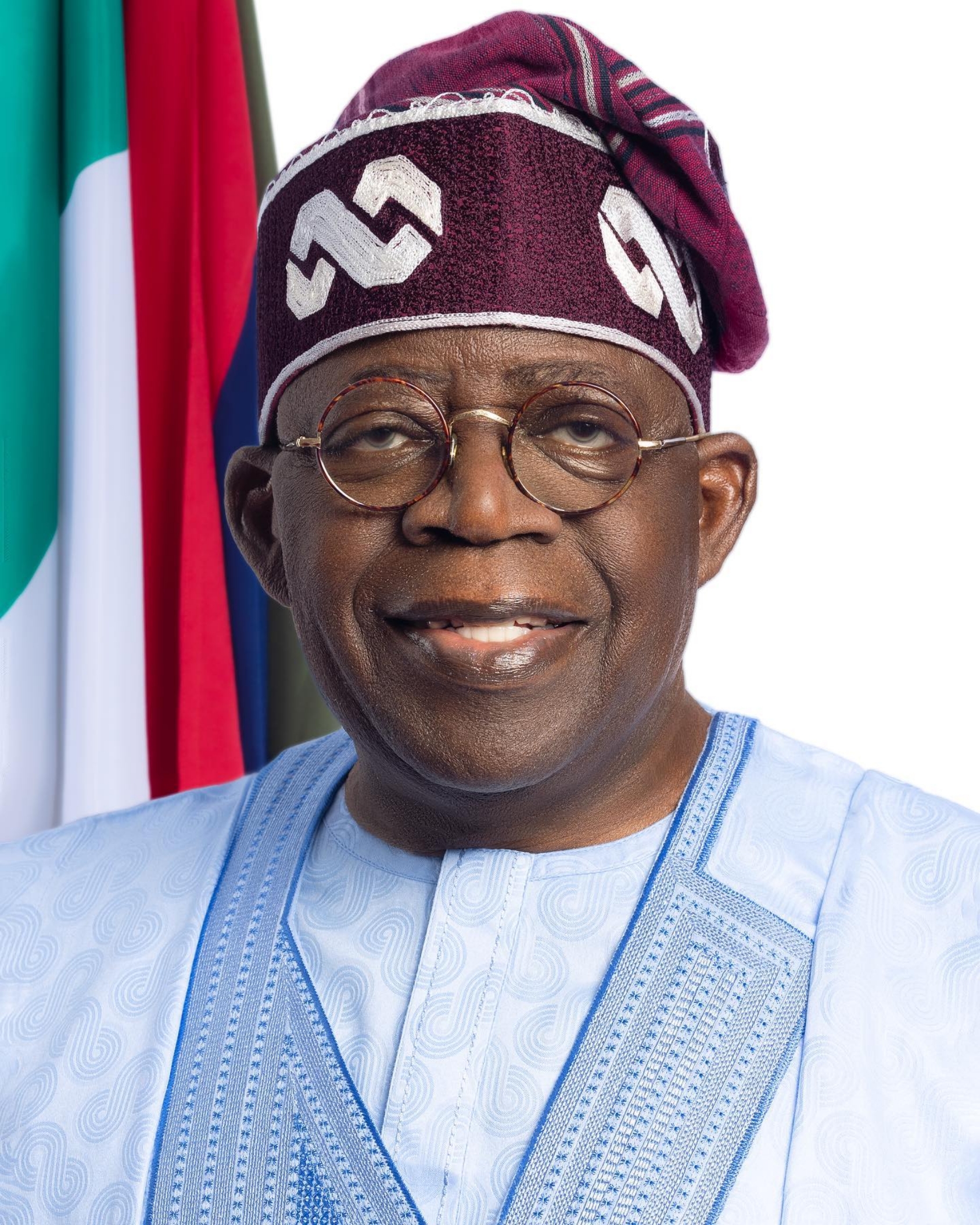
President Bola Tinubu has written the Senate, seeking the screening and subsequent confirmation of fifteen nominees to the National Human Rights Commission (NHRC).
The letter was read by the President of the Senate, Senator Godswill Akpabio.
The letter seeks the reconstitution of the commission’s board in line with statutory provisions with the list comprising nominees from diverse professional backgrounds, including the media and legal sectors.
Among the nominees are the President, Nigeria Guild of Editors and Editor, Vanguard Newspapers, Mr. Eze Anaba; and Dr. Salamatu Hussaina Suleiman, who has been proposed as chairman of the board.
The Executive Secretary of the Commission, Dr. Anthony Ojukwu (SAN) is to retain his position as the Chief Executive Officer.
Other nominees include Mrs Roseline Tasha, Ambassador Adam Yubak Baku, ACG Felix Lawrence, Mr. Edmund Chinonye, Mr. Chinonye Obiaku (SAN), Oluwakemi Asiwaju Okere-Odo, Professor Adedeji Ogunji, Kingsley Chidozie, Mohammed Adelodu, Maupe Ogun Yusuf, and Otunba Francis Meshioye as members.
Also nominated are Patience Patrick and Hawwa Ibrahim, listed as members.
The President said the nominations were made pursuant to Section 2(3) of the National Human Rights Commission (Establishment) Act, 2010, which empowers him to constitute the board subject to Senate confirmation.
He explained that the reconstitution of the board was necessary to enhance the commission’s institutional capacity and enable it to more effectively discharge its mandate to promote and protect human rights across the country.
If confirmed, the new board is expected to play a critical role in reinforcing the NHRC’s oversight functions, particularly at a time of heightened concerns over rights protection and accountability in Nigeria.
Following the presentation of the request, the Senate referred the nominations to its Committee on Judiciary, Human Rights and Legal Matters for screening and report within two weeks.

The Economic and Financial Crimes Commission, EFCC, has revealed that it investigated the founder of Streams of Joy International, Pastor Jerry Eze, for six months over suspected money laundering before clearing him.
Ola Olukoyede, chairman of the Commission, disclosed this on Wednesday while speaking at the Jerry Eze Foundation Business Grant Award Ceremony in Abuja.
According to him, the probe was triggered by intelligence reports and petitions after the commission observed large inflows of foreign currencies into the cleric’s domiciliary account.
“We work by intelligence, we work by petitions. At some point, I saw there was an account, a domiciliary account. Dollars, pounds were dropping in like raindrops, from Colombia, from America, from Sri Lanka, even from Togo.
“I said who is this man? Yes, I’ve been hearing about his name, I’ve seen his face a couple of times. I never bothered about what he was doing. I knew he was a pastor.
“So they said this one pastor of streams of joy, go and investigate him. So we went to the investigation. We combed the books,” Olukoyede stated.
The EFCC boss said he subsequently invited Eze for questioning after preliminary findings were compiled by investigators.
He added that upon meeting the cleric and reviewing the findings of the investigation, the commission found no wrongdoing.
“So he came to my office. He told me what happens and all of that, and how the money came, what he does, how he has been helping people, and all of that.
“I said, you know what, I didn’t call you here to explain to me. We have already done our work. I called you here to commend you,” he stated.
The remark drew applause from the audience, as Eze, who was present at the event, acknowledged the commendation.
He noted that the commission has a responsibility not only to investigate financial crimes but also to recognise individuals found to have acted with integrity.
The EFCC chairman, however, stated that the agency would continue to monitor financial activities where necessary, stressing that its preventive mandate remains critical in tackling corruption.
-

 News1 year ago
Senate to speed up conclusion of Nigeria Forest Security Service Bill
-
 News9 months ago
The Many Lies Against Bashir Haske
-

 News3 years ago
Breaking: Tinubu’s authentic ministerial nominees
-
 News3 years ago
“Anytime we want to kill terrorists, President would ask us to take permission from France but they were killing our soldiers-” Niger Republic coup leader
-
 News3 years ago
“I’m leaving the Catholic church because Bishop Onah is oppressing me,” says Okunerere
-

 News3 years ago
Radio Nigeria’s veteran broadcaster Kelvin Ugwu dies three months after retirement from service
-
 News3 years ago
Dokpesi and the Gazebo Mystique
-

 News3 years ago
Tsunami: Tinubu orders dissolution of managements, boards of MDAs, to sack all Buhari’s political appointees