
News
NHRC, LEDAP, others push for greater responsibility for traditional, religious leaders towards eradication of harmful practices against women


Key speakers at a consultative forum that took place in Abuja on Thursday, December 11, 2025, have called for more defined roles for traditional and religious leaders for towards eradication of all harmful practices against women in Nigeria.
The event was organized by the National Human Rights Commission, NHRC, and the Legal Defence and Advocacy Project, LEDAP with support from Ford Foundation.
Themed- “Empowering Traditional Rulers in Nigeria to Adopt and Implement Community Guidelines for Gender Equality and Non-Discrimination Against Women,” the forum was attended by the Ministry of Women Affairs and Social Development, Women Aid Collective (WACOL), NAPTIP, Nigerian Supreme Council for Islamic Affairs, FOMWAN, Abuja Muslim Forum and others.
In his opening speech, Dr. Tony Ojukwu, SAN, the Executive Secretary of the National Human Rights Commission, listed some gender-based violence and harmful practices to include female genital mutilation, child marriage, discriminatory inheritance laws and dehumanizing widowhood rites, saying those obnoxious acts pose serious threat to Nigerian women and girls.
Ojukwu said NHRC had received over 50,000 complaints related to gender-based violence and harmful practices in 2025 alone and said traditional and religious leaders have very serious roles to play towards changing social norms while calling on them to publicly condemn harmful practices, support girls’ education and advocate rights of survivors.
The NHRC boss urged law enforcement agencies, the justice sector, and health and social services workers, to improve training, survivor-centred services, and access to justice.
Chino Obiagwu, SAN, National Coordinator of LEDAP, outlined the project re-echoed the theme of the gathering and hammered on the critical role of traditional and religious leaders in influencing community norms and promoting women’s rights.
In her goodwill message, the Minister of Women Affairs and Social Development, Hon. Imaan Suleiman-Ibrahim, who was represented by the Director Legal, in the Ministry, Sweet Adesuwa Okundaiye, commended Dr. Tony Ojukwu and the management of NHRC for “consistently creating platforms for dialogue, accountability, and collective action in advancing the rights of women and girls in Nigeria.”
The Minister said the conversation came right on time- hours after the conclusion of the 2025 International 16 Days of Activism Against Gender-Based Violence; an annual global movement that underscores the urgency of dismantling all forms of violence and discrimination, adding that the forum provides the perfect opportunity to consolidate the momentum generated, transition from awareness to action, and interrogate the deeper social norms that sustain harmful practices.
“As a nation, we celebrate the richness of our cultural and religious diversity. Yet, we must also confront the reality that certain long-standing practices; however deeply rooted, now conflict with our constitutional values, our national aspirations, and our commitments under international and regional human rights instruments. “Addressing these contradictions is essential for justice, equity, and national development.
“Under the Renewed Hope Agenda of His Excellency, President Bola Ahmed Tinubu, GCFR, our government is committed to building a Nigeria where every woman and girl can live free from fear, discrimination, and harmful practices. This commitment drives every programme and reform at the Federal Ministry of Women Affairs and Social Development.
“Harmful traditional and religious practices—including early and forced marriage, denial of inheritance rights, female genital mutilation, dehumanising widowhood rites, and child socialisation practices that compromise the rights and wellbeing of children—continue to impede social progress. “These practices not only violate fundamental human rights, they limit productivity, weaken family structures, and undermine Nigeria’s socio-economic potential,” the Minister stated.
She also enumerated efforts of the Ministry of Women Affairs and Social Development in the advocacy for gender equity and end to discrimination, saying their approach is anchored on community engagement, evidence-based advocacy, and sustained social mobilisation.
“Through our nationwide efforts, we continue to sensitize communities on the Child Rights Act and the Violence Against Persons Prohibition (VAPP) Act, ensuring that families understand their provisions, protections, and responsibilities. At the same time, we are working closely with the Federal Ministry of Justice and other critical stakeholders to review and strengthen these laws to reflect emerging realities and ensure their effective implementation across the country.
“However, beyond laws and policies, we must ask ourselves some difficult questions that expose the contradictions in certain cultural practices: How is it that in modern Nigeria, in some communities, a man rarely “dies a natural death,” even when medical evidence shows he died from illnesses such as AIDS? Why is a newly widowed man quickly encouraged to seek another intimate partner, supposedly to protect him from his late wife’s spirit; while her body still lies cold in the morgue? Why should a widow be compelled to drink the water used to bathe her husband’s corpse to prove her innocence? Why should a growing child be denied nutritious foods like eggs simply to prevent the child from “stealing”?
“These endless questions demand introspection. They compel us to confront practices that clearly have no place in a just and progressive society,” she said and revealed that only 57% of women aged 15–49 is literate, compared to 72% of men, therefore emphacised the need to bring traditional rulers on board, every effort at breaching the gaps.
“This is why traditional rulers must remain at the centre of national reform efforts. They shape values, influence norms, and guide the moral compass of communities. We must also recognise that women themselves, often out of economic necessity or social pressure, contribute to sustaining certain harmful practices,” the Minister stated.
Professor Joy Ezeilo, Executive Director of Women Aid Collective (WACOL) and former UN Special Rapporteur on Trafficking in Persons who delivered the keynote on the legal framework and ongoing efforts to combat gender-based violence in Nigeria, highlighted harmful socio-cultural norms that persist despite existing laws.
In his speech, His Eminence, Sultan of Sokoto and President of the Supreme Council for Islamic Affairs, Alhaji Saad Abubakar, stressed the importance of engaging religious leaders in efforts to eliminate harmful practices. The Sultan’s message was read by Dr. Aminu Hayatu.
Highlights of the event was interactive discussions and breakout sessions aimed at developing community-sensitive strategies to prevent harmful practices, ensure protection for survivors, and promote accountability.
The leadership of Nigeria Democratic Congress, NDC, has disowned the Presidential Campaign Council, PCC, set up by the OK Movement ahead of the 2027 general elections.
This is contained in a statement signed by the party’s National Chairman, Cleopas Moses, on Saturday.
Moses stated that the announcement made by one John Ugulu was not authorised and did not come from the party.
According to him, going forward, no individual or group is authorised to announce, constitute or publish any campaign structure or organ in the name of the party without the approval of the party’s National Working Committee, NWC.
The statement partly read: “The leadership of our party, the Nigerian Democratic Congress, NDC, has noted with concern a publication credited to one John Ugulu, announcing a Presidential Campaign Council, PCC, under the guise of the OK Movement.
“For the avoidance of doubt, the party wishes to state categorically as follows: The party hereby dissociates itself in totality from the said OK Movement PCC announcement. It did not emanate from the party and should be disregarded by the public and the media.
“All candidates of the party must appreciate that they are not running as independent candidates. They are products of the party and remain subject to the authority and discipline of the party. Therefore, only the party’s leadership can constitute and announce a PCC.
“No member, candidate or support group should, under any guise, undermine the party or demarcate the party. The party recognises and deeply appreciates the contribution of all support groups and encourages their continued support. We welcome even more support groups who identify with our mission to rescue Nigeria.
“While the party will continue to work collaboratively with all support groups, such groups should not see themselves as alternative party structures or parallel organs of the party.”
News
25 dead bodies recovered as families remain uncertain over fate of 500 residents abducted from Niger communities
25 decomposing bodies belonging to victims of a mass abduction that took place in four communities in Niger state have been recovered.
They were part of residents that were abducted by terrorists Dekara, Kpenya, Sabon-Gida and Gidan-Zana in Borgu Local Government Area.
The bodies were recovered after the communities were reportedly alerted on Monday by the abductors to come and identify and retrieve the bodies.
The victims were said to be among about 500 worshippers abducted after Friday Jumm’at prayers on August 21, 2026.
25 bodies were recovered and later given a mass burial in a nearby bush.
The reported killings have heightened anxiety among families whose relatives remain in captivity, with residents saying they are increasingly uncertain about the fate of the remaining abductees.
A source said the abductors allegedly warned that more captives could be killed if their ransom demands were not met.
“They first asked each family to bring N10 million for each captive, but later reduced it to N5 million. There is no way we can afford it,” he said.
News
Democracy: NHRC calls for people-centered policies, robust debate, respect for human rights, dignity
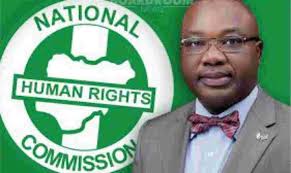
Ahead of the 2027 general election, the National Human Rights Commission (NHRC), has urged authorities and policy makers to prioritize rights of citizens and respect for human dignity over and above the quest to win election and occupy leadership position,
The Executive Secretary of the Commission, Chief Tony Ojukwu, SAN, made the call on Wednesday, as Nigeria joins the rest of the world to commemorate the 2026 International Day of Democracy.
Ojukwu said the day reminds us that democracy is not just about elections, but about the dignity, voice, and rights of every citizen.
He stated that democracy represents the freedom to speak, to choose, to participate, and to hold power accountable without fear; and called on all politicians, political parties and their supporters to exercise restraint and responsibility in public utterances.
He further stressed that democracy thrives on debate, not on hate speech, inciting statements, ethnic profiling, or threats.
A statement by Hajia Fatimah Agwai Mohammed, Director Corporate Affairs and External Linkages at the Commission, quoted Ojukwu to have reiterated that words can build peace or destroy the nation, and urged the political class to make campaigns issue-based and shun any language capable of inciting violence or undermining national unity.
The Chief Human Rights Officer of the country noted that the Commission will continue to monitor hate speech and electoral violence. He called on every eligible Nigerian to rise above voter apathy and actively exercise their civic rights, adding that citizens should not stay away from the polls, sell votes, or believe that votes do not count as these emanate from voter apathy.
Chief Ojukwu lamented that democracy dies when citizens withdraw, and remain silent, he emphasized that the Permanent Voter’s Card remains the power of the people to choose desired leaders.
He therefore urged citizens to come out, vote, and make votes count, describing the choice of leaders as both a right and a duty to Nigeria.
The Executive Secretary who is also the President of the Network of National Human Rights Institutions in West Africa (NNHRI-WA) called on the Federal Government, the Independent National Electoral Commission, and all security agencies to ensure a level playing field for all.
He further stated that government must guarantee the safety of voters, journalists, observers, human rights defenders and the citizens at large.
“Anyone regardless of status or party affiliation, who attempts to make the polity unbearable, who sponsors violence, vote-buying, voter suppression, or attacks on democratic institutions ahead of the 2027 General Elections, must be promptly investigated and prosecuted in accordance with the law, adding that impunity remains the greatest threat to democracy.
In conclusion, Chief Ojukwu called for commitment to a democracy that delivers not just elections, but justice, equality, and human rights for all.
-

 News2 years ago
Senate to speed up conclusion of Nigeria Forest Security Service Bill
-

 News1 year ago
The Many Lies Against Bashir Haske
-

 News3 years ago
Breaking: Tinubu’s authentic ministerial nominees
-
 News3 years ago
“Anytime we want to kill terrorists, President would ask us to take permission from France but they were killing our soldiers-” Niger Republic coup leader
-
 News3 years ago
“I’m leaving the Catholic church because Bishop Onah is oppressing me,” says Okunerere
-

 News3 years ago
My nude photo leak was a mistake- lawyer Ifunanya
-

 News3 years ago
Radio Nigeria’s veteran broadcaster Kelvin Ugwu dies three months after retirement from service
-
 News4 months ago
See your state governor’s performance ranking