News
Ned Nwoko: Anioma State Agitation Now a Structured National Process, Not Emotional Quest


The Chairman of Senate Committee on Reparation and Repatriation, Senator Ned Nwoko (APC, Delta North), says the renewed agitation for the creation of Anioma State has evolved from a cultural aspiration into one of the most organized and credible state-creation bids in Nigeria’s recent history.
He said the demand is no longer an emotional pursuit but a disciplined quest for equity, anchored on correcting long-standing structural imbalances within the federation.
In a statement by his Director of Communications, Gloria Okolugbo, titled *“Anioma: The Journey So Far,” Nwoko said the movement has reached a defining moment where *“history is no longer being imagined; it is being negotiated and documented stage by stage.”
According to the statement, the lawmaker and business tycoon noted that the earliest advocacy for Anioma was rooted in cultural consciousness. Traditional institutions and cultural groups across Delta North consistently projected the identity shared by the Aniocha, Ika, Ndokwa and Ukwuani people.
This cultural clarity, he said, gave political legitimacy to the demand and provided a united social foundation for subsequent constitutional engagement.
The statement said further that- “A major turning point came when Senator Nwoko sponsored a bill to create Anioma State from the nine local government areas of Delta North. The statement described the move as historic, giving the agitation a clearly defined geographic and constitutional structure.
“Senator Ned did more than sponsor a bill, he provided population data, economic viability indices, administrative footprints and cultural coherence — elements required under the constitution for the creation of a new state.
“The Senate debate that followed reportedly showed broad bipartisan support, placing Anioma firmly on the national legislative agenda for the first time in years.”
The statement explained that as the Constitution Review Committee examined state creation proposals nationwide, Anioma stood out for having both historical grounding and constitutional clarity.
During national committee retreats in Kano and Lagos, Anioma’s proposal — built around nine clearly defined LGAs — consistently met constitutional thresholds relating to population, geography and administrative viability. It was eventually shortlisted as one of the viable proposals and recognized as a strong candidate for the long-awaited sixth state in the South East.
He also disclosed that national discussions have shifted toward a unified demand for one additional state in the South East. She noted that various groups from Imo, Anambra and parts of Delta presented different proposals, but sustained dialogue has led to convergence around a single harmonized position — with Anioma emerging as a leading candidate due to its constitutional coherence.
Outlining the remaining milestones, the statement listed the adoption of boundary frameworks by subcommittees, securing two-thirds approval from state assemblies, the referendum to confirm the people’s will, and final approval by the National Assembly.
*“These stages demand unity, strategy and unwavering commitment to the greater good of the proposed state and the South East,”* it added.
According to the statement, the creation of Anioma State would deliver balanced development, improve equity in the federation and address long-standing political disparities.
“Anioma has moved from aspiration to national recognition; from recognition to legislative documentation; and now approaches the threshold of constitutional reality,”* it stated.
As the movement approaches the referendum stage, Nwoko called on all Anioma citizens to participate fully, warning that apathy could undermine the will of the people.
“The referendum is not a formality — it is Anioma speaking for itself,”* the statement concluded. *“This is the defining moment, and every vote will shape the future we have worked for.”
The leadership of Nigeria Democratic Congress, NDC, has disowned the Presidential Campaign Council, PCC, set up by the OK Movement ahead of the 2027 general elections.
This is contained in a statement signed by the party’s National Chairman, Cleopas Moses, on Saturday.
Moses stated that the announcement made by one John Ugulu was not authorised and did not come from the party.
According to him, going forward, no individual or group is authorised to announce, constitute or publish any campaign structure or organ in the name of the party without the approval of the party’s National Working Committee, NWC.
The statement partly read: “The leadership of our party, the Nigerian Democratic Congress, NDC, has noted with concern a publication credited to one John Ugulu, announcing a Presidential Campaign Council, PCC, under the guise of the OK Movement.
“For the avoidance of doubt, the party wishes to state categorically as follows: The party hereby dissociates itself in totality from the said OK Movement PCC announcement. It did not emanate from the party and should be disregarded by the public and the media.
“All candidates of the party must appreciate that they are not running as independent candidates. They are products of the party and remain subject to the authority and discipline of the party. Therefore, only the party’s leadership can constitute and announce a PCC.
“No member, candidate or support group should, under any guise, undermine the party or demarcate the party. The party recognises and deeply appreciates the contribution of all support groups and encourages their continued support. We welcome even more support groups who identify with our mission to rescue Nigeria.
“While the party will continue to work collaboratively with all support groups, such groups should not see themselves as alternative party structures or parallel organs of the party.”
News
25 dead bodies recovered as families remain uncertain over fate of 500 residents abducted from Niger communities
25 decomposing bodies belonging to victims of a mass abduction that took place in four communities in Niger state have been recovered.
They were part of residents that were abducted by terrorists Dekara, Kpenya, Sabon-Gida and Gidan-Zana in Borgu Local Government Area.
The bodies were recovered after the communities were reportedly alerted on Monday by the abductors to come and identify and retrieve the bodies.
The victims were said to be among about 500 worshippers abducted after Friday Jumm’at prayers on August 21, 2026.
25 bodies were recovered and later given a mass burial in a nearby bush.
The reported killings have heightened anxiety among families whose relatives remain in captivity, with residents saying they are increasingly uncertain about the fate of the remaining abductees.
A source said the abductors allegedly warned that more captives could be killed if their ransom demands were not met.
“They first asked each family to bring N10 million for each captive, but later reduced it to N5 million. There is no way we can afford it,” he said.
News
Democracy: NHRC calls for people-centered policies, robust debate, respect for human rights, dignity
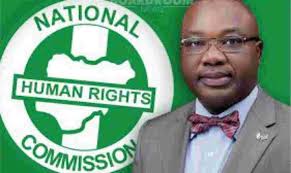
Ahead of the 2027 general election, the National Human Rights Commission (NHRC), has urged authorities and policy makers to prioritize rights of citizens and respect for human dignity over and above the quest to win election and occupy leadership position,
The Executive Secretary of the Commission, Chief Tony Ojukwu, SAN, made the call on Wednesday, as Nigeria joins the rest of the world to commemorate the 2026 International Day of Democracy.
Ojukwu said the day reminds us that democracy is not just about elections, but about the dignity, voice, and rights of every citizen.
He stated that democracy represents the freedom to speak, to choose, to participate, and to hold power accountable without fear; and called on all politicians, political parties and their supporters to exercise restraint and responsibility in public utterances.
He further stressed that democracy thrives on debate, not on hate speech, inciting statements, ethnic profiling, or threats.
A statement by Hajia Fatimah Agwai Mohammed, Director Corporate Affairs and External Linkages at the Commission, quoted Ojukwu to have reiterated that words can build peace or destroy the nation, and urged the political class to make campaigns issue-based and shun any language capable of inciting violence or undermining national unity.
The Chief Human Rights Officer of the country noted that the Commission will continue to monitor hate speech and electoral violence. He called on every eligible Nigerian to rise above voter apathy and actively exercise their civic rights, adding that citizens should not stay away from the polls, sell votes, or believe that votes do not count as these emanate from voter apathy.
Chief Ojukwu lamented that democracy dies when citizens withdraw, and remain silent, he emphasized that the Permanent Voter’s Card remains the power of the people to choose desired leaders.
He therefore urged citizens to come out, vote, and make votes count, describing the choice of leaders as both a right and a duty to Nigeria.
The Executive Secretary who is also the President of the Network of National Human Rights Institutions in West Africa (NNHRI-WA) called on the Federal Government, the Independent National Electoral Commission, and all security agencies to ensure a level playing field for all.
He further stated that government must guarantee the safety of voters, journalists, observers, human rights defenders and the citizens at large.
“Anyone regardless of status or party affiliation, who attempts to make the polity unbearable, who sponsors violence, vote-buying, voter suppression, or attacks on democratic institutions ahead of the 2027 General Elections, must be promptly investigated and prosecuted in accordance with the law, adding that impunity remains the greatest threat to democracy.
In conclusion, Chief Ojukwu called for commitment to a democracy that delivers not just elections, but justice, equality, and human rights for all.
-

 News2 years ago
Senate to speed up conclusion of Nigeria Forest Security Service Bill
-
 News1 year ago
The Many Lies Against Bashir Haske
-

 News3 years ago
Breaking: Tinubu’s authentic ministerial nominees
-
 News3 years ago
“Anytime we want to kill terrorists, President would ask us to take permission from France but they were killing our soldiers-” Niger Republic coup leader
-
 News3 years ago
“I’m leaving the Catholic church because Bishop Onah is oppressing me,” says Okunerere
-

 News3 years ago
My nude photo leak was a mistake- lawyer Ifunanya
-

 News3 years ago
Radio Nigeria’s veteran broadcaster Kelvin Ugwu dies three months after retirement from service
-
 News4 months ago
See your state governor’s performance ranking